#Yarn & Fiber
Sorona® Polymer marks 25 years of sustainable innovation with release of new life cycle assessment results at Intertextile Shanghai
Under new leadership, Sorona® polymer is poised to continue its tradition of innovation for decades to come
The announcements coincide with Intertextile Shanghai Apparel Fabrics, September 2–4, 2025, where CovationBio will showcase its next chapter of sustainable performance fibers in an exhibit spanning more than 670 square meters featuring apparel options made with Sorona® polymer from 15 leading brands (images of the Intertextile exhibit available for media here).
“As we celebrate 25 years of progress, we’re not just reflecting on where we’ve been, we’re setting the stage for the next era of responsible growth, powered by science, transparency, and global collaboration,” says Ackerman, who has spent more than 15 years with the Sorona® brand. (Ackerman’s full bio and headshots available for media here.)
Demonstrating significant environmental advantages compared to conventional synthetics, CovationBio is releasing its updated LCA results. Conducted by TrueNorth Collective and critically reviewed under ISO standards, the latest study shows the positive environmental impact of using the 37% plant based Sorona® product, compared to frequently used fossil-based materials.
Producing Sorona® uses 44% less energy and emits 170% less greenhouse gas emissions than producing nylon 6 from non-renewable resources.
Producing Sorona® releases 41% less greenhouse gas emissions than the production of PET from non-renewable resources.
Producing Sorona® uses 4% less energy and emits 4% less greenhouse gas emissions than the production of fossil PBT from non-renewable resources.
The new LCA results also reflect continuous improvements in the Sorona® polymer production process since its first assessment in 2016. Investments such as greater reliance on hydropower, local corn sourcing for its bio-PDO ingredient, and new cogeneration systems have driven reductions in global warming potential, ozone depletion, and resource use.
“These results underscore our company’s long-standing commitment to shaping a more responsible textile value chain,” says Ackerman. “Our downstream value chain partners are looking for new ways to offer performance and quality to their customers while improving their environmental footprint. We’re here to help them meet that need.”
Launched in 2000 as the world’s first PTT polymer, the Sorona® brand has grown into a globally recognized ingredient, known for combining renewably sourced content with uncompromising performance. From athleisure to outerwear, workwear, carpet, and faux fur, Sorona® polymer that becomes fiber continues to set benchmarks for quality, performance, and improved environmental impact including its signature attributes of softness, durability, and stretch recovery.
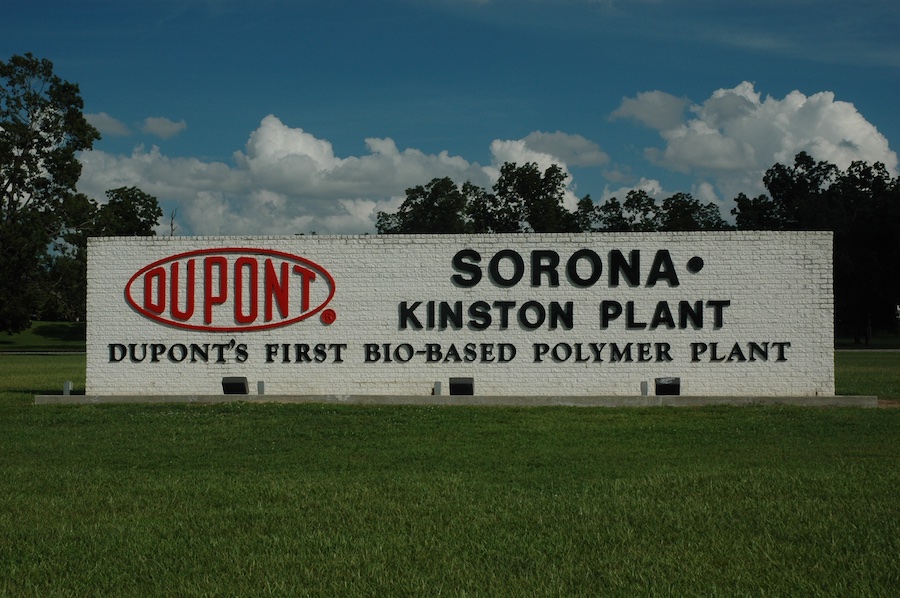
Celebrating 25 years of milestones
Since its commercial debut, the Sorona® brand has become a trusted ingredient in some of the world’s most recognizable apparel and home brands while consistently advancing the textile industry:
2000 – Sorona® launches its first commercial run for the 3G2 production line at the Kinston, North Carolina plant site, signifying the launch of the world’s first PTT polymer, known by its trademark Sorona®
2005 – Partnership with Mohawk Industries, Inc introduces Sorona® polymer in residential carpets.
2012 – Expansion into diverse apparel segments including trousers, jeans, seamless apparel, swimwear, and wrinkle-resistant outerwear
2016 – First comprehensive LCA work confirms lower energy and emissions profile compared to traditional fossil-based alternatives.
2017 – Recognized with Frost & Sullivan’s Best Practices Award for European Bio-Based Materials Company of the Year.
2018 – Kinston, North Carolina facility expansion to meet growing global demand for Sorona® polymer
2019 – Sorona® faux fur debuts on the Paris runway with Stella McCartney.
2020 – Creation of the Common Thread Fabric Certification Program to build trust and transparency in the supply chain. Sorona® sub-branded fabrics are introduced, guaranteeing performance attributes and a minimum level of Sorona® content in each fabric type including Agile, Aura, Luxe, Profile, and Revive.
2022 – Creation of the Global Preferred Mill Network, advancing transparency and traceability across 350+ certified mills worldwide and across more than 43 million garments
2022 – Covation Biomaterials launches as an independent business following the acquisition of DuPont Biomaterials by the Huafon Group
2022 – CovationBio and Primient Covation LLC. announce participation in Truterra™ to support sustainable, regenerative agricultural practices at scale in the U.S., and ensure sustainable U.S. corn sourcing for Sorona® feedstocks
2025 – Steve Ackerman appointed as CovationBio CEO bringing more than 15 years of specialized experience in sustainable materials innovation and strategy with a proven track record in advancing high-performance bio-based products for global markets.
2025 – Updated LCA results announced demonstrating the significant environmental advantages of Sorona® polymer compared to conventional synthetics.
Today, the Sorona® product offers its softness, stretch, durability, and warm breathability across a variety of fashion and home goods applications. Sub-brands including Agile, Aura, Luxe, Profile, and Revive are found in garments around the world, created to perform for a variety of lifestyles including activewear, outerwear, workwear, ready-to-wear, and high-fashion applications. The Sorona® signature performance can also be found in homes around the world with carpet and a variety of home goods.
Now under new leadership, CovationBio is entering its next chapter of innovation and growth reaffirming its commitment to delivering the building blocks of a circular, bio-based economy.
“From the beginning, Sorona® has been about more than performance, it’s about reshaping industries to be both innovative and responsible,” says Ackerman. “Fashion and textiles are at a critical turning point. The Sorona® journey proves that sustainable materials can scale, perform, and deliver transparency. The next chapter will be about pushing boundaries even further with renewable chemistry and responsible innovation.”