[pageLogInLogOut]

#Yarn & Fiber

Lenzing introduces new Black Towel Collection with long-lasting softness
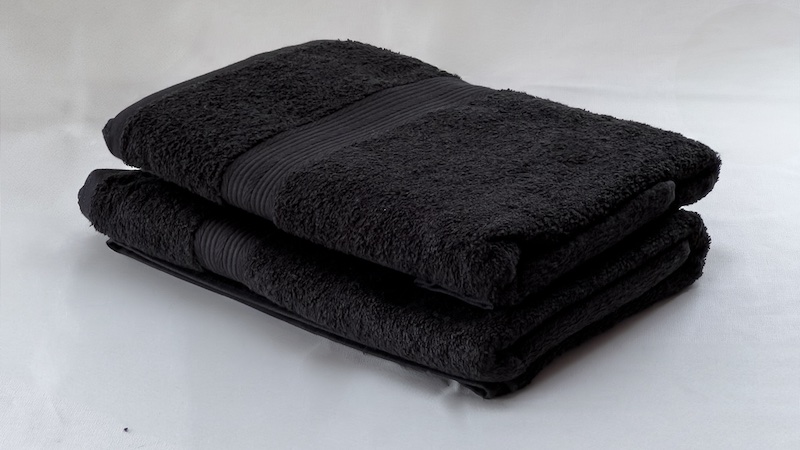
Lenzing Group, a leading global producer of wood-based specialty fibers, announces the launch of its latest Black Towel Collection made with LENZING™ ECOVERO™ branded black viscose fibers and TENCEL™ branded black modal fibers. The collection features six essential everyday washable and reusable face and body care items, from makeup removal pads, makeup removal towels, gym towels, bath towels, hand towels, hair bonnets, to beach towels, designed to cater to the ever-changing consumers’ needs for quality, responsible personal care items for every aspect of daily life.
Black Towels © 2024 LENZING


+ Lenzing’s latest Black Towel Collection features six essential everyday personal care items crafted with TENCEL™ Modal in black fibers and LENZING™ ECOVERO™ Viscose in black fibers

+ Featuring remarkable softness after repeated washes, the collection utilizes a spin-dyeing technique that not only reduces environmental impact3,4 during dyeing process, but also ensures lasting color intensity

Made with ingredients that are responsibly produced[1], the Black Towel Collection presents an alternative choice for a societal norm where conventional makeup removal products are mostly single-use disposable items, and reusable towels often get stained or discoloration due to repeated usage. The collection will bring about a refined experience to consumers through its exceptional durability, softness and color vibrancy.

Engineered for everyday use with enhanced softness and durability

The Black Towel Collection is woven with a blend of cotton and TENCEL™ Modal black fibers or LENZING™ ECOVERO™ Viscose black fibers with a unique fabric composition to enhance durability. Even after multiple washes, these products retain their softness and gentle feel on the skin, making them ideal for repeated use. Derived from controlled or certified wood sources, these specialty fibers are made from resource-saving processes, using at least 50% less carbon emissions and water consumption1. Additionally, the LENZING™ ECOVERO™ Viscose black fibers are certified biodegradable and compostable at the end of their lifecycle[2]. Both reusable and responsibly produced, this towel collection is an excellent solution for individuals looking to minimize the carbon footprint1 of their everyday care practices.

Long-lasting colour vibrancy enabled by resource-saving dyeing processes

Featuring a rich black color, the towels are dyed in the fiber stage using the spin-dyeing technique, where black color pigments are directly incorporated into the fibers. The unique process uses 50% less energy and water[3] and does not require post-dye rinses, substantially enabling a 60% decrease in carbon footprint compared to conventional dyeing methods3. The process also helps preserve color intensity even after multiple washes[4] and can mitigate the formation of cream spots caused by contact with substances like acne cream. With high colour fastness, consumers also do not have to worry about the black colour staining other garments in the washing process. Specifically, the gym towels and beach towels in this collection feature chlorine-resistant properties that minimize discoloration and fabric damage caused by exposure to chlorine in household water and swimming pools. This helps towels retain colour and quality longer, reducing the need for frequent replacement.

“Majority of the make-up removal towel offerings, including disposable cotton towels, washable microfiber, and face towels, are made with 100% cotton. As consumers become more aware of the environmental impact of their daily essential face and body care products, we see an opportunity for Lenzing to bring forth an alternative option using our cellulosic fibers,” said Ebru Bayramoglu, Head of Global Business Development in textiles business at Lenzing. “Developed in collaboration with our value chain partners, this Black Towel Collection will be an inspirational offering to be showcased at various retail outlets and highlighted during upcoming trade events. Exceptionally soft and durable even after repeated washes, our collection is set to become a popular choice among conscious consumers who want to make a difference to the world through their daily personal care rituals.”

“We are proud to work with Lenzing to develop our first Black Towel Collection. We have always loved experimenting with different fiber blends and fabric compositions to develop practical products that address the everyday needs of consumers. With this new offering, we hope that more brands and consumers will come to realize that they can be kinder to the world with small changes in their everyday habits,” said Mustafa Soylu, Research and Development Coordinator at Veritas Tekstil.

LENZING™ ECOVERO™ black fibers © 2024 LENZING


[1] TENCEL™ Modal fibers and LENZING™ ECOVERO™ viscose fibers are made with at least 50% less carbon emissions and water consumption compared to generic (unbranded) modal and viscose. The results were calculated according to LCA standards (ISO 14040/44) and are made available via the Higg Materials Sustainability Index (MSI) v3.7 by Cascale (formerly Sustainable Apparel Coalition).

[2] LENZING™ Viscose standard fibers are certified by TÜV AUSTRIA as biodegradable in soil, freshwater and marine environments, and compostable under home and industrial conditions.

[3] Calculations based on Terinte et al., 2014: Terinte, N., Manda, B.M.K., Taylor, J., Schuster, K.C., and Patel, M. (2014). “Environmental assessment of coloured fabrics and opportunities for value creation: spin-dyeing versus conventional dyeing.” Journal of Cleaner Production, Vol. 72: 127–138.; Textile processing steps being similar for modal and viscose, therefore savings are based on calculations of fabric production and dyeing via jet dyeing excl. fiber impact.

[4] Samples have been tested according to ISO 105 C10-C6 indicating marginal changes in color and no staining.

More News from Lenzing

#Nonwovens

Lenzing Group highlights scalable, bio-based nonwovens solutions at leading global industry fairs

From CIDPEX in China to Techtextil in Frankfurt and INDEX in Geneva, the Lenzing Group showcases ready-for-market, bio-based nonwoven solutions and receives industry recognition for LENZING™ Nonwoven Technology.

#Yarn & Fiber

Lenzing AG appoints Georg Kasperkovitz as Chief Executive Officer

The Supervisory Board of Lenzing AG has appointed Georg Kasperkovitz, Member of the Management Board and Chief Operations Officer, as Chief Executive Officer (CEO) of Lenzing AG with effect from June 1, 2026.

#Denim

TENCEL™ Lyocell - HV100 achieves global denim availability in six months; Vol. 2 debuts at Kingpins Amsterdam

When TENCEL™ Lyocell - HV100 debuted at last year’s Kingpins Amsterdam in October, 17 mill partners across five countries presented fabrics featuring the new fiber. Just six months on, participation has more than doubled, evolving into a global network that spans nine countries and four continents, signaling both strong industry momentum and growing demand.

#Techtextil 2026

Lenzing unveils three-tier cellulosic fiber portfolio for next generation protective wear

The Lenzing Group, a leading supplier of regenerated cellulosic fibers for the textile and nonwovens industries, today introduces Lenzing Solutions for Protective Wear. This integrated three-tier portfolio is anchored by LENZING™ FR fibers at the highest protection tier for inherent flame resistance and brings together complementary solutions including TENCEL™ Lyocell fibers, both EU Ecolabel-certified² and derived from certified or controlled wood sources³, within a unified protective wear architecture for the first time. The launch marks the most significant expansion of Lenzing’s protective wear business since the company pioneered inherently flame-resistant cellulosic fiber in 1977, and comes as the global personal protective equipment (PPE) market accelerates toward an estimated USD 130 billion by 2033⁴.

More News on Yarn & Fiber

#Yarns

Yarns and technologies in symbiosis: Biella Yarn presents Fall/Winter 2027/2028 collection “New Romance_”

Biella Yarn, the flat knitting brand of Suedwolle Group, launches new Fall/Winter 2027/2028 collection, inspired by the symbiosis of yarns and technologies – elements that blend, adapt and evolve together, forming something new without losing their origin. The name “Neu Romance_” reflects the emotional and neurological dimension of the yarns: a connection that engages the senses, experienced through material, touch and interaction. The collection is further brought to life through design collaborations, featuring selected yarns used in different design approaches.

#Recycling / Circular Economy

The textile industry in transition

Recycling, traceability, eco-design and digitalisation are among the key future challenges facing the European textile industry. The Erasmus+ project Skills4Circularity, involving 21 partners from twelve countries, is investigating the skills required to address these challenges. As the German industry partner, the Industry Association for Finishing – Yarns – Fabrics – Technical Textiles (IVGT) is bringing the industry’s perspective to the project.

#Research & Development

GenuTrace client advisory: Is your cotton supply chain UFLPA ready?

U.S. Customs and Border Protection has released updated operational guidance (CBP Publication No. 5560-0526) expanding its forced labor enforcement framework. The guidance supersedes the original 2022 UFLPA Operational Guidance and now covers all forced labor enforcement authorities — UFLPA, CAATSA, and WROs/Findings — in a single unified document. For cotton importers, the enforcement posture has not softened. It has become more structured, more documented, and more demanding. Learn more about UFLPA.

#Spinning

"We will become a recycling powerhouse"

The textile industry is now in its fourth consecutive year of crisis, while automation, artificial intelligence and recycling are reshaping the rules of the game. In this interview, Rieter CEO Thomas Oetterli discusses the first signs of a market recovery, reflects on his first three years at the helm of the company, explains the integration of Barmag, outlines Rieter’s vision of the fully automated spinning mill and highlights the strategic importance of recycling. In doing so, he explains why the new Rieter Group aims to play a leading role in transforming the textile value chain into a circular economy.

Latest News

#Natural Fibers

Cashmere specialist joins AbTF Board of Trustees

The Aid by Trade Foundation (AbTF) is pleased to welcome Brian Yu, the chief executive officer of the Artwell Group, to its board of trustees. As CEO, Brian Yu developed Artwell into the world’s largest supplier of responsibly produced cashmere knitwear.

#Recycling / Circular Economy

HKRITA signs MoU with Jeanologia and Looptworks to establish the Green Machine Circular Textile Ecosystem

The Hong Kong Research Institute of Textiles and Apparel (HKRITA) yesterday officially signed a landmark Memorandum of Understanding (MoU) with two key global partners, Jeanologia and Looptworks, to establish the Green Machine Circular Textile Ecosystem – a first-of-its-kind collaboration to accelerate the large-scale recycling of blended textiles.

#Spinning

Object Carpet tests production of rPET BCF yarn on Neumag BCF line

In a joint project with Object Carpet GmbH, Denkendorf; the Institute for Textile Technology (ITA), Augsburg; and Next Generation Recyclingmaschinen GmbH (NGR), Feldkirchen, Austria, Barmag investigated the processing of recycled polyester for BCF yarn. The goal was to evaluate the fundamental suitability of 100% recycled carpet material for reuse in carpet yarn production to create a closed-loop system in carpet manufacturing. To date, commercial rPET BCF processes have been based solely on rPET from bottle pellets.

#Composites

MEL Composites supports ELA Aviation with advanced composite materials

MEL Composites is supplying advanced composite materials and process consumables to ELA Aviation for the production of its next-generation gyroplanes. The collaboration underlines MEL Composites’ growing role in advanced aerospace mobility, providing lightweight materials designed to improve aircraft performance, manufacturing efficiency and structural reliability.

TOP