[pageLogInLogOut]

#Yarn & Fiber

A clothing that was planted: Xtep launched new PLA T-shirts

The pollution of textile and clothing industry has existed for a long time, and the green transformation is imminent. According to the United Nations, the total carbon emissions of the fashion industry exceed those of all international flights and shipping combined, accounting for 10% of global carbon emissions, making it the second most polluting industry after the oil industry. Regarding how to reduce pollution in the fashion industry, Xtep, a Chinese sporting goods brand, is providing its own solution.

A piece of clothing that was planted

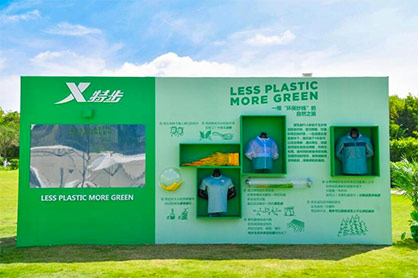
On June 3, a new environmentally friendly product, polylactic acid T-shirt, was launched by Xtep. Polylactic acid (PLA) is mainly extracted from corn, straw and other starch-containing crops and transformed into polylactic acid fiber after spinning. The clothes made of polylactic acid fiber being buried in a specific environment can be degraded naturally within one year. This method of replacing plastic chemical fiber with polylactic acid can reduce the harm to the environment from the source. 
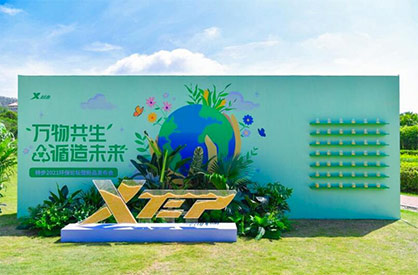
A Clothing That Was planted?Xtep launched new PLA T-shirts (Photo: Business Wire)


As early as June 5 2020, the World Environment Day, Xtep launched the world's first PLA windbreaker, becoming the first enterprise in the industry to overcome the problem of PLA coloring and achieve the production of polylactic acid products. At that time, PLA accounted for 19% of the whole trench coat fabric. One year later, the proportion of today's PLA T-shirts has risen sharply to 60%.

Xtep said that the PLA content of knitted sweaters scheduled to go on sale in the second quarter of 2022 will be further increased to 67%, and in the third quarter of the same year, 100% pure PLA trench coats will be on the market, really coming from the field, going to the field, and "sowing" clothes. In the future, Xtep will gradually achieve layers of breakthroughs in the application of PLA products, and strive to achieve more than one million pieces of PLA products in a single season before 2023. 

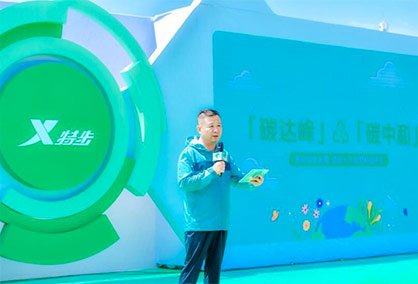
At the press conference on the same day, Xtep also displayed all the environmentally friendly products of the group's "environmental protection family". In addition to the ready-made clothing made of PLA material, there are also shoes, clothing and accessories made of organic cotton, serona, DuPont paper and other environmentally friendly materials. The design and production of environmentally friendly products is not only limited to the main brands of Xtep Group, its new brands Saucony and Palladium also join the exploration in the field of environmental protection. It is understood that at present, products made of environmentally friendly materials account for 30% of the entire category of Xtep Group.

It is supported by the powerful patron of Xtep environmental protection technology platform. Xtep environmental protection technology platform promotes environmental protection from the three dimensions of "raw material environmental protection", "production environmental protection" and "environmental protection by consumption", and has become the main driving force of the group's green material innovation. Among them, "raw material environmental protection" and "production environmental protection” not only attach importance to the environmental protection of raw materials, but also attach importance to the environmental protection of the production process. Because of the non-high temperature resistance of PLA, the dyeing temperature and setting temperature of the production process are 0-10 °C and 40-60 °C, respectively, which are lower than those of ordinary polyester. If all the fabrics of Xtep are replaced with PLA, 300 million cubic meters of natural gas can be saved per year, which is equivalent to 2.6 billion kilowatt-hours of electricity and 620000 tons of coal consumption.


Lu Peng, a researcher at the Institute of Sociology of the Chinese Academy of Social Sciences, believes that the sense of social responsibility of China's private enterprises is constantly improving, and the awareness of collective environmental protection is becoming the mainstream of China's private enterprises. The practice of sustainable development by a larger company like Xtep will bring great inspiration to the "concept of justice and benefit" of Chinese and even global counterparts.
© 2021 Business Wire


Xtep Group is a leading enterprise of sporting shoes and clothing in China. It was founded in 1987 and listed in Hong Kong in 2008. In 2019, Xtep signed Jeremy Shu-how Lin to enter the field of basketball. In the same year, Xtep acquired the development, marketing, and distribution of Saucony and Merrell in mainland China, Hong Kong, and Macau, and wholly acquired K-Swiss and Palladium brands. In 2020, Xtep Group's revenue exceeded 8.1 billion yuan.
© 2021 Business Wire


For further information, please visit:

https://en.xtep.com

https://global.xtep.com

https://global-uk.xtep.com

https://www.facebook.com/XTEPSPORTS

https://www.instagram.com/xtepofficial/


More News from TEXDATA International

#Texprocess 2026

Texprocess 2026: Automation, digitalisation and AI reshape textile processing

Investment decisions in textile processing have become increasingly complex. Rising energy prices, labour shortages and geopolitical uncertainties are forcing companies to prioritise technologies that deliver measurable improvements in efficiency and process stability. This applies not only to apparel production, but also to the processing of technical textiles and high-performance materials. Modernisation projects are therefore being evaluated more selectively – but the pressure to upgrade production systems continues to grow. Texprocess 2026 reflects this tension between cautious investment behaviour and increasing technological demand.

#Techtextil 2026

Textile Chemicals & Dyes: Innovation in Textile Chemistry moves into focus at Techtextil 2026

From PFAS-free finishes and water-saving dyeing technologies to advanced coatings and recycling-compatible formulations, innovation in textile chemistry is accelerating across the industry. Reflecting this development, Techtextil 2026 introduces Textile Chemicals & Dyes as a dedicated product segment, highlighting the growing role of chemical solutions in shaping the next generation of technical textiles.

#Recycling / Circular Economy

textile.4U publishes special edition “Top 100 Textile Recycling Companies 2025”

With a comprehensive 176-page special edition, textile.4U is dedicating its latest issue entirely to one of the most dynamic and influential topics in today’s textile industry: textile recycling. The new issue, published exclusively in high-quality print, presents the Top 100 textile recycling companies researched and selected by TexData – organizations that already play a key role in the transition to circular textiles or are expected to have a significant impact in the near future.

#Recycling / Circular Economy

Responsible Textile Recovery Act of 2024 signed by Governor

Senator Josh Newman (D-Fullerton) is proud to announce that Senate Bill 707 (SB 707), the Responsible Textile Recovery Act of 2024, has been signed into law by the Governor of California, Gavin Newsom. This groundbreaking legislation establishes the country’s first Extended Producer Responsibility (EPR) textile recycling program, marking a significant step forward in the state’s efforts to combat waste and promote sustainability.

More News on Yarn & Fiber

#Man-Made Fibers

Lenzing advances its transformation: Higher EBITDA, stronger free cash flow and more than EUR 200 million in cost savings

The business performance of the Lenzing Group in 2025 was affected particularly in the second half of the year by external factors such as international tariff measures, subdued demand and declining market prices. As a result, revenue decreased slightly by 2.3 percent to EUR 2.6 billion, primarily due to lower fiber sales volumes and lower prices for fibers and pulp, which were further negatively impacted by currency developments. Nevertheless, thanks to the comprehensive Performance Program, Lenzing was able to improve its operating performance and key financial indicators compared with the previous year.

#Man-Made Fibers

“Lead Transformation – Generate Impact”: Lenzing presents its 2025 Annual and Sustainability Report

The Lenzing Group has published its 2025 Annual and Sustainability Report, entitled LEAD TRANSFORMATION – GENERATE IMPACT. The report shows how Lenzing is actively shaping change in the industry and making a lasting impact: economically, ecologically, and socially. Lenzing is consistently focused on the future: with targeted investments in premiumization, excellence, innovation, and sustainability, the company is strengthening its position as a leading provider of sustainable, cellulose-based premium fibers. The combined report is available in digital format.

#Raw Materials

Lenzing Group positions bio‑based materials as a strategic asset for Europe’s economic security

The Lenzing Group, a leading supplier of regenerated cellulose fibers for the textile and nonwovens industries, hosted a high‑level roundtable in Brussels to discuss how bio‑based materials can strengthen Europe’s economic security and support the shift toward a fossil‑free future. Organized in cooperation with Euractiv, the event brought together representatives of the European Commission, the UK Mission to the EU, academia, civil society, and industry.

#Yarn & Fiber

Teijin Carbon strengthens high‑end sports offering with advanced prepreg and resin technologies for next‑generation bicycle performance

High‑end bicycle manufacturers are entering a new era in which modern frames and components must be lighter, stiffer, tougher and more sustainable – all while enabling fast, repeatable and cost‑efficient production. To support this shift, Teijin Carbon is expanding its portfolio of advanced prepreg systems developed specifically for premium road, gravel and mountain bike applications.

Latest News

#Techtextil 2026

Gebr. Otto highlights versatility at Techtextil with regional supply chains, yarn innovations and new hygiene segment

At this year’s Techtextil, Gebr. Otto places its versatility at the center of its presentation. In addition to spinning, twisting and dyeing – traditionally focused on fine cotton – textile processors will also find a competent development partner for technical specialty solutions. The Dietenheim-based spinning mill has now built up a decade of experience in the production of technical yarns, particularly from aramids. A new hygiene segment has also been established, where yarns for medical and hygiene products are currently being produced. In the future, this department could also develop textile products for the food sector. Gebr. Otto will once again be present at the BW-i joint stand, booth D81, hall 12.1. What is wound onto the spool is determined by the customer: Gebr. Otto develops according to specific customer requirements and transforms its own ideas into yarn innovations.

#Europe

Commission presents proposal for EU Inc. - unlocking the full potential of the Single Market for Europe's entrepreneurs

Today, the European Commission presented its proposal for EU Inc., a new single set of corporate rules, building the cornerstone and starting point for the EU's 28th regime. EU Inc. is an optional, digital-by-default European corporate framework. It will make it easier for businesses to start, operate and grow across the EU – incentivising them to stay in Europe, and encourage those who once looked elsewhere to return.

#Man-Made Fibers

OnceMore® from Södra brings end-to-end traceability for circular Man-made Cellulosic Fibers (MMCF) using TextileGenesis

OnceMore® from Södra, the world’s first large-scale process for recycling blended fabrics into high‐quality dissolving pulp, will begin using TextileGenesis, a Lectra company, to strengthen traceability from raw material to retail across the value chain. OnceMore® produces dissolving pulp made from blended textile waste and wood sourced from responsibly managed Swedish forests. By integrating TextileGenesis, OnceMore® supports the growing need for verified data and secure, transparent tracking throughout increasingly complex supply chain.

#Sustainability

Experts publish APAC policy priorities

Cascale today announced the publication of its APAC Policy Priorities Paper, developed by the Asia-Pacific (APAC) Policy Member Expert Team (MET) to identify key regional sustainability challenges and provide practical, aligned recommendations for policymakers and industry stakeholders across Asia-Pacific.

TOP