[pageLogInLogOut]

#Yarn & Fiber

Teijin to mass produce nanofiber filament made from recycled polyester

Teijin Frontier Co., Ltd., the Teijin Group fibers and products converting company, announced today that it has developed technology to mass produce a new version of its Nanofront® ultra-fine polyester, which the company believes is the world’s first nanofiber to be made from recycled polyester raw materials. Moreover, the new technology will enable Teijin Frontier to produce all of its polyester fiber products with recycled raw materials.

Teijin Frontier expects filament and textiles made with this new version of Nanofront® made from recycled polyester materials to replace conventional Nanofront® made from petroleum-derived raw materials in a wide range of fields, including sportswear, functional clothing, industrial uniforms and more. The company is forecasting sales of recycled-polyester Nanofront® to reach JPY 300 million in fiscal 2021 and JPY 800 million in fiscal 2025. 
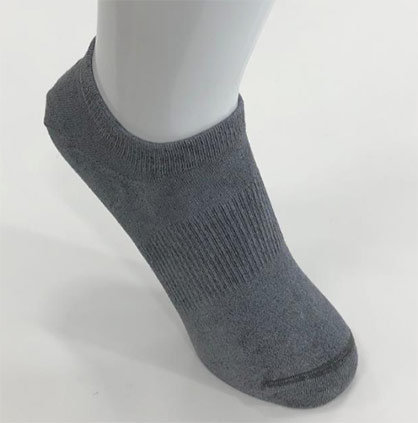
Sample sock made with Nanofront® recycled-polyester nanofiber © 2021 Teijin


Nanofront® made from recycled polyester offers the same functions as conventional Nanofront® made from petroleum-derived raw materials:
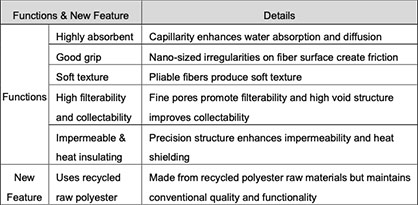


In recent years, the demand for Nanofront® has expanded in a wide range of fields due to growing needs for materials offering high functionality, such as absorbency and grip, and excellent comfort including soft texture and low skin irritation. Meanwhile, the demand for recycling raw materials is rapidly increasing, but it has been difficult to mass produce ultra-fine fibers made from recycled polyester due to needs for high-level polymer control and spinning. Teijin Frontier has now developed new polymer-control and spinning techniques for Nanofront® made from recycled polyester materials. The key was the company’s proprietary “sea-island” composite-fiber processing technology, which distributes two types of polymers into the fiber’s "sea" and "island" parts, then dissolves and removes the "sea" part using an alkaline, etc. treatment, and finally extracts only the "island" part as raw yarn.


More News from Teijin Aramid

#Yarn & Fiber

Teijin Aramid: Taiichi Machida to succeed Peter ter Horst as CEO

Peter ter Horst will step down as Chief Executive Officer at the end of 2025, after 19 years of dedicated service. Effective October 1, 2025, Taiichi Machida will take over as CEO.

#Yarn & Fiber

Teijin announces availability of DPP-compliant products aligned with Europe’s ESPR Environmental Regulation

Teijin Limited announced today that it has started rolling out initiatives to enable aramid fibers and carbon fibers to be accompanied by Digital Product Passport (DPP) technology, which enhances supply chain transparency by verifying the origins of materials and supporting sustainability claims. The company is using the supply chain traceability system from Netherlands-based Circularise B.V., in which Teijin has invested since November 2024, to develop DPPs for each product.

#Composites

Teijin Carbon showcases new eco-friendly Tenax Next™ R2S 513 6mm short carbon fiber at JEC World 2025

Teijin Carbon, a leading manufacturer of carbon fiber products, is presenting its latest development in sustainable materials at JEC World 2025 (hall 6, G22). New Tenax Next™ R2S 513 6mm is a short carbon fiber product in rice-shaped form for reinforcing thermoplastic compounds that not only offers exceptional performance characteristics but also reinforces the company’s commitment to environmental responsibility and circularity.

#Recycling / Circular Economy

Teijin to invest in Circularise B.V. and adopt its supply chain traceability platform to promote the Circular Economy

Teijin Limited announced today that it will invest in Circularise B.V., a company based in The Hague, Netherlands, which develops product traceability management systems using blockchain technology. Teijin will also implement Circularise’s software to improve visibility into its global supply chain. Circularise’s proprietary “Smart Questioning”(*) solution, which utilizes Zero-Knowledge Proof (ZKP) technology, provides both anonymity and transparency to ensure a highly reliable product traceability system.

More News on Yarn & Fiber

#Man-Made Fibers

DYNEEMA® and NP Aerospace advance personal protection for military servicewomen

Dyneema®, owned by Avient Corporation, an innovator of materials solutions, is supplying its high-performance unidirectional (UD) materials to world-leading armor manufacturer NP Aerospace, enabling the production of armor systems designed specifically to fit the female body. With 2,000 new armor systems, including 4,000 plates, made in the United Kingdom (UK) and delivered in June 2026, this collaboration addresses a long-standing lack of high-quality personal protection specially built for female defense and security personnel.

#Man-Made Fibers

Grasim Industries announces fresh investment of ₹3094 Crore to expand Lyocell capacity

Grasim Industries Limited, the flagship company of the Aditya Birla Group and a global leader in cellulosic fibres, today announced an investment of ₹3,094 crore, for Phase II Lyocell capacity of 110K TPA at Harihar, Karnataka. This expansion will consist of 2 lines of 55K TPA (150 Tons per day) each. The first line is expected to be commissioned by 2028, and the second line is expected to be commissioned by 2030.

#Yarn & Fiber

Lenzing AG appoints Georg Kasperkovitz as Chief Executive Officer

The Supervisory Board of Lenzing AG has appointed Georg Kasperkovitz, Member of the Management Board and Chief Operations Officer, as Chief Executive Officer (CEO) of Lenzing AG with effect from June 1, 2026.

#Yarn & Fiber

Next week’s focus: Intertextile Shenzhen & Yarn Expo Shenzhen fuse textile tradition with sustainable, digital trends

Fashion will not be left behind in one of the world’s undisputed tech and manufacturing capitals. Which is why next week, at Intertextile Shenzhen Apparel Fabrics and Yarn Expo Shenzhen 2026, the organisers have made special efforts to integrate textile topics such as materials innovation, holistic sustainability, digitalisation and AI. Yet, from 9 – 11 June at the Shenzhen Convention and Exhibition Center, the platform also includes timeless tradition and heritage-inspired evolution in equal measure. Across both shows, over 600 exhibitors from 11 countries and regions are set to showcase everything from Peruvian alpaca wool fabrics to tea-derived fibres, while their fringe programmes will explore diverse solutions along the entire value chain.

Latest News

#Raw Materials

Better Cotton Initiative welcomes new and returning Council members

The Better Cotton Initiative (BCI) has confirmed a series of appointments and reappointments to its Council, the multistakeholder board responsible for BCI’s strategic direction.

#Man-Made Fibers

Textile Exchange publishes comprehensive polyester LCA study

Textile Exchange has released a new Life Cycle Assessment (LCA) study on polyester, providing detailed data on the environmental impacts of both virgin and recycled polyester production. The study aims to strengthen understanding across the fashion, textile and apparel industries and support more informed decision-making regarding polyester sourcing and production.

#Textiles & Apparel / Garment

Autopsy, the new trend book by Texworld Apparel Sourcing Paris, deciphers the fractures of our time through 12 creative signals

Presented during Texworld Apparel Sourcing Paris, from August 31 to September 2, 2026, at the Paris-Le Bourget Exhibition Center, Autopsy offers a reinterpretation of the contours of fashion in a world undergoing profound transformation, balancing radical introspection and sensitive renewal.

#Associations

Keeping products moving with Swedish automation at FILTECH 2026

At FILTECH 2026, taking place in Cologne from June 30th to July 2nd, members of TMAS – the Swedish textile machinery association – will highlight how the country’s engineering expertise is enabling filtration manufacturers to increase productivity, improve traceability and reduce dependence on labour-intensive manual processes.

TOP



