[pageLogInLogOut]

#Weaving

Paris Arc de Triomphe to be wrapped: Fabric is made in Germany by SETEX
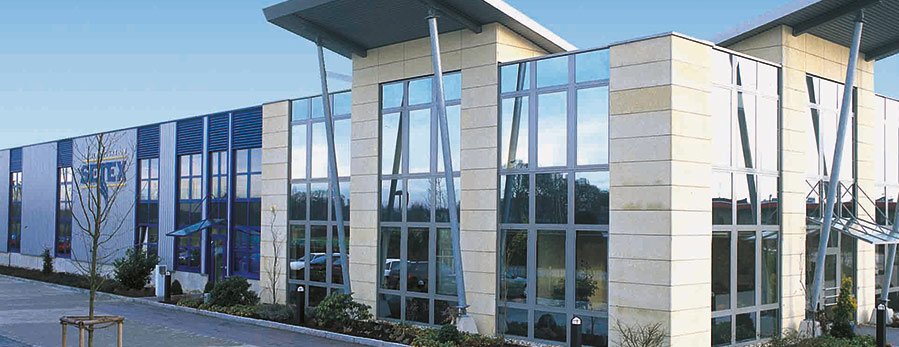
© 2021 SETEX
It all started in the mid-1990s in the reunified Berlin: SETEX-Textil GmbH supplied the fabric for the wrapping of the German Reichstag. For what was probably the last project of the artist couple Christo and Jeanne-Claude, the weaving machines were running at full speed again. For the wrapping of the Arc de Triomphe in Paris, the world-famous artists relied on the expertise of the textile specialist for the fifth time. Blue and grey polypropylene fabrics were produced at the Greven production site, which will completely cover the Arc de Triomphe in Paris from 18 September.
  • SETEX supplies more than 25,000 square metres of fabric
  • First collaboration with Christo in 1994
  • Company has been involved in five works created by Christo

It is Christo's last gift to the city of Paris; he has been planning this project for 60 years. After his death last year, Christo cannot witness the wrapping of the Arc de Triomphe at the weekend. In North Rhine-Westphalia the eyes are also on the French capital: SETEX-Textil GmbH, headquartered in Dingden, has supplied the fabric for the fifth time – but it was produced at the Greven site. "The relationship with Christo has grown over a long period of time - a very friendly cooperation, by the way," says Stefan Ott from the sales department for technical textiles of SETEX.

The cooperation began in the 1990s. The contact came about through Stefan Schilgen and his company of the same name, which was bought by SETEX in 2012. The company boss was an art lover and met Christo by chance when the artist was looking for a textile to cover the Reichstag. Schilgen was able to help - and the friendly conversations eventually turned into a partnership. Now, for the fifth time, the textile company has supplied the textiles for a project by the artist.

Stricter fire safety regulations after Notre Dame

Since Christo could no longer travel personally from his home in New York to Germany to plan the wrapping of the Arc de Triomphe due to his age, the coordination was done through confidants and mutual friends, as Ott explains. There were a few challenges to overcome. In addition to the restrictions imposed by the coronavirus pandemic, the Notre Dame fire in 2019 led to fire regulations being tightened. "We had to re-sample everything again," Ott says. The fabric had to be coated accordingly to make it non-flammable.

The colour design also caused smoking heads at SETEX. "We are an industrial company that produces technical fabrics for technical applications, for example for the automotive industry. To us, for example, the colour of the textiles hardly plays a role.


It took a long time until the colour was finally right and until we had exactly the right feel," says Ott. "For Christo, visuals and haptics were naturally more important than technical properties. That's why we had to constantly make new designs. Until the final product was in the right colour and yarn thickness, there were several trials and numerous meetings." Even a new weaving machine was purchased for the project.

Fabric can be recycled – just as Christo intended

At the Arc de Triomphe, the substructure for the fabric panels is now completely finished, and on Saturday the approximately 25,000 square metres of fabric – a pure polypropylene fabric in the colours grey and blue – will be completely unrolled. The material used for the artwork is normally used for the filtration of food. "By changing the structure and colour, however, we were able to transform the fabric optimally for this project," says Ott. The material also has the advantage of being 100 percent recyclable. "That was always in Christo's mind: he wanted to create works of art that everyone could look at. But in the end, no one can take anything away from it. That's why this fabric will be recycled and can then be used for another purpose," the textile expert explains.

At SETEX, anticipation is growing more and more. "It is an exciting thing to know that you are working for a world-famous artist. It's not an everyday thing," says Ott. "I have my heart set on going to Paris to see the artwork, and I think some of our staff are planning to do the same."

More information:

http://www.setex-textil.de/en

http://www.setex.de/en/



More News from TEXDATA International

#ITM 2026

ITM 2026: The new geography of textile production

New production hubs are emerging across North Africa and Central Asia, while Türkiye is accelerating its transformation toward higher-value, technology-driven and more sustainable textile manufacturing.

#Research & Development

“Production is a product”

From technical textiles and AI-driven robotics to the limitations of textile circularity: Professor Dr Thomas Gries looks back on more than two decades of development at ITA Aachen. In the interview, he explains why production technology remains a decisive success factor, discusses international collaborations and innovation ecosystems, and shares his views on the transformation of production landscapes and the challenges facing an increasingly regulated industry.

#Knitting & Hosiery

“We need to move away from the price trap and return to a value-driven mindset.”

With its new Textile Innovation Center, KARL MAYER is sending a strong signal for innovation, collaboration, and the future of textile applications. In this interview, Karl Josef Mayer discusses new opportunities in warp knitting, the processing of staple fibres, recycling, the changing role of machinery manufacturers, and why the textile industry must once again focus more strongly on the value of textiles. by Oliver Schmidt

#Associations

“Innovation, resilience and international experience remain the great strengths of the Swiss textile machinery industry”

Geopolitical uncertainty, growing competitive pressure from China, new free trade agreements and the shift towards a circular economy are currently reshaping the global textile industry. In this interview, Cornelia Buchwalder discusses the current mood within the Swiss textile machinery sector, the industry’s distinctive innovative strength, new market opportunities in India and Asia, and the technological trends that could shape the upcoming trade fair cycle leading up to ITMA 2027.

More News on Weaving

#Weaving

Lindauer DORNIER GmbH welcomes new apprentices and dual-study students

For 22 new “DORNIER Talents”, these days mark the beginning of a new chapter at Lindauer DORNIER. For the family-owned company, in-house training is a key pillar in developing skilled professionals and retaining them within the company for the long term.

#Weaving

"Dynamic markets do not only create uncertainty – they also create opportunities."

Volatile markets, increasingly complex materials and growing demands for flexibility are changing the weaving industry. At the same time, new opportunities are emerging in technical textiles, filtration, composites and many other specialised applications. Since taking over as Head of DORNIER's Weaving Machines Product Line at the beginning of 2026, Yvonne Schuberth has been helping to shape this development. In this interview with TexData, she explains why process stability and customer proximity remain the foundation of innovation, how digitalisation is transforming weaving mills, and why she believes the future belongs to technologically demanding applications.

#Weaving

More patterns, less effort: the MULTI-MATIC® at Rohleder

Rohleder is one of Europe’s most modern weaving mills. For over 80 years, the family-owned company has been developing and manufacturing premium fabrics for brands, retailers and private customers – 100% Made in Germany. This success is made possible by a consistent focus on design, quality, and functionality, as well as by continuous investment in state-of-the-art production facilities. Rohleder also relies on innovative technologies in warp preparation and has been collaborating with KARL MAYER for many years. As recently as 2023, a MULTI-MATIC® was delivered to the company’s headquarters in Konradsreuth.

#Knitting & Hosiery

Groz-Beckert at Igatex 2026

From October 15 to 18, 2026, Groz-Beckert will present its latest innovations and solutions across the product areas of Knitting, Weaving, Sewing and Spinning at Igatex in Pakistan (Hall 1, Booth A-1-08).

Latest News

#Recycled Fibers

RE&UP’s Next-Gen Cotton fibers power Zalando private label t-shirt collection crafted from innovative recycled textiles

RE&UP Recycling Technologies’ Next-Gen Cotton powers a new collection from Zalando’s private labels, marking a step forward in bringing textile-to-textile recycled fibers into commercial fashion production. Launching on Zalando in August, the collection comprises five t-shirts across YOURTURN by Zalando and Even&Odd by Zalando, made from a circular-knit fabric blending 80% organic cotton with 20% RE&UP Next-Gen Cotton — textile-to-textile recycled fiber produced from textile waste. This is the first time RE&UP's recycled fibers feature in Zalando's private label assortment.

#Heimtextil 2027

Heimtextil Trends 27/28: ‘Home-Maxxing’ between performance and respite

Sleep better, recover faster, live more efficiently: the desire for optimisation has long since reached our homes. Under the title ‘Home-Maxxing – The Performance of Everyday Living’, Heimtextil Trends 27/28 show how our relationship with efficiency-driven thinking and technology is influencing the design of spaces and textiles. The more sleep, wellness, routines, materials and spaces are optimised, the stronger the desire for a home that does not demand even more of us.

#Recycled Fibers

Driving circularity with Uster Recycled Fiber Matrix

The textile industry’s commitment to circularity continues to accelerate, and mechanical recycling is viewed as a targeted approach to cutting textile waste and its environmental impact. At the forefront of this drive, Uster has developed the Recycled Fiber Matrix, a two-dimensional assessment of mechanically recycled fibers to guide optimum processing and end-uses.

#Digital Printing

Mimaki advances DTF productivity and stability with new TxF330-800

Mimaki Europe, a leading manufacturer of industrial inkjet printers and cutting plotters, announces the TxF330-800, its new direct-to-film (DTF) printer. Designed to support stable, high-quality garment decoration in demanding print environments, the system combines automated maintenance, expanded white ink capacity and advanced production capabilities to streamline workflow.

TOP