[pageLogInLogOut]

#Textiles & Apparel / Garment

Fashion For Good museum opens final exhibition “What Goes Around Comes Around”

The Fashion for Good museum in Amsterdam marks its 6 year journey with a special fashion exhibition focused on circularity, called What Goes Around Comes Around. Honing in on how circularity plays out in different circles of influence, the exhibition showcases inspirational displays that make tangible what a circular fashion industry will look like. What Goes Around Comes Around pays homage to the extraordinary work of pioneering artists, innovators and designers working to shift the fashion industry with new solutions. The exhibition opens January 27, 2024 and will be open to the public for 5 months.

It is the grand finale, as the Museum is closing its doors. As such it will be the Museum’s final call to collective action, which the fashion industry still so highly needs.

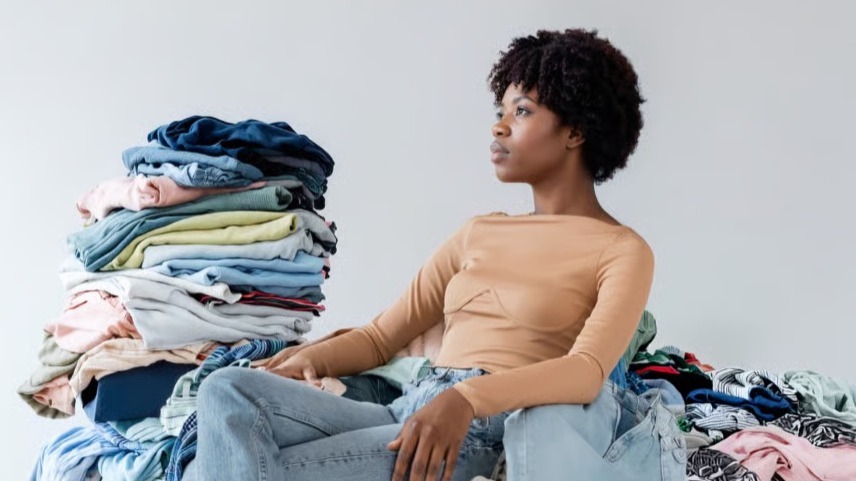
Today’s fashion industry is caught in a vicious cycle of ‘take-make-waste’ and this system has a growing negative impact on people and the planet. For instance, in Europe, the average consumer is responsible for 15 kilos of textile waste per year and these numbers are increasing. To address this, we need action from individuals, the industry and society alike to go from a linear take-make-waste model into one that is circular by design.

The Fashion for Good Museum is inviting you to come visit its final exhibition and learn from concrete examples, to understand the current state of the fashion industry, gain the tools for taking individual or collective action and be inspired by circular fashion available today. 
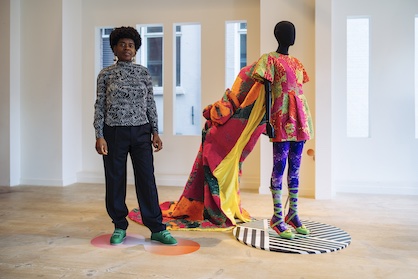
Fashion designer Marga Weimans presenting her garment Wonderland © Photographer Elzo Bonam


Designing for circularity means we need to design without creating waste or pollution, as all materials are continually reused instead of discarded. A circular system is restorative and regenerative and reduces pressure on natural resources. The ultimate goal of the exhibition is to put circularity into practice, help people envision a circular economy based on community practices and empower visitors to take collective action, starting in the museum but extending to their homes and daily lives.

We hereby invite you one last time to join the Good fashion movement, visit our final exhibition and contribute to the urgent action needed. We have exactly 131 days until World Environment Day on June 5th, marking the final day of our final exhibition.
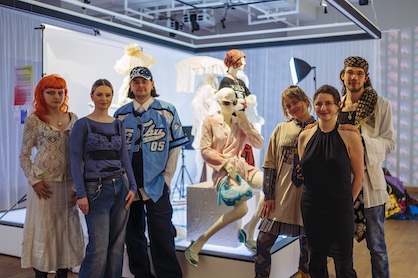
Design collective The Patchwork Family presenting their garments in the Fashion for Good Museum © Photographer Elzo Bonam


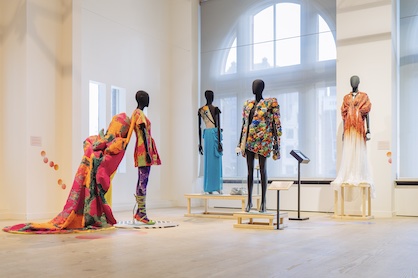
Selection of looks of the What Goes Around Comes Around exhibition © Photographer: Elzo Bonam


ABOUT THE EXHIBITION

“We are highlighting three areas in What Goes Around Comes Around", explains curator Sophie Jager-van Duren at the Fashion for Good Museum. “First: new work by local artists Atelier Reservé and The Patchwork Family, design collectives working towards circularity, demonstrating what is happening right now. We are also showing looks from established designers BOTTER, Ronald van der Kemp and Marga Weimans, Yuima Nakazato and Nicole McLaughlin. Second, the community, with an installation for visitors to participate in, planting the seed that we need each other to change the fashion system. Lastly, the industry - honing in on examples of innovations and technologies. We invited designers to create new work with circular materials including Living Ink, MIRUM, Altmat and Biophilica.”

Katrin Ley, Managing Director of Fashion for Good adds: 

“What Goes Around Comes Around showcases looks from recent capsule collections featuring implemented innovations such as Circ, Infinited Fiber Company, Ambercycle and Renewcell, demonstrating that next gen solutions aren't just a future fantasy - but are ready for market now.” 

Through the exhibition and its public programme, which consists of interactive workshops and educational events, the museum functions as a community space where visitors are invited to learn, gain new perspectives and are exposed to inspiring examples, building the skills and knowledge to create positive change. The upcoming few months there are multiple events, educational toolkits and other opportunities to join us, all open for the public, keep an eye out on our website and social media channels for the latest updates.

The exhibition is open for the public from Saturday 27th of January until June 5th 2024, marking World Environment Day on June 5th as the final closing day of the museum.

You can buy museum tickets here:

https://tickets.fashionforgood.com/en/tickets

More News from Fashion for Good

#Textile chemistry

Fashion for Good launches DW(O)R-X to navigate the emerging landscape of PFAS-free finishes

Fashion for Good announced the launch of Project DW(O)R-X, a collaborative initiative designed to benchmark PFAS alternative durable water- and oil-repellent (DW(O)R) chemistries. Responding to growing market demand for alternatives to PFAS‑based finishes, the project aims to generate reliable, comparable data that can support informed sourcing decisions and the assessment of emerging chemistries.

#Sustainability

Closing the Footwear Loop reveals challenges and opportunities for circular footwear

The footwear industry faces one of the most complex circularity challenges in the fashion sector. A new Phase 1 report from the Fashion for Good initiative Closing the Footwear Loop, developed together with Circle Economy, provides new insights into the composition, condition and recycling potential of post-consumer footwear waste.

#Recycling / Circular Economy

Project REWEAR investigates diverse economies of rewear as a global practice of circularity

Every year, European households discard millions of tonnes of clothing. Around a quarter of what gets separately collected is exported, much of it classified as rewearable. A significant share ends up in markets like Kantamanto in Accra, Ghana, where an estimated 15 million garments arrive every week. New research published today reveals what happens when that clothing arrives.

#Recycling / Circular Economy

Solving the Feedstock Gap: Unlocking Post-consumer Feedstocks for Textile-to-Textile Recycling in Europe

Fashion for Good launches Project FAE (Feedstock Activation Europe) to develop the sorting and pre-processing infrastructure needed to channel non-rewearable post-consumer textiles into textile-to-textile (T2T) recycling at scale. The project is a practical response to one of the most pressing problems in textile circularity: making post-consumer waste a viable, commercially competitive raw material for recyclers.

More News on Textiles & Apparel / Garment

#Textiles & Apparel / Garment

C&S strengthens its governance to support its evolution

C&S announces the appointment of Marco Lucietti to its Board of Directors. With extensive international experience across the textile and denim industries, Lucietti will work alongside CEO Federico Corneli, contributing to the company’s managerial development, organizational structure and long-term strategic direction.

#Textiles & Apparel / Garment

Carrington Textiles publishes third Sustainability Report

Carrington Textiles has announced the publication of the third Sustainability Report from the RTS Textiles Group, highlighting another year of progress towards more responsible manufacturing across its global operations. The report outlines continued investment in technologies and initiatives designed to improve environmental performance and support long-term business resilience across the Group’s manufacturing facilities in the UK, Portugal and Pakistan.

#Textile processing

YKK develops concept EXCELLA® zipper tape using nonwoven fabric partially derived from used clothing

YKK Corporation has developed a concept version of its premium EXCELLA® zipper series made from nonwoven fabric sheets created by fiberizing used clothing and other textile materials. Based on a proposal by fashion designer Yuima Nakazato, this item was created as a result of collaboration between Nakazato, Seiko Epson Corporation and YKK. The concept zipper was incorporated as a material component for pieces in the newest YUIMA NAKAZATO Couture Collection, “INFERNO,” which was unveiled in Paris, France on July 8, 2026.

#Textiles & Apparel / Garment

Texworld Apparel Sourcing Paris highlights evolving global sourcing landscape

From 31 August to 2 September 2026, Texworld Apparel Sourcing Paris will bring together more than 1,000 international exhibitors at Paris-Le Bourget Exhibition Centre. This edition reflects the new global balance of textile and apparel sourcing, highlighting a strong diversity of sourcing countries — some unexpected.

Latest News

#Functional Fabrics

PERFORMANCE DAYS announces new focus topic & forums for October 2026

With its upcoming October 13–14, 2026 edition, PERFORMANCE DAYS is placing the spotlight on one of the textile industry’s most important transformations: “Bio-Based Materials – From Fiber to Fabric”, a two-part Focus Topic exploring the future of bio-based innovation across the textile value chain. Part 1, presented in October 2026, will focus on fibers and next-generation material developments, while Part 2 at the March 2027 edition will shift the perspective toward dyeing, finishing, additives, and processing technologies.

#Nonwoven machines

MENANG rapidly resumes production with new ANDRITZ airlay line after major fire

MENANG, a Malaysian manufacturer of nonwoven automotive components, has resumed production after a major fire severely damaged its airlay line in mid-March 2026. A new airlay line supplied by ANDRITZ enabled production to restart within only four months.

#Exhibitions & Events

Febratex 2026 to be the largest edition of the leading textile trade fair in the Americas with 10 exhibition halls

Febratex 2026 will be the largest edition in the history of the leading textile trade fair in the Americas. Dedicated to the textile and apparel manufacturing industries, the event will take place from August 18–21, 2026, in Blumenau, Santa Catarina, Brazil, with a strong focus on technology, sustainability, and business generation.

#Raw Materials

Cotton Brazil Dialogues field trip brings international stakeholders closer to Brazil’s cotton production chain

How do you build trust across the global textile value chain? By opening the farm gates. This is the principle behind the Cotton Brazil Dialogues. At the end of July, the programme welcomed its first group of international participants for a five-day immersion into Brazilian cotton production, combining field visits with technical workshops to showcase the quality, sustainability, innovation and traceability behind one of the world’s leading cotton origins.

TOP