#Textiles & Apparel / Garment
The choice of quality and sustainability-focused fashion brands; ‘Naturally’ Elyaf Tekstil
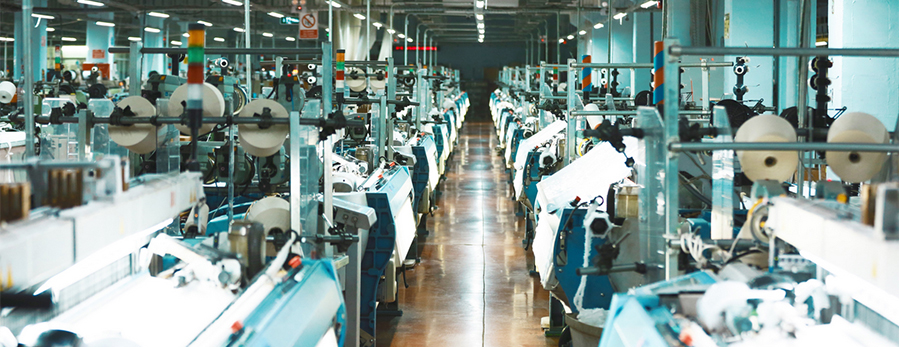
Elyaf Tekstil, one of Türkiye’s leading textile manufacturers, has managed to become a fabric brand preferred by global fashion and retail brands with its production power and vision of sustainability. The company continues its activities in Bursa, one of the traditional textile centres of Türkiye and is among the trendsetters of the industry with its fabric collections exclusively prepared for its customers. Elyaf Tekstil, with its own design and R&D departments, puts its signature on high-quality, functional, exclusive woven fabrics demanded by fashion from ready-to-wear to haute couture collections.
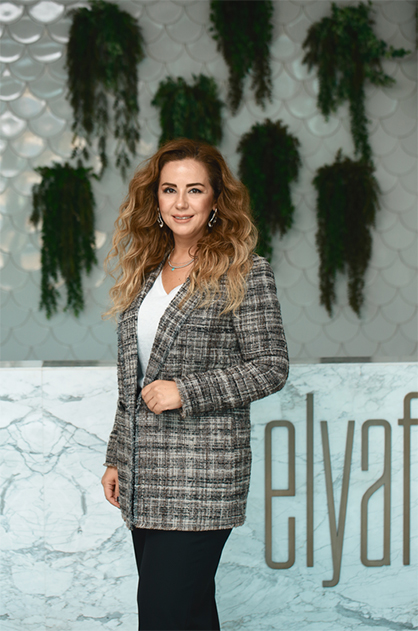
Elyaf Tekstil Vice Chairperson of the Board of Directors Elif Bilge Olaganer said that they have been collaborating with strong and distinguished brands in the global textile and fashion market for many years and producing exclusive fabrics for them, explaining the development process and installed power of the company as follows: “Elyaf Tekstil was founded in 1987 in Bursa, one of the traditional centres of our industry, with the initiatives of two young entrepreneurs, Sami Bilge and Seref Yoldas. Investments in the production of dyed and printed woven fabrics for women’s ready-to-wear were made, and our company soon turned into an experience and heritage passed down from generation to generation with both production and market success. As of today, our company, continuing its activities with 430 employees in its 27 thousand m2facility in Bursa, is a fully integrated facility. In other words, processes starting from the purchase of the yarn raw material, twisting, warp preparation, weaving, dyeing, digital printing, transfer printing, finishing and apparel are carried out in the relevant departments with the latest technologies. Thanks to our integrated facility and high production capacity, we gain production, quality and supply advantages, while providing the production flexibility demanded by customers.”
90% of fabrics are exported to developed markets
Elif Bilge Olaganer emphasized that Elyaf Tekstil has a wide product range and noted that they produce fabrics for dresses, blouses, shirts, jackets and trousers using regenerated viscose fibre, lyocell, modal, polyamide, polyester, cotton and their elastane blends. She underlined that, aside from being daily active wear, these fabrics have stylish and elegant features. Remarking that they export 90% of the fabrics they produce to developed markets, Olaganer said: “EU countries, the United Kingdom and the USA stand out among the main markets of our company. Among the brands we provide solutions to are the leading players of the global market such as Inditex Group, H&M Group, Marks & Spencer, Marco Polo, Reiss, Mango, Tommy Hilfiger, Calvin Klein and Michael Kors.”
Olaganer stated that they continue to make new investments in order to expand their production capacity and offer more solutions, disclosing that they have carried over their skills in woven fabrics to the field of knitting and woven apparel products.
“Sustainability is not a label, but a living corporate culture”
Elif Bilge Olaganer remarked that Elyaf Tekstil has been carrying out important studies on sustainability for a long time and underlined that they have a holistic and institutional approach in this regard. Saying: “Sustainability is not just an abstract concept or label for us, but a corporate culture we experience every day,” She relayed that the Sustainability Department established within the company draws a roadmap for the studies on this subject and provides a strong vision.
She stated that sustainability has been determined as the base criterion in all links of the supply chain and continued her words as follows: “Investments have been and continue to be made that minimize our carbon footprint in numerous areas from reducing the use of raw materials to saving energy in order to show that eco-friendly textile production is possible. We further improved our processes with technological investments and reduced our environmental footprint with the installation of SPP. We focused on the utilization of waste in order to reduce the use of natural resources. For example, we produced notebook covers by putting our waste fabrics into the upcycle process. We carried out the 'This Waste Writes Code' project in schools and increased awareness about the collection of electronic waste in cooperation with Vodafone. In addition, studies are carried out to contribute to social development by collaborating with institutions and organizations such as TEMA and Kizilay. Elyaf Tekstil verifies its commitment to sustainability by producing value-added fabrics and clothing without harming our planet’s ecosystem.”
Olaganer noted that they approach sustainability with the principle of cradle to cradle by using raw materials with certificates such as OCS, GRS, RCS and FSC; explaining that almost all of the collections they have prepared in the last 3 years have been designed using the most sustainable materials. She stated that the chemicals they use in the production meet the ZDHC rules and that independent inspections are carried out at the finishing, dyeing and printing stages. Olaganer also relayed that the company has the Oekotex 100 Standard Label, which shows that all fabrics used in production are harmless to human health.
“Our natural dyed fabrics will create a butterfly effect for green fashion”
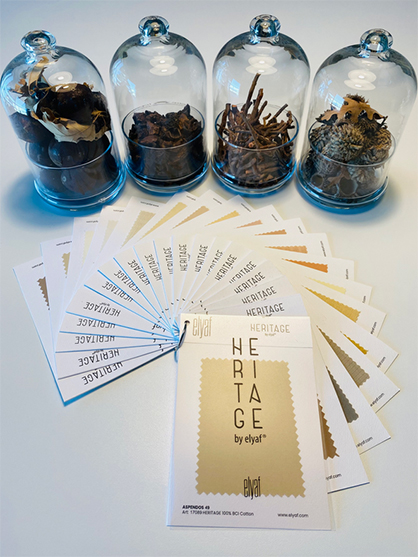
Saying that Elyaf Tekstil's R&D department has an intense work schedule in terms of sustainability, functionality and design, Elif Bilge Olaganer drew attention to the fact that the achievements made positive contributions not only to themselves but also to the industry and our world. She stated that, in this context, they developed the natural dyeing project as an alternative to synthetic dyeing, which is harmful to the environment and human health, and noted that naturally dyed fabric collections were met with great interest in the market.
Olaganer explained that they use plant and plant residues that meet various criteria in the natural dyeing project and disclosed: “We preferred plants and plant residues grown in our country, especially in order to prevent the carbon footprint that would occur during the transportation process. We used plants that do not affect different sectors such as medicine and food, are not in danger of extinction, do not have allergen and toxic side effects, have continuity, grow annually or every 2 years and have GOTS certificate. We can say that our natural dyeing project from the source of raw materials is creating a butterfly effect for the textile and clothing industry and we will see the benefits of this more clearly in the coming years.”
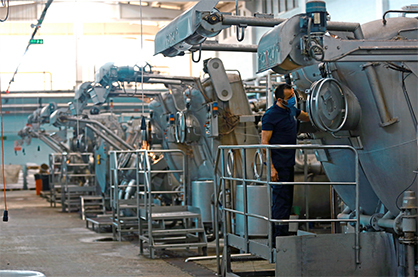
She said that the natural dyeing process provides significant benefits when compared to conventional dyeing and told: “Compared to conventional dyeing, we achieved savings of 77% in chemical consumption, 44% in electricity consumption and 34% in steam consumption. We started our studies this year in order to reveal the environmental effects of natural dyeing with objective data compared to conventional dyeing, and we will complete the results of this LCA study in 2023 and share it with the public.
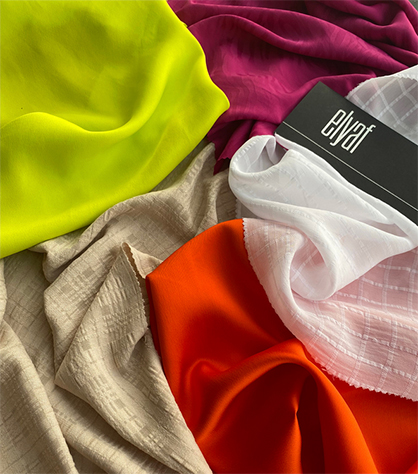
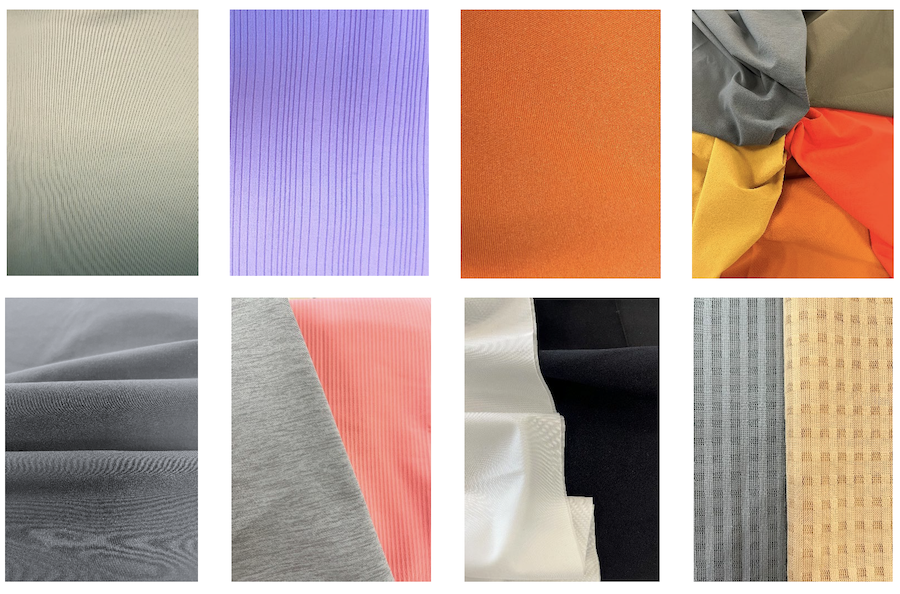
Soft colours such as yellow, beige, coffee, pink, salmon, khaki and mink can be obtained and different effects can be created on fabrics according to the season and design with the natural dyeing developed by Elyaf Tekstil. Numerous important fashion and clothing brands emphasizing sustainability and naturalness offer their customers Elyaf Tekstil’s exclusive and high-quality fabrics by using them in various different designs.