[pageLogInLogOut]

#Textiles & Apparel / Garment

300 years of Delius - one of the 25 oldest family-owned companies in Germany
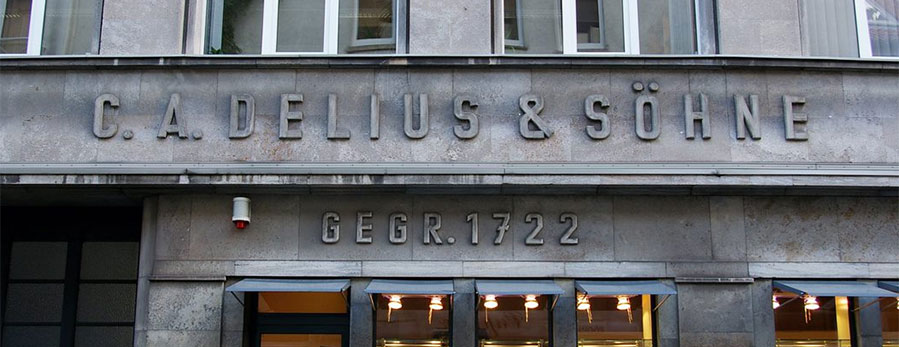
Exterior view of business premises of C. A. Delius & Söhne, Goldstraße in Bielefeld © 2022 Delius
The acquisition of the trading licence by Johann Caspar Delius on September 11, 1722 laid the foundation for the success story of DELIUS. Thanks to the continuous determination to offer innovative and high-quality products to its customers, today DELIUS can look back on a 300-year history in which the company has been able to develop steadily.

An overview of 300 years of company history

The company began as a linen trader and grew from 1722 to 1836 to become the third largest linen trading company in Bielefeld. In 1837, the company introduced contract manufacturing and was thus able to offer its customers tailor-made linen. The former E.A. Delius & Söhne was thus the first linen trading company in Bielefeld to use industrial production in a workroom system. In 1838 the workshop already employed 200 weavers. This system began to fail in 1839 when quality problems increased and competition was intensified by the advancing industrialisation in England and the cheap and machine-made linen that came with it. To countervail Hermann Delius founded the "Ravensberger Spinnerei" in collaboration with other local entrepreneurs and thus introduced the machine production of flax fibres in Westphalia. That way it became possible to overcome the challenges of industrialisation.
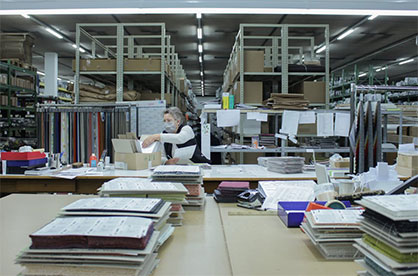
Sample department 2022 © 2022 Delius


In 1845 Gottfried Delius started silk production. In 1852 E.A. Delius & Söhne founded the first health insurance company in Bielefeld. From 1864 on, the sale of linen accounted for only 20% of the total revenue. In 1886, production was expanded to include plush. As it became too extensive, the company was split into two on July 1, 1887. C.A. Delius & Söhne (Carl Albrecht Delius and his sons Paul and Erich) focused on silk production and Delius & Sohn (Hermann Delius and his son Otto) continued linen and plush production.
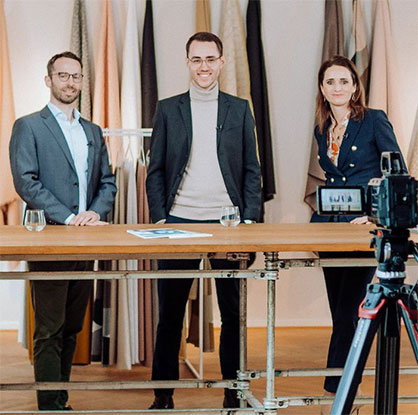
10. Generation der Familie Delius: Julian Mahlert (Enkel von Reinhard Delius), Maximilian Delius (Sohn von Friedrich Wilhelm Delius) und Verena Pausder (Tochter von Rudolf Delius) © 2022 Delius


Today's DELIUS goes back to Carl Albrecht. From 1897 on, the international markets, especially England and the USA, were among the most important sales markets for Delius fabrics. By 1925 four factories were built. At the time of World War I and in the post-war period, C. A. Delius & Söhne experienced ups and downs but was able to withstand through strategic adjustments. In the 1930s, the company added home textiles to its range of products. The replacement of pure silk with rayon led to an immense increase in sales. Moreover, this new raw material facilitated the development of new products. In 1939, the company's capacity reached its peak and C.A. Delius & Söhne employed 2689 workers.

Rudolf Delius and Friedrich Wilhelm Delius represent the 9th generation of the Delius family of entrepreneurs © 2022 Delius


During World War II, the company mainly produced parachute silk. In May 1945, civilian production was resumed with only 300 employees producing mainly clothing fabrics, blouses and linings. The first automatic looms were introduced in 1952. From then on, the focus was on constant expansion and modernisation. From the mid-1960s, also synthetic fibres were used to produce high-quality fabrics. The 1990s were marked by globalisation and an economic downturn. The trend from standardised products to specialised technologies led to a reduction in capacities and personnel.

In 1997, the company was passed down to the 9th generation, Rudolf and Friedrich Wilhelm Delius.


As of 2002, DELCOTEX has been manufacturing technical textiles in-house and has an accredited testing laboratory. DELIUS develops and sells contract textiles with high functionality and aesthetic appeal.
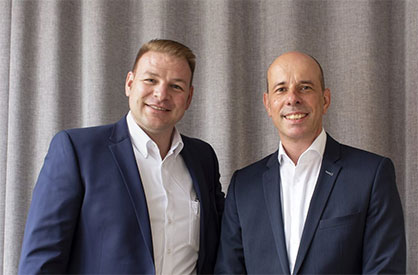
Managing Directors Dr. Marc Schmidt and Kai Hofmeister © 2022 Delius


Since the beginning of 2020, the company has been by the managing directors Dr. Marc Schmidt (Delius Holding, Delius GmbH & Co. KG and DELCOTEX) and Kai Hofmeister (Delius GmbH & Co. KG). The Delius family remains engaged as an advisory board.

With the combination of German and international production, sustainable corporate and employee management as well as the further development of sophisticated, innovative collections, DELIUS and DELCOTEX have been facing the challenges of the future - for three centuries and every day anew.
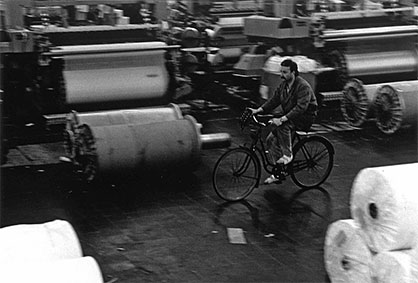
Everyday work in the weaving mill © 2022 Delius


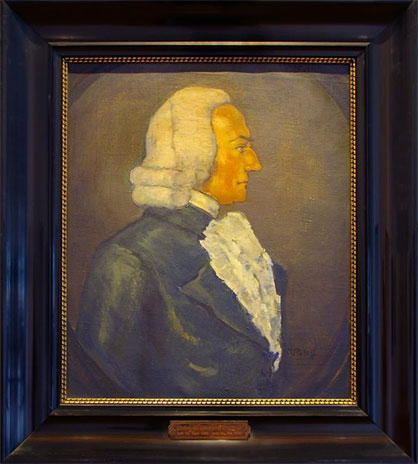
Company founder Johann Caspar Delius 1693 - 1756 © 2022 Delius


More News from TEXDATA International

#Techtextil 2026

Performance Apparels: Functional textiles drive innovation at Techtextil 2026

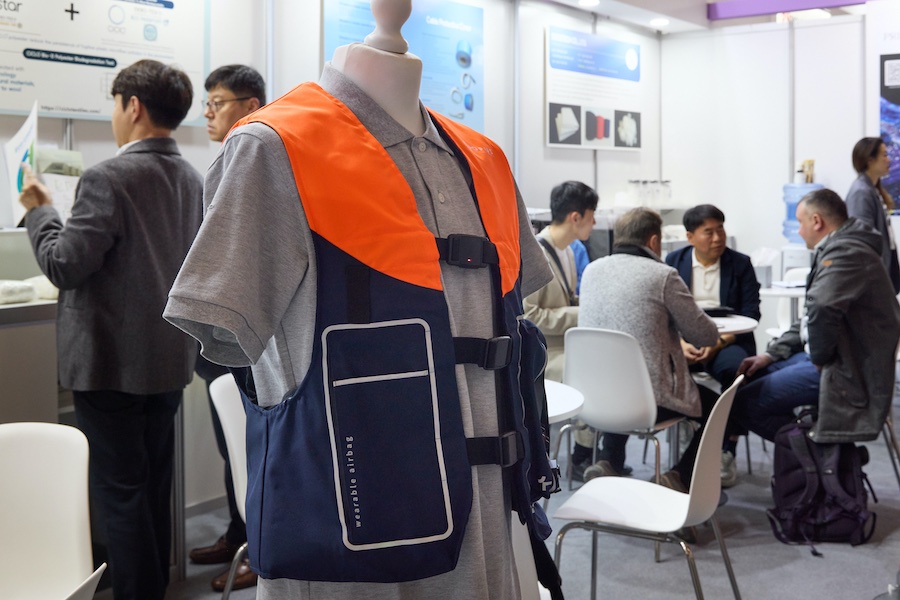
From high-performance fibres and advanced membranes to smart textiles and sustainable material concepts – functional apparel is becoming one of the most dynamic innovation fields in technical textiles. At Techtextil 2026, exhibitors demonstrate how new materials, finishing technologies and digital functions are shaping the next generation of protective, workwear and outdoor systems.

#Texprocess 2026

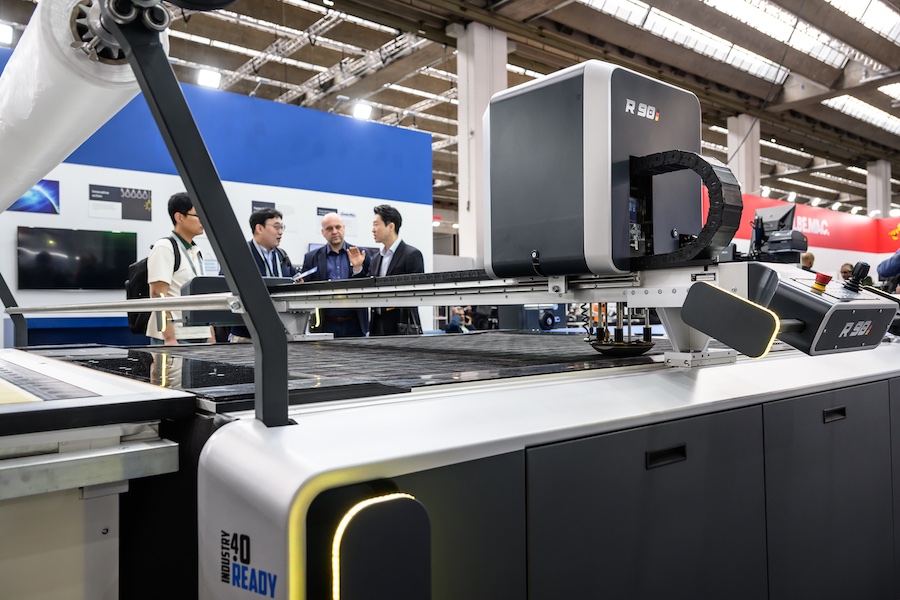
Texprocess 2026: Automation, digitalisation and AI reshape textile processing

Investment decisions in textile processing have become increasingly complex. Rising energy prices, labour shortages and geopolitical uncertainties are forcing companies to prioritise technologies that deliver measurable improvements in efficiency and process stability. This applies not only to apparel production, but also to the processing of technical textiles and high-performance materials. Modernisation projects are therefore being evaluated more selectively – but the pressure to upgrade production systems continues to grow. Texprocess 2026 reflects this tension between cautious investment behaviour and increasing technological demand.

#Techtextil 2026

Textile Chemicals & Dyes: Innovation in Textile Chemistry moves into focus at Techtextil 2026

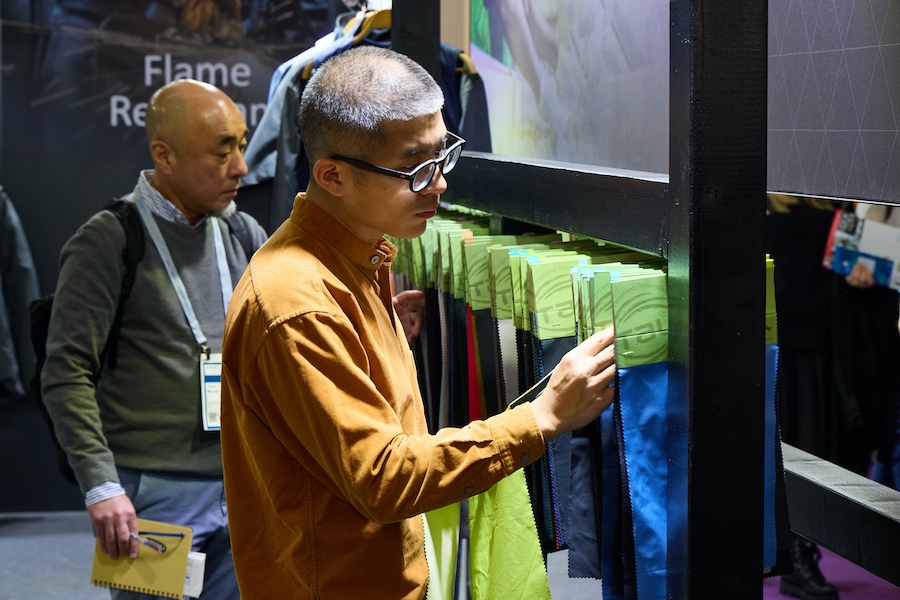
From PFAS-free finishes and water-saving dyeing technologies to advanced coatings and recycling-compatible formulations, innovation in textile chemistry is accelerating across the industry. Reflecting this development, Techtextil 2026 introduces Textile Chemicals & Dyes as a dedicated product segment, highlighting the growing role of chemical solutions in shaping the next generation of technical textiles.

#Recycling / Circular Economy

textile.4U publishes special edition “Top 100 Textile Recycling Companies 2025”

With a comprehensive 176-page special edition, textile.4U is dedicating its latest issue entirely to one of the most dynamic and influential topics in today’s textile industry: textile recycling. The new issue, published exclusively in high-quality print, presents the Top 100 textile recycling companies researched and selected by TexData – organizations that already play a key role in the transition to circular textiles or are expected to have a significant impact in the near future.

More News on Textiles & Apparel / Garment

#Sustainability

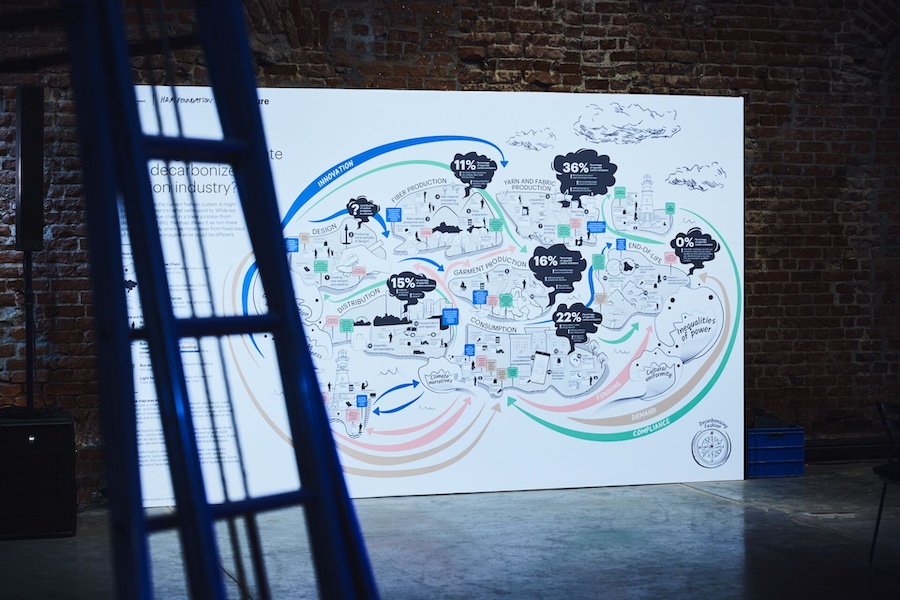
Practical toolkit to drive coordinated climate action launched

An open-access workshop toolkit enables brands, suppliers, policymakers and investors across the textile industry to apply the System Map in their own work, identifying leverage points to halve emissions and enable a just transition.

#Textiles & Apparel / Garment

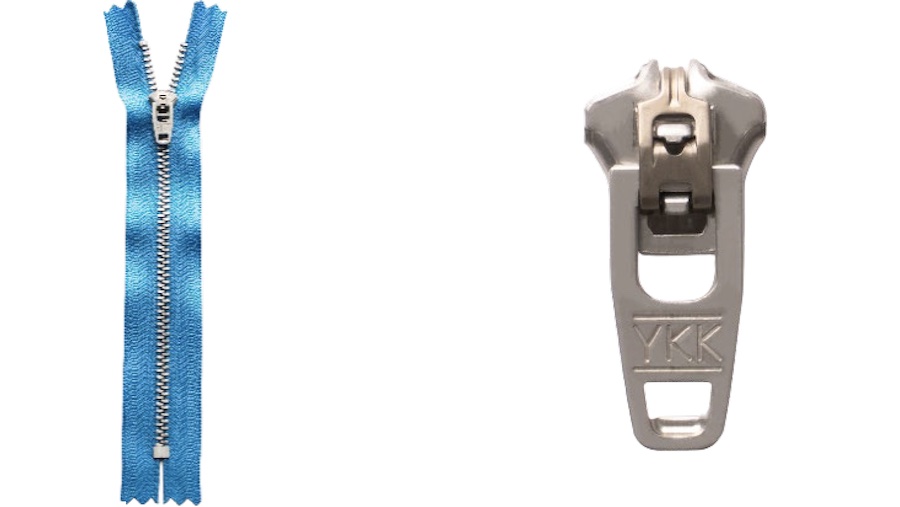
YKK launches “YZiP® Light” aluminum alloy zipper for cotton pants

YKK Corporation (Headquarters: Chiyoda-ku, Tokyo; President: Koichi Matsushima; hereafter, YKK) has launched YZiP® Light, a lightweight aluminum alloy zipper for cotton pants, with sales beginning in late March. The introduction of YZiP® Light expands YKK’s zipper portfolio—led by the flagship YZiP® copper alloy zipper—providing customers with greater flexibility to meet diverse garment needs.

#Textiles & Apparel / Garment

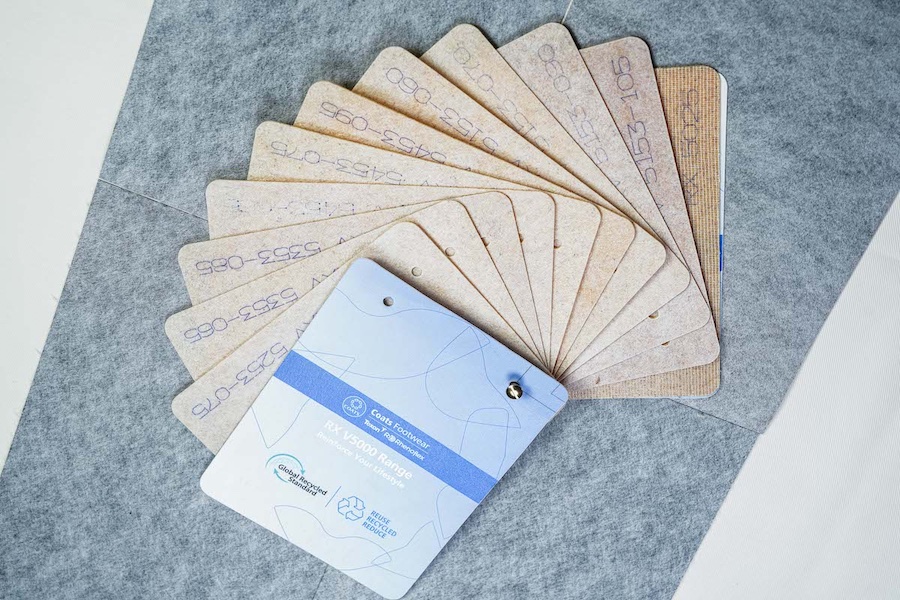
Coats to showcase innovative reinforcement and filler materials for leather goods and accessories at APLF 2026

Coats, a world-class Tier 2 manufacturer and trusted partner for the apparel and footwear industries, will be promoting four advanced materials from its ‘Lifestyle Solutions’ portfolio at APLF 2026 in Hong Kong in March. Each innovation has been specifically engineered to help luxury and premium brands elevate the craft, durability, sustainability and creative expression required in the manufacturing of handbags, purses, and other high-end designer accessories.

#Textiles & Apparel / Garment

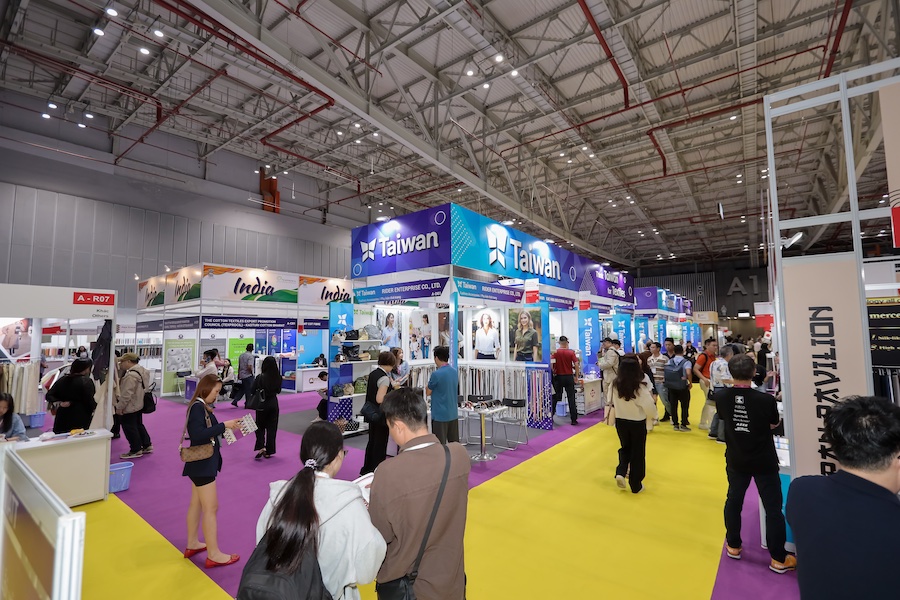
Design, innovation and sustainability propel VIATT 2026’s expanding role in ASEAN textile sourcing

At its third edition, the Vietnam International Trade Fair for Apparel, Textiles, and Textile Technologies (VIATT) further reinforced its role as a key sourcing and business platform for ASEAN’s textile industry. The three-day fair welcomed over 17,000 visits from 54 countries and regions, and featured over 460 exhibitors from 21 countries and regions across 18,000 sqm. The 2026 edition was marked by the introduction of new international pavilions and zones, broadening the fair’s sourcing scope across new geographies and product categories. The fringe programme, headlined by the debut Trend Forum, further distinguished VIATT as the region’s most integrated textile trade platform – uniquely spanning the entire value chain.

Latest News

#Techtextil 2026

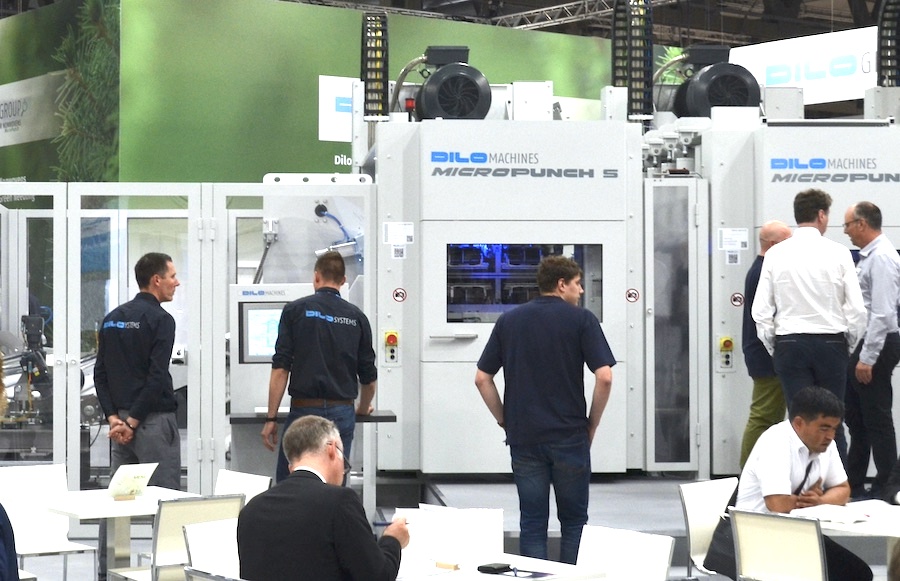
Modernizing Needling – DiloGroup at Techtextil & INDEX 2026

With the theme “Modernizing Needling”, the DiloGroup presents a comprehensively enhanced portfolio for needling technology. The objective is to further increase the performance and application range of needlefelt production lines in terms of productivity, flexibility, and the development of new products, thereby meeting the growing demands of modern technical textiles.

#Advertorial

New Gravimax MMX-R X-ray sensor platform opens up new application fields

The demands placed on quality control in web-based production processes are increasing: materials are becoming more complex, basis weights are varying more widely, and at the same time, pressure is growing to make processes more efficient and transparent. Precise measurement data across the entire web width has therefore become a key factor in ensuring stable production processes. With its new Gravimax MMX-R sensor platform, Mahlo introduces a radiometric measurement solution designed to set new standards in determining basis weight and material composition. The platform combines advanced X-ray technology with newly developed signal processing, enabling measurement tasks that previously often required multiple sensor technologies.

#Recycling / Circular Economy

Carbios confirms Longlaville plant in France following financing progress

Carbios has reaffirmed its plans to build its Longlaville plant in France within a project financing framework, targeting the start of production in the first half of 2028. The company also reports a solid cash position of around €60 million at the end of 2025 and has appointed Benoît Grenot as Deputy Chief Executive Officer to support the execution of its strategic projects.

#Composites

KARL MAYER strengthens partnerships in the composites industry at JEC World 2026

KARL MAYER further strengthened its role as a reliable and competent partner to the composites industry at JEC World 2026. The global market leader in textile machinery manufacturing used the trade show to meet key customers, establish numerous new contacts, and engage in in-depth technical discussions.

TOP