[pageLogInLogOut]

#Textiles & Apparel / Garment

Pablo Isla underscores “the strength of Inditex’s integrated, digital and sustainable model, thanks to the work and commitment of every employee”

At today’s Annual General Meeting at its headquarters in Arteixo, Inditex’s shareholders ratified the Group’s financial results for fiscal year 2020, a period in which revenue reached €20.4 billion despite the fact that all of its stores were forced to shut at some point on account of the COVID-19 pandemic. Online sales via the global integrated platform increased by 77% in local currencies to €6.6 billion, making Inditex a global leader in online fashion retailing.
  • The Executive Chairman announces that Inditex will bring its net zero emissions target forward 10 years to 2040. The Group is also bringing several other sustainability targets forward. This includes aiming for all its cotton to be more sustainable or recycled by 2023, two years ahead of schedule.
  • Pablo Isla reviewed Inditex’s performance in 2020 at today’s Annual General Meeting.
  • He highlighted that the “commitment, talent and work displayed by the entire team in 2020, and the flexible and integrated business model, has delivered results in the most complex environment”.
  • The Group’s net cash position remains solid – ending the fiscal year at €7.56 billion. The Company’s shareholders ratified the Board of Directors’ motion to pay a dividend of €0.70 per share, thus extending the policy of paying out 60% of net profit.

During his presentation to the Group’s shareholders, Pablo Isla highlighted “the strength of Inditex’s strategic transformation and its fully integrated, digital and sustainable business model. This, combined with the commitment, talent and work displayed by the entire team, delivered noteworthy results in extremely difficult circumstances. As we expected, the transformation we embarked upon in 2012 continued to bear fruit”, said Pablo Isla.

Thanks to consistent active management, the Group’s operating expenses narrowed by 17%. Net profit totalled €1.11 billion and the Group ended the year with a solid net cash position of €7.56 billion. Moreover, inventories declined by 9% year-on-year following strong demand for the collections of all of the brands, coupled with efficient stock management.

A KEY YEAR FOR INDITEX’S STRATEGIC TRANSFORMATION

The Executive Chairman explained during his speech how 2020 was key to Inditex’s strategic transformation, which the company embarked upon in 2012, and in which the Group has invested over €11 billion. Thanks to that effort, the Company has attained its goal of building a fully integrated and sustainable store and online platform that is capable of servicing customers in 216 markets worldwide. In 2020, Inditex added 25 new online markets and opened stores in 29 countries, while completing its Group-wide eco-efficiency store programme, which had reached all 6,829 stores at year-end.

It is also noteworthy that the rapid rollout of the integrated stock management system in 2020, which is available in 5,777 stores in 89 markets, has enabled the fulfilment of 46 million orders worth €1.16 billion from the Group’s stores. “Access to that enabling technology was critical during the lockdowns and store closures, particularly at times when as many as 88% of all stores were closed at once”, he recalled.

In 2020, 2021 and 2022, the Group will invest another €2.7 billion in its transformation programme, of which €1 billion will be invested in digitalisation and €1.7 billion will be invested in incorporating the latest technology across the Group stores, with the opening of as many as 450 major flagships planned for the period. In parallel with these investments, the different brands will deepen the digital integration of stores and online, adding new and innovative digital services such as the Store Mode.

In 2020, the Group’s apps and websites received over 5.3 billion visits and the eight brands’ various social media handles amassed 200 million followers.

Inditex’s Executive Chairman noted that the sharp acceleration in the transformation strategy and associated investments will allow the full development of the Group’s proprietary technology platform, known as the Inditex Open Platform (IOP). The IOP - the keystone of Inditex’s strategy - constitutes a hybrid, cloud-based digital replica of every phase of Inditex’s business model; it encompasses the entire product life cycle and enables constant interaction, feedback and fine-tuning.


DELIVERY AND RAMP-UP OF SUSTAINABILITY TARGETS

Another cornerstone of the strategic transformation, carried over from prior years, is the Group’s sustainability effort. Pablo Isla outlined how in 2020 the Group not only delivered its targets but brought forward the delivery of certain milestones. Some 35% of the Group’s garments carried the Join Life label, which designates more sustainable processes and raw materials, ahead of the 25% target set for the year. In addition, 80% of the energy used came from renewable sources, compared to the target of 65%. The use of more sustainable cotton also increased by 91%.

Against this backdrop, Inditex’s Executive Chairman announced to shareholders that the Group was setting out the following objectives:

  • The Net zero emissions target will be brought forward by a whole decade to 2040 (previously 2050).
  • All of the cotton Inditex uses will be more sustainable by 2023, two years ahead of schedule.
  • All energy in its direct operations will come from renewable sources in 2022 (compared to a target of 80% in 2025).
  • Over 50% of garments will be Join Life by 2022, the label that distinguishes the Group’s most sustainable products.
  • As a new objective, Inditex aims to cut by 25% the water used on the whole supply chain by 2025.

In parallel, the Group will continue to make progress on its existing commitments, such as the elimination of plastic, a strategy based around two milestones: in 2020 the company eliminated all plastic bags from its stores and online orders; by 2023 it plans to eliminate all single-use plastics from customer interfaces. All the materials the Group uses in its operations (cardboard, plastic, paper…) will also be completely recycled by 2023.

In fabrics, by 2023 all garments made of cellulosic fibres will be 100% sustainable and by 2025 all polyester and linen will be 100% recycled or sustainable, in line with the parameters the company has set out.

The Group will continue to champion innovative research in textile recyclability over the coming years, working with partners from across the supply chain, as well as with prestigious research centres such as the Massachusetts Institute of Technology (MIT). The Group will also forge ahead with all the programmes encompassed by its ‘Worker at the Centre’ strategy, designed to respect and promote social conditions in the supply chain.

Tax contribution and community investment

Pablo Isla described how the Group creates value for the communities in which it does business, quantifying Inditex’s global tax contribution in 2020 at €4.69 billion. Of this sum, €1.2 billion was paid in Spain, where the Group is headquartered, €620 million of which was in the form of indirect taxes. The Group’s effective corporate income tax rate was 21.2%.

Inditex’s Executive Chairman also underscored the more than 3.3 million direct beneficiaries of the 703 different community programmes to which Inditex donated €71.8 million in 2020. He outlined the emergency relief provided to assist with theCOVID-19 effort,- humanitarian aid, community wellbeing and educational programmes and projects supported by Inditex's contributions in the past year.

Resolutions ratified at the Annual General Meeting

The Company’s shareholders approved the Board’s motion to pay out an ordinary dividend of €0.70 per share. Of the total, €0.35 was paid out on 3 May 2021 and the remaining €0.35 will be paid on 2 November 2021. That leaves Inditex’s shareholder remuneration policy fully intact.
More News from TEXDATA International

#Techtextil 2026

Textile Chemicals & Dyes: Innovation in Textile Chemistry moves into focus at Techtextil 2026

From PFAS-free finishes and water-saving dyeing technologies to advanced coatings and recycling-compatible formulations, innovation in textile chemistry is accelerating across the industry. Reflecting this development, Techtextil 2026 introduces Textile Chemicals & Dyes as a dedicated product segment, highlighting the growing role of chemical solutions in shaping the next generation of technical textiles.

#Recycling / Circular Economy

textile.4U publishes special edition “Top 100 Textile Recycling Companies 2025”

With a comprehensive 176-page special edition, textile.4U is dedicating its latest issue entirely to one of the most dynamic and influential topics in today’s textile industry: textile recycling. The new issue, published exclusively in high-quality print, presents the Top 100 textile recycling companies researched and selected by TexData – organizations that already play a key role in the transition to circular textiles or are expected to have a significant impact in the near future.

#Recycling / Circular Economy

Responsible Textile Recovery Act of 2024 signed by Governor

Senator Josh Newman (D-Fullerton) is proud to announce that Senate Bill 707 (SB 707), the Responsible Textile Recovery Act of 2024, has been signed into law by the Governor of California, Gavin Newsom. This groundbreaking legislation establishes the country’s first Extended Producer Responsibility (EPR) textile recycling program, marking a significant step forward in the state’s efforts to combat waste and promote sustainability.

#Textiles & Apparel / Garment

Modtissimo promotes sustainability with 28 coordinates in the Green Circle

Modtissimo is proving more and more to be a textile and clothing show that delivers the latest innovations in the area of sustainability, with the iTechStyle Green Circle being the main showcase for companies' creations. In this 60+4 edition, taking place on 12 and 13 September, 28 coordinates will be exhibited in a section organised by CITEVE and curated by Paulo Gomes.

More News on Textiles & Apparel / Garment

#Textiles & Apparel / Garment

Coats to showcase innovative reinforcement and filler materials for leather goods and accessories at APLF 2026

Coats, a world-class Tier 2 manufacturer and trusted partner for the apparel and footwear industries, will be promoting four advanced materials from its ‘Lifestyle Solutions’ portfolio at APLF 2026 in Hong Kong in March. Each innovation has been specifically engineered to help luxury and premium brands elevate the craft, durability, sustainability and creative expression required in the manufacturing of handbags, purses, and other high-end designer accessories.

#Textiles & Apparel / Garment

Design, innovation and sustainability propel VIATT 2026’s expanding role in ASEAN textile sourcing

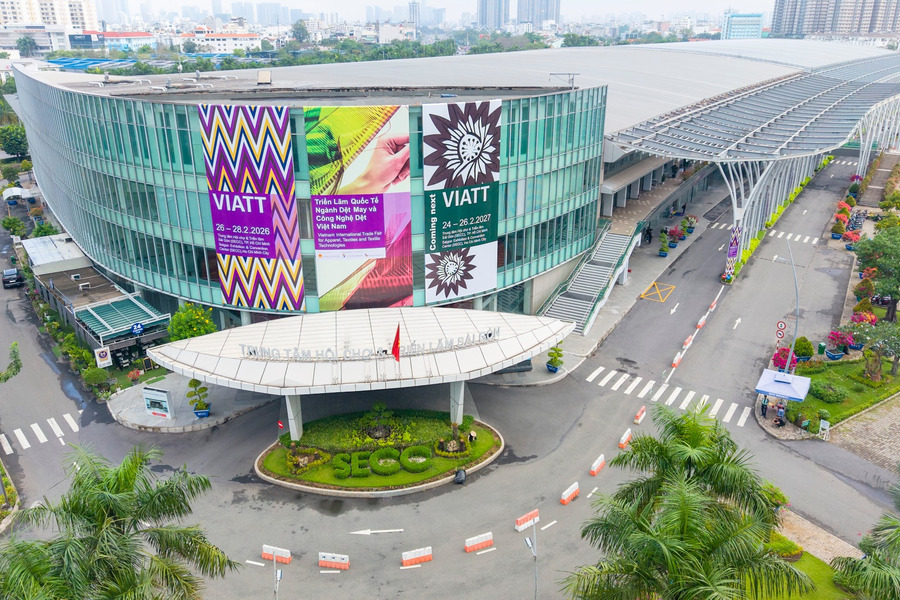
At its third edition, the Vietnam International Trade Fair for Apparel, Textiles, and Textile Technologies (VIATT) further reinforced its role as a key sourcing and business platform for ASEAN’s textile industry. The three-day fair welcomed over 17,000 visits from 54 countries and regions, and featured over 460 exhibitors from 21 countries and regions across 18,000 sqm. The 2026 edition was marked by the introduction of new international pavilions and zones, broadening the fair’s sourcing scope across new geographies and product categories. The fringe programme, headlined by the debut Trend Forum, further distinguished VIATT as the region’s most integrated textile trade platform – uniquely spanning the entire value chain.

#Textiles & Apparel / Garment

Revived Replacement Elements for VISLON® wins the iF Design Award 2026

YKK Corporation (Headquarters: Chiyoda-ku, Tokyo; President: Koichi Matsushima; hereinafter “YKK”) is proud to announce that its Revived Replacement Elements for VISLON® has been awarded the prestigious iF DESIGN AWARD 2026, an award that recognizes excellence in design and quality, organized by iF Design Foundation.

#Knitting & Hosiery

Driving WARP KNIT Inspiration

KARL MAYER sees performance fabrics and next-level textile solutions in particular as potential growth drivers for its customers, as a motor for business development and as real game changers for the entire textile industry. Innovation does not happen by chance. It is the result of close exchange with customers & brands, textile expertise and competence in textile machine engineering. This is why KARL MAYER is investing in progress and collaborative development and opening its TEXTILE INNOVATION CEN-TER (TIC) – a place to be for the entire textile world.

Latest News

#INDEX 2026

EDANA unveils nominees for INDEX™26 Awards: Highlighting the next generation of nonwoven excellence

EDANA is proud to unveil the highly anticipated nominees for the INDEX™26 Awards, the nonwoven industry’s highest accolade for technical and sustainable excellence. Out of a record-breaking field of entries, these finalists represent the cutting edge of material science—from bio-based hygiene fibers and PFAS-free protective textiles to revolutionary water-filtration machinery. Each nominee has been selected by a jury of industry experts for their ability to solve critical global challenges, including the transition to a circular economy and the pursuit of enhanced consumer performance.

#Raw Materials

Lenzing Group positions bio‑based materials as a strategic asset for Europe’s economic security

The Lenzing Group, a leading supplier of regenerated cellulose fibers for the textile and nonwovens industries, hosted a high‑level roundtable in Brussels to discuss how bio‑based materials can strengthen Europe’s economic security and support the shift toward a fossil‑free future. Organized in cooperation with Euractiv, the event brought together representatives of the European Commission, the UK Mission to the EU, academia, civil society, and industry.

#Natural Fibers

Beyond Cotton: Natural Fibres in the Spotlight at the Bremen Cotton Conference - Branded by DNFI

Climate targets, fragile supply chains, and rising regulatory requirements are fundamentally changing the perspective of the textile industry - the focus is increasingly shifting toward the base material. Not only cotton, but natural fibres are gaining significant importance: they stand out not only because of their outstanding functional properties, but also because they make a valuable contribution to the bioeconomy and responsible product development.

#Nonwovens

Sandler turns financial stability into a catalyst for shaping the future

The Sandler Group has presented its financial figures for the past fiscal year (01/01/2025-12/31/2025). Like previous years, the year 2025 was also marked by industry-wide structural challenges and geopolitical uncertainties. Turnover was virtually stable at EUR 321 million (2024: EUR 326 million). High energy costs continue to weigh heavily on profitability. The number of employees was 975 (2024: 980). The family-owned company, which was founded in 1879 and has been run by the fifth generation since August 2025, continues to invest millions in its Schwarzenbach site despite the high production costs in Germany. As part of the long-term corporate strategy, the management team is focusing on strict cost management, further development of the product portfolio, and greater efficiency in production and administrative processes. The company does not expect a market recovery in 2026 and 2027.

TOP