[pageLogInLogOut]

#Textile processing

Leading brand manufacturer HWASEUNG Enterprise implements Coloreel in Vietnam
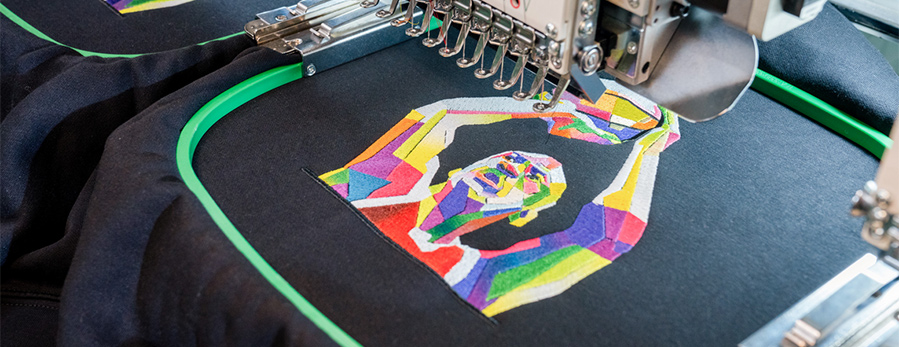
Coloreel HWASEUNG Enterprise partnership © 2023 Coloreel
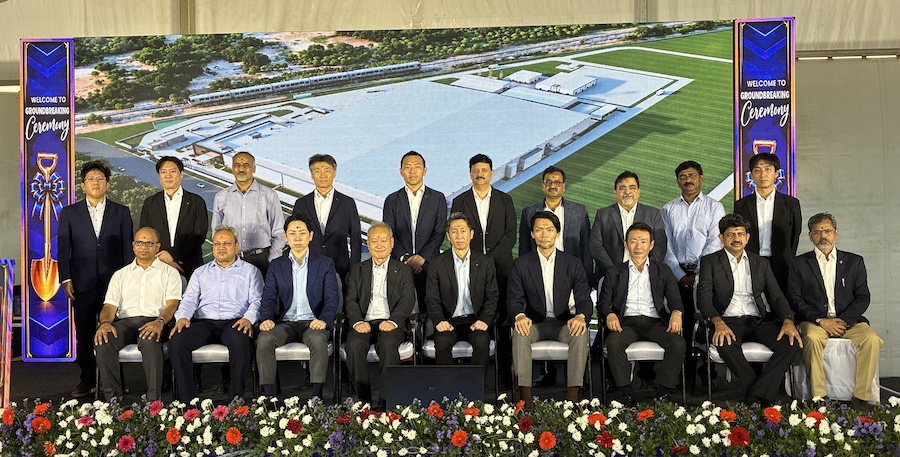
HWASEUNG Enterprise, an industry-leading footwear, headwear, and textile manufacturer, announces the first installation of Coloreel in Vietnam.

With Coloreel, HWASEUNG Enterprise takes another step towards more sustainable production. As a key supplier to leading global brands such as Nike, Adidas,Titleist and Lacoste, HWASEUNG Enterprise is a signatory to the UNFCCC Fashion Industry Charter for Climate Action and has committed to reducing Greenhouse gas emissions by 50% by 2030.

"By partnering with Coloreel, we are taking a significant step towards a more sustainable future while offering our clients unprecedented customization options", says Darren Hamilton, Executive COO of Apparel & Accessories at HWASEUNG Enterprise. "This collaboration reinforces our commitment to innovation and environmental leadership, shaping the future of the textile industry."

Coloreel's technology eliminates pre-colored thread, reducing water and chemical consumption associated with dyeing. By dyeing a 100% recycled polyester thread in real-time, water consumption is reduced by at least 97% compared to traditional dyeing methods. In addition, the technology significantly reduces thread waste.


When Coloreel launched this technology for digital thread dyeing, the aim was to streamline an industry characterized by slow processes, difficulty in creating complicated designs, and excessive resource usage.
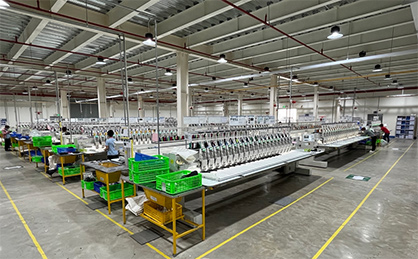
Coloreel HWASEUNG enterprise facilities © 2023 Coloreel


"A partnership with a company like HWASEUNG Enterprise, which produces over 20 million hats annually, can truly be a game-changer. With unlimited color and design possibilities, we offer a solution for quick turnaround, customization and small-batch production, providing significant value to our customers," states Torbjörn Bäck, CEO of Coloreel.


More News from Coloreel

More News on Textile processing

#Textile processing

Jeanologia showcases the future of product development

Jeanologia is showcasing how software is transforming product development in the fashion industry at PI Apparel Europe: The Fashion Technology Show, taking place on March 30–31 in London.

#Techtextil 2026

Groz-Beckert showcases cross-segment innovations for technical textiles in Frankfurt

From April 21 to 24, 2026, Groz-Beckert will present its latest innovations and solutions across the product areas of knitting, weaving, nonwovens and sewing at Techtextil 2026 in Frankfurt (Hall 12, Booth B90).

#Textile processing

Major expansion for ACG Kinna follows record year

In response to growing demand for its full textile and finished product line automation services, ACG Kinna – a member of TMAS, the Swedish textile machinery association – has inaugurated a 1,000-square-metre expansion at its headquarters in Skene, Sweden.

#Texprocess 2026

Texprocess 2026: Automation, digitalisation and AI reshape textile processing

Investment decisions in textile processing have become increasingly complex. Rising energy prices, labour shortages and geopolitical uncertainties are forcing companies to prioritise technologies that deliver measurable improvements in efficiency and process stability. This applies not only to apparel production, but also to the processing of technical textiles and high-performance materials. Modernisation projects are therefore being evaluated more selectively – but the pressure to upgrade production systems continues to grow. Texprocess 2026 reflects this tension between cautious investment behaviour and increasing technological demand.

Latest News

#Techtextil 2026

AI, Start-ups, Research: Techtextil and Texprocess bring together players in the textile industry

From start-ups to universities and research institutes: at Techtextil and Texprocess, the world’s leading innovation trade fairs in Frankfurt am Main, exhibitors present future-oriented concepts for the global textile industry. With the international Campus & Research area, a strong participation from start-ups and the latest AI applications for textile processing, both trade fairs showcase current developments in the textile industry. By bringing together innovation, research and application, they enable new partnerships across the textile value chain.

#Techtextil 2026

IVGT joint stand brings innovation and networking to Techtextil 2026

At Techtextil 2026 and the parallel Texprocess 2026, key transformation topics such as artificial intelligence, digitalisation, sustainability, recycling and the circular economy will be reflected across the show. Against this backdrop, the IVGT, together with 16 member companies, will present its joint stand in Hall 12.1 (Stand D62) as a platform for exchange and networking.

#Man-Made Fibers

Indorama Ventures supports Southeast Asia’s textile customers with reliable regional supply and global innovative portfolio

Indorama Ventures, one of the leading global polyester fiber and filament yarn suppliers globally, will participate in Indo Intertex 2026 in Jakarta this April, making its diverse global portfolio available to apparel, home textile, and hygiene customers across Southeast Asia.

#Raw Materials

New study shows low environmental impact by Cotton made in Africa Organic Cotton from Tanzania

Today, the Aid by Trade Foundation (AbTF) is announcing the results of a comprehensive life-cycle analysis (LCA) for cotton produced in Tanzania under the Cotton made in Africa Organic (CmiA Organic) standard. The study emphasises the small ecological footprint of CmiA Organic verified cotton. This can largely be traced back to the absence of synthetic pesticides, artificial fertilisers, and artificial irrigation. Consequently, CmiA Organic cotton can help the textile industry meet regulatory requirements as well as science-based targets. The results also show that the consequences of climate change threaten the livelihoods of these cotton farmers, even though the type of agriculture they practise barely contributes to climate change.

TOP