[pageLogInLogOut]

#Textile chemistry

Devan and Jeanologia join forces to reduce water usage for antimicrobial and skincare finishes for post garment treatments
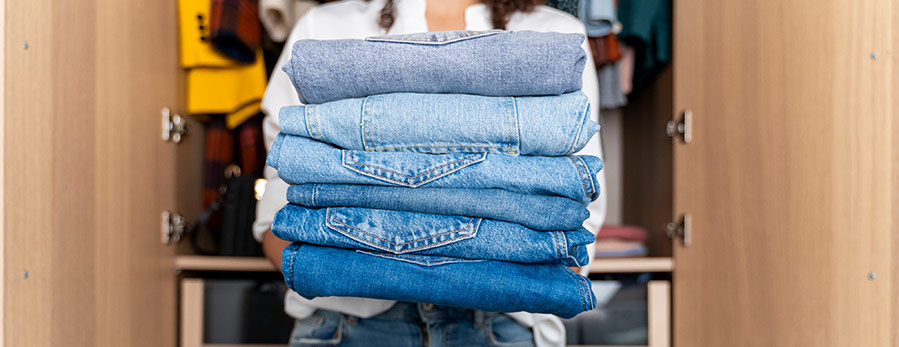
© 2021 Devan
Devan, leader in sustainable and functional textile finishes, has been working together with Jeanologia, a global leader in sustainable and efficient finishing technologies for textiles, to reduce further water consumption during the application of Devan’s awarded BI-OME® antimicrobial and R-Vital® skincare range.

With increased attention to climate change and limiting excess water consumption in textile production (whether denim or other textiles), Devan and Jeanologia worked together to evaluate the application of Devan finishes onto garments via the patented e-Flow technology.

Devan has been committed to bringing ‘green’ chemistry to the world since the early 1990’s. Jeanologia is an innovative company with over 25 years of experience in the development of sustainable and eco-efficient technologies for the finishing industry.

e-Flow technology can accomplish a considerable number of finishing effects with the highest quality, a minimal amount of water and zero discharge. The technology uses micronization and nebulization to substitute traditional abrasion process and deliver performance chemistry using nano-bubbles instead of water. It reduces the cost of application, saves the amount of water used and ensures that the correct amount of chemistry stays in the garment and not in the water. e-Flow is the perfect fit for every industrial washing machine. This allows mills and brands to apply Devan’s technologies in a more sustainable way than using traditional application equipment, even for smaller production runs and direct onto garments.


“With the global textile production using 4% of the global freshwater withdrawal, here at Devan we are continuously working on more sustainable solutions”, says Dr. Vanessa Daelman, CTO at Devan. “Next to this, we of course highly value sustainable application methods from Jeanologia, like e-Flow, in order to reduce the excess water usage during textile application. We are delighted that we could work together with Jeanologia and establish that Devan technologies can be easily applied via these technologies onto garments or fabrics like denim and with full retention of functionality. This application method also allows post garment treatment of our finishes, for example an antimicrobial treatment onto already finished garments, which will be increasingly important in a more circular textile world where re-use plays an important role”, Dr. Daelman concludes.

More News from Devan Chemicals

#Textile chemistry

Devan unveils innovative textile solutions to enhance comfort during sleep at Heimtextil 2026

From 13 to 16 January 2026, Devan was exhibiting at Heimtextil in Frankfurt, the world’s leading international trade fair for home and contract textiles. The event brought together key players from across the global textile value chain, providing the ideal platform for Devan to present its latest innovations.

#Textile chemistry

Devan Chemicals launches new sleep promoting technology at Heimtextil 2025

Devan, a global leader in sustainable textile finishes, launched an innovative sleep promoting technology, “Devan Sleep Tight”, at Heimtextil 2025. This technology enhances sleep quality and overall quality of life, as confirmed by an independent clinical trial.

#Chemical industry

Devan Chemicals presents “Devan Stain Release”, a PFC-free release technology for water and oil based stains

Devan Chemicals, a global leader in innovative textile solutions, proudly announces the launch of its latest breakthrough in textile finishing technology “Devan Stain Release”. With a focus on sustainability and performance, the company is proud to launch a release technology that ensures that both water and oil based stains can easily be washed off.

#HEIMTEXTIL 2024

Devan Chemicals is proud to present its latest Innovations at Heimtextil 2024

Devan Chemicals, a renowned pioneer in sustainable textile finishes, is excited to announce its upcoming participation in Heimtextil 2024. Devan invites attendees to explore their booth in Hall 11.0, booth A21, and experience firsthand the latest sustainable textile finishes that Devan has developed.

More News on Textile chemistry

Latest News

#Technical Textiles

Fifteen years of Autoneum – From spin off to global technology leader

What started as a strategic carve‑out has since become the success story of a global technology leader in acoustic and thermal management solutions for vehicles. Headquartered in Winterthur, Switzerland, Autoneum supplies leading automobile manufacturers worldwide with innovative, lightweight and increasingly sustainable solutions.

#Nonwoven machines

Kruger, Canada, orders first nonwovens line for sustainable wipes from ANDRITZ

International technology group ANDRITZ has received an order from newly established Kruger Nonwovens to deliver a complete WetlaceTM hybrid line for the Wayagamack mill in Trois-Rivières, Quebec, Canada. With this investment, pulp and paper producer Kruger is preparing to enter the nonwovens market with a new generation of plastic-free, chemical-free materials for sustainable wipes. The line is the first of its kind in Canada and is scheduled to start production in 2028.

#ITM 2026

Picanol to present its leading weaving technology at ITM 2026

Picanol is pleased to announce it will be participating in ITM 2026 in Istanbul. This is a key event for industry professionals to engage with the Turkish textile industry as well as the extensive international audience attending the fair. During the event, Picanol will present its latest innovations to the visitors in Hall 8, booth 802.

#Man-Made Fibers

The updated poster on biodegradable Polymers in various environments has been released

As part of the PerPlacsBio project, nova-Institute has updated its popular poster on the biodegradability of polymers in different environments. The updated version reflects current standards, certifications and the latest scientific findings. The poster can be used to assess biodegradable alternatives for use in agriculture and forestry, and it is now available in German for the first time.

TOP