[pageLogInLogOut]

#Textile chemistry

DyStar releases integrated Sustainability Report 2019 – 2020

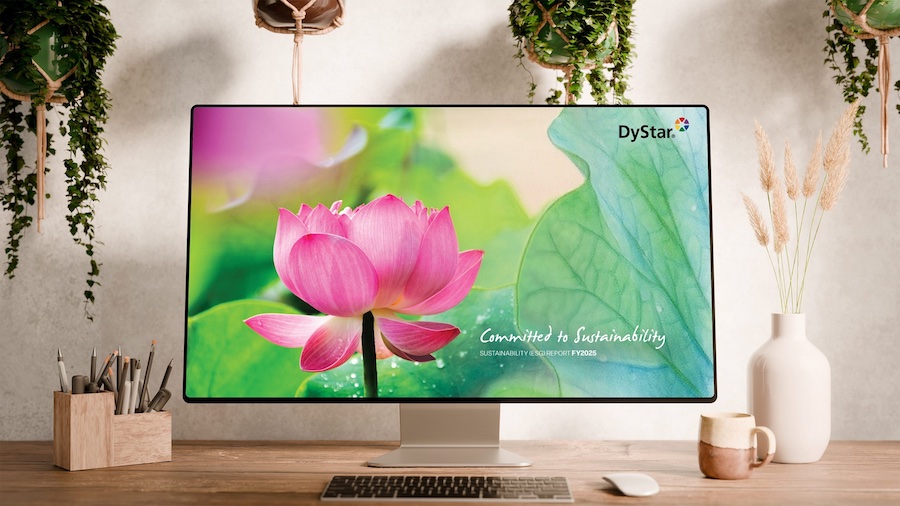
DyStar, a leading specialty chemical company with a heritage of more than a century in product development and innovation is pleased to announce the release of DyStar’s Integrated Sustainability Report for 2019 – 20. In this report, DyStar has adopted an Integrated Reporting framework which enables the organization to better communicate essential values across multiple stakeholders through meaningful assessments based on the six major capitals, namely financial capital, manufactured capital, intellectual capital, human capital, social and relationship capital, and natural capital.

Mr. Eric Hopmann, CEO of DyStar Group said, “Amid the worrying COVID-19 situation, as DyStar shared its Tenth Sustainability Report, DyStar has continued to demonstrate the unwavering commitment to sustainability by gathering and presenting improved quality information to support integrated thinking, decision-making and actions that focus on value creation over time. This information clearly illustrates the organization’s ability in creating value across multiple stakeholders.”

Whilst the DyStar Integrated Sustainability Report for 2019 – 20 adopts a new reporting approach, it is still based on the fundamentals of GRI Standards: Core option. The integration of the framework refers to the company’s sustainability performance adopting the IR’s value creation model, alignment of short, mid to long term strategy, and evaluated based on the concept of multiple capitals, which have been adopted by the International Integrated Reporting Council (IIRC) since 2013.


In order to drive DyStar towards an integrated value creation model, DyStar’s management agreed on established commitments and goals for each capital and assigned a responsible department to lead these specific initiatives on a global basis. The report also presents DyStar’s 2025 Sustainability Master Plan, which was earlier presented to the management, outlining clear objectives, goals, roadmap, and specific outcomes for each capital stock. The overall plan is aligned with and supported by DyStar’s Global Sustainability vision to be the environmental and innovative global leader in its chosen industries.

As part of our commitment to environmental sustainability, only e-magazine and PDF version will be made available for download from https://www.dystar.com/sustainability-reports/

More News from DyStar Singapore Pte Ltd

More News on Textile chemistry

#Textile chemistry

A flagship for chemical production: BASF inaugurates world-scale Verbund site in China

BASF today (March 26, 2026) celebrated the official inauguration of its newly built, world-scale Verbund site in Zhanjiang, Guangdong Province in southern China. Covering an area of around four square kilometers, it is more than a major BASF project in the chemical growth market of China. “Zhanjiang shows what the future of chemistry looks like: efficient, digital and sustainable by design. The site showcases a smart integrated Verbund structure on an industrial scale,” said Dr. Markus Kamieth, CEO of BASF, at the ceremony attended by representatives from government, customers, business partners and employees.

#Research & Development

Hof University develops sustainable textile coating for the fashion of tomorrow from mushrooms

Clothing is often treated as disposable: T-shirts for events, general merchandise, or short-term campaigns frequently end up in the trash after only a few uses. This is particularly problematic given that their production still largely relies on fossil-based materials. This is precisely where a new research project at Hof University of Applied Sciences comes in.

#Textile chemistry

Jeanologia urges industry to accelerate PP Spray phase-out following ZDHC Watchlist update

Potassium permanganate has officially entered the Chemical Watchlist of the ZDHC Foundation, signaling increased scrutiny and potential phase-out of one of the most hazardous chemicals still used in denim finishing. The inclusion confirms an industry shift that Jeanologia anticipated more than a decade ago.

#Textile chemistry

RUDOLF gets the exclusive global distribution rights for Sanitized® textile technologies

With effect from today, RUDOLF officially assumes exclusive global distribution rights for Sanitized® textile technologies from SANITIZED AG. This is the next milestone in the strategic collaboration announced in 2025, with the partnership between the two companies now fully implemented and expanded worldwide.

Latest News

#Recycling / Circular Economy

ABB and Syre partner to explore technologies for industrial-scale textile recycling

ABB has signed a Memorandum of Understanding (MoU) with Swedish textile impact company Syre to jointly explore technologies to support the development of Syre’s first textile-to-textile recycling plant in Vietnam. The agreement establishes a framework for collaboration to investigate how ABB’s automation, electrification and digital technologies could contribute to safe, efficient and scalable operations. It will also explore how these capabilities could further optimize process and quality control performance as Syre advances its ambition to produce circular polyester at industrial scale.

#Techtextil 2026

From Nature Performance to Circular Economy: Techtextil 2026 focuses on the future market for technical textiles

Alternative materials and recycling technologies are one of the most important future segments and drivers of innovation in technical textiles. Sustainability goals and regulatory requirements increase their relevance, while advances in performance and economic viability enhance their market competitiveness. Taking place from 21 to 24 April 2026, Techtextil reflects this key industry trend with a growing number of specialised exhibitors. With the new “Nature Performance” label, the leading global trade fair bundles relevant market offerings and facilitates access to new solutions – from natural fibres and yarns to bio-based materials and circular approaches.

#Research & Development

Textile cascade filter for removing microplastics from wastewater

Microplastics are now found almost everywhere, even in remote regions of Antarctica. They enter the human body through the food chain. Studies indicate that microplastics may have negative effects on the human health.

#Textile processing

Jeanologia showcases the future of product development

Jeanologia is showcasing how software is transforming product development in the fashion industry at PI Apparel Europe: The Fashion Technology Show, taking place on March 30–31 in London.

TOP