[pageLogInLogOut]

#Textile chemistry

Toray’s Advanced High-Surface-Area Ultrafiltration (UF) Membrane Modules Selected at Large-Scale Water Treatment Facilities Worldwide

Toray Industries, Inc. is pleased to announce that a large-scale wastewater treatment facility has started purifying water with Toray's latest UF membrane technology. The wastewater facility located in Wuxi New District, an industrial park in Wuxi, China, was built by GreenTech Environmental Co., Ltd., a leading provider of advanced membrane treatment solutions.

GreenTech selected Toray's advanced high-surface-area HFUG-2020AN UF mode (hereinafter referred to as HFUG) for its unparalleled performance to meet China's stringent Class III surface water quality requirement and to offer significant cost reductions for the 34,000 metric ton facility. 

Keeping capital and operating expenses low by not drastically modifying existing configurations and increasing throughput is a goal of water treatment technologies today. On its durable Polyvinylidene fluoride (PVDF) membrane layer, the HFUG has a pore size of 0.01 micron, equivalent to one-fifth thousandth the diameter of a human hair, effectively removing suspended solids and microorganisms in the wastewater. Using the same proven membrane layer, Toray has applied proprietary fabrication methods to produce thinner hollow fibers while maintaining integrity and permeability. The thinner hollow-fibers in the HFUG result in an active membrane area of 90 square meters, a 25 percent increase than models with similar dimensions. Furthermore, the high-surface-area module requires less piping and valve components and an overall reduction of system real estate by 20 percent, significantly reducing capital costs.

Since its commercialization in 2019, water and wastewater treatment facilities worldwide have adopted the new UF technology. In Idaho, United States, a water district selected the HFUG to treat up to 10,000 metric tons of sewage daily. In Poland, a industrial water treatment facility uses the HFUG to supply 7,500 metric tons of water every day. 


HFUG-2020AN installed at a wa (c) 2020 Toray


The HFUG is recognized for its superior operational stability, compact offering, and economic performance. As part of the Toray Group's Sustainability Vision and long-term corporate vision, Toray Vision 2030, Toray aims to use the HFUG and membrane technologies in RO, NF, UF, and MBR resolve global water challenges.

More News from Toray Engineering Co. Ltd.

#Man-Made Fibers

Toray develops AURLIST™ polyester filament fiber with luxurious luster and ultra-fine structure

Toray Industries has developed AURLIST™, a new polyester filament fiber designed to combine luxurious luster, soft loft and a subtle fibrillated surface texture. The company primarily targets applications in women’s apparel such as tops, bottoms and dresses.

#Recycling / Circular Economy

Toray develops recycling technology that retains carbon fiber strength and surface quality

Toray Industries, Inc., announced today that it has developed a recycling technology that can decompose diverse carbon fiber reinforced plastics (CFRP) made from thermosetting resins while retaining the strength and surface quality of those fibers. The company drew on this technology to create a nonwoven fabric employing recycled carbon fibers.

#Composites

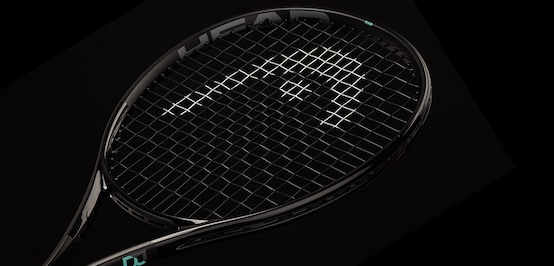
HEAD launches more sustainable(1) BOOM RAW racquet on Earth Day by using Toray’s bio-circular carbon fibers

HEAD continues to innovate with the launch of the BOOM RAW tennis racquet, an encouraging development in the search for a more sustainable future for racquet sports. All of the carbon fibers are bio-circular carbon fibers in the limited-edition and highly innovative BOOM RAW racquet, which offers the same explosive power - along with the same fun, feel and easy playability - as the regular, in-line BOOM racquet. The bio-circular carbon fibers are manufactured by Toray and its subsidiary Toray Carbon Fibers Europe.

#Recycling / Circular Economy

Companies in Japan initiate demonstration to expand the automotive recycling process

DENSO CORPORATION and other partners have been chosen by an industry-government-academia collaborative project aiming to expand the recycle content for automobile in the fiscal year 2023 supported by Ministry of the Environment, Japan.

More News on Textile chemistry

#Textile chemistry

bluesign updates chemical reference lists with stronger PFAS restrictions

bluesign has published the 2026 editions of its three core chemical reference lists, introducing updated substance limits and testing requirements in line with the latest scientific findings and regulatory developments.

#Textile chemistry

Fashion for Good launches DW(O)R-X to navigate the emerging landscape of PFAS-free finishes

Fashion for Good announced the launch of Project DW(O)R-X, a collaborative initiative designed to benchmark PFAS alternative durable water- and oil-repellent (DW(O)R) chemistries. Responding to growing market demand for alternatives to PFAS‑based finishes, the project aims to generate reliable, comparable data that can support informed sourcing decisions and the assessment of emerging chemistries.

#Sustainability

Indovinya advances sustainable solutions with agreement for the supply of renewable Oxygen from Air Liquide

Indovinya, the specialty chemicals and surfactants division of Indorama Ventures, has entered into an agreement with Air Liquide — a world leader in gases, technologies, and services for industry and healthcare — for the supply of renewable oxygen. The agreement represents a strategic advancement in Indovinya’s commitment to sustainability, as it increases the share of renewable raw materials in the production of ethylene oxide, one of its key products.

#Textile chemistry

DyStar releases FY2025 sustainability report, marking a new milestone towards its 2030 targets

DyStar, a leading specialty chemicals company with more than a century of expertise in product development and innovation, today announced the release of its FY2025 Sustainability Report, marking a significant milestone in its sustainability journey and reinforcing its commitment to long-term value creation.

Latest News

#Raw Materials

Brazil sets new cotton export record and consolidates global leadership

Brazil ended the 2025/26 commercial year with a new record, consolidating its position as the world’s largest cotton exporter. Between August 2025 and July 2026, the country shipped 3,373,941 tonnes of the fiber, 19% more than in the previous cycle, and reached record revenue of US$5.3 billion. The result represents a milestone in Brazil’s expansion in the international market and reinforces the country’s role as a strategic supplier to the global textile industry.

#Raw Materials

Better Cotton Initiative partners with Avalo in AI plant breeding for climate-resilient cotton

The Better Cotton Initiative (BCI) has partnered with agriculture solutions company Avalo, whose platform accelerates the speed at which plants with key resiliency traits may be developed.

#Man-Made Fibers

The LYCRA Company expands its co-creation vision through an immersive Lifestyle District at Intertextile Shanghai.

The LYCRA Company, a global leader in fiber and technology solutions for the apparel industry, is reimagining the trade show experience at Intertextile Shanghai Apparel Fabrics Autumn Edition, which opened today in China. Building on the success of last year's ALL IN concept, the company has expanded its co-creation vision into a 356-square-meter Lifestyle District featuring partners Jingzili New Material, JYT Textile, Lianxingfa Knitting, and Trend Textile. The district is part of a larger 895-square-meter pavilion showcasing a total of 19 co-exhibitors. Together, they demonstrate how innovations in fiber, fabric, and garments can be combined to create compelling solutions for both work and play.

#Natural Fibers

Plastic-free stretch technologies drive new direction for denim innovation

As the denim industry looks for ways to reduce its reliance on synthetic fibres, plastic-free stretch technologies are gaining momentum. Developments based on mechanical fabric construction and natural rubber are demonstrating that comfort and stretch can be achieved without conventional elastane, supporting both recyclability and circular product design.

TOP