[pageLogInLogOut]

#Technical Textiles

Flexi-Light PET: Outstanding, sustainable sound insulation for vehicles
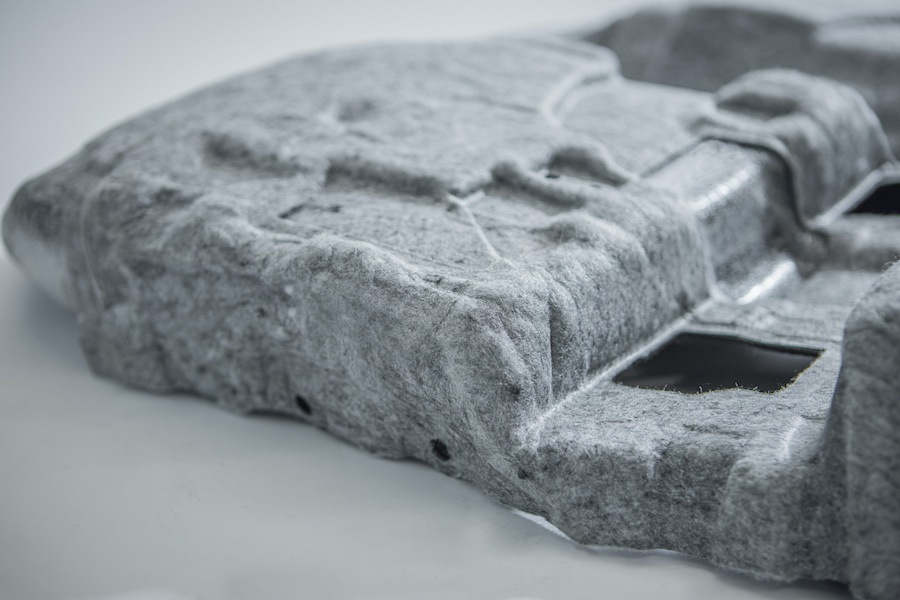
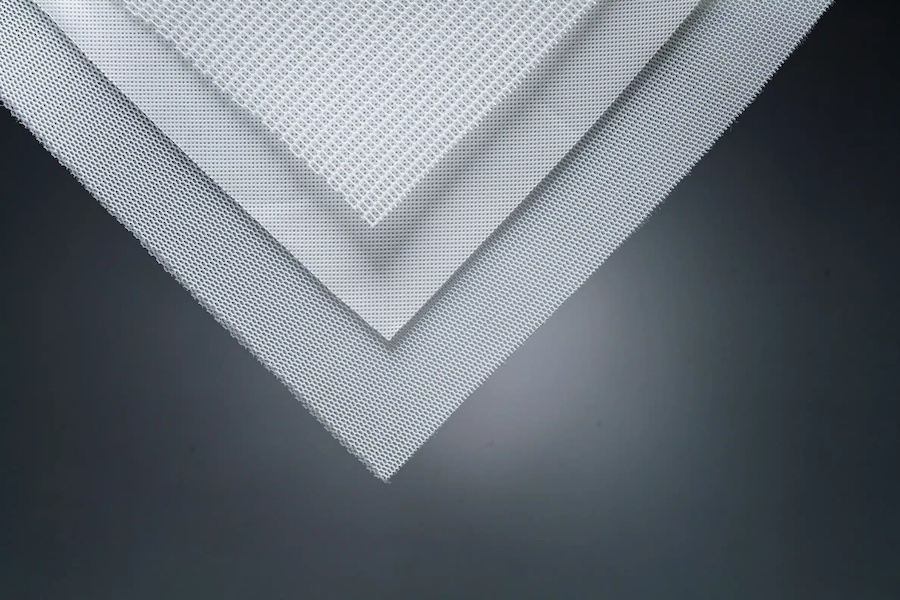
Polyurethane foam has traditionally been used to reduce noise, vibration and harshness (NVH) in vehicles, contributing to passenger comfort. At the Automotive Acoustics Conference in Constance, Germany, Autoneum presented a polyester felt-based sound insulation system that is lightweight, resilient and shapeable, thus combining best-in-class acoustic performance and precise contours with enhanced recyclability.
Flexi-Light PET © 2025 Autoneum


Flexi-Light PET is manufactured from a novel blend of polyester fibers that is primarily sourced from recycled PET. Through a state-of-the-art production process, Autoneum can adjust the fibers’ orientation to produce a proprietary felt with mechanical and acoustic properties comparable to polyurethane foam. The material is flexible and can be molded into 3D shapes, making it an ideal insulation material for interior components with complex contours, such as carpets and inner dashes.

Composed entirely of PET — up to 90% of which is recycled content — Flexi-Light PET can be used as a decoupler in conjunction with other PET-based technologies within Autoneum’s product portfolio to support full circularity, allowing for the reuse of production waste and end-of-life recycling of the product. Flexi-Light PET is the latest addition to Autoneum’s Pure technologies, which are intended to offer an excellent environmental performance throughout the entire product life cycle.

This innovation builds on the Flexi-Loft technology, which is made from a blend of recycled cotton and polyester fibers and was initially introduced by Autoneum in 2021.

Flexi-Light PET is currently available worldwide as insulation for automotive carpets.



More News from

#Techtextil 2026

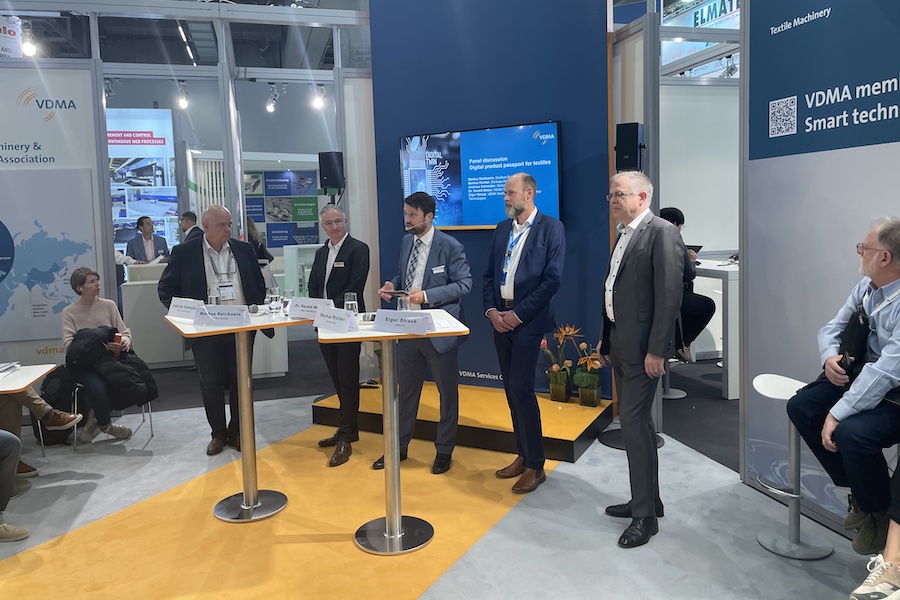
Techtextil and Texprocess 2026: Innovation as a Key Driver of the Textile Future

Innovations are the textile industry’s response to economic uncertainty, geopolitical tensions and continued restraint in investment. Today, this became clear at the press conference of the leading international trade fairs Techtextil and Texprocess. In a panel discussion, industry representatives explored how innovation is accelerating the transformation of the textile sector – from artificial intelligence to sustainable materials and new production models. This innovative strength is concentrated in the Techtextil and Texprocess Innovation Awards, which showcase pioneering solutions driving the textile transformation.

#Spinning

Efficiency reimagined: economical, precise, compact

At this year's PaintExpo in Karlsruhe (April 14–17), Barmag will present an optimized design of its paint metering pump (Hall 3, Booth 3344). It impresses with its low weight, increased productivity, and extended service life. Specially developed for compact robot arms, the pump enables high-precision and economical paint application – ideal for industries such as automotive, aerospace, and renewable energies.

#Dyeing, Drying, Finishing

Monforts announces leadership transition in 2026

Effective from January 1, 2026, Volker Gingter, has been appointed the new Managing Director of A. Monforts Textilmaschinen GmbH & Co. KG, headquartered in Mönchengladbach, Germany, and will steer the fortunes of the leading dyeing and finishing technology company going forward.

#Textile chemistry

Archroma and HeiQ partner to bring revolutionary antimicrobial and odor-control solutions to textile industry

Archroma, a global leader in specialty chemicals towards sustainable solutions, and HeiQ, a Swiss deeptech materials innovator active in functional textiles and sustainable fibers, have entered into a co-marketing agreement that combines their complementary strengths to deliver advanced, planet-conscious anti-odor and antimicrobial technologies to brands, retailers, and textile mills worldwide.

More News on Technical Textiles

#Technical Textiles

Techtextil India 2025 concludes on a stellar note: Sports textile, circular supply chains, bio-based materials and resource-efficient manufacturing under spotlight

The 10th edition of Techtextil India 2025 concluded recently at the Bombay Exhibition Centre, Mumbai, with strong buyer turnout, primarily from Western India, reaching 9144 visitors across 235 Indian cities and 45 countries. Over three days, the trade fair brought together leading domestic and international brands, technology providers, institutional buyers and policymakers, reinforcing India’s ambition to emerge as a global hub for value-added technical textiles. The show hosted 216 exhibitors, featuring over 300 brands and showcased cutting-edge solutions across 12 application areas, keeping the show floor busy throughout the three days.

#Associations

Driving innovation in technical textiles, digitalisation and testing

Members of the British Textile Machinery Association (BTMA) can look back on 2025 as a year marked by notable technological advances and continued progress in global trade, despite an uncertain and volatile market.

#Technical Textiles

Autoneum and Polestar set new benchmarks for passenger experience and sustainability

As the global market leader in sustainable acoustic and thermal management, Autoneum is a key supplier of interior and exterior components for the highly anticipated Polestar 5 model. The successful collaboration between Autoneum and Polestar marks a significant milestone in sustainable automotive engineering: the electric grand tourer sports car features several innovations in lightweight, fully recyclable polyester-based components that ensure a superior driving experience. Polestar 5 was revealed at the IAA Mobility 2025 in Munich and is available in 24 markets.

#Research & Development

More safety and comfort for protective clothing thanks to auxetic fabrics

When everyday materials are pulled, they stretch or elongate in the direction of the pull and become narrower in cross-section. We can also observe this property in two-dimensional textiles. Auxetic structures behave differently here. They have the striking property of not changing under tensile stress or even increasing their width or thickness. These properties are advantageous, for example, in protective textiles or textile filter media. The DITF are researching auxetic fabrics for various applications.

Latest News

#Textiles & Apparel / Garment

YKK collaborates with Coloro to deliver data-driven color ffeasibility for zippers

YKK Corporation announces its collaboration with Coloro, a leading innovator in color solutions and data for the global fashion industry, to introduce joint matching and feasibility results of Coloro colors in YKK’s zippers.

#Heimtextil 2026

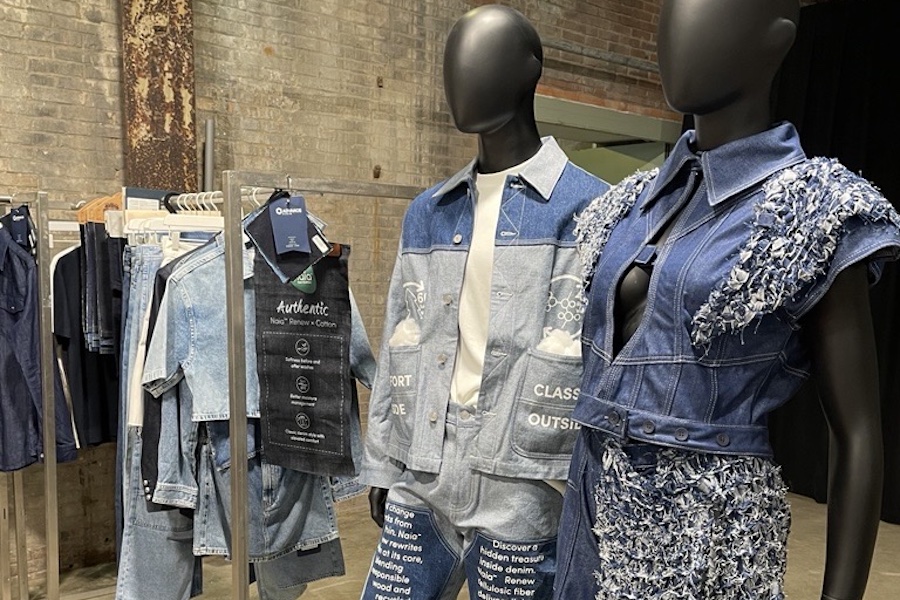
Eastman Naia™ expands All-Night Comfort at Heimtextil 2026

New fill solutions and the debut of sleepwear highlight the versatility and performance of Naia™ Renew, its circular fiber, for home textile applications.

#Heimtextil 2026

Stability in volatile markets: Heimtextil 2026 launches with 3,000 exhibitors and design expertise from Patricia Urquiola

Heimtextil opens the new season with 3,000 exhibitors from 66 countries – maintaining stability while becoming even more international. The new hall layout increases visibility and connects supply and demand even more efficiently. At the opening, architect and designer Patricia Urquiola and Rosa Bertoli, Global Design Director of Wallpaper magazine, talk about AI, innovative materials and future-oriented design for modern living environments.

#Research & Development

Innovation center for textile circular economy inaugurated

Just over eight months after the foundation stone was laid, the new Innovation Center for Textile Circular Economy was officially inaugurated today at TITK Rudolstadt. Thuringia's Minister President Mario Voigt, TITK Director Benjamin Redlingshöfer, and other guests of honor cut the ribbon to the modern building complex and viewed the premises, which are now ready for occupancy. The “DICE – Demonstration and Innovation Center for Textile Circular Economy” is TITK's largest single investment to date. The Free State of Thuringia supported the total cost of €11.5 million with €8 million in GRW and FTI funding.

TOP