[pageLogInLogOut]

#Sustainability

Jeanologia Sustainability Report highlights environmental impact of textile technologies

© 2026 Jeanologia
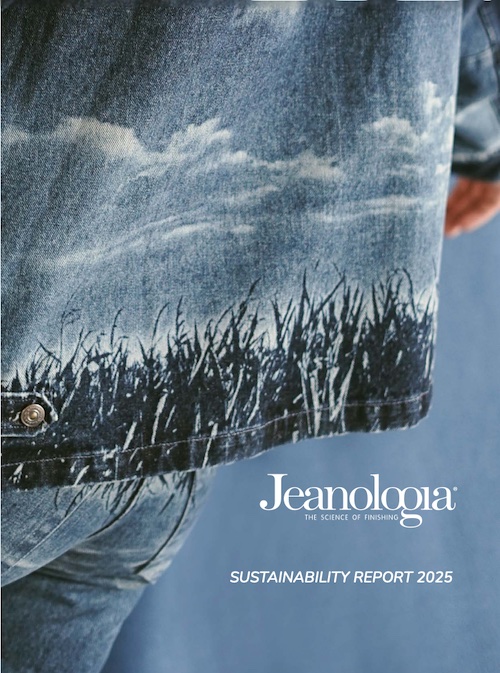
Jeanologia has published its Sustainability Report 2025, reporting a 13.64% reduction in its own carbon footprint and quantifying the environmental impact associated with the use of its technologies across the global textile industry. According to the company’s calculations, their use avoided the pollution of 21.52 million m³ of water and emissions of approximately 103,530 tonnes of CO₂ compared with conventional textile finishing processes.

For more than 30 years, Jeanologia has been developing technologies designed to reduce the environmental impact of textile production. Its Sustainability Report 2025 sets out the company’s latest environmental and social performance as well as priorities for further improving the measurement and reduction of its impact.

“Sustainability is not a destination or a department. It is a way of thinking, creating and acting. Real transformation only happens when sustainability and business progress together,” said Enrique Silla, founder and CEO of Jeanologia.

Reducing operational and industry impact

Jeanologia’s sustainability strategy addresses both the environmental footprint of its own operations and the impact associated with the use of its technologies by textile manufacturers.

In 2025, the company reduced its own carbon footprint by 13.64%, from 895.79 tonnes of CO₂ equivalent in the previous year to 773.57 tonnes.

The report also quantifies the estimated environmental impact of Jeanologia technologies used in factories around the world. Based on the company’s methodology and comparisons with conventional textile finishing processes, Jeanologia calculates that their use prevented 21.52 million m³ of water from being polluted and avoided approximately 103,530 tonnes of CO₂ emissions during 2025.

The relationship between sustainability and the company’s business activities is also addressed through Jeanologia’s first voluntary assessment against the EU Taxonomy. According to the company, 96.37% of its turnover, 84.43% of its capital expenditure (CapEx) and 34.96% of its operating expenditure (OpEx) are associated with activities aligned with the framework, primarily through contributions to climate change mitigation and adaptation and the transition towards a circular economy.

Jeanologia also addresses social responsibility through longer-term projects with organizations in the communities where it operates.

The company has been a participant in the United Nations Global Compact since 2019, committing to its principles covering human rights, labor, the environment and anti-corruption as well as contributing to the Sustainable Development Goals.

Measuring environmental performance

Measurement has become a central element of Jeanologia’s sustainability strategy. The company published its first Sustainability Report in 2017 and introduced an Environmental Profit and Loss Account to quantify the water savings and reductions in CO₂ emissions associated with the use of its technologies.

In 2019, Jeanologia established a cross-functional Sustainability Committee, followed in 2022 by the further development of its reporting process in line with United Nations principles and GRI Standards.

The Sustainability Report 2025 identifies several priorities for the next phase. These include improving the quality, consistency and traceability of emissions measurement, further reducing the environmental impact of the company’s own operations, increasing visibility across its value chain and strengthening resilience to climate change.
© 2026 Jeanologia
© 2026 Jeanologia


EIM draws on more than 100,000 textile processes

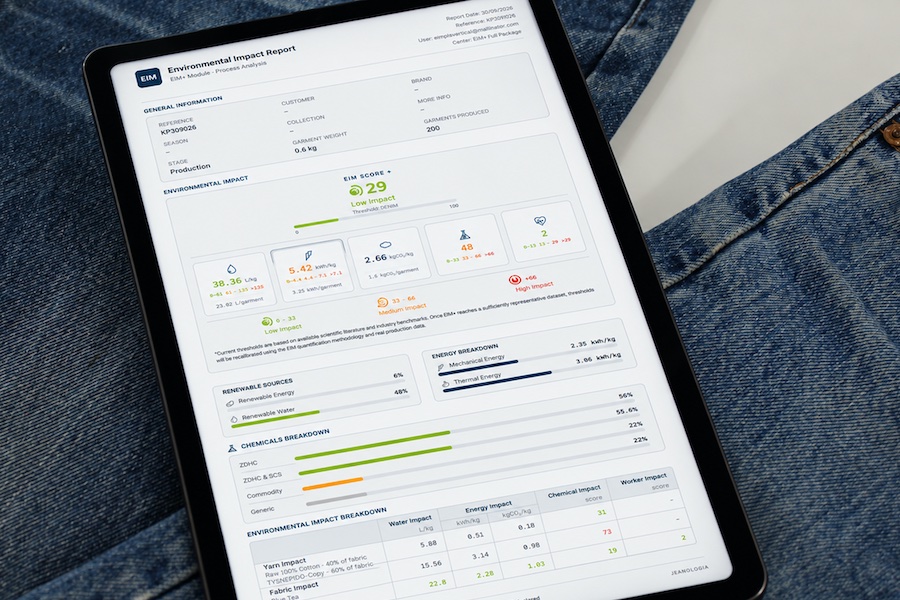
Jeanologia is also extending its measurement approach to textile manufacturing through EIM (Environmental Impact Measuring), its methodology for assessing and comparing the environmental impact of textile processes.

In 2025, the company published its second EIM report, drawing on data from more than 100,000 real-world processes carried out by 359 manufacturers in more than 40 countries. The dataset provides insight into the environmental performance of industrial processes within the global denim industry.

EIM is designed to provide brands and manufacturers with a common framework for measuring and comparing processes and identifying opportunities for environmental improvement. Jeanologia says it is continuing to develop EIM as an independent unit and is allocating additional resources to the methodology.

The Sustainability Report 2025 now sets out further steps for Jeanologia to improve the measurement of its own environmental performance as well as the impact associated with technologies deployed across the textile industry.

More News from JEANOLOGIA S.L.

#Recycling / Circular Economy

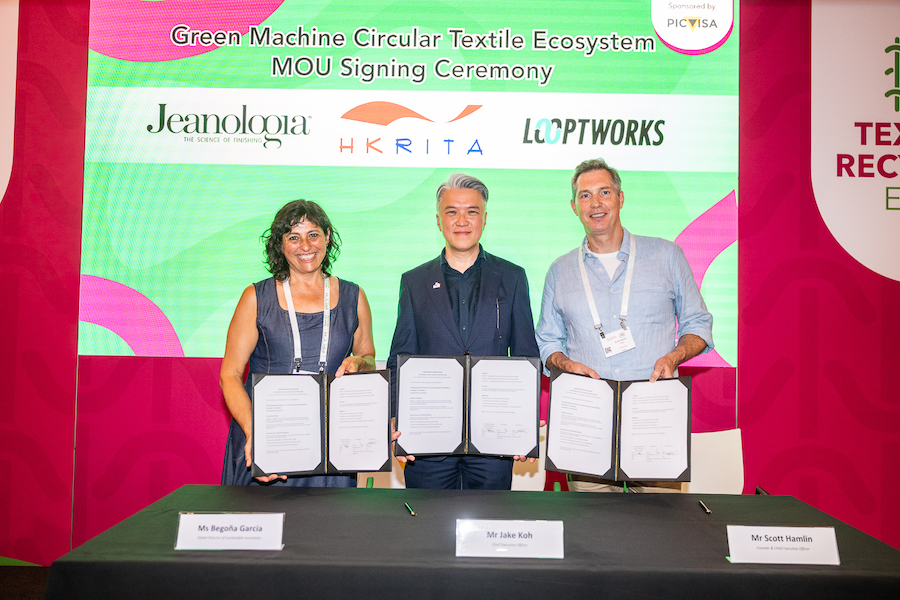
HKRITA signs MoU with Jeanologia and Looptworks to establish the Green Machine Circular Textile Ecosystem

The Hong Kong Research Institute of Textiles and Apparel (HKRITA) yesterday officially signed a landmark Memorandum of Understanding (MoU) with two key global partners, Jeanologia and Looptworks, to establish the Green Machine Circular Textile Ecosystem – a first-of-its-kind collaboration to accelerate the large-scale recycling of blended textiles.

#Denim

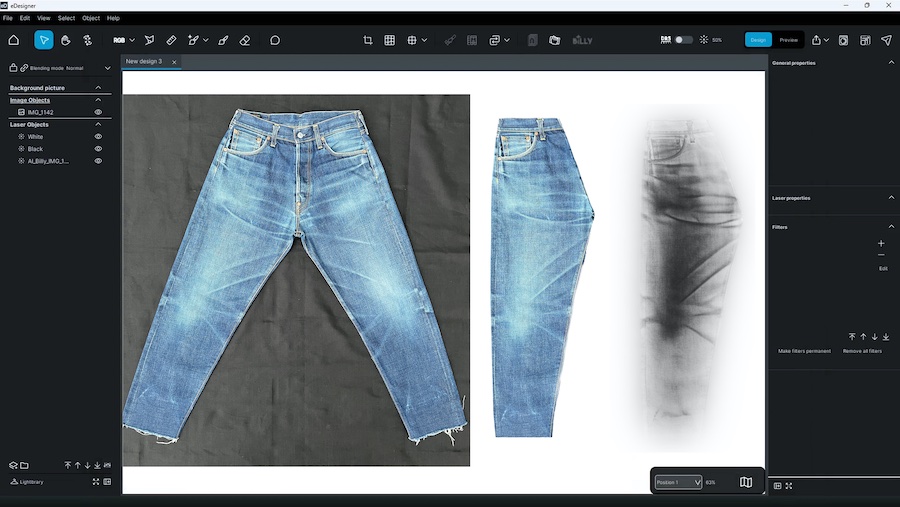
Jeanologia brings “Billy” to China, the AI transforming denim design

The denim industry is turning its attention to Hangzhou this week, where a new edition of Kingpins, the leading international trade show for the sector, takes place on May 21 and 22. There, the Spanish company Jeanologia, a global leader in sustainable technologies for the textile industry, is introducing its latest innovation to the Chinese market: “Billy”, the first artificial intelligence specifically developed for denim finishing design.

#Denim

Denim moves towards sustainability

EIM (Environmental Impact Measurement), the global reference platform for measuring the environmental impact of garment finishing, presents the second edition of its annual report Denim Industry Progress & Insights 2025. The study analyses over 100,000 real denim finishing processes, providing an accurate and up-to-date view of the industry’s evolution towards more sustainable models.

#Textile processing

Jeanologia showcases the future of product development

Jeanologia is showcasing how software is transforming product development in the fashion industry at PI Apparel Europe: The Fashion Technology Show, taking place on March 30–31 in London.

More News on Sustainability

#Sustainability

Global Standards announce launch of a new textile processing standard

The 14th September 2026 marks the public launch of the Global Responsible Textile Standard (GRTS), a new standard for the processing of textiles made from fibres certified to third-party standards recognised by GRTS and covering a broad range of plant, animal, synthetic, man-made cellulosic and recycled fibres.

#Raw Materials

ALLIED expands down traceability with lot-level carbon footprint data

ALLIED Feather + Down has expanded its TrackMyDown traceability platform to include validated cradle-to-gate carbon footprint data linked to individual down lots. The initiative is designed to provide brands and consumers with more detailed environmental information on the materials used in finished products and could also support future data requirements associated with Digital Product Passports.

#Sustainability

bluesign launches bluepass alongside first consumer-facing campaign

With its first consumer-facing advertising campaign, bluesign is taking a new approach to making chemical management, manufacturing standards and third-party verification more visible to consumers. The UNSEEN campaign will launch on September 20 around New York Climate Week and accompanies the introduction of bluepass, bluesign’s new consumer-facing designation.

#Sustainability

Wendy Woods named Chair of the Fashion for Good BV Board

Fashion for Good is pleased to welcome Wendy Woods as its new board chair, succeeding Jill Beraud as of 1 September 2026, who had led the board since 2022.

Latest News

#Industry 4.0 / Digitalization

Orient Rongheng connects production planning across China and Bangladesh with FastReactPlan

Chinese apparel manufacturer Orient Rongheng is implementing Coats Digital’s FastReactPlan to digitalize production planning across its manufacturing operations in China and Bangladesh. The project aims to connect capacity, materials and order planning across multiple factories while integrating these processes with the company’s existing ERP and Manufacturing Execution System (MES).

#Fabrics

Texhibition Istanbul strengthens international sourcing profile with innovation and technical textiles

Texhibition Istanbul Fabric and Textile Accessories Fair concluded its 10th edition from 9–11 September 2026 at Istanbul Expo Center. Around 500 exhibitors presented their latest collections and developments across five halls and 42,850 sqm, covering knitted and woven fabrics, prints, artificial leather, denim, yarns, embroidery, lace, textile accessories as well as innovative, sustainable and technical textile solutions.

#Spinning

Barmag showcases pump solutions for demanding PU applications at PU China 2026

At PU China, taking place November 3–5, 2026, at the Shanghai World Expo Exhibition Center in Shanghai, Barmag’s Pumps Division will present high-performance metering solutions for the processing of polyurethane systems (Hall 1, Booth 135). The focus is on high-precision gear metering pumps that enable the exact delivery of PUR components as well as other high-viscosity and reactive media. With their high metering accuracy, they help reduce material consumption, stabilize processes, and ensure consistently high product quality.

#Industry 4.0 / Digitalization

Lectra launches Apogy with agentic AI for fashion product development

Lectra has launched Apogy, a new cloud-based solution for fashion product development that combines product data, collaborative workflows and agentic artificial intelligence. The platform is designed to connect the different stakeholders and processes between initial design and production while using AI agents to automate tasks and support decision-making throughout the development cycle.

TOP