[pageLogInLogOut]

#Sustainability

IndustriALL Global Union, IF Metall and H&M Group update Global Framework Agreement
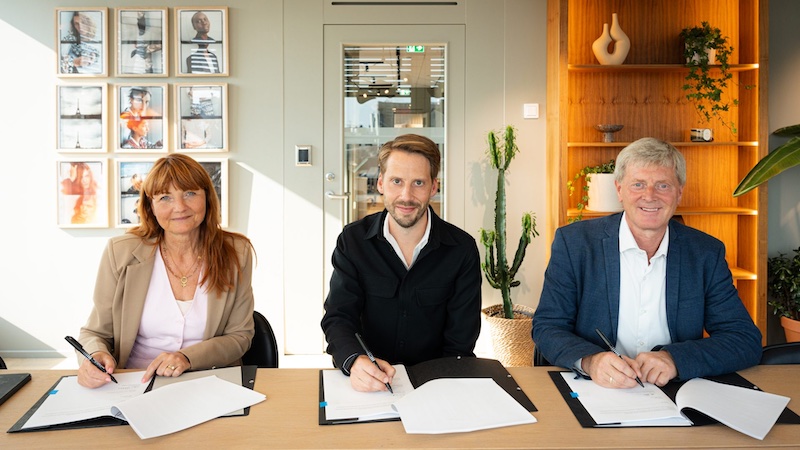
The world’s largest trade union federation, IndustriALL Global Union, representing 50 million workers, and H&M Group have together with the Swedish trade union IF Metall signed an updated global framework agreement, protecting the interests of more than one million garment workers.
© 2024 H&M Group
© 2024 H&M Group


Reflecting on eight years of partnership, this global framework agreement (GFA) marks a new level of commitment to fundamental rights of workers across H&M Group’s supply chain. It covers more than one million garment workers that are employed at the around 1,000 factories run by the manufacturers where H&M Group buys their products.

IndustriALL general secretary Atle Hoie, says on the GFA: “With this renewed agreement we continue the important work in the sector of further empowering workers and unions in H&M’s supply chain. The GFA includes significant achievements, like the inclusion of all core ILO conventions, as well as ILO Convention 190 on violence and harassment. Neutrality in union organizing is another important element of the agreement. The national monitoring committees, a global steering committee, a joint industrial relations development committee, and importantly a dispute resolution mechanism that is bound by the decision of the independent mediator, provide a solid ground for functional industrial relations needed for a sustainable textile and garment industry.”

H&M Group CEO Daniel Ervér says: "We are proud about this long lasting collaboration with IndustriALL and IF Metall to continue empowering workers in our supply chain. Well-functioning industrial relations including collective bargaining are key to achieving good working conditions and improved wages in our supply chain. This contributes to a more sustainable fashion industry through functioning labour markets in the countries where we source our products from.”

IF Metall president Marie Nilsson says: “Through this agreement, we renew the commitment to realise a sustainable garment industry, where workers are organised by trade unions. Now the important part begins, ensuring that we move from policy to practice. We are excited to continue this important partnership.”

The agreement includes an updated governance structure to ensure effective implementation of the agreement, a commitment to collaborate on due diligence in line with OECD Guidelines and strengthened language on preventing and providing remedy to gender-based violence and harassment. The updates also acknowledge the importance of the industry collaboration we engage in to improve working conditions for everyone, like ACT, the ACCORD, and the RSC and Employment Injury Scheme (EIS) in Bangladesh.

The Global Framework Agreement will continue to establish that

  • The parties will jointly promote signing of collective agreements both at factory, company and industrial level between relevant social partners.
  • Workers have the right to refuse unsafe work as part of their health and safety rights.
  • The parties will provide training for both management and union representatives on employers’ responsibilities, workers’ rights and obligations, industrial relations, collective bargaining agreements and peaceful conflict resolution.
  • H&M will actively use all its possible leverage to ensure that its direct suppliers respect human and trade union rights in the workplace.
  • Workers’ representatives are not discriminated against and have access to carry out their representative functions in the workplace
  • H&M, IndustriALL and IF Metall first signed a Global Framework Agreement in 2015, which was renewed in 2016.

Global Framework Agreements

Global Framework Agreements (GFAs) protect the interests of workers employed in all operations of the multinational companies who sign them.

GFAs are negotiated at the global level between trade unions and companies.They establish the best possible standards on trade union rights, on health and safety, and on the labour relations principles adhered to by the company in its global operations, regardless of the standards existing in a particular country.

More News from H&M Group

#Sustainability

Practical toolkit to drive coordinated climate action launched

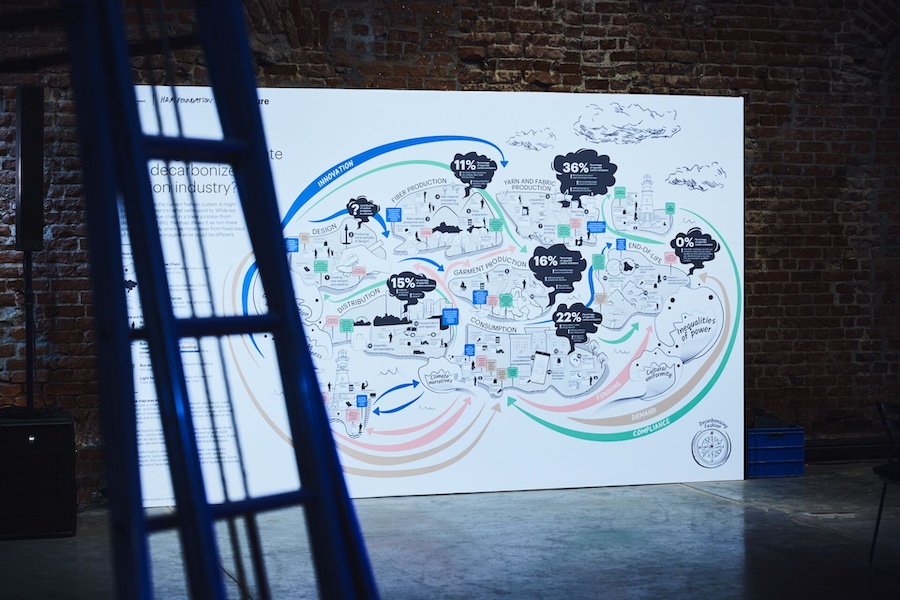
An open-access workshop toolkit enables brands, suppliers, policymakers and investors across the textile industry to apply the System Map in their own work, identifying leverage points to halve emissions and enable a just transition.

#Sustainability

Pioneering open-source framework shows how early innovation drives a just and net-zero fashion future

The non-profit H&M Foundation, in collaboration with Accenture, has unveiled From Signals to Systems Change, an insight report calling on the fashion industry to rethink its role in transformation. At its core is the Reimagined System Map, a pioneering open-source framework that visualises how early-stage innovation could drive a just and net-zero textile future.

#Sustainability

H&M Foundation funds pioneering initiative to build the factories of the future

The H&M Foundation is committing SEK 53 million (approx. EUR 5 million) towards Future Forward Factories, a five-year initiative led by Fashion for Good, to address fashion’s most polluting stage: tier 2 textile processing.

#Textiles & Apparel / Garment

Global Change Award 2026: Nominations now open

On 1 September, the H&M Foundation launched the nomination round for the Global Change Award 2026. The international innovation challenge is looking for early-stage ideas that can drive the textile and fashion industry towards circularity and climate neutrality.

More News on Sustainability

#Natural Fibers

Global Standard gGmbH launches second public consultation for GRTS Draft 2 for the textile industry (1–30 April 2026)

Global Standard gGmbH is pleased to announce the release of Draft 2 of the Global Responsible Textile Standard (GRTS) for its second public consultation. The consultation will be open from 1 April 2026 to 30 April 2026, inviting stakeholders across the textile and apparel value chain to provide input and contribute to the further development of this new Standard.

#Raw Materials

Textile Exchange publishes cotton Life Cycle Assessment study to strengthen impact data

Textile Exchange has published the first in a series of seven Life Cycle Assessment (LCA) studies designed to improve the quality and robustness of environmental impact data for raw material production across the fashion, textile, and apparel industry. The first LCA study focuses on cotton and addresses critical data gaps and methodology variability through new high-quality data across key producing countries. The study includes organic, regenerative, recycled, and country averages for conventional cotton production systems, providing a clearer picture of the associated environmental impact.

#Sustainability

Experts publish APAC policy priorities

Cascale today announced the publication of its APAC Policy Priorities Paper, developed by the Asia-Pacific (APAC) Policy Member Expert Team (MET) to identify key regional sustainability challenges and provide practical, aligned recommendations for policymakers and industry stakeholders across Asia-Pacific.

#Sustainability

GOTS version 8.0 released: advanced supply chain accountability, from fibre to finished product

Global Standard is pleased to announce the release of GOTS Version 8.0, the latest update to the world's leading processing standard for organic textiles. The updated Standard strengthens requirements for air emissions and waste management, as well as criteria for product safety. It introduces new provisions on circularity, microfibre management and updates in residue testing. Version 8.0 also elevates due diligence obligations and formalises governance requirements, including ESG disclosure, anti-corruption policies and conflict-of-interest safeguards, to support credible, responsible business conduct.

Latest News

#Raw Materials

New study shows low environmental impact by Cotton made in Africa Organic Cotton from Tanzania

Today, the Aid by Trade Foundation (AbTF) is announcing the results of a comprehensive life-cycle analysis (LCA) for cotton produced in Tanzania under the Cotton made in Africa Organic (CmiA Organic) standard. The study emphasises the small ecological footprint of CmiA Organic verified cotton. This can largely be traced back to the absence of synthetic pesticides, artificial fertilisers, and artificial irrigation. Consequently, CmiA Organic cotton can help the textile industry meet regulatory requirements as well as science-based targets. The results also show that the consequences of climate change threaten the livelihoods of these cotton farmers, even though the type of agriculture they practise barely contributes to climate change.

#Raw Materials

Better Cotton Initiative strengthens regenerative focus in standard update

The Better Cotton Initiative (BCI) has strengthened the regenerative focus of its field-level standard with the launch of a new version of its Principles & Criteria (P&C), which marks the next step in the organisation’s journey to becoming a regenerative standards system.

#Man-Made Fibers

Selenis and Kintra Fibers partner to scale 100% bio-based synthetic fiber technology

Selenis, a leading global specialty polyester manufacturer, today announced a strategic manufacturing partnership with materials science company Kintra Fibers to scale Kintra’s patented fiber-grade PBS resin - a 100% bio-based and biodegradable material designed for textile applications.

#Functional Fabrics

PERFORMANCE DAYS proves its relevance as the industry’s key meeting point

Held on March 18–19, 2026, PERFORMANCE DAYS once again confirmed its position as a leading international platform for functional textiles. A total of 3.366 trade visitors and around 560 exhibitors gathered in Munich, with the event already kicking off successfully on DAY 0, which received highly positive feedback for its interactive format. Despite challenging conditions caused by the public transport strike in Munich, the event saw strong attendance and a consistently high level of activity across both exhibition days.

TOP