[pageLogInLogOut]

#Sustainability

Teijin to partner with European carbon-management firms for accelerated reduction of greenhouse gas emissions

Teijin Limited announced today that it will form a business partnership with European carbon-management professionals GreenDelta GmbH, Makersite GmbH, Minviro Ltd and PRè Sustainability B.V. to establish a new system aimed at accelerating Teijin’s reduction of greenhouse gas (GHG) emissions throughout product life cycles.

The partnership is expected to further Teijin’s ongoing life cycle assessment (LCA) initiatives to reduce GHG emissions in its manufacture of carbon, aramid fibers and other products as well as lower the environmental impact of product life cycles in a wide range of supply chains, including indirect emissions from the value chains of customer companies, both upstream and downstream (Scope 3), in accordance with the GHG protocol. GHG emission-calculation data and software will be used to visualize emissions from various materials, parts and products, which will support the creation of enhanced emissions-reduction measures.

GreenDelta is a developer of the broadly used LCA and sustainability software offering sustainability consultancy and support. Makersite has a platform that powers sustainable products and supply chain decisions at scale utilizing AI and digital twins. Minviro has an LCA software and is well known for consulting covering the raw materials and battery sectors. PRé Sustainability is a developer of the well-known software and providing various consulting. The know-how and expertise of these companies as well as Teijin will be used to calculate LCA and GHG emissions for environmental impact reduction in a wide range of supply chains.

Teijin aims to further its analysis of GHG emission data to reduce the environmental impacts of its own carbon, aramid fibers and fiber reinforced plastics (FRP) as well as indirect emissions in Scope 3. Teijin also plans to integrate data on the environmental value of recycled materials it collects and tracks in order to visualize the environmental impacts of materials disposal, recycling and reuse, based on which the company expects to disclose more reliable LCA quantitative data.


Manufacturers are striving to meet various environmental goals, including to mitigate and adapt to climate change and develop circular economies. LCA requires strict measures to quantitatively evaluate environmental impacts throughout product life cycles as well as to visualize GHG emissions. Teijin established a method for calculating emissions when manufacturing carbon and aramid fibers and also launched a blockchain-based

traceability platform for enhancing the environmental value of recycled materials for FRP used in aircraft and automotive applications. Meanwhile, industries are beginning to require more specific actions to manufacturers by using quantitative information obtained by comprehensively visualizing the environmental impacts of materials, components and products in an integrated manner.

Teijin is committed to contributing to a more sustainable world by providing innovative, people-centered solutions that improve the peoples’ quality of life. Going forward, Teijin will continue to mitigate the impact of its business on the environment and society in order to realize its long-term vision of being a company that supports the society of the future.



More News from Teijin Aramid

#Yarn & Fiber

Teijin Aramid: Taiichi Machida to succeed Peter ter Horst as CEO

Peter ter Horst will step down as Chief Executive Officer at the end of 2025, after 19 years of dedicated service. Effective October 1, 2025, Taiichi Machida will take over as CEO.

#Yarn & Fiber

Teijin announces availability of DPP-compliant products aligned with Europe’s ESPR Environmental Regulation

Teijin Limited announced today that it has started rolling out initiatives to enable aramid fibers and carbon fibers to be accompanied by Digital Product Passport (DPP) technology, which enhances supply chain transparency by verifying the origins of materials and supporting sustainability claims. The company is using the supply chain traceability system from Netherlands-based Circularise B.V., in which Teijin has invested since November 2024, to develop DPPs for each product.

#Composites

Teijin Carbon showcases new eco-friendly Tenax Next™ R2S 513 6mm short carbon fiber at JEC World 2025

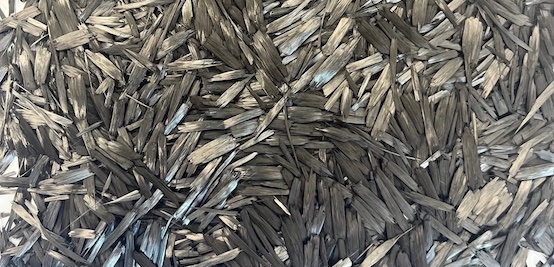
Teijin Carbon, a leading manufacturer of carbon fiber products, is presenting its latest development in sustainable materials at JEC World 2025 (hall 6, G22). New Tenax Next™ R2S 513 6mm is a short carbon fiber product in rice-shaped form for reinforcing thermoplastic compounds that not only offers exceptional performance characteristics but also reinforces the company’s commitment to environmental responsibility and circularity.

#Recycling / Circular Economy

Teijin to invest in Circularise B.V. and adopt its supply chain traceability platform to promote the Circular Economy

Teijin Limited announced today that it will invest in Circularise B.V., a company based in The Hague, Netherlands, which develops product traceability management systems using blockchain technology. Teijin will also implement Circularise’s software to improve visibility into its global supply chain. Circularise’s proprietary “Smart Questioning”(*) solution, which utilizes Zero-Knowledge Proof (ZKP) technology, provides both anonymity and transparency to ensure a highly reliable product traceability system.

More News on Sustainability

#Sustainability

GOTS version 8.0 released: advanced supply chain accountability, from fibre to finished product

Global Standard is pleased to announce the release of GOTS Version 8.0, the latest update to the world's leading processing standard for organic textiles. The updated Standard strengthens requirements for air emissions and waste management, as well as criteria for product safety. It introduces new provisions on circularity, microfibre management and updates in residue testing. Version 8.0 also elevates due diligence obligations and formalises governance requirements, including ESG disclosure, anti-corruption policies and conflict-of-interest safeguards, to support credible, responsible business conduct.

#Sustainability

The nova-Institute establishes new Renewable Feedstock Department to lay the groundwork for industrial defossilisation

The transition from fossil-based to renewable carbon – sourced from biomass, CO₂ utilisation and recycling – is the cornerstone of a climate-neutral chemical industry. The nova-Institute’s new department is dedicated to providing the essential data, analyses and strategic roadmaps required to secure a reliable future feedstock supply and make this transition a commercial and ecological reality.

#Sustainability

Textile Exchange unveils commitment-based pathway for members to accelerate responsible raw material production

Textile Exchange has unveiled further details about its new membership structure, designed to guide the fashion, textile, and apparel industry in a collective course of action toward preferred production systems for raw materials and fibers.

#Textile chemistry

Jeanologia urges industry to accelerate PP Spray phase-out following ZDHC Watchlist update

Potassium permanganate has officially entered the Chemical Watchlist of the ZDHC Foundation, signaling increased scrutiny and potential phase-out of one of the most hazardous chemicals still used in denim finishing. The inclusion confirms an industry shift that Jeanologia anticipated more than a decade ago.

Latest News

#INDEX 2026

EDANA unveils nominees for INDEX™26 Awards: Highlighting the next generation of nonwoven excellence

EDANA is proud to unveil the highly anticipated nominees for the INDEX™26 Awards, the nonwoven industry’s highest accolade for technical and sustainable excellence. Out of a record-breaking field of entries, these finalists represent the cutting edge of material science—from bio-based hygiene fibers and PFAS-free protective textiles to revolutionary water-filtration machinery. Each nominee has been selected by a jury of industry experts for their ability to solve critical global challenges, including the transition to a circular economy and the pursuit of enhanced consumer performance.

#Raw Materials

Lenzing Group positions bio‑based materials as a strategic asset for Europe’s economic security

The Lenzing Group, a leading supplier of regenerated cellulose fibers for the textile and nonwovens industries, hosted a high‑level roundtable in Brussels to discuss how bio‑based materials can strengthen Europe’s economic security and support the shift toward a fossil‑free future. Organized in cooperation with Euractiv, the event brought together representatives of the European Commission, the UK Mission to the EU, academia, civil society, and industry.

#Natural Fibers

Beyond Cotton: Natural Fibres in the Spotlight at the Bremen Cotton Conference - Branded by DNFI

Climate targets, fragile supply chains, and rising regulatory requirements are fundamentally changing the perspective of the textile industry - the focus is increasingly shifting toward the base material. Not only cotton, but natural fibres are gaining significant importance: they stand out not only because of their outstanding functional properties, but also because they make a valuable contribution to the bioeconomy and responsible product development.

#Textiles & Apparel / Garment

Coats to showcase innovative reinforcement and filler materials for leather goods and accessories at APLF 2026

Coats, a world-class Tier 2 manufacturer and trusted partner for the apparel and footwear industries, will be promoting four advanced materials from its ‘Lifestyle Solutions’ portfolio at APLF 2026 in Hong Kong in March. Each innovation has been specifically engineered to help luxury and premium brands elevate the craft, durability, sustainability and creative expression required in the manufacturing of handbags, purses, and other high-end designer accessories.

TOP