[pageLogInLogOut]

#Spinning

Shiny and fancy effects

Brand new ways to combine metallic-coated thread with filament - Metallic-coated yarns such as Lurex have been well established in the market for decades. One current trend is to integrate these yarns into fabrics to achieve a shiny and fancy effect. Featuring specific yarn combinations, these yarns are finding a wide range of applications, from home textiles to fashion apparel including shoes and hosiery.

The market is constantly in search of unique fancy products. With this in mind, SSM has worked to develop an innovative way of creating brand-new combinations using the air-covering process. The SSM XENO-AC produces not only standard air-covered yarns, but also sophisticated yarns in which Lurex is added to various filament yarns such as PES and PA, either DTY or FDY. These yarns give the final knitted or woven fabric an exceptional shiny effect with incomparable properties. The production process involves Lurex thread being inserted into an air-pressure nozzle along with one or more filament yarns where they are then comingled. Figures 1, 2 and 3 show the special yarn path that has been engineered to achieve a smooth and regular feed of the metallic-coated thread directly from the supply packages.


Fig. 1: Yarn path of SSM XENO-AC, Lurex (C) 2020 SSM


The filament yarn covering the Lurex reduces itchiness and lends the fabric a softer touch than that achieved through direct use in knitting or weaving. The filament cover also protects the Lurex from abrasion and prevents breakage in downstream processes. For some products, the air-covering process can replace more expensive and slower conventional covering processes used to cover fi laments with Lurex. Typical production speed for the air-covering process of Lurex is about 20 times higher than conventional covering. Furthermore, elastane can be fed into the yarn, enhancing the fabric properties by creating a stretch effect for glittery and elastic fabrics commonly used in denim, socks, and hosiery. Figure 4 shows a woven fabric and figure 5 various yarn packages with fabric samples made of filament yarn and Lurex.

Fig. 2: LUREX supply packages (c) 2020 SSM


Fig. 3: SSM XENO-AC LUREX execution (c) 2020 SSM


A retrofit is available for customers who already own a XENO-AC and can easily modify a standard execution to handle Lurex. A similar retrofit is also available for the SSM DP5-T air-texturing machine (Fig. 6), in turn providing manufacturers even greater flexibility in the creation of new types of fancy yarns.

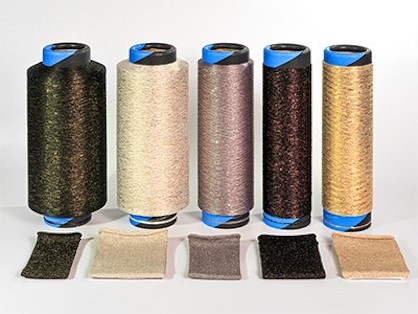
Fig. 4: Woven fabric with Lurex inserts (c) 2020 SSM


Fig. 5: Yarn packages and fabric samples made of filament and Lurex (c) 2020 SSM


Fig. 6: SSM Air Texturing Machine, DP5-T (c) 2020 SSM


For more information about SSM solutions please visit: www.ssm.ch

NOTE: Lurex is a registered brand name of the Lurex Company, Ltd.


More News from SSM Schärer Schweiter Mettler AG

More News on Spinning

#Spinning

Rieter advances strategic repositioning amid market volatility

Rieter successfully completed the acquisition of Barmag on February 2, 2026, and reached an important milestone in the company’s repositioning. Barmag will be integrated into the Rieter Group as the “Man-Made Fiber” Division. With this strategically transformative acquisition, Rieter is expanding its core business beyond the short-staple fiber business in a targeted way. This positions Rieter as the global market leader along the entire value chain for natural and man-made fibers. In addition, as a complete systems supplier, Rieter is further strengthening its technological leadership in the areas of automation and digitization.

#Spinning

Measure and control the fiber – optimize yarn quality

Producing consistent yarn quality is an everyday challenge – and a very difficult one. Detailed knowledge and understanding of the fiber raw material is absolutely critical to achieving the best possible quality in the yarn. To help spinners, Uster experts have put together guidelines for avoiding yarn irregularity claims, in a special edition of the Uster News Bulletin.

#Spinning

A breakthrough innovation for diaper manufacturers

Developed and manufactured by Mesdan, Italy, the Loop knotter type 093E is a special version of the well-known Loop knotter, specifically designed to join hygiene-grade spandex yarns used in the personal care industry.

#Spinning

Rieter responds to higher raw material prices

Global political and economic developments have been leading to rising raw material and energy costs for some time. The textile machinery industry is also affected by this trend. Rieter machines and components consist to a large extent of steel, copper, aluminum and electronics. These materials in particular have seen higher demand and higher prices in recent months.

Latest News

#Digital Printing

Hybris Productions scales licensed apparel production moving from screen to digital with Kornit Digital

Kornit Digital, a global pioneer in sustainable, on-demand digital fashion and textile production technologies, today announced that Hybris Productions has adopted Kornit’s direct-to-garment (DTG) digital production technology to scale licensed apparel manufacturing with greater speed, design flexibility, and on-demand production capabilities supporting retail and e-commerce growth.

#Composites

STFI at JEC

The Sächsisches Textilforschungsinstitut e.V. (STFI) will present composites for aviation made from recycled carbon fibres and natural fibres, as well as printed lightweight elements for surface heating in electric vehicles at JEC World in Paris.

#Nonwovens

Change in Suominen Leadership Team: Minna Rouru to pursue new opportunities outside the company

Suominen Chief People and Communications Officer (CPCO) Minna Rouru has announced her decision to leave Suominen to take on a role in another company. She will leave Suominen at the latest on August 26, 2026. The CPCO succession process has been initiated and will be announced in due course.

#Research & Development

Fabolose: Fabricating vegan and circular leather alternatives from bio-tech-derived cellulose

Fabulose is an EU funded project coordinated by the German Institutes of Textile and Fiber Research (DITF). Its consortium consists of leading research institutes, biotech innovators, and industry stakeholders who aim to create high-performance, biobased and recyclable leather-like fabrics, using efficient biotech production routes for bacterial cellulose, cyanophycin and bacterial pigments

TOP