[pageLogInLogOut]
TRÜTZSCHLER SPINNING - FROM WASTE TO VALUE

#Spinning

The new Weftmaster SFB
Weftmaster SFB © 2020 Leopfe
Have you ever wondered how your parcels arrive safely? We know the answer! E-commerce has gained ground worldwide - and it’s here to stay. Warehouses and trucks are working hard to ensure that a whole variety of goods are not only available for customers, but also that they are shipped in the fastest possible way. In this hectic online shopping world, tarpaulins are all around us!

Redesigning our future

Protecting goods from adverse weather and other factors helps to ensure satisfied end-customers. Loepfe's WeftMaster SFB-L yarn brake is the perfect system for producing these coated technical fabrics on projectile and rapier looms in the most economical way.

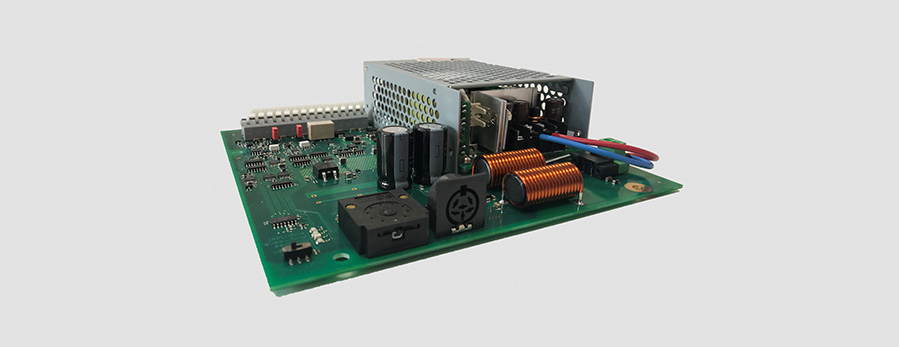
The WeftMaster SFB weft brake has been in use on projectile and rapier weaving machines worldwide for many years. Since its foundation in 1955, Loepfe has been a reliable, expert partner to the weaving industry. Still today Loepfe remains totally committed to the further development of its various weaving products. For instance, the control electronics for the SFB weft brake were recently redesigned for the future. The new electronics can now control 4 brakes instead of the previous 3, which saves space and simplifies the brake deceleration setting. In addition, the inputs are now also galvanically isolated.

Projectile looms are designed for the production of a wide variety of fabrics and are considered to be space-saving, especially when producing heavy fabrics. Thus the applications are almost endless, especially in the field of technical textiles. The focus is always on the high-quality requirements of the various end-products. Especially when yarns with a low tensile strength are used, weft tension is a decisive parameter.

Weftmaster SFB © 2020 Leopfe


Too much stretching can lead to uneven fabric or - in the worst case - to weft thread breaks, which lead to expensive machine stoppages. Therefore, a constant, even weft thread tension is essential for all yarn types.

By using the WeftMaster SFB electronic weft thread brake, the number of weft breaks can be reduced by at least 50%. Its use pays off for the weaving mills within a very short time and significantly improves the quality of the fabric. Every weft break is a potential source of error (including start-up faults, the formation of stripes, etc.).


You can find more information on how the WeftMaster SFB weft brake increases machine efficiency here [Know-How].

The WeftMaster SFB weft brake is in use for the production of:

  • Tarpaulin fabrics for trucks, advertisements, agriculture and architecture
  • Filter fabric, e.g. for water filtration or also paper production
  • Geotextiles
  • Screen prints
  • Canvas
  • Conveyor belts, straps
  • Blood filters
  • Microphone filters for mobile phones
  • Speaker filters for mobile phones
  • Carbon fiber fabrics for auto parts
  • Carpet backing
  • Bigbags
  • Potato bag fabrics
  • Silk fabrics for underwear
  • Wool fabrics for suits

The requirements of the different fabrics are highly varied and weaving mills often depend on individual solutions. In this awareness, Loepfe offers its customers suitable solutions for all types of projectile and rapier weaving machines. Furthermore, weaving mills can always count on the straight-forward and quick assistance of Loepfe experts.
More News from LOEPFE BROTHERS LTD.

More News on Spinning

#Research & Development

GenuTrace client advisory: Is your cotton supply chain UFLPA ready?

U.S. Customs and Border Protection has released updated operational guidance (CBP Publication No. 5560-0526) expanding its forced labor enforcement framework. The guidance supersedes the original 2022 UFLPA Operational Guidance and now covers all forced labor enforcement authorities — UFLPA, CAATSA, and WROs/Findings — in a single unified document. For cotton importers, the enforcement posture has not softened. It has become more structured, more documented, and more demanding. Learn more about UFLPA.

#Spinning

"We will become a recycling powerhouse"

The textile industry is now in its fourth consecutive year of crisis, while automation, artificial intelligence and recycling are reshaping the rules of the game. In this interview, Rieter CEO Thomas Oetterli discusses the first signs of a market recovery, reflects on his first three years at the helm of the company, explains the integration of Barmag, outlines Rieter’s vision of the fully automated spinning mill and highlights the strategic importance of recycling. In doing so, he explains why the new Rieter Group aims to play a leading role in transforming the textile value chain into a circular economy.

#Spinning

Barmag and Hitech Automation enter into partnership for an auto-doff system for texturing machines

Barmag (Suzhou) Technology Co., Ltd. and Hitech Automation Solutions PVT LTD. of Surat, India, have agreed to an exclusive partnership to jointly market Hitech’s Doffmatic automation solution for Barmag’s proven manual eFK texturing machines. In many texturing facilities, manual doffing processes remain heavily operator-dependent – resulting in issues such as increased scrap, inconsistent quality, and limited productivity.

#ITM 2026

Uster’s new Recycling Opening Index guides spinners to the perfect blend

Uster AFIS 6 now offers the key data for better decisions when blending recycled fibers. Process control is decisive in determining the quality and economic outcome. The new R Recycling Module of AFIS 6 introduces the Recycling Opening Index (ROI), so spinners can optimize their circularity credentials. It was officially launched at ITM 2026 in Istanbul, Türkiye.

Latest News

#Carpets

DOMOTEX Hannover 2028 off to a strong start with expanded portfolio

Preparations for DOMOTEX 2028 are already gaining strong momentum. Following its successful repositioning as the Home of Flooring & Interior Finishing, around 100 international manufacturers have already secured their place during the initial registration phase.

#Knitting & Hosiery

STOLL: Agreement signed for the divestiture of selected assets

In early 2025, KARL MAYER announced its strategic decision to focus on its core business areas of WARP KNITTING, WARP PREPARATION, and TECHNICAL TEXTILES. As part of this move, the flat knitting machine business under the STOLL brand was discontinued and the production site in Reutlingen was closed in October 2025.

#Research & Development

TERNAfil wins first place at PitchMiUp Night 2026 in Minden

The RWTH spin-off TERNAfil has developed MAXCarbon, a new high-performance hybrid fibre that combines the mechanical performance of carbon with the temperature and corrosion resistance of ceramic materials. For this development, TERNAfil was awarded first prize at the PitchMiUp Night in Minden on 21 May 2026.

#Nonwovens

Lenzing Group highlights scalable, bio-based nonwovens solutions at leading global industry fairs

From CIDPEX in China to Techtextil in Frankfurt and INDEX in Geneva, the Lenzing Group showcases ready-for-market, bio-based nonwoven solutions and receives industry recognition for LENZING™ Nonwoven Technology.

TOP