[pageLogInLogOut]

#Sustainability

Inditex and UNI Global Union renew their global agreement
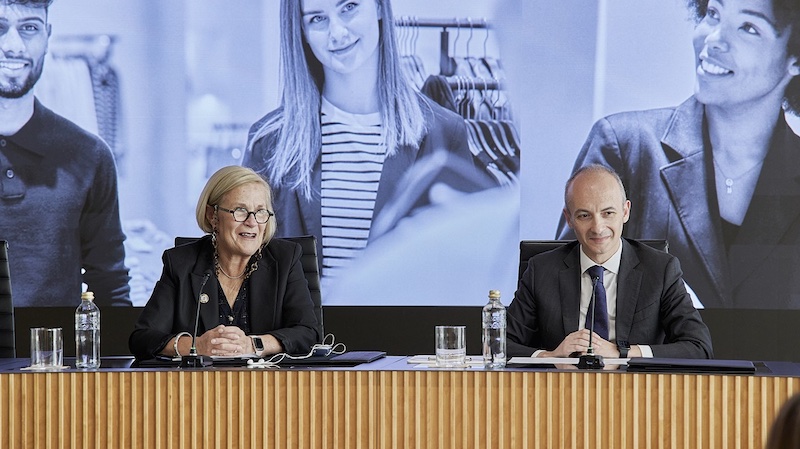
Inditex and UNI Global Union, a federation of 20 million service workers, including retail workers, from more than 150 countries, renewed the Framework Agreement originally entered into by the two organisations in 2009 to foster best labour practices.
© 2024 INDITEX
© 2024 INDITEX


This new framework agreement reinforces the firm’s endorsement of the labour principles enshrined in the internationally recognised conventions and delves deeper into newer challenges such as the inclusion and retention of people with functional diversity. 

Both parties will also work together to combat sexual harassment and gender violence in the workplace, prioritising worker awareness to ensure victims know how to proceed in the event of possible breaches of their fundamental rights. Together, they will also reinforce appropriate channels for notifying incidents in a confidential manner and procedures for guaranteeing adequate investigations and foster the implementation of precautionary, corrective and/or disciplinary measures. 

During the signing event organised at the company's headquarters in Arteixo (Coruña), Inditex’s CEO, Óscar García Maceiras, and the general secretary of UNI Global Union, Christy Hoffman, revisited the key milestones that have marked the collaboration between the Group and global union and outlined the challenges being tackled by the new agreement in an attempt to stay in touch with the ever-changing global economic and social reality after 15 years of fruitful work together. 

Óscar García Maceiras said how “the commitment to the more than 160,000 people who populate our company and our efforts to have a positive impact on our communities are strategic priorities for Inditex”, going on to underline that, “constantly improving the opportunities to engage with the unions is key to continuing to make progress on the common goal of ensuring workers’ wellbeing”. 

Lastly, he stressed that “the inclusion of persons with disabilities is one of the key thrusts of our commitment to people”, to which end he recalled the commitment made by Inditex to the ILO in January 2023 to boost inclusion of such professionals into its network of stores, logistics facilities, warehouses and offices all around the world, an effort that will “translate into the addition of 1,500 new Group employees by February 2025”.

The general secretary of UNI Global Union, Christy Hoffman, said that “Our agreement is a much-needed response to pressing issues facing retail workers today including a post-pandemic spike in third-party violence as well as the effects of digitalization. We also see many countries in Europe adopting Human Rights and Due Diligance legislation, on to that end we are pleased Inditex recognizes exercises its responsibilities in this agreement and will now include franchised operations as a topic of discussion with UNI Global Union”.

The event was also attended by representatives from the main Spanish unions, including the general secretary of Servicios Comisiones Obreras, José María Martínez, and the general vice-secretary of FeSMC-UGT, Pedro Aller, as well as members of the European Works Council. According to the representative from Comisiones Obreras, “labour rights are the seeds of advanced democracies, understood as social states under the rule of law. Those rights are based on the freedom of association. Global labour agreements such as Inditex's signify a commitment, at the level of transnational enterprises, with democracy around the world”. The spokesperson for UGT said "This marks a new horizon for continuing to flesh out this agreement and the values it enshrines and to further dialogue that is constructive and collaborative. As has already been proven, this agreement is one of the instruments best suited to ensuring compliance with workers’ social, labour and economic rights".

More News from INDITEX

More News on Sustainability

#Sustainability

Fashion for Good launches Project Footprints Unpacked to close environmental data gaps in the footwear industry

Fashion for Good has launched Project Footprints Unpacked, a joint effort with Carbonfact, New Balance, On and two other brands. The project aims to transform primary data from suppliers into ISO-compliant life cycle assessment (LCA) datasets to guide robust reporting and scalable decarbonisation decisions in the footwear value chain.

#Sustainability

Cascale adds more than 20 material options to the Higg MSI

Cascale announced version 3.13 of the Higg Material Sustainability Index (Higg MSI) on 12 November 2026. The update adds more than 20 material options from 10 data contributors and revises more than 20 existing datasets. It has been available on the Worldly platform since 11 November.

#Sustainability

Inside the Making at Ecomondo 2026: Textile supply chain calls for transparency and measurable sustainability

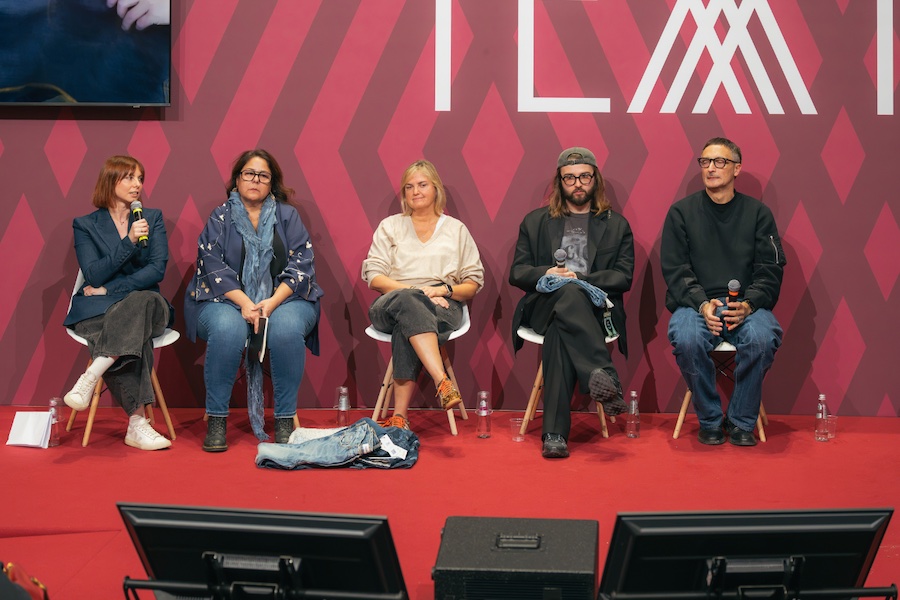
Transparency, verifiable environmental claims and closer cooperation across the textile value chain were the central themes of the “Inside the Making: The Power of the Process” panel at Ecomondo 2026 in Rimini. Representatives from denim and sportswear manufacturing, textile finishing, digital printing and branding discussed how technological innovation and supply chain collaboration can help companies meet new European regulatory requirements while making sustainability economically viable.

#Recycling / Circular Economy

H&M Foundation highlights economic barriers to scaling circular textile systems

Discussions at Textile Exchange 2026 underline the need for coordinated investment, reliable material flows and a fair distribution of costs and risks across the textile recycling value chain.

Latest News

#India ITME 2026

Groz-Beckert targets energy efficiency, productivity and process reliability across six textile technology sectors at India ITME 2026

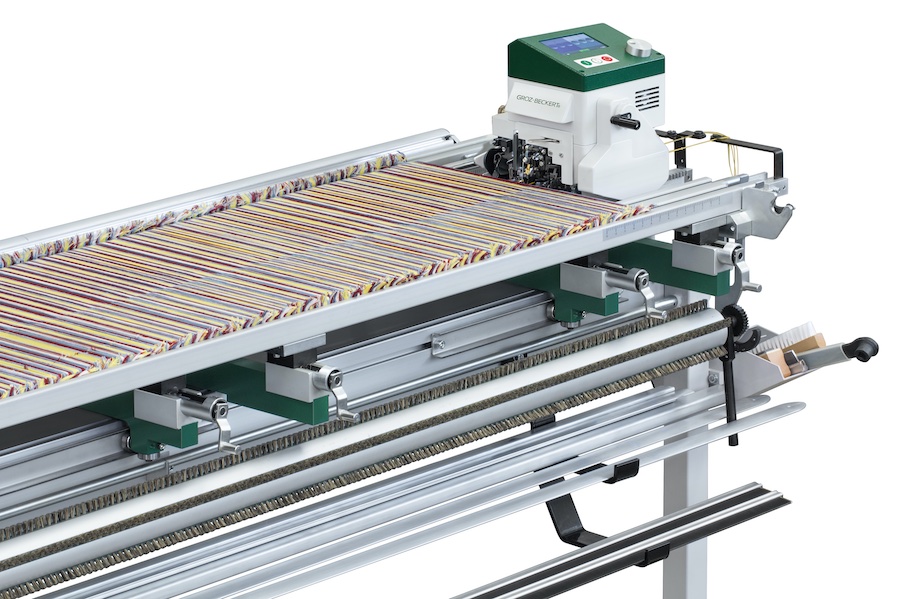
At India ITME 2026 in Greater Noida from 4 to 9 December, Groz-Beckert will present its latest innovations across all six product areas – Knitting, Weaving, Nonwovens, Sewing, Tufting and Spinning. At Hall 14, Booth B6, the German textile technology specialist will showcase advanced components, systems, services and digital solutions designed to improve energy efficiency, productivity, process reliability and textile quality while addressing the increasingly diverse requirements of modern textile manufacturing.

#Knitting & Hosiery

Monarch extends its Woven Look knitting technology from mattress ticking to apparel and performance textiles

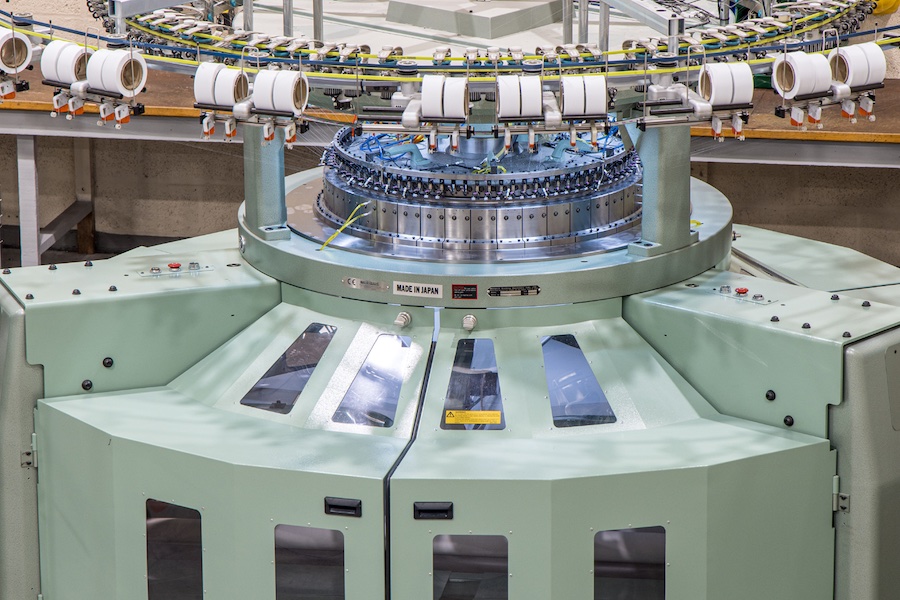
A fabric technology originally developed to reproduce the appearance of woven mattress ticking by Monarch Knitting Machinery, a member of the British Textile Machinery Association (BTMA), is finding new applications in apparel. With the introduction of its 36-gauge OD5B-M-7ED44 double-knit machine, Monarch is expanding the possibilities for producing fine knitted structures that closely resemble woven textiles while retaining the stretch and comfort associated with knitting.

#Textiles & Apparel / Garment

VIATT 2027 names Thailand as its inaugural Partner Country

Thailand will take centre stage as the inaugural Partner Country at the Vietnam International Trade Fair for Apparel, Textiles and Textile Technologies (VIATT), returning to Ho Chi Minh City from 24 to 26 February 2027. Featuring a pavilion, dedicated product displays and various fringe events, the Partner Country programme will showcase Thailand’s textile and fashion capabilities, complementing an exhibitor line-up spanning VIATT’s three sectors. Alongside this new cooperation, eight additionally confirmed country and region pavilions and zones are set to strengthen the fair’s international offering.

#Recycling / Circular Economy

IVGT presents initial findings from the Erasmus+ project Skills4Circularity

At Albstadt ID 2026, hosted by Albstadt-Sigmaringen University of Applied Sciences, IVGT project manager Iris Schlomski presented initial findings from Skills4Circularity on 12 November 2026. She opened her presentation with an estimate from the European Environment Agency: the EU generated around seven million tonnes of textile waste in 2022. The Erasmus+ project brings together 21 partners from twelve countries to identify the skills textile and clothing professionals need to design more durable products, use fewer resources in production and recover fibres after use.

TOP