[pageLogInLogOut]

#Research & Development

Hochschule Niederrhein simulates the textile industry of the future

The textile and clothing industry in the Rhineland region is experiencing a significant innovation boost: the future-oriented project ‘Textilfabrik 7.0’ (Textile Factory 7.0) of the Niederrhein University of Applied Sciences (HSNR), together with other strong industry players, is now being launched: On 15 July, Mona Neubaur, Minister for Economic Affairs, Industry, Climate Protection and Energy and Deputy Minister-President of the State of North Rhine-Westphalia (NRW), will present the funding approval for this ambitious project, which will implement the digital and sustainable industrial production of tomorrow in an exemplary manner, generate new jobs in the Rhineland region and be competitive in a global context.

Mona Neubaur, Minister for Economic Affairs and Deputy Minister-President: "Textile Factory 7.0 is a real turning point for the Rhineland region – and a strong signal for future-proof jobs, sustainable production and regional innovation. Here, business, science and local authorities are working together to show how transformation can be achieved in practice: with high-tech, circular economy and educational opportunities that keep young people in the region. This is structural change you can touch – innovative, climate-friendly and, above all, achieved together."

The HSNR is receiving a total of €25 million in funding from the Ministry of Economic Affairs, Industry, Climate Protection and Energy of the State of North Rhine-Westphalia and the Federal Ministry for Economic Affairs and Energy. The HSNR received advisory support during the application phase from the Zukunftsagentur Rheinisches Revier (Rhenish Mining Area Future Agency).

The textile and clothing industry is facing a comprehensive transformation: production and business processes are becoming digital, robotics must be introduced, and the restructuring of the textile industry into a sustainable circular economy is essential. Supply chain resilience, skills shortages and a secure energy supply are further major challenges. ‘In Textile Factory 7.0, leading players from research, industry and local authorities have joined forces to initially establish a technology centre where precisely these challenges can be addressed for and together with companies and, hopefully, brought closer to a solution,’ says Prof. Dr.-Ing. habil. Maike Rabe, Professor of Textile Finishing and Ecology, Head of the Textile and Clothing Research Institute at the Niederrhein University of Applied Sciences and also project manager.

In addition to the HSNR, RWTH Aachen University with the ITA (Institute for Textile Technology), WFMG – Wirtschaftsförderung Mönchengladbach GmbH, the Association of the Rhenish Textile and Clothing Industry, the Textile Academy NRW and the Association of the North-West German Textile and Clothing Industry are also involved in the large-scale project and will be represented in person at the certificate presentation ceremony.

The mayor of Mönchengladbach, Felix Heinrichs, will also be present. A technology centre has just been approved: ‘On 1 October, work will begin on setting up the technology centre in the Monforts Quarter in Mönchengladbach, where representative machines and equipment for the development of on-demand production, microfactories, smart textiles and biological and textile laboratories for the extraction of sustainable raw materials will be available for joint transfer work by practitioners and scientists,’ says Maike Rabe.

However, the overall Textile Factory 7.0 (T7) project goes beyond the technology centre, as application-oriented research and development is intended to stimulate the transformation process in the textile industry in such a way that industrial production in the Rhineland region is established in a zero-emission park (T7 Park). In addition, the aim is to strengthen existing companies. ‘In this way, we as a university will make a central contribution to structural change in the region, so that the textile industry will continue to be a significant location factor and magnet of international importance in the future,’ emphasise University President Dr Thomas Grünwald and Vice President for Research and Innovation Prof. Dr Kathleen Diener.

Mayor Felix Heinrichs emphasises: ‘Textile Factory 7.0 is one of the most important structural change projects for the entire region. Now it's finally happening! In cooperation with universities, industry and the city, we are creating sustainable employment in Mönchengladbach in such an impressive environment as the Monforts Quarter.’

Another special feature of the project is that it is intended to continue on an economic basis without further government funding. The project partners mentioned above have already founded a joint company, T7 Management GmbH, to take over the project structures and content after the funding period. The project is thus intended to be sustainable in every respect. ‘To be clear: this is a joint project between industry and science with the aim of technological transformation,’ says Maike Rabe. Textile and clothing companies can use the know-how and technology for their own benefit, while at the same time providing impetus to the factory. ‘In this way, we bring together expert knowledge from science and practice.’

For Textile Factory 7.0, the Department of Textile and Clothing Technology is working across disciplines with experts from across the university, for example when it comes to expertise in energy management, mechanical engineering, robotics or biotechnology, according to Maike Rabe. ‘Our students will also benefit from exciting research projects and maker spaces where they can implement their own ideas.’
More News from Institut für Textiltechnik of RWTH Aachen University (ITA)

#Composites

More affordable, environmentally friendly hydrogen pressure tanks at ITA-JEC booth

As a highlight of the JEC, the Institut für Textiltechnik (ITA) of RWTH Aachen University will be presenting hydrogen pressure tanks manufactured using multifilament winding processes at the NRW joint booth in Hall 5, Stand G65.

#Research & Development

Pellet press enables thermomechanical textile recycling on a pilot scale at ITA

Since the end of 2025, the technical centre of the Institut für Textiltechnik (ITA) of RWTH Aachen University has been equipped with a pellet press from the manufacturer Amandus Kahl GmbH & Co. KG, Reinbek, Germany. This press can efficiently compact shredded synthetic textiles at a throughput of up to 25 kg/h and process them into pellets with a diameter of 4 mm.

#Research & Development

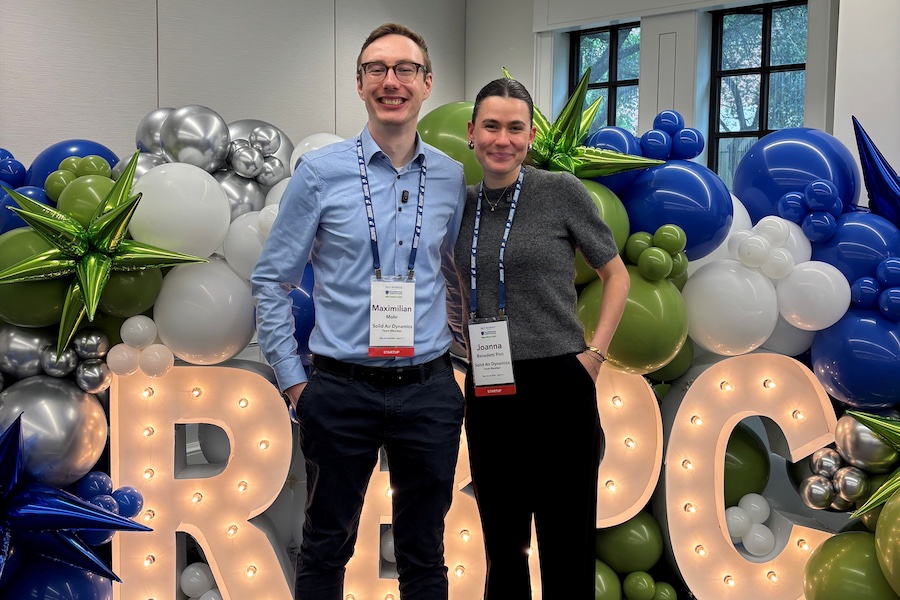
Solid Air Dynamics wins second place at RWTH Innovation Award

On 30 January, RWTH spin-off Solid Air Dynamics was awarded second place in the RWTH Innovation Awards for its research in the field of aerogel fibres. Manufactured from renewable raw materials, aerogel fibres offer outstanding thermal insulation, are extremely lightweight and completely biodegradable, and can consist of over 90 per cent air.

#Research & Development

Award-winning research for sustainable carbon fibre cycles

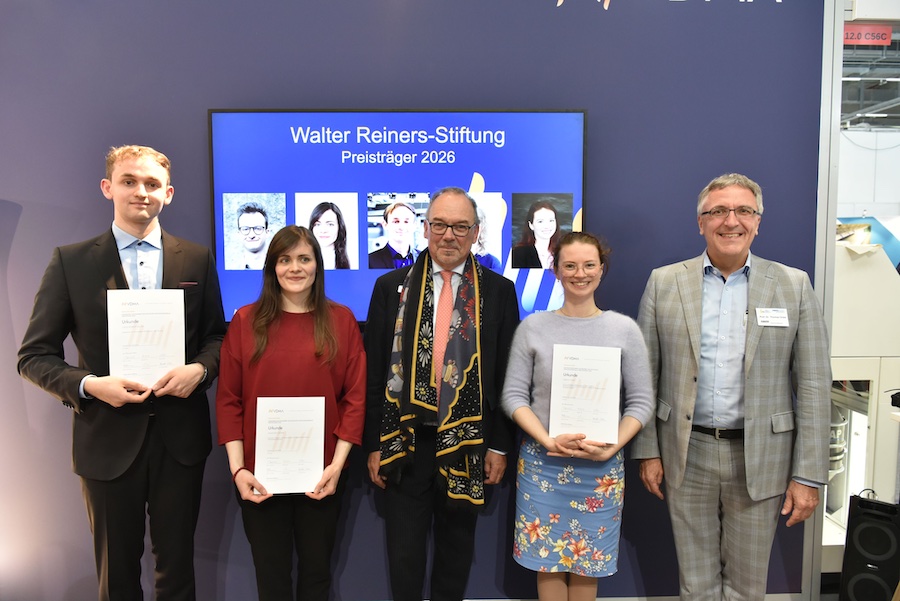
Sustainable recycling of carbon fibres is possible through targeted electrochemical surface modification, which makes the sizing of carbon fibres resistant to solvolysis. ITA PhD student Sabina Dann was awarded the MSW Award from RWTH Aachen University for her master's thesis on this development. The award ceremony took place on 12 November 2025 in Aachen.

More News on Research & Development

#Research & Development

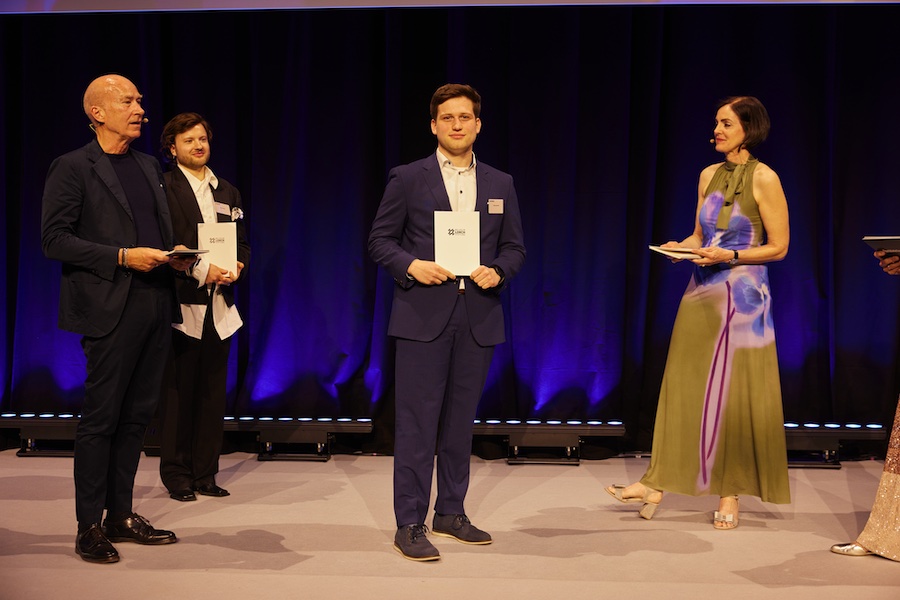
Pioneer of the first hour: Michael Carus steps down after more than 30 years from nova-Institute’s Management

After more than three decades at the helm, founder and CEO Michael Carus is set to step down as head of the Renewable Carbon division on 1 March 2026. Lars Börger as the new CEO, will take over this key position of the nova-Institute together with COO Linda Engel, while Carus will remain with the research and consulting company as a senior advisor and shareholder. This change takes place after a one-year transition phase, as planned.

#Man-Made Fibers

Toray develops AURLIST™ polyester filament fiber with luxurious luster and ultra-fine structure

Toray Industries has developed AURLIST™, a new polyester filament fiber designed to combine luxurious luster, soft loft and a subtle fibrillated surface texture. The company primarily targets applications in women’s apparel such as tops, bottoms and dresses.

#Sustainability

The nova-Institute establishes new Renewable Feedstock Department to lay the groundwork for industrial defossilisation

The transition from fossil-based to renewable carbon – sourced from biomass, CO₂ utilisation and recycling – is the cornerstone of a climate-neutral chemical industry. The nova-Institute’s new department is dedicated to providing the essential data, analyses and strategic roadmaps required to secure a reliable future feedstock supply and make this transition a commercial and ecological reality.

#Composites

STFI at JEC

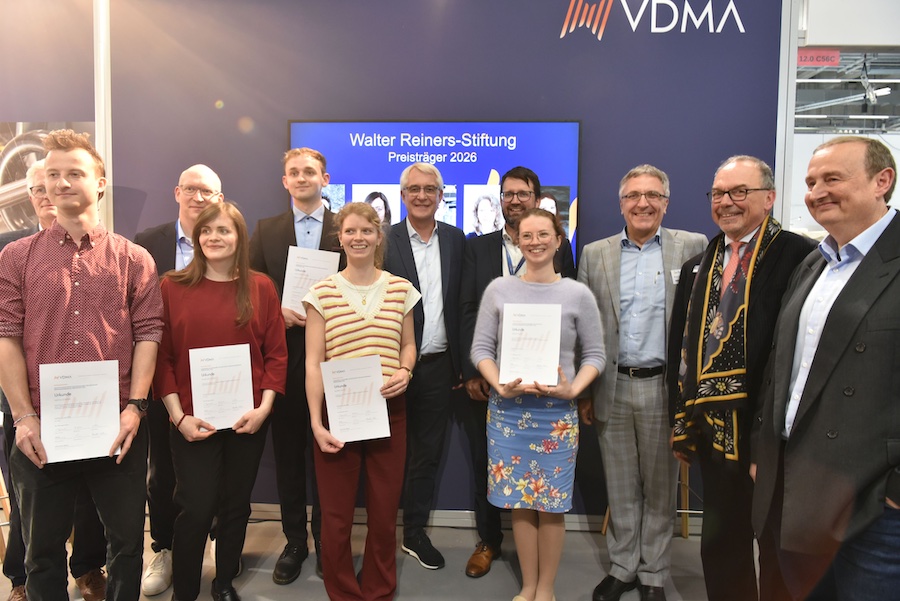
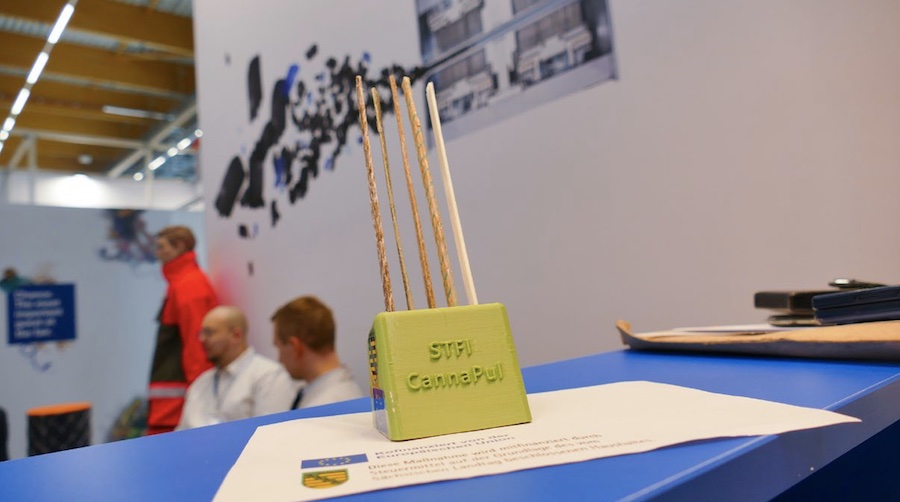
The Sächsisches Textilforschungsinstitut e.V. (STFI) will present composites for aviation made from recycled carbon fibres and natural fibres, as well as printed lightweight elements for surface heating in electric vehicles at JEC World in Paris.

Latest News

#Techtextil 2026

Knowledge that drives progress: Techtextil and Texprocess forums strengthen the global textile industry with a future-oriented programme

From AI-supported production optimisation and digital manufacturing solutions to circular technologies and bio-based high-performance materials: the Techtextil and Texprocess forums provide answers to the key challenges of the global textile industry with a curated content programme. As hubs for innovation and knowledge, they enhance competitiveness and offer orientation in changing markets. From 21 to 24 April 2026, Frankfurt is once again the global meeting point for thought leaders from industry, research and business.

#Techtextil 2026

Enhanced protection without added weight: Innovative technology for flame-retardant textiles doubles reaction time and ensures high wearing comfort

Flame-retardant textiles have long faced the same dilemma: the higher the level of protection, the greater the compromise in comfort, weight and breathability. This is especially important for workwear and protective clothing worn for long hours, where comfort is crucial to wearer acceptance and satisfaction. At Techtextil 2026 in Frankfurt, Swiss company Textilcolor AG will unveil pyroshell™, an innovative flame-retardant technology designed to tackle this challenge. Protection is provided by a graphite-based functional layer integrated into the textile structure, which doubles the reaction time before burns occur while significantly enhancing comfort. The material does not release any toxic fumes and offers textile manufacturers entirely new opportunities to design and produce protective and functional garments. It is also durable enough to withstand up to 50 industrial washes.

#Composites

JEC WORLD 2026 opens: Paris becomes the World Capital of composites

JEC World 2026 opens tomorrow, March 10, at Paris Nord Villepinte, bringing together the entire composites ecosystem for three days of exhibitions, conferences, technical sessions, strategic industry gatherings, and business meetings. As the “festival of composites”, JEC World is also a destination for a broad spectrum of other professional visitors, eager to discover how these advanced materials can offer sustainable solutions to their industries.

#Spinning

Barmag presents the next generation of POY production – energy-efficient and partial-automated

With POY 2.0, Barmag is introducing a completely redesigned spinning concept that takes the production of partially oriented yarn (POY) to a new level in terms of technology and economy. The solution, which was presented to a selected audience of experts for the first time at ITMA Asia + CITME 2025, was met with great enthusiasm: several yarn producers worldwide immediately expressed their interest in a pilot plant.

TOP