[pageLogInLogOut]

#Research & Development

Leading technology for high-level research

Textile reinforcements in concrete do not require any corrosion-related covering and thus make building cheaper, more environmentally friendly and more versatile. Completely new architectural solutions can be implemented through the slender construction forms of textile concrete. The Institute for Textile Technology (ITA) at the RWTH Aachen University is investigating what is actually possible. Already between 1999 and 2011, the Construction Composites Research Group developed textile reinforcement structures for concrete structures as part of the Collaborative Research Centre 532.

KARL MAYER’s new BIAXTRONIC® CO at the RWTH Aachen University for innovative semi-finished fibre products

The work was carried out on a KARL MAYER Malimo machine, and then continued at the ITA after 2011. Recent textile projects placed high demands on machine technology and required new investments. Once again, the ITA opted for a model from KARL MAYER. “The Malimo was already a great machine. Unfortunately, it was just getting on a bit,” says Martin Scheurer from the Department of Textile Machinery and ITA, when explaining their choice. He and his colleagues also valued KARL MAYER as a competent partner when it came to questions and service. They are now excited about the newcomer: a BIAXTRONIC® CO was delivered to Aachen at the end of 2020. It had been completely assembled and functionally tested in advance at KARL MAYER Technische Textilien in Chemnitz, since it is a tailor-made model. The high-performance warp knitting machine with course-oriented weft-insertion was equipped with novel functions that will open up new research paths for the ITA and its research partners.
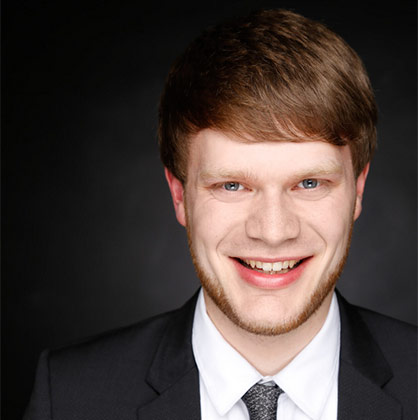
Martin Scheurer, employee at the Department of Textile Machinery and Institute of Textile Technology at the RWTH Aachen University is looking for the research work on the BIAXTRONIC® CO © 2021 KARL MAYER


A made-to-measure model

BIAXTRONIC® CO is predestined for the production of biaxial non-crimp fabrics and composite structures, and was equipped with specific features for its use at the ITA. One of these is KAMCOS® 2. The latest generation of KARL MAYER’s Command System offers an ethernet interface for integrating the machine into an existing network. This enables participation in future-oriented research topics such as Industry 4.0, inline quality control, sociology and process chain networking. 


“We are planning to transmit the data from the producing machine via ethernet to the Internet of Production Excellence Cluster at RWTH Aachen University. The cluster deals with production research in high-wage countries,” explains Martin Scheurer. The BIAXTRONIC® CO for the research facility was also equipped with an EL pattern drive. Electronic guide bar control and the ability to vary process parameters inline contribute to the production of locally adapted, tailor-made textiles.

What’s more, the product quality can also be significantly improved. For example, Martin Scheurer wants to use the EL drive to investigate the influence of the warp knitting thread in different lapping variants on the geometry of the roving used and thus on the behaviour of the finished grid structure. Other details that favoured the BIAXTRONIC® CO are a working width that meets standard industrial practices and the possibility of feeding basic substrates such as nonwovens in a standard process.

Research- and practice-based projects

With BIAXTRONIC® CO, ITA researchers want to further develop and produce reinforcement structures for concrete matrices in particular. Functional models and prototypes for other areas of application are also to be produced on the machine. Martin Scheurer and his team want to produce reinforcements for wound dressings and hybrid warp knitted fabrics on a nonwoven substrate, for example. The combination of grid structures with other materials facilitates fundamental research into geotextile applications. Projects for filtration technology can also be implemented. The production of unidirectional (UD) non-crimp fabrics for fibre composites and of flat warp knitted fabrics for heating textiles, which can be used in the mobility sector, are also conceivable. In addition to research and development work, the ITA has its sights set on production practice using the BIAXTRONIC® CO. Users of weft-insertion machines can use the capacities and expertise in Aachen to optimise their production processes, produce prototypes of new textile structures or even test the processing of new materials.

Save the date: discovery awaits

Interested parties can find out what can be done with the BIAXTRONIC® CO on 19 April 2021. To kick off the new year, the ITA invites you to discover the new machine as part of a one-day industrial event. “We look forward to exchanging information with industry and research partners from all over the world,” says Martin Scheurer. He is looking forward to stimulating discussions on the needs and future developments relating to companies in the manufacturing sector in particular.

More News from KARL MAYER Textilmaschinenfabrik GmbH

#Knitting & Hosiery

The newcomers HKS 3-M EL ECO and HKS 4-M EL ECO set new standards in the tricot market

Short development cycles, frequent pattern changes, and maximum efficiency – even with small batch sizes: Today's global fashion and apparel market demands more flexibility than ever before. High-performance warp knitting machines with compound needles (HKS) and EL pattern drive are KARL MAYER's answer to this challenge.

#Knitting & Hosiery

KARL MAYER celebrates 35 years of EL pattern drive

KARL MAYER is celebrating an anniversary this year: on 30 November 1990, the first warp knitting machine with electronic guide bar control, the KS 4 EL, was delivered – another milestone for patterning. As early as 1980, the SU gearbox with the MRS42SU had initiated the transition from mechanical chains to digital data.

#ITMA Asia + CITME Singapore 2025

India becomes growth engine for the warp knitting industry

ITMA ASIA 2025 exceeded all expectations for KARL MAYER – above all thanks to the strong interest from India: around 30% of the qualified discussions were held with partners from this traditional textile country. The response underlines the growing importance of the Indian market, which could become the second largest sales region for KARL MAYER after China. The warp knitting industry in particular is developing dynamically.

#Weaving

Solution for lower energy consumption proves itself in practice

Getzner Textil is one of KARL MAYER’s first customers to use PROSIZE with CASCADE. The innovative weaving specialist has tested the steam and condensation system by KARL MAYER and determined the energy savings it achieves. Karl-Heinz Vaaßen, Head of Textile Drying at KARL MAYER, assisted Getzner Textil’s production specialists both with the tests and with all questions relating to CASCADE. In a conversation with Werner Egger, Head of Weaving, and Thomas Rossi, Head of Warp Preparation at Getzner Textil, he learnt more about the system’s benefits for his customer.

More News on Research & Development

#Research & Development

More safety and comfort for protective clothing thanks to auxetic fabrics

When everyday materials are pulled, they stretch or elongate in the direction of the pull and become narrower in cross-section. We can also observe this property in two-dimensional textiles. Auxetic structures behave differently here. They have the striking property of not changing under tensile stress or even increasing their width or thickness. These properties are advantageous, for example, in protective textiles or textile filter media. The DITF are researching auxetic fabrics for various applications.

#Research & Development

Fraunhofer CCPE presents the “Monomaterial Design Set” – Innovative solutions for circular product design

Composite materials made from different types of plastic often extend the lifetime of products but make recycling more difficult in the circular economy. That is why Fraunhofer CCPE has developed the “Monomaterial Design Set”. This new approach helps to reduce the variety of plastics used in durable products and offers circular solutions for designers and product developers.

#Research & Development

How innovations drive BASF’s success

“Innovation has always been part of BASF’s DNA. Especially in these volatile times, it is crucial to leverage our innovative strength to develop competitive solutions that differentiate us as a company in our markets and give us a competitive edge,” said Dr. Stephan Kothrade, Member of the Board of Executive Directors of BASF and Chief Technology Officer, at the company’s Research Press Briefing held today. To achieve this, BASF implemented its “Winning Ways” strategy about a year ago with the clear goal of becoming the preferred chemical company to enable its customers’ green transformation.

#Research & Development

Small tolerances, big impact and a recyclable alternative to elastane

ITA Master's student Janne Warnecke investigated tension differences over the fabric width in the weaving process and thereby contributed to quality assurance; ITA Bachelor's student Jasmin Roos found a basis for the development of recyclable yarns and textiles. For these developments, they were awarded the Walter Reiners Foundation's Promotion and Sustainability Prizes on 27 November. Peter D. Dornier, Chairman of the Walter Reiners Foundation, presented the awards at the Aachen-Dresden-Denkendorf International Textile Conference (ADD-ITC) in Aachen, Germany.

Latest News

#People

Happy Holidays!

Dear reader, the year 2025 is drawing to a close. We are entering what we hope will be a peaceful holiday season, spending time with our families and taking a moment to pause and reflect. We hope we have been able to support you once again this year with relevant news and articles, and we look forward to surprising you with many innovations in the coming year. Enjoy the festive season, stay healthy, and we wish you a happy and joyful holiday season.

#Weaving

Lindauer Dornier announces leadership transition in weaving machine business

After more than ten successful years at Lindauer DORNIER GmbH, Mr Wolfgang Schöffl will leave the family-owned company at the end of the year to enter well-deserved retirement.

#Heimtextil 2026

Texpertise Focus AI: Messe Frankfurt puts Artificial Intelligence centre stage at its international textile and apparel trade fairs

Under the banner 'Texpertise Focus AI, Messe Frankfurt will place a strong emphasis on Artificial Intelligence (AI) across its international textile and apparel trade fairs from 2026 onwards, setting a future-shaping signal for the industry. The initiative highlights the responsible use of AI along the entire textile value chain, from fibre production to the point of sale. The programme will launch at Heimtextil in Frankfurt in January 2026.

#Technical Textiles

Autoneum and Polestar set new benchmarks for passenger experience and sustainability

As the global market leader in sustainable acoustic and thermal management, Autoneum is a key supplier of interior and exterior components for the highly anticipated Polestar 5 model. The successful collaboration between Autoneum and Polestar marks a significant milestone in sustainable automotive engineering: the electric grand tourer sports car features several innovations in lightweight, fully recyclable polyester-based components that ensure a superior driving experience. Polestar 5 was revealed at the IAA Mobility 2025 in Munich and is available in 24 markets.

TOP