[pageLogInLogOut]

#Recycling / Circular Economy

STADLER: the secret of accurate commissioning and timely project delivery
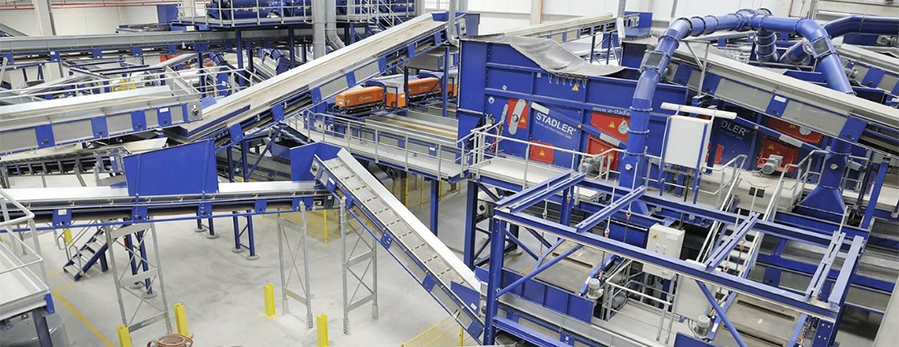
ECOparc4 Sorting Plant in Spain, built by STADLER © 2023 STADLER
The pursuit of a circular economy to address the global waste issue is driving a growth of the recycling industry and an increasing complexity in its demands. Environmental services providers and waste management companies need sorting facilities capable of processing the high volumes required efficiently while produce outputs of the high quality needed for recycling. When planning the construction of a new plant or upgrade of an existing one to meet these requirements, selecting the company for designing and building it is a critical business decision.

The importance of timely commissioning

A key factor in the selection is the company’s ability to work to the agreed schedule and complete commissioning on time.

“The material sorted at our facility is connected to contracts with fixed starting points,” explains Tristan Merk, Project Manager at environmental services provider PreZero Recycling. “Due to this fact, it is very important that the scheduled milestones will be reached. If the construction or the commissioning period isn’t on time, we risk problems with our customer or losing the contract.” David Aguado Teruel, Technical Director at GRIÑO Group in Spain agrees: late delivery on the project would have “a very negative effect, because the delay has a direct impact on the viability of our business plan and commitments, and our ability to deliver our services to our customers and public administrations.”
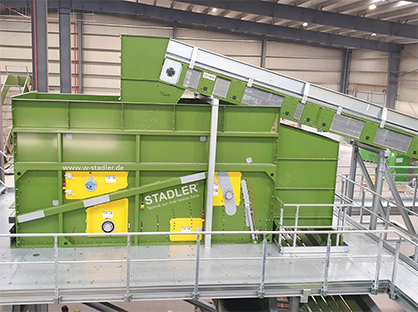
STADLER Ballistic Separator in Almonacid del Marquesado Sorting Plant for GRIÑO Group © 2023 STADLER


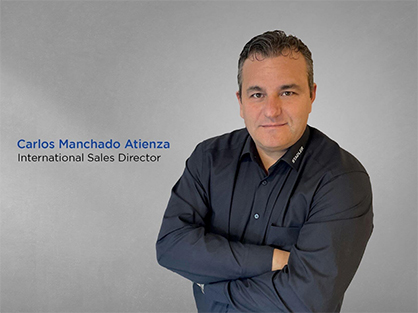
STADLER is well aware of the critical importance of timely commissioning, as Carlos Manchado Atienza, International Sales Director at STADLER explains: “The implications of a delay for our customer are serious: we are talking about losses in the thousands of Euros for non-recovered material and fixed costs already contracted – and this is without taking into consideration landfill costs.” Ventura Montes, Catalonia Waste Treatment Plants Manager at PreZero Spain, adds: “For a packaging plant, we could face monthly costs of some 350,000 Euro for alternative waste treatment arrangements and around 400,000 Euro in lost opportunities. For a larger facility, such as an urban waste treatment center, it could be some 350,000 Euro a month in fixed costs plus around 2 Million Euro in lost sales.”
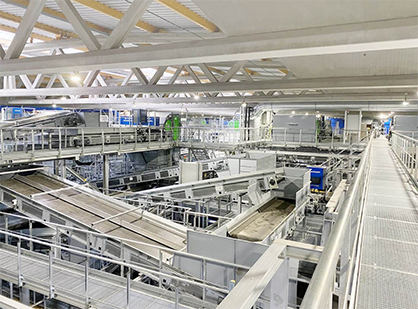
PreZero Sorting Plant for light packaging in Eitting, built by STADLER © 2023 STADLER


“That’s why we study the schedule of our work very seriously,” says Carlos Manchado Atienza. “STADLER is recognized not only for the quality of our products and our expertise, but also for our seriousness in the start-up and punctuality in project delivery.” Ventura Montes agrees: “One of STADLER’s strengths is that not only do they always deliver on the agreed date, but usually they are even a few days early. Every time we contracted STADLER for the construction or upgrade of plants, commissioning has always been on time and very few adjustments were required after installation.”

STADLER’s secret to smooth and timely commissioning

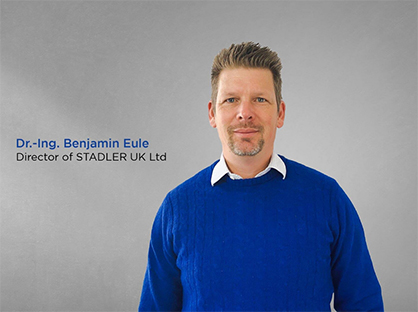
Careful planning based on STADLER’s experience is a key factor in its ability to consistently deliver on time. “First of all, we only provide delivery dates we know we can achieve,” says Benjamin Eule, Director, STADLER UK and Head of Commissioning. “The final delivery is not only the timely installation, but also the commissioning of the facility to go into production. We work with realistic time schedules, and we allow sufficient time for each stage.”

STADLER’s in-house capabilities are also an important factor, as Benjamin Eule explains: “As we have in-house teams for mechanical installation and electrical planning, installation and Process Control Programming, we can control and manage the delivery schedules. We also have quicker internal communication and greater flexibility to adjust the work requirements across multiple projects.” Carlos Manchado Atienza adds: “All the preparation work in detailed and construction engineering helps us in manufacturing and gives us an advantage when preparing the assembly.


The clear roles and effective collaboration of the local and Head Office teams are crucial, as Carlos Manchado Atienza states: “Coordination and planning between the different departments are key. The good work of the sales teams with the basic engineering, followed by the Head Office’s work in detailed and construction engineering give us a competitive advantage. The professionalism of everyone involved and knowing our teams well – from sales and project management to production and assembly – gives us the security to trust the deadlines we have set.”
PreZero Sorting Plant for light packaging in Eitting, built by STADLER © 2023 STADLER


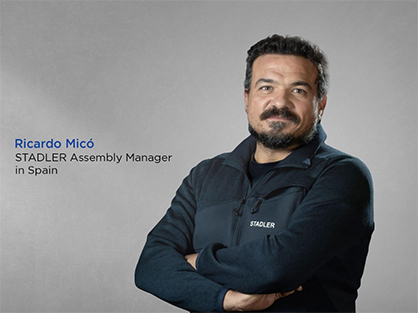
Ricardo Micó, STADLER Assembly Manager Spain, agrees: “For us, respecting the project milestones is key, as well as the effective coordination of all STADLER departments to meet our clients’ needs. This gives us unmatched strength in working with our clients’ full confidence.”

A reputation for quality work and timely commissioning

Environmental services provider PreZero has contracted STADLER on several projects, turning to the company again and again for its reliability: “There are always challenges and unforeseen events; STADLER adapts and is flexible; if necessary, their assembly team will work weekends, holidays, nights – on occasion they have even doubled resources to deliver on the agreed day,” says Ventura Montes. “If it’s a large-scale project or an upgrade is expected to be difficult, we always try to work with STADLER.”
Carlos Manchado Atienza, International Sales Director at STADLER  © 2023 STADLER
Carlos Manchado Atienza, International Sales Director at STADLER © 2023 STADLER


STADLER recently designed and built the sorting and recycling plant in Almonacid del Marquesado, Spain, for GRIÑO Group. “The project coincided with the final stages of the coronavirus pandemic, so it was necessary to manage very well the resources and materials needed for the assembly,” concludes David Aguado Teruel. “In my experience, STADLER is a company that has demonstrated in its projects its commitment to meeting deadlines and milestones. I would recommend STADLER for the construction, installation and commissioning of waste treatment plants.”

Ricardo Micó, STADLER Assembly Manager in Spain © 2023 STADLER


More News from TEXDATA International

#ITM 2026

ITM 2026: The new geography of textile production

New production hubs are emerging across North Africa and Central Asia, while Türkiye is accelerating its transformation toward higher-value, technology-driven and more sustainable textile manufacturing.

#Research & Development

“Production is a product”

From technical textiles and AI-driven robotics to the limitations of textile circularity: Professor Dr Thomas Gries looks back on more than two decades of development at ITA Aachen. In the interview, he explains why production technology remains a decisive success factor, discusses international collaborations and innovation ecosystems, and shares his views on the transformation of production landscapes and the challenges facing an increasingly regulated industry.

#Knitting & Hosiery

“We need to move away from the price trap and return to a value-driven mindset.”

With its new Textile Innovation Center, KARL MAYER is sending a strong signal for innovation, collaboration, and the future of textile applications. In this interview, Karl Josef Mayer discusses new opportunities in warp knitting, the processing of staple fibres, recycling, the changing role of machinery manufacturers, and why the textile industry must once again focus more strongly on the value of textiles. by Oliver Schmidt

#Associations

“Innovation, resilience and international experience remain the great strengths of the Swiss textile machinery industry”

Geopolitical uncertainty, growing competitive pressure from China, new free trade agreements and the shift towards a circular economy are currently reshaping the global textile industry. In this interview, Cornelia Buchwalder discusses the current mood within the Swiss textile machinery sector, the industry’s distinctive innovative strength, new market opportunities in India and Asia, and the technological trends that could shape the upcoming trade fair cycle leading up to ITMA 2027.

More News on Recycling / Circular Economy

#Recycling / Circular Economy

Countdown to Textiles Recycling Expo 2026: Brussels prepares for Europe’s textile recycling gathering

With only two weeks remaining until the start of the second edition of the Textiles Recycling Expo 2026, preparations are entering the final phase. The exhibition and conference, dedicated exclusively to textile recycling and circularity, will take place on 24–25 June 2026 at Brussels Expo and is expected to attract stakeholders from across the textile recycling value chain.

#Recycled Fibers

Indorama Ventures enables brands to scale circular textiles through proven, traceable supply chains

Indorama Ventures, a global leader in recycled polyester staple fibers and filament yarns, will exhibit at Textiles Recycling Expo in Brussels on June 24–25. At the event, the company will show how brands and textile manufacturers can build traceable, circular textile supply chains by working with proven partners who deliver recycled materials on an industrial scale.

#Recycled Fibers

RECOVER™ launches Recover™ Yarns to accelerate recycled cotton uptake

Recover™, a leading materials science company and one of the world’s largest producers of recycled cotton fiber, today announces the launch of Recover™ Yarns, a curated portfolio of ready-to-use yarn solutions designed to accelerate the adoption of recycled cotton across the apparel supply chain.

#ITM 2026

Uster’s new Recycling Opening Index guides spinners to the perfect blend

Uster AFIS 6 now offers the key data for better decisions when blending recycled fibers. Process control is decisive in determining the quality and economic outcome. The new R Recycling Module of AFIS 6 introduces the Recycling Opening Index (ROI), so spinners can optimize their circularity credentials. It was officially launched at ITM 2026 in Istanbul, Türkiye.

Latest News

#Associations

Mario Jorge Machado re-elected President of EURATEX

The EURATEX General Assembly has re-elected Mario Jorge Machado as President of EURATEX, renewing its confidence in his leadership at a crucial moment for the European textile and clothing industry. The sector is facing rising costs, global competitive pressure and an increasingly challenging transition towards sustainability and digitalisation.

#ITM 2026

ITM 2026 makes happy participants with its international and qualified visitor profile

ITM 2026 International Textile Machinery Exhibition, one of the most prestigious meeting points of the textile machinery sector, attracted attention in its first three days, particularly with its diverse international visitor numbers. Industry professionals from all over the world had the opportunity to closely examine the latest technology machines and solutions displayed in operation. Thousands of visitors from approximately 100 countries, primarily Egypt, Pakistan, India, Uzbekistan, Syria, Turkmenistan, Tajikistan, Morocco, Algeria, and Tunisia, met at the Tüyap Fair and Congress Center for new investment and cooperation opportunities.

#ITM 2026

KARL MAYER presents a textile TEXTRONIC® innovation at ITM 2026

With highly efficient machines and continuous textile innovations, KARL MAYER underscores its role as a reliable partner for discerning top-tier customers. Just in time for ITM 2026 in Istanbul, the industry leader is introducing a true innovation: an eyelash lace with its characteristic fringed look – combined with a previously unattainable 4-way stretch. While the established fabric could until now only be produced as rigid version or with one-dimensional stretch, the new elasticity in both dimensions expands the possibilities for cross-band panel fabrics.

#Raw Materials

Better Cotton Initiative welcomes new and returning Council members

The Better Cotton Initiative (BCI) has confirmed a series of appointments and reappointments to its Council, the multistakeholder board responsible for BCI’s strategic direction.

TOP