[pageLogInLogOut]

#Recycling / Circular Economy

Beximco and Recover™ implement a circular, sustainable system

© 2022 Recover™
Recover has partnered with The Bangladesh Export Import Company Limited (Beximco) to scale its recycled fiber production by setting up the largest recycling facility in Bangladesh. This partnership will also allow Beximco to offer: the highest-quality woven, knit and denim fabrics that are made with recycled fiber; a transparent supply chain; and sustainable fabric dyeing and finishing production techniques.

Sights set on Bangladesh

Bangladesh is the world’s second-largest apparel exporter of ready-made garments. And due to the country’s available infrastructure and new technology initiatives, the number of exports is expected to keep growing. In 2019, Bangladesh produced approximately 577,000?tons of waste from its ready-made garment factories and fabrics?mills, according to an estimate from Circular Fashion Partnership (CFP). Of this, 250,000 tons was 100% pure cotton waste, making the country one of the largest cotton waste-producing regions in the world.

Not only is Bangladesh one of the primary producers of textile waste but is also one of the biggest importers of textile fiber. In 2019 alone, the country brought in 1.63 million tons of staple cotton fiber worth $3.5 billion. Due to its key role in the fashion production industry, Recover knew they had to get in on the ground level.

The sustainable approach

Luckily, Recover has found sustainably-minded allies, like Bangladesh-based conglomerate, Beximco, who are determined to create a circular future for fashion.

One of the global leaders in sustainable fashion manufacturing, Beximco puts sustainability and circularity at the heart of its operations. The company has laid out a direct approach to solve the growing quantity of waste through its 3 Ps: Planet, People and Profit.

Some of its sustainable practices include:

  • Using advanced manufacturing and supply chain management solutions
  • Digitalizing design proposals to reduce waste of physical samples
  • Employing environmentally-friendly practices to reduce water usage by up to 70%
  • Reusing 30% of its water capacity for irrigation and farming
  • Partnering with us at Recover™ on a new program by using recycled raw materials

Beximco and Recover™: a strategic alliance

Both Beximco and Recover™ are two key players at different stages of the textile value chain with decades of experience in each of our respective fields.

As a leading materials science company and global producer of low-impact, high-quality recycled cotton fiber and fiber blends, Recover's goal is to expand the use of its proprietary technology so they can close the loop on fashion. And thanks to partnerships and backing by STORY3 Capital and Goldman Sachs, they have been able to set their sights on global expansion, opening new facilities in key textile hubs around the world in strategic locations like Central America, Brazil, Turkey, India, and Southeast Asia.

Beximco’s commitment to sustainability coupled with its impressive presence in Bangladesh made it the perfect partner. By combining the expertise, they are taking an important step towards solving Bangladesh’s textile waste problem and establishing a closed-loop industry.


Circular solutions to scale

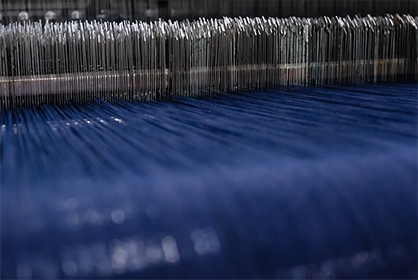
Thanks to the alliance with Beximco, Recover has been able to build a super-hub in Bangladesh – the largest textile recycling facility in the country. Strategically placed in Dhaka, this facility is close to both the supply and demand as well as the textile waste, reducing the carbon impact of transportation, lowering the environmental impact, and minimizing the fiber import dependency.
© 2022 Recover™
© 2022 Recover™


The facility comes fully equipped with Recover's proprietary machinery, as well as RColorBlend installation -- the innovative technology that provides fiber blends with color, with a lower environmental impact.

The partnership also allows Beximco to offer the market the highest-quality denim, woven and knit fabrics made with 5-30% RCS/GRS verified recycled fiber; a completely transparent supply chain; and sustainable fabric production techniques in dyeing and finishing.

Taking circularity mainstream

Recover is making this collaboration mainstream. They have already collaborated on key brand collaborations, including the sustainable T-shirt collection launched by Fruit of the Loom®. This collaboration is key to demonstrating how a material science ingredients brand and an established fashion brand can work together to make the circular economy mainstream. Find out more about this collaboration here:

https://recoverfiber.com/collaborations/fruit-of-the-loom


More News from TEXDATA International

#ITM 2026

ITM 2026: The new geography of textile production

New production hubs are emerging across North Africa and Central Asia, while Türkiye is accelerating its transformation toward higher-value, technology-driven and more sustainable textile manufacturing.

#Research & Development

“Production is a product”

From technical textiles and AI-driven robotics to the limitations of textile circularity: Professor Dr Thomas Gries looks back on more than two decades of development at ITA Aachen. In the interview, he explains why production technology remains a decisive success factor, discusses international collaborations and innovation ecosystems, and shares his views on the transformation of production landscapes and the challenges facing an increasingly regulated industry.

#Knitting & Hosiery

“We need to move away from the price trap and return to a value-driven mindset.”

With its new Textile Innovation Center, KARL MAYER is sending a strong signal for innovation, collaboration, and the future of textile applications. In this interview, Karl Josef Mayer discusses new opportunities in warp knitting, the processing of staple fibres, recycling, the changing role of machinery manufacturers, and why the textile industry must once again focus more strongly on the value of textiles. by Oliver Schmidt

#Associations

“Innovation, resilience and international experience remain the great strengths of the Swiss textile machinery industry”

Geopolitical uncertainty, growing competitive pressure from China, new free trade agreements and the shift towards a circular economy are currently reshaping the global textile industry. In this interview, Cornelia Buchwalder discusses the current mood within the Swiss textile machinery sector, the industry’s distinctive innovative strength, new market opportunities in India and Asia, and the technological trends that could shape the upcoming trade fair cycle leading up to ITMA 2027.

More News on Recycling / Circular Economy

#Recycling / Circular Economy

Textiles Recycling Expo 2026 builds on successful debut with record attendance, global participation and expanded industry collaboration

The second edition of Textiles Recycling Expo concluded on 24–25 June at Brussels Expo, reinforcing its position as Europe's leading exhibition and conference dedicated exclusively to textile recycling and circularity.

#Recycling / Circular Economy

New skills for a circular textile economy

Based on the results of a comprehensive analysis, the Erasmus+ project Skills4Circularity is developing three practical training modules covering recycling technologies, eco-design for the circular economy and sustainable manufacturing. The content of the first module, Recycling Technologies, has now been developed and validated together with industry representatives. The module provides participants with knowledge of regulatory requirements, material sorting and the preparation of textile waste for recycling.

#Recycling / Circular Economy

RE&UP establishes Fiber Club consortium to scale Next-Gen material sourcing

Originally developed as an umbrella framework by innovation platform Fashion for Good, the RE&UP Fiber Club aims to accelerate the commercial adoption of circular Next-Gen materials across the global fashion ecosystem.

#Recycling / Circular Economy

HKRITA signs MoU with Jeanologia and Looptworks to establish the Green Machine Circular Textile Ecosystem

The Hong Kong Research Institute of Textiles and Apparel (HKRITA) yesterday officially signed a landmark Memorandum of Understanding (MoU) with two key global partners, Jeanologia and Looptworks, to establish the Green Machine Circular Textile Ecosystem – a first-of-its-kind collaboration to accelerate the large-scale recycling of blended textiles.

Latest News

#Textiles & Apparel / Garment

Catalyst Club launches in Florence: Where conversations become catalysts for change

The first chapter of Catalyst Club debuted in Florence, bringing together creative directors, entrepreneurs, manufacturers, journalists and innovators from across the fashion and textile industry for an evening of dialogue, exchange and connection.

#Composites

JEC Forum Southeast Asia 2026 highlights Taiwan as a strategic hub for the global composites industry

The third edition of JEC Forum organized in Southeast Asia brought together 350+ participants from 22 countries for three active days of high-level Business Meetings, conferences, and networking, emphasizing Southeast Asia’s growing role in the global composites market. Held for the first time in Taipei from 23 to 24 June 2026, following the successful first editions in Bangkok, JEC Forum Southeast Asia 2026 confirmed its position as the region’s leading business platform dedicated to the composites industry.

#Associations

Textile machinery: Italian technology charts the course for revival

Operating in a scenario characterized by geopolitical instability, slowing industrial investments, and new protectionist pressures. This is the main challenge for the Italian textile machinery industry that emerged during the General Assembly of ACIMIT (Association of Italian Textile Machinery Manufacturers), held today in Milan at the Shareholders’ Hall of Palazzo Edison.

#Nonwovens

EDANA announces five new board members following 2026 Annual General Meeting

The EDANA Board of Governors is elected or re-elected at the Annual General Meeting by the member companies. The Governors are senior executives (business leaders) from member companies, based in different countries and representing different sectors of the nonwovens industry. The Board has central responsibility for guiding EDANA's overall strategy and approving its policies and priorities. It meets three times a year.

TOP