[pageLogInLogOut]

#Recycling / Circular Economy

Teijin and Fujitsu agree to jointly develop blockchain-based commercial platform to promote sustainable use of recycled materials

Image of platform for enhancing the environmental value of recycled mater © 2022 Teijin
Teijin Limited (hereinafter Teijin) and Fujitsu Limited today launched a joint project to realize a blockchain-based commercial platform for enhancing the environmental value of recycled materials for manufacturers. The collaboration will promote environmentally conscious design (1) by leveraging Teijin's Life Cycle Assessment (LCA) Calculation Method for measuring the environmental impact of manufacturing processes across the value chain, as well as Fujitsu's blockchain technology to collect and track primary data on environmental impact (including GHG emissions) to deliver reliable, transparent traceability.

The new platform will promote the use of recycled materials and environmentally friendly designs by providing manufacturers who design products from recycled materials with accurate information about their environmental footprint, including proof of origin of recycled materials and data on GHG emissions.

This joint effort demonstrates the two companies’ commitment to contributing to the realization of the common global goal of a carbon-neutral future for humanity.

Features of the new platform

  • The new platform will improve the reliability and the environmental value of recycled materials by leveraging Fujitsu's blockchain technology to collect and trace primary data on environmental impact (including GHG emissions) across the value-chain
  • The new platform will promote the use of recycled materials and environmentally friendly designs by providing manufacturers who design products from recycled materials with environmental impact information, including proof of origin of recycled materials and highly reliable GHG emissions

As a first step in their collaboration, Teijin and Fujitsu will start full-scale trials with the aim of realizing business in the FRP field within fiscal 2022. Based on the results of these trials, the two companies will consider expanding the scope of the project for other types of materials.

Moving forward, Teijin and Fujitsu will continue to contribute to the materials industry as a starting point for the realization of a "circular economy" and will promote environmentally conscious design in society by promoting the use of reliable recycled materials.

The two parties will further promote discussions and field trials with partner companies and organizations that support this initiative to contribute to the realization of carbon neutrality on a corporate and global level.

In order to realize a sustainable society, Teijin will provide innovative, people-centered solutions that improve peoples’ quality of life. Teijin will further strive to mitigate the impact of its business activities on the environment and society to realize its long-term vision “to be a company that supports the society of the future.” Fujitsu is promoting "Sustainable Manufacturing" to achieve growth through the coexistence of people and the earth as one of its key focus areas under its global business brand, Fujitsu Uvance.


Measuring and reducing the environmental impact of manufacturing processes as well as enhancing the environmental value of recycled materials represents an ongoing challenge for players in the manufacturing industry.

To this end, manufacturers are increasingly introducing LCA throughout the life cycle of products, disclosing evaluation results, and taking proactive measures to obtain environmental labels (2) as part of their environmental impact management strategies. The introduction of stricter environmental regulations in Europe in particular requires companies to not only adjust to additional requirements in the manufacturing process, but also to focus on environmentally friendly designs and materials. In particular, fiber reinforced plastics (FRP), which are increasingly used for industrial purposes particularly in the transportation field such as aircraft and electric vehicles (EVs), will require more advanced, environmentally conscious design efforts in the future.

To achieve these goals, both the government and the private sector are actively working to regulate waste disposal and develop improved recycling technologies. However, transparency and traceability of recycled materials remain an ongoing challenge, and demand for solutions for reliable information management is expected to grow amidst trends to institutionalize the verification of the usage of recycled resources.

To address this issue, Teijin and Fujitsu started collaboration on a blockchain-based commercial platform to promote sustainable use of recycled materials and provide manufacturers with reliable and transparent information on the origin of recycled resources and data on GHG emissions.

Teijin has established a method for calculating greenhouse gas (GHG) emissions from carbon fiber and aramid fiber manufacturing processes and is also promoting initiatives related to FRP recycling. Fujitsu has a strong track record in building systems using blockchain technologies that ensure high transparency and traceability and makes it virtually impossible to falsify information.


More News from Teijin Aramid

#Yarn & Fiber

Teijin Aramid: Taiichi Machida to succeed Peter ter Horst as CEO

Peter ter Horst will step down as Chief Executive Officer at the end of 2025, after 19 years of dedicated service. Effective October 1, 2025, Taiichi Machida will take over as CEO.

#Yarn & Fiber

Teijin announces availability of DPP-compliant products aligned with Europe’s ESPR Environmental Regulation

Teijin Limited announced today that it has started rolling out initiatives to enable aramid fibers and carbon fibers to be accompanied by Digital Product Passport (DPP) technology, which enhances supply chain transparency by verifying the origins of materials and supporting sustainability claims. The company is using the supply chain traceability system from Netherlands-based Circularise B.V., in which Teijin has invested since November 2024, to develop DPPs for each product.

#Composites

Teijin Carbon showcases new eco-friendly Tenax Next™ R2S 513 6mm short carbon fiber at JEC World 2025

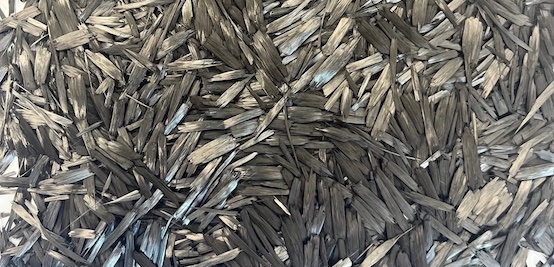
Teijin Carbon, a leading manufacturer of carbon fiber products, is presenting its latest development in sustainable materials at JEC World 2025 (hall 6, G22). New Tenax Next™ R2S 513 6mm is a short carbon fiber product in rice-shaped form for reinforcing thermoplastic compounds that not only offers exceptional performance characteristics but also reinforces the company’s commitment to environmental responsibility and circularity.

#Recycling / Circular Economy

Teijin to invest in Circularise B.V. and adopt its supply chain traceability platform to promote the Circular Economy

Teijin Limited announced today that it will invest in Circularise B.V., a company based in The Hague, Netherlands, which develops product traceability management systems using blockchain technology. Teijin will also implement Circularise’s software to improve visibility into its global supply chain. Circularise’s proprietary “Smart Questioning”(*) solution, which utilizes Zero-Knowledge Proof (ZKP) technology, provides both anonymity and transparency to ensure a highly reliable product traceability system.

More News on Recycling / Circular Economy

#Recycling / Circular Economy

The textile industry in transition

Recycling, traceability, eco-design and digitalisation are among the key future challenges facing the European textile industry. The Erasmus+ project Skills4Circularity, involving 21 partners from twelve countries, is investigating the skills required to address these challenges. As the German industry partner, the Industry Association for Finishing – Yarns – Fabrics – Technical Textiles (IVGT) is bringing the industry’s perspective to the project.

#Spinning

"We will become a recycling powerhouse"

The textile industry is now in its fourth consecutive year of crisis, while automation, artificial intelligence and recycling are reshaping the rules of the game. In this interview, Rieter CEO Thomas Oetterli discusses the first signs of a market recovery, reflects on his first three years at the helm of the company, explains the integration of Barmag, outlines Rieter’s vision of the fully automated spinning mill and highlights the strategic importance of recycling. In doing so, he explains why the new Rieter Group aims to play a leading role in transforming the textile value chain into a circular economy.

#Recycling / Circular Economy

Countdown to Textiles Recycling Expo 2026: Brussels prepares for Europe’s textile recycling gathering

With only two weeks remaining until the start of the second edition of the Textiles Recycling Expo 2026, preparations are entering the final phase. The exhibition and conference, dedicated exclusively to textile recycling and circularity, will take place on 24–25 June 2026 at Brussels Expo and is expected to attract stakeholders from across the textile recycling value chain.

#Recycled Fibers

Indorama Ventures enables brands to scale circular textiles through proven, traceable supply chains

Indorama Ventures, a global leader in recycled polyester staple fibers and filament yarns, will exhibit at Textiles Recycling Expo in Brussels on June 24–25. At the event, the company will show how brands and textile manufacturers can build traceable, circular textile supply chains by working with proven partners who deliver recycled materials on an industrial scale.

Latest News

#Natural Fibers

Bremen Cotton Exchange: Fritz A. Grobien re-elected as President

The members of the Bremen Cotton Exchange have re-elected Fritz A. Grobien as President during the association’s 152nd General Assembly on June 18, 2026. The election confirms the organization’s commitment to maintaining its role as a leading international platform for the cotton and fiber industry amid a period of geopolitical and economic uncertainty.

#Natural Fibers

Organic cotton at the crossroads: Ideology, evidence, and the road ahead

Organic cotton occupies one of the most contentious spaces in global agriculture. While praised by brands and consumers for its environmental ideals, it also faces persistent questions about yield stability, certification integrity, and scalability. The current edition of The ICAC Recorder cuts through the ideology to deliver a rigorous, evidence-based assessment of both sides of the debate.

#Spinning

New spinning package with two-step filtration for recycled yarns and more

At the ITM in Istanbul, BB Engineering unveiled its new, patented ValuePack spinning package for the first time, which features a two-stage filtration system. This is particularly beneficial for re-cycling processes. Until now, spinning packs have used either metal powder (“sand”) or filter candles as filter media. Both options are suitable for differ-ent applications, and each has its own specific advantages and dis-advantages.

#ITMA 2027

ITMA 2027 gains strong momentum

In line with the theme "Co-creating the future of textiles", ITMA continues to strengthen its support for start-ups, recognising their role in driving innovation and shaping the future of textile and garment manufacturing. Through the Start-Up Valley, emerging companies gain access to a global marketplace where they can connect with industry leaders, potential partners, investors and customers.

TOP