[pageLogInLogOut]

#Recycling / Circular Economy

Action needed to ensure a successful green and digital transition of the EU textiles ecosystem

The European social partners of the textiles, clothing, leather, and footwear (TCLF) industries agree joint demands to ensure that the textiles ecosystem can become more resilient, sustainable, and digital as set out in the EU textiles strategy. This involves tackling strategic dependencies, appropriate funding, incentives and support to help the European TCLF sectors decarbonise their production and become more circular, and initiatives to ensure that workers have the right skills for the future.
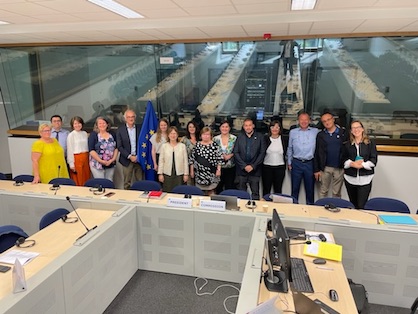
In yesterday’s Sectoral Social Dialogue meeting, employers’ and workers’ representatives for the European TCLF sectors, CEC, Cotance, Euratex and industriAll Europe met with the European Commission to discuss how to ensure a successful green and digital transition of the EU Textiles Ecosystem.. During the meeting, national and European social partners adopted a joint statement setting out clear demands for the TCLF sectors to become more resilient, sustainable, and digital. 

The joint statement follows the European Commission’s EU strategy for sustainable and circular textiles and the launch of co-creation process towards a transition pathway for a more resilient, sustainable and digital textiles ecosystem (TCLF sectors). The transition pathway recognises the need to build a resilient textiles ecosystem, based on innovation and global competitiveness, noting that the European TCLF sectors face tough global competition, and that measures are needed to encourage sustainable production and consumption in Europe’s internal market.

The strategy aims to ensure that by 2030, the ecosystem’s products placed on the EU market are long-lived and recyclable, while the industry moves from a linear to a circular business model. Initiatives in the strategy include new design requirements for textiles and leather products under the Eco-design for Sustainable Products Initiative, clearer information on products and a Digital Product Passport, measures to tackle greenwashing, and action to discourage the destruction of unsold or returned articles.

As a response, the TCLF social partners have agreed on specific joint demands to ensure that the ecosystem can become more resilient, sustainable, and digital. These include decisive action by Member States and the EU to tackle strategic dependencies, appropriate funding, sound metrics, legal incentives and support to help the European TCLF sectors decarbonise their production and become more circular, and initiatives to ensure that workers have the right skills for the future. 

(c) 2022 EURATEX
(c) 2022 EURATEX


Dirk Vantyghem, Director General of Euratex, said:

The essence of the EU textile strategy is to reconcile sustainability and competitiveness. We believe it is possible; we even believe that sustainability can become a source of competitiveness. But to make that happen, we need thoughtful legislation, support to the industry to make that transition, and a market willing to buy sustainable products. The coming months will be critical to shape that conducive environment.

Carmen Arias, Secretary General of CEC, said:

Footwear companies are reinventing their business strategies to address the fast-changing environment, and adverse political and economic scenarios. Digitalisation and sustainability can make a difference in maximising the efficient production of their high-quality products, but both public support and consumers’ awareness are needed. Furthermore, any legislative proposal should consider the complexity of a shoe, its design, multiplicity of materials and processes, in order to succeed.

Gustavo Gonzalez-Quijano, Secretary General of Cotance, said:

“Leather is the best example of a circular economy product, as it is the result of recycling an unavoidable residue of meat production. In doing so, European tanners create wealth and jobs for an entire value chain! The “Green Transition”? It’s our DNA! And leather can and will become even more sustainable, but this needs to be done hand in hand with our regulators and stakeholders.”

Judith Kirton?Darling, Deputy General Secretary of industriAll Europe,said:

‘’Trade unions insist that the green and digital transition of the TCLF sectors is a Just Transition, for us this means ensuring that no sector, region, or worker is left behind. Concrete measures are needed to transform the ecosystem into a more sustainable one, with skilled workers and quality jobs at its centre. Investment and support will be required to increase the production and demand for sustainable products and we will continue to work with our sectoral social partners and policy makers to ensure that this is a success.’’

The European TCLF social partners agreed to continue their good cooperation including during the co-creation process towards a transition pathway for a more resilient, sustainable and digital textiles ecosystem (TCLF sectors) noting the importance of quality sectoral social dialogue.

More News from European Apparel and Textile Confederation (EURATEX)

#Europe

Level playing field at stake: Europe’s textile industry demands decisive action

Yesterday, the European Parliament took a welcomed and necessary step by voting a resolution calling for stronger market surveillance, reinforced customs controls and faster enforcement of the Digital Services Act in case of infringements. For Europe’s textile and clothing manufacturers, this is the first political acknowledgement that the system is broken — and that enforcement must finally match the scale of the problem.

#Recycling / Circular Economy

EURATEX calls for a competitive and harmonised Circular Economy Act For Textiles

EURATEX, representing Europe’s textile and clothing industry with over 200,000 companies and 1.3 million workers, has submitted its official position paper to the European Commission’s consultation on the upcoming Circular Economy Act (CEA). The association welcomes the Commission’s initiative to shape a framework that strengthens Europe’s circular economy while maintaining industrial competitiveness.

#Associations

European textile and clothing federations mobilize against ultra-fast fashion

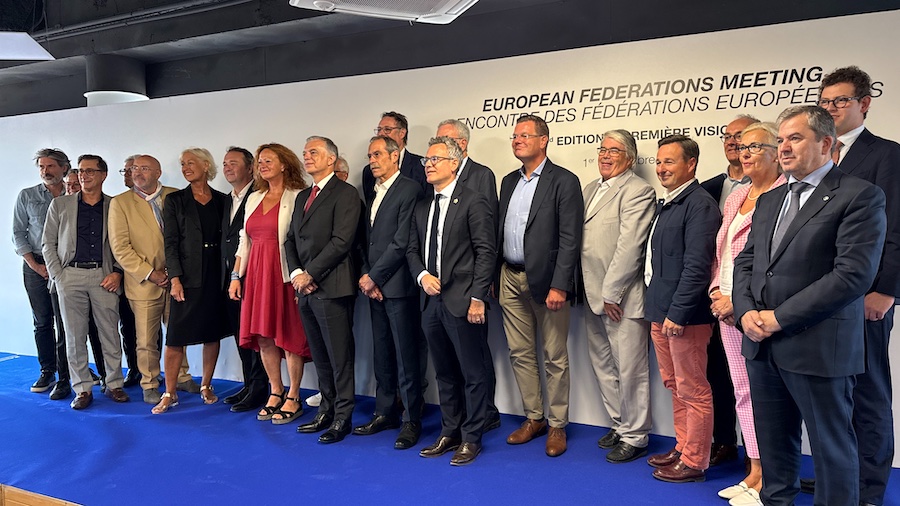
On the occasion of the Première Vision trade fair in Villepinte, the leading European textile and clothing federations issued a solemn call for urgent action against the rapid rise of ultra fast fashion. This model, driven by major non-European e-commerce platforms, already accounted for 4.5 billion imported parcels in the European Union in 2024—representing 5% of clothing sales (20% online)—and continues to grow at a staggering pace.

#Associations

Joint statement by EURATEX and Danish Fashion and Textiles

EURATEX and its Danish member Dansk Mode & Textil are calling upon the Danish Presidency of the EU to bring back stability and transparency to the European agenda. These last few months we have seen major upheavals and turbulence in global markets, as well as uncertainty surrounding a number of regulatory initiatives. All this creates a climate of uncertainty for European industry and anxiety with the consumers. As a result, demand for textile and garments is low, and entrepreneurs are hesitant to make any further investment decisions.

More News on Recycling / Circular Economy

#Research & Development

Innovation center for textile circular economy inaugurated

Just over eight months after the foundation stone was laid, the new Innovation Center for Textile Circular Economy was officially inaugurated today at TITK Rudolstadt. Thuringia's Minister President Mario Voigt, TITK Director Benjamin Redlingshöfer, and other guests of honor cut the ribbon to the modern building complex and viewed the premises, which are now ready for occupancy. The “DICE – Demonstration and Innovation Center for Textile Circular Economy” is TITK's largest single investment to date. The Free State of Thuringia supported the total cost of €11.5 million with €8 million in GRW and FTI funding.

#Associations

Waste2Fashion: FTTH Committed to advancing Circular Fashion in the Mediterranean

As an official partner of the Waste2Fashion project, the Tunisian Federation of Textile and Apparel (FTTH) participated in the Kick-off Meeting held on 10–11 December in Spain. The event brought together project partners from across the Mediterranean, including Spain, Italy, Egypt, Lebanon, and Tunisia, to align on a shared vision and initiate the first implementation steps.

#Recycled_Fibers

Leading fashion brands step up to unlock the next chapter of Circulose

Since 2024, under new ownership and leadership, Circulose has set a renewed strategic direction focused on securing long-term commitments with partner brands to bring CIRCULOSE® back to market at scale. This strategy has proven successful.

#Recycled_Fibers

Recycling mixed-fibre garments becomes a reality: RadiciGroup, The LYCRA Company and Triumph take circular fashion a step forward

The process, which is both economically and environmentally sustainable, has enabled the production of an underwear set made from 100% recycled nylon and LYCRA® fibre in a closed-loop system.

Latest News

#Research & Development

Sustainable design of Geosynthetics and roof underlayments made from recyclates

Is it possible to recover plastic recyclates from previously unused waste streams in order to produce high-quality fibers and films? How can bio-based polymer fibers be manufactured so as to allow adjustable biodegradability? These are the questions being addressed by researchers from the Fraunhofer Cluster of Excellence Circular Plastics Economy CCPE in the Zirk-Tex project.

#Associations

AATCC announces 2025 Herman & Myrtle Goldstein Graduate Student Paper Competition winners

The American Association of Textile Chemists and Colorists (AATCC) recognized the winners of the 2025 Herman & Myrtle Goldstein Graduate Student Paper Competition. Founded in 1982 to give student members the chance to conduct and present original research, the competition was renamed in 1994 in honor of Herman and Myrtle Goldstein, following their US$60,000 endowment. Their gift is a lasting remembrance of their dedication to young people in the textile industry.

#Nonwoven machines

Yanpai expands nonwovens capacity with two new ANDRITZ needlepunch lines

Zhejiang Yanpai Filter Technology Co., Ltd. (hereinafter referred to as “Yanpai”) has placed an order with international technology group ANDRITZ for two high-performance needlepunch lines. The equipment will be installed at Yanpai’s headquarters facility in Tiantai County, China. Commissioning is scheduled for the third quarter of 2026.

#Natural Fibers

Dr. Jane Dever inducted into the 2025 Cotton Research and Promotion Hall of Fame

Dr. Jane K. Dever, a recognized leader in cotton breeding and fiber quality research, was inducted into the 2025 Cotton Research and Promotion Hall of Fame during the joint Cotton Incorporated/Cotton Board Annual Meeting held on December 9 in New Orleans, LA.

TOP