[pageLogInLogOut]

#Recycling / Circular Economy

H&M Group game-changers: For a circular fashion future

© 2021 H&M
Recognizing both the role they have played and the responsibility they have to turn things around, H&M constantly challenge themselves to rethink the industry’s fabric, down to the very last thread. Learn how H&M Group’s latest recycling innovations, Looop and Green Machine, help reduce fashion’s waste problem on a global scale.

As the unceasing climate crisis looms, consumers are rethinking their consumption habits; questioning what they need and what adds value to their life. More than three in five consumers consider environmental impact a critical factor to their purchasing decisions – that’s over 60% (McKinsey & Company, 2021 ). Environmental issues are now more important (great), and more pressing (not so great), than ever. So, what can we do?  

Recycling, upscaling, renting, reselling and repairing garments are fantastic ways to extend the life (and value) of goods and minimize waste. In 2019 alone, H&M Group collected 29,005 tons of recycled textiles for reuse through their garment collecting initiative; that makes roughly 145 million T-shirts.  

Successfully recycling such quantities, though, requires the right technology. While H&M Group always looked for game-changing solutions, some textiles have been persistently harder to recycle than others.

Why?

Most clothes are made of multiple materials; fibres are often mixed to meet the garment’s needs – more stretch, fewer wrinkles, a better price, for example. Mixed fabrics are harder to separate by fibre, and consequently, harder to recycle back into new garments. 

The new normal requires new technology  

Finding virtuous and circular solutions to waste-related problems sits within H&M Group’s goal to use only recycled or sustainably sourced materials by 2030. So, the challenge H&M tasked themselves with was to find technology that could separate recycled garments at fibre level, including blended fabrics; a solution that would allow us to use even the trickiest of recycled textiles to their fullest – down to the very last thread.  

Several initiatives by H&M Group and its collaborators are already getting real-world trials. Re:newcell, the Swedish textile recycling company, for example, was the basis of the H&M Conscious Exclusive SS20 collection. A recently signed multi-year agreement with the firm will enable the group’s portfolio of brands to continue to choose Circulose®* fibres for millions of garments; a vital alternative to virgin materials like cotton, which require unsustainable amounts of land and water to cultivate.     
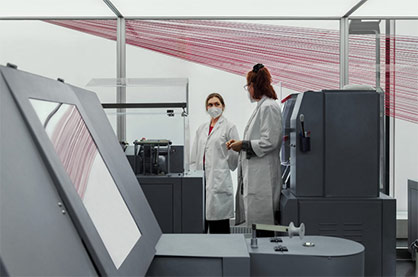
Looop is located in H&M’s flagship store in central Stockholm. The machine is available to customers who want to recycle their old garments into new ones. © 2021 H&M


Looop – visualizing the value of textiles 

The newest eco-hero (read: game-changing recycling innovation) is Looop. Transforming old garments into fresh ones in only eight steps, Looop shows customers how something old can become something new – without the added environmental cost. The system recaptures valuable raw materials in recycled clothing and regenerates them back into fibres that are spun into new yarn and knitted into new clothes. You can see Looop in action at H&M’s flagship store in Stockholm. 

“It is important to let our customers be part of our journey and to show them the value of textiles and at the same time, inspire them to prolong the lifetime of their garments. Looop is a good way to visualize that and a great forum to pay attention to H&M Group’s other recycling and repair initiatives. Looop is not the whole solution but an important part of our journey to become a circular business“, Felicia Reuterswaerd, Sustainability Manager at H&M Sweden, says.
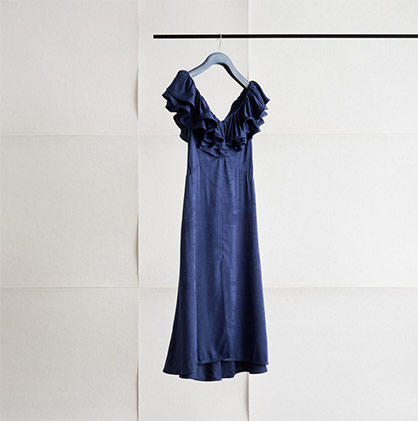
Dress from H&M Conscious Exclusive SS20 made of Renewcell’s Circulose®. Image: Renewcell/Alexander Donka


A recently signed multi-year agreement with Renewcell will enable the H&M Group’s brands to continue to choose Circulose® fibres for millions of garments. Image: Renewcell/Alexander Donka


The Green Machine – breaking barriers in production  

While Looop is front and centre, (quite literally) unravelling textiles’ real value before our eyes, Green Machine works behind the scenes. This unsung hero entirely separates and recycles cotton and polyester blends into new fibres with no quality loss and at industrial scale.?Born from a research collaboration between H&M Foundation, The Hong Kong Research Institute of Textiles and Apparel (HKRITA) and one of Monki’s key suppliers, the Green Machine is a real gamechanger for upcycling blend fabrics in the brand’s production.  

“In order to close the loop, we need to be able to upcycle the recycled clothes at scale. That’s nothing new, but the ability to do this requires a technical revolution. The fact that we can use this machine in our production means that we can break the scale barrier and solve one of the issues that we must overcome to learn more about circularity“, Jenny Fagerlin, Sustainability and Transformation Director, Monki, says. 
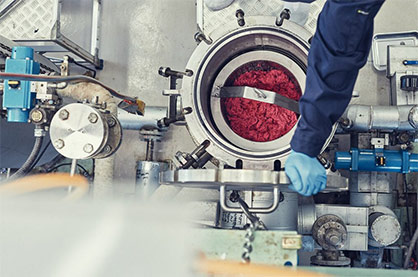
Green Machine works behind the scenes to fully separate and recycle cotton and polyester blends into new fibres with no quality loss and at industrial scale. © 2021 H&M


“The Green Machine is unique because it takes on an infrastructure challenge of getting polyester fibres more sustainably. It can separate the components of a garment without losing the quality of its fibres.“

Jenny Fagerlin, Sustainability and Transformation Director, Monki

Accelerating the power of Green Machine 

Harnessing Green Machine’s power to separate and recycle cotton and polyester blends at scale, Monki created an exclusive online tracksuit. The brand’s first collection using the system was a set that not only looked and felt good but was also good for the environment. Monki will release another online exclusive during the spring, and by fall 2021, aims to accelerate its Green Machine production even further.  

“We only have one planet, and the way we are treating it today doesn’t work. Our customers are aware of that and require solutions as much as we want to lead the change. But we have to dare to confront the challenge to find a way to produce bulk collections. The Green Machine shows that we are focusing on the right things“, Jenny Fagerlin, says. 
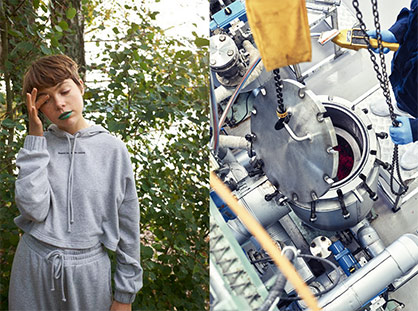
Monki’s online exclusive tracksuit from 2020 is the first result from the Green Machine. © 2021 H&M


More News from TEXDATA International

#People

Happy Holidays!

Dear reader, the year 2025 is drawing to a close. We are entering what we hope will be a peaceful holiday season, spending time with our families and taking a moment to pause and reflect. We hope we have been able to support you once again this year with relevant news and articles, and we look forward to surprising you with many innovations in the coming year. Enjoy the festive season, stay healthy, and we wish you a happy and joyful holiday season.

#Recycling / Circular Economy

textile.4U publishes special edition “Top 100 Textile Recycling Companies 2025”

With a comprehensive 176-page special edition, textile.4U is dedicating its latest issue entirely to one of the most dynamic and influential topics in today’s textile industry: textile recycling. The new issue, published exclusively in high-quality print, presents the Top 100 textile recycling companies researched and selected by TexData – organizations that already play a key role in the transition to circular textiles or are expected to have a significant impact in the near future.

#Recycling / Circular Economy

Responsible Textile Recovery Act of 2024 signed by Governor

Senator Josh Newman (D-Fullerton) is proud to announce that Senate Bill 707 (SB 707), the Responsible Textile Recovery Act of 2024, has been signed into law by the Governor of California, Gavin Newsom. This groundbreaking legislation establishes the country’s first Extended Producer Responsibility (EPR) textile recycling program, marking a significant step forward in the state’s efforts to combat waste and promote sustainability.

#Textiles & Apparel / Garment

Modtissimo promotes sustainability with 28 coordinates in the Green Circle

Modtissimo is proving more and more to be a textile and clothing show that delivers the latest innovations in the area of sustainability, with the iTechStyle Green Circle being the main showcase for companies' creations. In this 60+4 edition, taking place on 12 and 13 September, 28 coordinates will be exhibited in a section organised by CITEVE and curated by Paulo Gomes.

More News on Recycling / Circular Economy

#Recycled_Fibers

Leading fashion brands step up to unlock the next chapter of Circulose

Since 2024, under new ownership and leadership, Circulose has set a renewed strategic direction focused on securing long-term commitments with partner brands to bring CIRCULOSE® back to market at scale. This strategy has proven successful.

#Recycled_Fibers

Recycling mixed-fibre garments becomes a reality: RadiciGroup, The LYCRA Company and Triumph take circular fashion a step forward

The process, which is both economically and environmentally sustainable, has enabled the production of an underwear set made from 100% recycled nylon and LYCRA® fibre in a closed-loop system.

#Research & Development

How innovations drive BASF’s success

“Innovation has always been part of BASF’s DNA. Especially in these volatile times, it is crucial to leverage our innovative strength to develop competitive solutions that differentiate us as a company in our markets and give us a competitive edge,” said Dr. Stephan Kothrade, Member of the Board of Executive Directors of BASF and Chief Technology Officer, at the company’s Research Press Briefing held today. To achieve this, BASF implemented its “Winning Ways” strategy about a year ago with the clear goal of becoming the preferred chemical company to enable its customers’ green transformation.

#Recycling / Circular Economy

Textiles Recycling Expo announces collaboration with Future Fabrics Expo for 2026

The Textiles Recycling Expo has entered a major new collaboration with the Future Fabrics Expo which means that both events will run alongside each other at the Brussels Expo, Belgium on 24–25 June 2026. This co-location marks a significant step forward for the textile and fashion industries, bringing together two influential and complementary events under one roof.

Latest News

#Weaving

Lindauer Dornier announces leadership transition in weaving machine business

After more than ten successful years at Lindauer DORNIER GmbH, Mr Wolfgang Schöffl will leave the family-owned company at the end of the year to enter well-deserved retirement.

#Heimtextil 2026

Texpertise Focus AI: Messe Frankfurt puts Artificial Intelligence centre stage at its international textile and apparel trade fairs

Under the banner 'Texpertise Focus AI, Messe Frankfurt will place a strong emphasis on Artificial Intelligence (AI) across its international textile and apparel trade fairs from 2026 onwards, setting a future-shaping signal for the industry. The initiative highlights the responsible use of AI along the entire textile value chain, from fibre production to the point of sale. The programme will launch at Heimtextil in Frankfurt in January 2026.

#Technical Textiles

Autoneum and Polestar set new benchmarks for passenger experience and sustainability

As the global market leader in sustainable acoustic and thermal management, Autoneum is a key supplier of interior and exterior components for the highly anticipated Polestar 5 model. The successful collaboration between Autoneum and Polestar marks a significant milestone in sustainable automotive engineering: the electric grand tourer sports car features several innovations in lightweight, fully recyclable polyester-based components that ensure a superior driving experience. Polestar 5 was revealed at the IAA Mobility 2025 in Munich and is available in 24 markets.

#Natural Fibers

Cashmere producers stress the importance of The Good Cashmere Standard®

At the invitation of the Aid by Trade Foundation (AbTF), over 70 experts from the cashmere production and supply chain, as well as other specialists, met at the GCS Unit Meeting in Shanghai, China to discuss the progress and new objectives of The Good Cashmere Standard (GCS). The meeting focused on implementation and verification of the standard, important aspects of animal welfare and the importance of the standard in the global textile market.

TOP