[pageLogInLogOut]

#Recycling / Circular Economy

Accelerating Circularity announces global commitment to sustainable textile industry at Clinton Global Initiative Annual Meeting
Accelerating Circularity, a leading nonprofit dedicated to transforming the apparel industry by creating business models and supply chains for manufacturing more sustainable fabrics, this week proudly announced its Commitment to Action at the Clinton Global Initiative (CGI) 2024 Annual Meeting. This commitment, titled "Building Circular Systems," aims to transform the textile industry by building scalable systems where materials are continuously repurposed and reused, rather than just being recycled once or discarded.
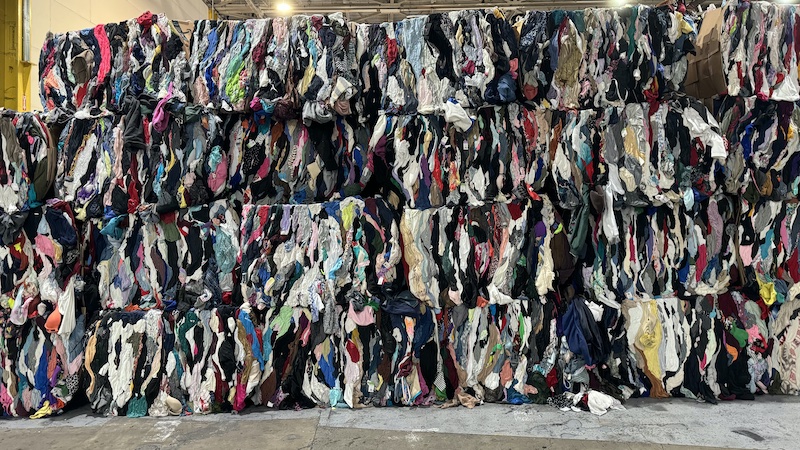
Post-consumer textiles are collected at various locations, including this US charity, and are then sent to sorting centers. (Photo: Business Wire)


This approach, known as circularity, tackles the need to reduce the environmental impact of textiles by keeping materials in use longer, ultimately reducing waste and conserving natural resources.

“Our work, amplified by the Clinton Global Initiative, will help us make a difference by reducing waste and pollution and promoting sustainability worldwide. We invite businesses, organizations, and individuals to join us in this effort and help create a more sustainable future for textiles.”

Currently, 92 million tons of textiles end up in landfills each year, while another 116 million tons of new fibers are produced. This wasteful cycle harms the environment, contributing to pollution and the depletion of natural resources. As discarded textiles decompose in landfills, they release harmful gasses into the environment. Additionally, manufacturing new textiles consumes large amounts of water, energy, and chemicals, further damaging the environment.

Accelerating Circularity's commitment will focus on three key initiatives:

Building a market for recycled textiles: Accelerating Circularity will collaborate with brand, retail and manufacturing partners across the U.S. and Europe to recycle 325 tons of used textiles, including 150 tons of cotton, 100 tons of polyester, and 75 tons of other fibers. The goal is to create a strong market where recycled textiles are used to make new products that people want to buy. 

Creating a used textile mapping tool: A comprehensive map, the platform will outline the entire recycling ecosystem by pinpointing collectors, sorters, processors, recyclers, fiber producers, yarn spinners, fabric mills, and product manufacturers who can repurpose used textiles into new fibers. It will streamline the recycling process for textiles from various sources—including fabric mills, brands, retailers, and consumers—by identifying the most efficient and environmentally sustainable pathways for converting these materials into new products. 

Educational resources: Educational materials will be developed to help brands and consumers understand how to responsibly dispose of and recycle textiles.

Founded in 2019, Accelerating Circularity has proven the power of collaboration through its strategic partnerships. One example is its work with Goodwill Industries, supported by a $1.2 million grant from the Walmart Foundation. This initiative focused on creating new business models for processing the large volumes of donated clothing Goodwill receives each year.

In addition, Accelerating Circularity has brought together key players from across the textile supply chain, including major companies like global textile firm Giotex, Canada-based used clothing collector Bank & Vogue, North Carolina-based yarn manufacturer Parkdale Mills, leading denim innovator Cone Denim, and UNIFI, a global leader in fiber science. Together, they have developed and tested circular textile systems that not only create new materials but have led to finished products currently available at Target (here and here). More products are expected to hit stores in the coming weeks, including Wrangler denim jeans, to be sold at Walmart.

It's important to note that circularity goes beyond traditional recycling. While recycling typically involves reprocessing materials to create the same or similar products, circularity encompasses a broader system where materials are used and re-used for as long as possible, reimagining them into new forms, and only recycling as a last resort. This approach minimizes waste and reduces the need for virgin resources, making it a more sustainable solution.

The commitment launched at CGI on September 23rd and is set to be completed by March 2026. During this time, Accelerating Circularity will leverage their relationships and foster new alliances with major brands, retailers, and recyclers to build the use of circular systems, creating new market opportunities and helping companies reduce their environmental impact.

"I'm honored to lead this important initiative to change the textile industry," said Karla Magruder, President and Founder of Accelerating Circularity. "Our work, amplified by the Clinton Global Initiative, will help us make a difference by reducing waste and pollution and promoting sustainability worldwide. We invite businesses, organizations, and individuals to join us in this effort and help create a more sustainable future for textiles."


More News from Accelerating Circularity

More News on Recycling / Circular Economy

#Recycling / Circular Economy

trinamiX with new management

BASF is examining strategic options for its subsidiary trinamiX GmbH. trinamiX specializes in biometric imaging and mobile material analysis. These activities are not part of BASF’s core business, on which the company is focusing as part of the implementation of its new strategy.

#Recycling / Circular Economy

Reju announces site selection for first U.S. industrial sized facility regeneration hub in Rochester, New York

Reju, the textile-to-textile regeneration company, today announced it has selected the site for its first U.S.-based industrial facility marking a significant milestone in its efforts to scale globally. This future Regeneration Hub will be in Rochester, New York, reinforcing Reju’s commitment to the adoption of circular textile system across key regions worldwide.

#Business

Canopy introduces a first-of-its-kind $2 billion USD investment blueprint to decarbonize global materials supply chains

Today, the global, solutions-driven not-for-profit Canopy joined partners at Davos to introduce a new finance model designed to accelerate the growth of low-carbon materials and transform the paper, packaging, and textile supply chains. The event was anchored by a keynote speech from Sri A Revanth Reddy, Hon’ble Chief Minister of Telangana, with India set to host the first iteration of the new investment blueprint.

#Recycled_Fibers

Borealis invests EUR 49 million in Burghausen, Germany to accelerate design for circularity

Borealis announces a EUR 49 million strategic investment to scale up production of Borstar® Nextension polypropylene (PP) at its manufacturing site in Burghausen, Germany. This will expand commercial production of next-generation single-site polypropylene (ssPP) grades that deliver enhanced purity, processability, and performance - supporting customers in key sectors including packaging, healthcare, mobility, and fibers, to meet evolving market and regulatory demands.

Latest News

#Natural Fibers

Modern testing methods for raw cotton

The 38th International Cotton Conference Bremen will take place from 25 to 27 March 2026 at the Bremen Parliament. This conference has traditionally stood for in-depth expertise and international exchange. The program will focus on technical innovations, market trends, and regulatory frameworks across the entire value chain – from agriculture to the circular economy. With high-profile speakers, the conference is regarded as the key meeting point for the global cotton industry. Today’s focus: Cotton quality and testing methods.

#Research & Development

Exchange data between textile companies openly, securely and cost-effectively without a central platform – ITA makes it possible

The Institut für Textiltechnik (ITA) of RWTH Aachen University has launched a new demonstrator for an open and secure data space in the textile industry at the Digital Innovation Centre Europe (DICE). For the first time, the demonstrator shows directly and clearly how companies can share their data securely with each other without the need for a central platform. Data exchange is based on shared, freely usable technical foundations.

#Man-Made Fibers

Kelheim Fibres GmbH informs about the closure of operations

The management of Kelheim Fibres GmbH informs that business operations will be terminated as of 31 March 2026. A continuation of the company beyond this date is not possible. The investor and sales process conducted within the framework of the self-administration did not lead to a positive outcome. The potential strategic investor who most recently entered the process has withdrawn from a potential investment at short notice.

#Europe

EU and India conclude landmark Free Trade Agreement

The EU and India concluded negotiations today for a historic, ambitious and commercially significant free trade agreement (FTA), the largest such deal ever concluded by either side. It will strengthen economic and political ties between the world's second and fourth largest economies, at a time of rising geopolitical tensions and global economic challenges, highlighting their joint commitment to economic openness and rules-based trade.

TOP