[pageLogInLogOut]

#Raw Materials

Panel discussion: Circular Economy – The Future

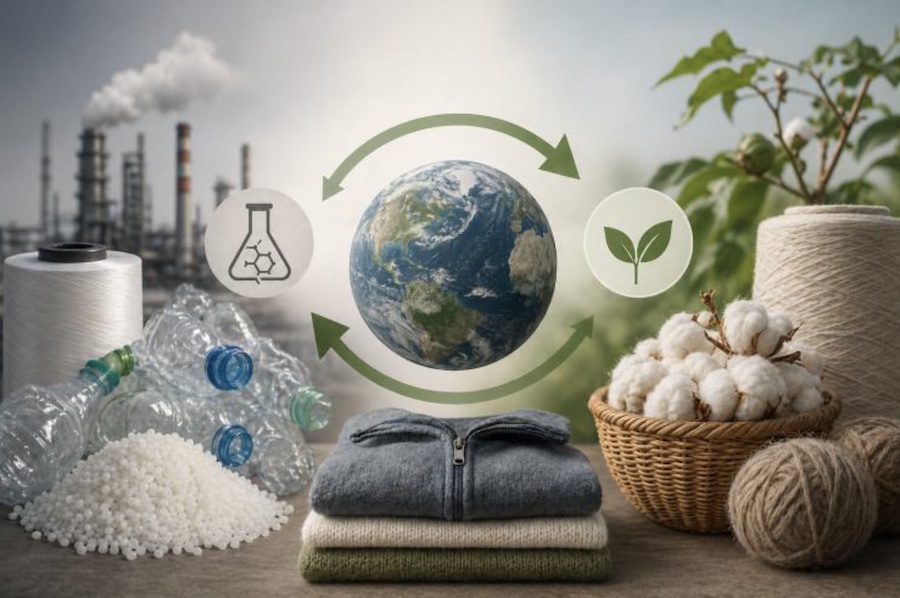
No more use it and throw it away but use it and keep it. The “Circular Economy” is a much-discussed industry topic at the upcoming International Cotton Conference in Bremen with its motto “Passion for Cotton!”. At its core, it is about the life cycle of cotton in terms of the circular economy. Based on a “cradle to cradle” process, the cycle begins with its natural origin and runs through various stages of processing and use to then be returned to its biological origin at the end.

The Bremen conference is well-known for getting to the bottom of things. To this year’s hybrid format also applies: We ask questions and try to work out all the advantages and disadvantages in the session ‘Circular Economy – The Future’ taking place on Thursday 18 March.

Panel Discussion with Top-Class Participants

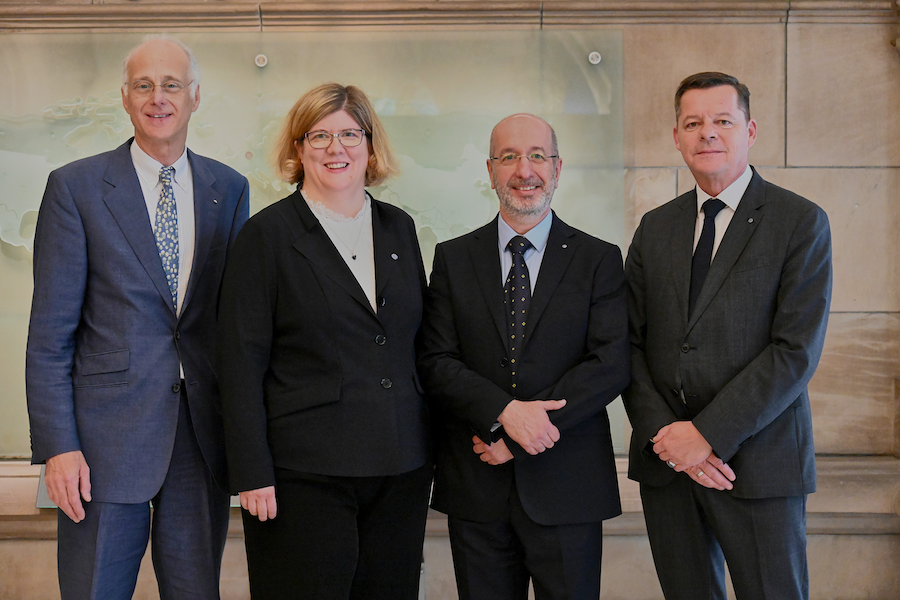
 The two-hour panel discussion will be led by Simon Ferrigno from Derby, UK, a specialist in sustainable and organic production systems, author and contributor to various specialist publications.

His discussion partners include Pamela Ravasio from Zurich in Switzerland. She founded the Shirahime consultancy in 2009. As a specialist in corporate management and corporate sustainability with a focus on innovative digitalised processes, she has been advising European companies on the implementation of sustainable and transparent supply chains for more than 15 years. Ecologically responsible and socially acceptable working methods are essential here.

Kjersti Kviseth, Jar, Norway, is the owner of the 2025 design agency. She specialises in lifecycle design and has developed principles for circular design. Here, issues such as upcycling and recycling play a major role. In 2019, she won the Ispo EcoAward for her work.

Rolf Heimann is CEO and founder of the hessnatur Foundation, Berlin, Germany and has been active in textile ecology for almost 30 years. He has developed environmentally friendly and biodegradable dying systems and coatings for textiles. For 12 years, Heimann led the Corporate Responsibility department at hessnatur, a mail order and retail company that has been one of the pioneers in the market for sustainable textiles made from cotton and wool since it was founded in 1976.

Mary Ankeny is Vice President, Product Development and Implementation Operation at Cotton Incorporated, Cary NC, USA. Among other things, Cotton Incorporated deals with research questions concerning the biodegradability of cotton and other fibres, as well as with the subject of ‘cotton’s next life’ outside of the classic clothing supply chain.


Ernst Grimmelt is Managing Partner of spinner and weaver Velener Textil in Velen, Germany. Two years ago, his company developed a product branded as ‘Wecycled’, in which processed production residues from the spinning and weaving mill are converted back into individual fibres. With the addition of fresh cotton, they can be turned into high quality yarns and fabrics. The result is that leftovers are no longer disposed of unused but processed into new products.

Ecological and Economic Benefits Put to the Test

The aim of the panel discussion is to draw a picture of the current situation of the circular economy. In addition to the ecological benefits, it will also question the economic viability of processes. Advantages and disadvantages should become clear. In the context of recycling, there will be discussion on the chemical and mechanical processes for the production of new products, and questions about the biodegradability of fibres and textile products.

We will continue to report on the further content of the cotton conference and its supporting programme in future press releases. The current conference news and programme details can also be viewed on the conference website: https://cotton-conference-bremen.de/program/.

We look forward to active reporting. Interview requests in advance are processed as quickly as possible. We are already inviting journalists to the conference. Accreditations are possible at any time via the conference website https://cotton-conference-bremen.de/press/.

More News from Bremer Baumwollbörse

#Natural Fibers

Bremen Cotton Exchange: Fritz A. Grobien re-elected as President

The members of the Bremen Cotton Exchange have re-elected Fritz A. Grobien as President during the association’s 152nd General Assembly on June 18, 2026. The election confirms the organization’s commitment to maintaining its role as a leading international platform for the cotton and fiber industry amid a period of geopolitical and economic uncertainty.

#Raw Materials

Fiber traceability - A vehicle to ensure sustainability or injustice?

The Bremen Cotton Exchange is making a new paper available for download. In this paper, analyst Veronica Bates Kassatly and statistician Terry Townsend examine the justifications behind this approach and assess the consequences for textile and apparel sustainability claims and global legislation.

#Raw Materials

A Powerful Opening: Global thought leaders launch the International Cotton Conference Bremen

The International Cotton Conference Bremen will open on 25 March 2026 in the Parliament building of the Free Hanseatic City of Bremen with a keynote session of exceptional calibre. Distinguished international experts will set the stage for the conference by offering incisive perspectives on the most pressing challenges and the defining trends shaping the future of the global cotton trade. Their insights will span a broad spectrum — from geopolitically driven disruptions affecting global supply chains to the opportunities emerging from innovation-led agriculture capable of supporting a growing world population. Together, these opening keynotes will frame the dialogue of the conference, highlighting both the complexity of today’s market environment and the pathways toward a resilient and forward-looking cotton sector.

#Natural Fibers

Beyond Cotton: Natural Fibres in the Spotlight at the Bremen Cotton Conference - Branded by DNFI

Climate targets, fragile supply chains, and rising regulatory requirements are fundamentally changing the perspective of the textile industry - the focus is increasingly shifting toward the base material. Not only cotton, but natural fibres are gaining significant importance: they stand out not only because of their outstanding functional properties, but also because they make a valuable contribution to the bioeconomy and responsible product development.

More News on Raw Materials

#Natural Fibers

Cotton ConneXions Insight to Impact brings supply chain leaders together around cotton innovation

Cotton Incorporated’s Cotton ConneXions Insight to Impact brought together more than 300 industry leaders from 140 companies across 10 countries, including more than 45 top global brands and sourcing organizations, underscoring strong global interest in cotton-rich product development, sourcing and supply chain collaboration.

#Natural Fibers

Organic cotton at the crossroads: Ideology, evidence, and the road ahead

Organic cotton occupies one of the most contentious spaces in global agriculture. While praised by brands and consumers for its environmental ideals, it also faces persistent questions about yield stability, certification integrity, and scalability. The current edition of The ICAC Recorder cuts through the ideology to deliver a rigorous, evidence-based assessment of both sides of the debate.

#Man-Made Fibers

Christian Wichert appointed Chief Executive Officer to lead next phase of growth

AMSilk GmbH (“AMSilk”), a global leader in advanced biomaterials made from silk proteins, today announces the appointment of Christian Wichert as its new Chief Executive Officer (CEO), effective 1 June. The appointment marks a pivotal moment in AMSilk’s journey, as the Company advances from development through scale-up to commercialization.

#Raw Materials

Better Cotton Initiative welcomes new and returning Council members

The Better Cotton Initiative (BCI) has confirmed a series of appointments and reappointments to its Council, the multistakeholder board responsible for BCI’s strategic direction.

Latest News

#Research & Development

2026 general meeting of the Friends and Supporters of RWTH Aachen at ITA

The Friends and Supporters of RWTH Aachen e. V. (proRWTH) looked back on a successful year of support at their 2026 general meeting. The meeting took place at Institut für Textiltechnik (ITA) of RWTH Aachen and was combined with a joint session of the Executive Board and the Administrative Board. Before the general meeting began, participants were given a guided tour of ITA, providing them with fascinating insights into current research and development topics in textile engineering.

#Knitting & Hosiery

Footwear innovation enabled by warp knitting technology– insights from New Balance

The future of the athletic shoe is increasingly being shaped on warp knitting machines. For KARL MAYER, the footwear industry is one of the most important growth markets – and one of the sectors where innovative textiles can realize their full potential. In his keynote address at the opening of KARL MAYER’s TEXTILE INNOVATION CENTER in Obertshausen in April, Vishnu Prakash Muthusamy, Senior Textile and Materials Engineer at New Balance, explained the opportunities that warp knitting technology opens up for performance, sustainability, and faster development processes, and why textile manufacturers are transitioning from suppliers to development partners.

#Natural Fibers

Cashmere specialist joins AbTF Board of Trustees

The Aid by Trade Foundation (AbTF) is pleased to welcome Brian Yu, the chief executive officer of the Artwell Group, to its board of trustees. As CEO, Brian Yu developed Artwell into the world’s largest supplier of responsibly produced cashmere knitwear.

#Recycling / Circular Economy

HKRITA signs MoU with Jeanologia and Looptworks to establish the Green Machine Circular Textile Ecosystem

The Hong Kong Research Institute of Textiles and Apparel (HKRITA) yesterday officially signed a landmark Memorandum of Understanding (MoU) with two key global partners, Jeanologia and Looptworks, to establish the Green Machine Circular Textile Ecosystem – a first-of-its-kind collaboration to accelerate the large-scale recycling of blended textiles.

TOP