[pageLogInLogOut]

#Other suppliers

Innovation in testing protective clothing and PPE

Global growth in more advanced protective wear, particularly for military and emergency services sectors has led to the continued development of James Heal textile testing equipment. Accurate, reliable testing is needed to ensure fabric properties in specialist garments meet their intended purpose, which are often critical to the survival of the wearer.

The James Heal team first established their Performance Testing Range having recognised the shift in consumer behaviour with trends towards ‘athleisure’ wear, and more advanced properties becoming commonplace features of everyday garments. Roll on four years from its initial launch at ITMA 2019, the James Heal Performance Testing Range has continued to expand, creating a suite of instruments that together cover a very different type of performance wear.

Further development of the range has been made to include new aspects of performance testing to incorporate what they saw as an increasing area for growth in the market for technical textiles in protective wear, particularly for first responder and military kit that has very specific challenges and testing requirements.

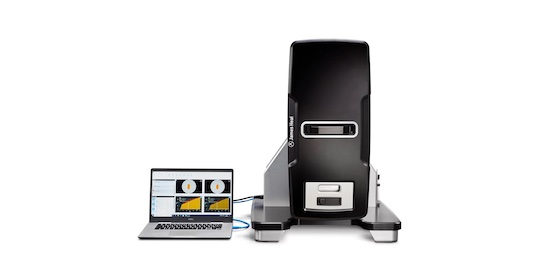
Each of the six performance testing instruments in the range has its own unique features, some groundbreaking. In particular, WickView having moved ahead of the current test standard for moisture wicking behaviour in fabric, and AquAbrasionwhich tests the effects of wet abrasion to better replicate real-life wear situations. Having developed their own test methods, James Heal is working with the industry to establish new standards in these revolutionary areas of textiles testing. In addition, the TruRain sustainable water repellency tester recycles water, cutting waste by 99%, and creates efficiencies to reduce operating costs by 83%. Test instruments for hydrostatic head, air permeability and drying rate complete the range.

To assist the industry with this specialist area of textile testing, James Heal has released a free whitepaper: The Lab Manager's Guide to Performance Testing.

Running alongside this innovation and complementing James Heal’s line up are the more traditional textiles testing instruments, such as for flammability, abrasion, tensile strength, and tear resistance, which together are widely used across the protective wear sectors for numerous applications to test for safety, durability, as well as comfort of the wearer.


Colin Whittaker, Business Development Manager at James Heal commented, “PPE fabrics and garments are critical for protecting first responders and military personnel in hazardous environments. They must possess specific functional attributes, such as flame resistance, thermal protection, breathability, and water resistance. They must also be tested to ensure that they meet the necessary standards for effectiveness and safety. The construction of these fabrics and garments is complex, often involving specialised techniques and a combination of fibres to achieve the desired characteristics. Our range of test instruments covers these complex requirements, and will continue to be developed alongside the ongoing advancement of technology in textiles.”

Established in Halifax, West Yorkshire in 1872, James Heal design and manufacture textile testing instruments, which are used worldwide. The brand became part of the wider PPT Group in 2014, with a number of sister brands each focusing on testing many aspects of materials and products.

More News from James Heal

More News on Other suppliers

#ITMA Asia + CITME Singapore 2025

Asteks to meet the global market at ITMA ASIA + CITME Singapore 2025

Getting ready to take its place at ITMA ASIA + CITME Singapore 2025 with advanced grinding solutions and a wide range of aprons and cots, Asteks is expanding its target for the Asian market. The company, focusing on strengthening relations with current and potential customers, will highlight the “Made in Türkiye” label with its innovative and competitive products.

#Other suppliers

New impulses for the textile care industry: Texcare 2024 supporting programme

The focus of Texcare International 2024 (6-9 November) will be on the major challenges facing the textile care industry, including automation, energy saving, circular models and textile hygiene. Together with its partners, the leading trade fair has designed a supporting programme that can offer progressive impulses for the future of the sector.

#Other suppliers

Microfactory for filter bags developed in Sweden

After an intensive few years of development, ACG Kinna Automatic and ACG Nyström – members of TMAS, the Swedish textile machinery association –have delivered the first microfactory for the production of fully finished filter bags to a major international filtration industry customer, in cooperation with JUKI Central Europe.

#Other suppliers

Vickers Oils secures OEM approval from Lonati

Vickers Oils has announced a significant milestone in the company’s partnership with Lonati S.p.a., Italy; earning OEM approval for VICKERLUBE SOCK 46 needle oil.

Latest News

#Recycling / Circular Economy

Advanced Recycling Conference 2025 fuels innovation across key waste streams

The Advanced Recycling Conference (ARC) 2025 brought together nearly 220 experts from 28 countries to spotlight pioneering advancements and foster industry collaboration in recycling across diverse waste streams including plastics, textiles, automotive and other materials.

#Dyeing, Drying, Finishing

Navis TubeTex announces U.S. partnership with Icomatex

Navis TubeTex, a global leader in advanced dyeing and finishing machinery solutions, is pleased to announce a new partnership with Icomatex (www.icomatex.com), a respected European manufacturer of high-quality stenters and textile finishing equipment. Under this agreement, Navis TubeTex will exclusively represent the Icomatex stenter line in the United States.

#Recycling / Circular Economy

ADVANSA launches ADVA®tex: A new step toward textile-to-textile recycling

ADVANSA has introduced ADVA®tex, a new filling fibre made entirely from recycled pre-consumer textile waste, positioning the material as a significant step forward in textile-to-textile (T2T) recycling. The fibre is designed for use in duvets, pillows, mattresses, and furniture applications and is available in three versions.

#Knitting & Hosiery

KARL MAYER celebrates 35 years of EL pattern drive

KARL MAYER is celebrating an anniversary this year: on 30 November 1990, the first warp knitting machine with electronic guide bar control, the KS 4 EL, was delivered – another milestone for patterning. As early as 1980, the SU gearbox with the MRS42SU had initiated the transition from mechanical chains to digital data.

TOP