[pageLogInLogOut]

#Nonwovens / Technical Textiles

SGL Carbon SE will not propose a dividend payment for fiscal year 2013

SGL Group is one of the world’s leading manufacturers of carbon-based products and materials (c) 2014 SGL Group
SGL Carbon SE has completed an extremely difficult fiscal year 2013. In June 2013 the full year EBITDA guidance was reduced to 50 - 60% below the prior-year level of €240 million. According to preliminary results, the Company has achieved this full year guidance at the lower end of the range due to a further weak development in the fourth quarter 2013.

In addition to the weak operational result, the earnings situation was significantly burdened by impairment charges in the Business Area Carbon Fibers & Composites (CFC) and in the deferred tax assets, which were already recorded in the second quarter 2013. As anticipated, the measures defined in the cost savings program SGL2015, which have already been partially implemented, have led to restructuring expenses in the second half year of 2013.

As announced, these expenses amount to a high double-digit million euro figure. Altogether, SGL Group expects a Group net loss of almost €400 million.

The negative trends observed in the final quarter 2013 have continued into the first weeks of the new fiscal year 2014, particularly in the main business with graphite electrodes. If this development does not improve significantly in the course of the year, it will be difficult to achieve the operating earnings level of 2013, as the expected improvements in most other Business Units will not suffice to compensate for the decline in the graphite electrode business.

In light of the high net loss in the fiscal year 2013 as well as the weak start into the new year, the Board of Management of SGL Carbon SE will not propose a dividend payment for the fiscal year 2013. The Company feels committed to its shareholders to resume payment of a continuous, earnings related dividend with the sustainable recovery of profitability.

More News from SGL CARBON SE

More News on Nonwovens / Technical Textiles

#ITMA Asia + CITME Singapore 2025

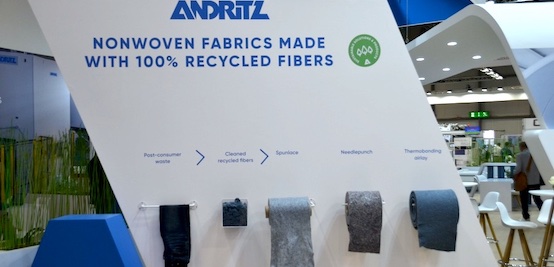
ANDRITZ sets focus on textile recycling and durable nonwoven production technologies at ITMA Asia 2025

International technology Group ANDRITZ will be presenting its innovative nonwovens production and textile solutions at ITMA ASIA + CITME 2025 in Singapore, from October 28 to 31, 2025 (Hall 2, D106). ANDRITZ will showcase its MMCF production plants, textile sorting and recycling, bast fiber processing, needlepunch, airlay, and life-cycle service technologies, with a focus on sustainable solutions. Discover how these innovations can grow your business opportunities and support a greener future.

#ITMA Asia + CITME Singapore 2025

Dilo Group at ITMA ASIA Singapore 2025

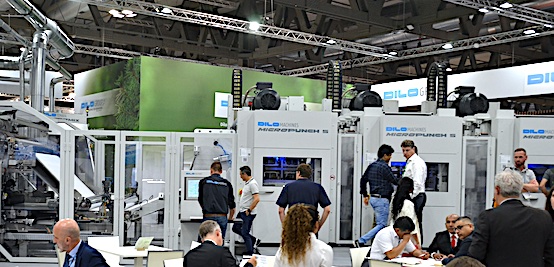
At ITMA ASIA Singapore, the Dilo Group will exhibit at Booth No. H2 – D202. Together with Kansan Materials, Izmir, the company will present its latest developments and looks forward to welcoming visitors to exchange ideas and explore innovations in needling technology.

#Nonwovens

OUTLOOK™ 2025: Charting a sustainable and innovative future for the Nonwovens Industry

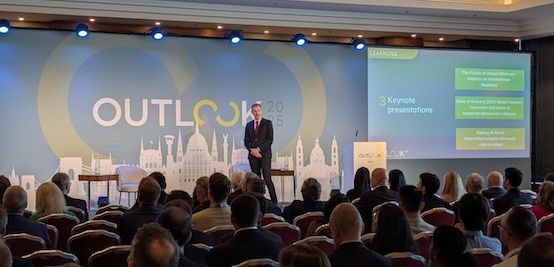
EDANA concluded its flagship event, OUTLOOK™ 2025, last week, marking it as a major success and addressing the biggest questions facing the industry. The three-day conference highlighted the urgent need for a unified approach to sustainability, regulation, and innovation in the absorbent hygiene and wipes sectors.

#Nonwovens

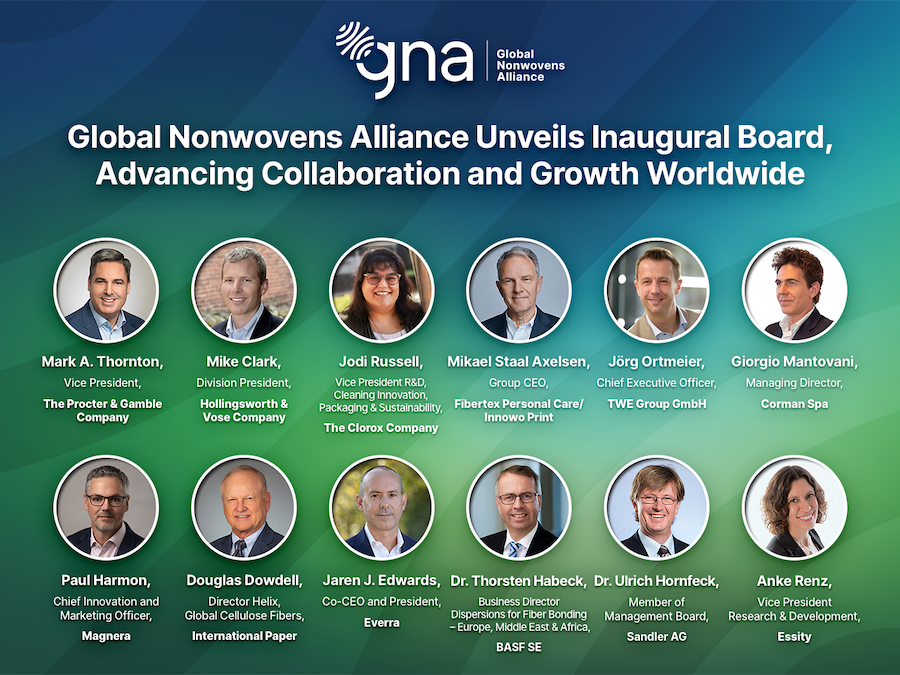
Global Nonwovens Alliance unveils Inaugural Board, advancing collaboration and growth worldwide

The Global Nonwovens Alliance (GNA), a tax-exempt federation jointly founded by INDA, the Association of the Nonwoven Fabrics Industry, and EDANA, the Voice of Nonwovens, announces the appointment of its founding Board of Directors. This group of leaders represents some of the most influential executives across the nonwovens value chain and reflects GNA’s mission to foster global collaboration, innovation, and growth in the industry.

Latest News

#Raw Materials

New study shows low environmental impact by Cotton made in Africa Organic Cotton from Tanzania

Today, the Aid by Trade Foundation (AbTF) is announcing the results of a comprehensive life-cycle analysis (LCA) for cotton produced in Tanzania under the Cotton made in Africa Organic (CmiA Organic) standard. The study emphasises the small ecological footprint of CmiA Organic verified cotton. This can largely be traced back to the absence of synthetic pesticides, artificial fertilisers, and artificial irrigation. Consequently, CmiA Organic cotton can help the textile industry meet regulatory requirements as well as science-based targets. The results also show that the consequences of climate change threaten the livelihoods of these cotton farmers, even though the type of agriculture they practise barely contributes to climate change.

#Raw Materials

Better Cotton Initiative strengthens regenerative focus in standard update

The Better Cotton Initiative (BCI) has strengthened the regenerative focus of its field-level standard with the launch of a new version of its Principles & Criteria (P&C), which marks the next step in the organisation’s journey to becoming a regenerative standards system.

#Man-Made Fibers

Selenis and Kintra Fibers partner to scale 100% bio-based synthetic fiber technology

Selenis, a leading global specialty polyester manufacturer, today announced a strategic manufacturing partnership with materials science company Kintra Fibers to scale Kintra’s patented fiber-grade PBS resin - a 100% bio-based and biodegradable material designed for textile applications.

#Functional Fabrics

PERFORMANCE DAYS proves its relevance as the industry’s key meeting point

Held on March 18–19, 2026, PERFORMANCE DAYS once again confirmed its position as a leading international platform for functional textiles. A total of 3.366 trade visitors and around 560 exhibitors gathered in Munich, with the event already kicking off successfully on DAY 0, which received highly positive feedback for its interactive format. Despite challenging conditions caused by the public transport strike in Munich, the event saw strong attendance and a consistently high level of activity across both exhibition days.

TOP