[pageLogInLogOut]

#Nonwovens / Technical Textiles

New machine family for the production of high-performance stone bags
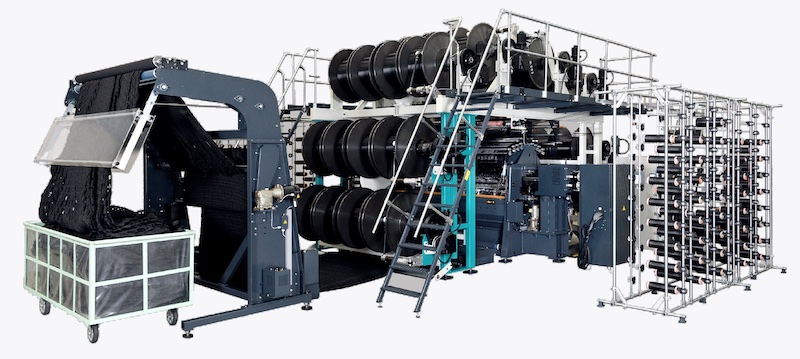
KARL MAYER launches its new RMF 8 EL and HDR 9 EL NET – two machines for the extremely economical production of stone bags, which can be manufactured in a variety of sizes and to different stages of completion. While the HDR model, as a representative of the double needle bar raschel series, produces complete sacks in one piece, the RMF 8 EL raschel machine produces individual textile sheets that are then assembled into a tubular net article.
The new HDR 9 EL NET  © 2025 KARLMAYER
The new HDR 9 EL NET © 2025 KARLMAYER


The stone bags made from the coarse net structures can be used for a variety of heavy-duty applications. Established applications include shore erosion control, foundation consolidation for bridge piers and disaster recovery structures.

The stone bags made from the coarse net structures can be used for a variety of heavy-duty applications. Established applications include coastal erosion control, foundation consolidation for bridge piers and the construction of disaster defence structures.

When used in demanding environments such as coastal and marine projects, the RMF 8 EL and HDR 9 EL NET stone bags offer unrivalled performance. The main feature here is their large capacity. Depending on the net structure, the bags can hold stones weighing between one and 12 tonnes. Made from recycled polyester or polyethylene fibres, they are also exceptionally strong, durable and adapt flexibly to the ground. 

Production with variety and efficiency, products with many advantages

The RMF 8 EL is the machine of choice when it comes to size flexibility. It produces items with a wide range of widths. A maximum of 190" is possible. In addition, different gauges - E3, E4, E8, E9 are available- make it possible to adapt the net structures to the operating conditions in terms of robustness.

The HDR 9 EL NET manufactures ready-to-use articles with two different gauges, E4 and E7, and thus streamlines the production of high-quality, tubular nets. The manufacturing process is extremely fast and cost-effective, with no additional sewing or finishing work.

The warp knitted stone bags themselves offer further advantages. The use of synthetic fibres makes them resistant to rust and corrosion, making them perfect for use in harsh environments, for example under the influence of seawater.

The net products are also extremely flexible. Thanks to their stitch structure, the stone bags made from them can adapt smoothly to uneven surfaces and fill gaps and open spaces effectively. This makes them particularly suitable for use in the construction applications.

The stone bags manufactured by RMF 8 EL and HDR 9 EL NET also score highly in terms of weight and stability. They are lightweight, yet extremely stable and therefore easy to transport, handle, fill and install. Their use on site requires less skilled labour and the installation process is faster. If crane-assisted methods are used for filling and installation, specialised personnel are no longer required.
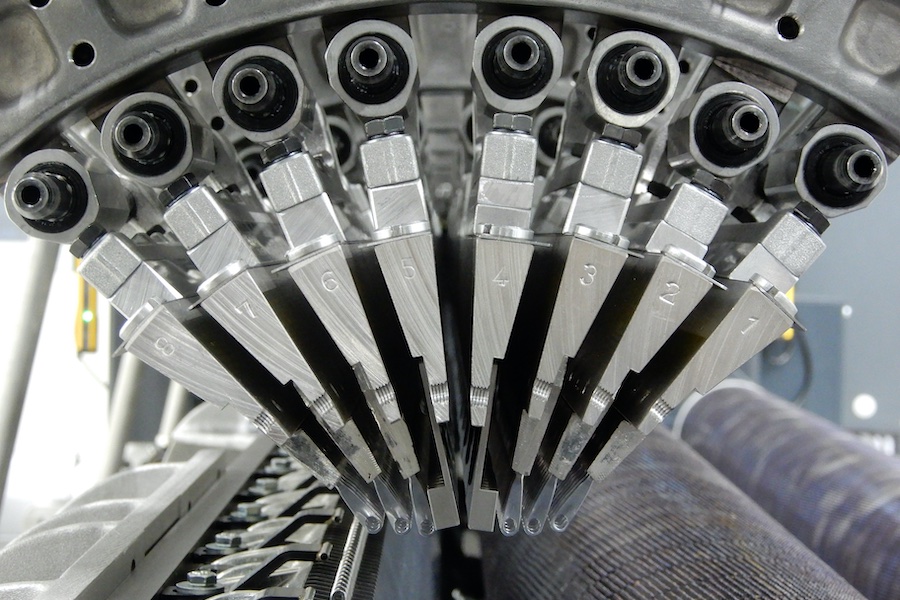
RMF 8 EL © 2025 KARLMAYER


Two machines, many applications

The RMF 8 EL and HDR 9 EL NET machines can be used to produce nets, mostly for stone bags, which can be customised to meet the various requirements of their industrial applications thanks to different net densities and dimensions. The fields of utilisation are extremely diverse.

Shore Protection: The stone bags can be used for coastal protection projects, for example for the construction of breakwaters, groynes and revetments. They absorb and dissipate the wave energy. This prevents erosion and protects the coastline.

Consolidation of foundations for bridge piers: In river and marine environments, stone bags permanently stabilise and consolidate the foundations of bridge piers to ensure structural integrity in erosion-prone areas.

Disaster Recovery Construction: Following natural disasters, stone bags can be quickly deployed to stabilise damaged infrastructure and prevent further erosion. This makes them a fast and reliable recovery solution.

Foundation work for temporary roads: In situations where temporary roads are needed, especially in soft or unstable terrain, the stone bags can be uses to provide stable foundations, supporting safe passage for heavy machinery and vehicles.
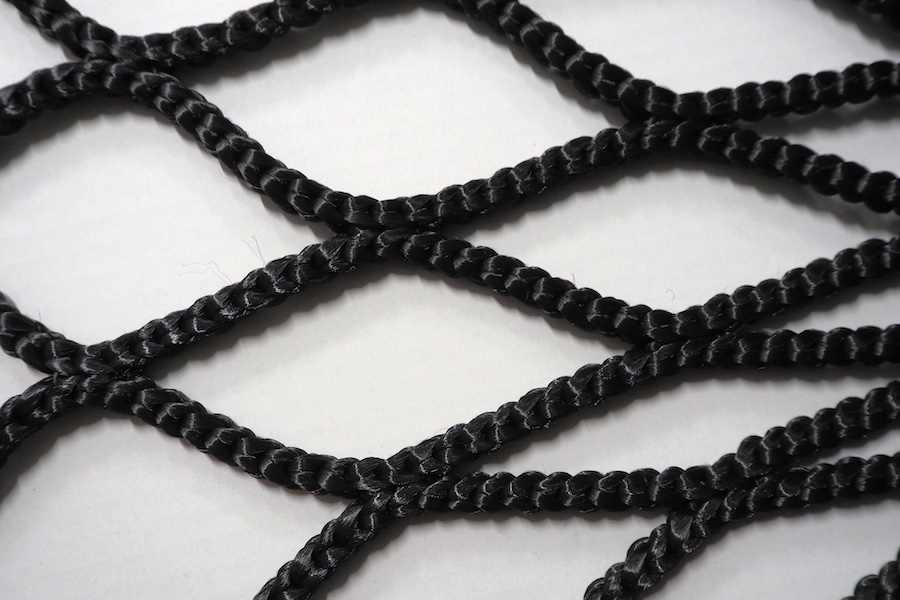

A net for stone bags manufactured by RMF 8 EL and HDR 9 EL NET © 2025 KARLMAYER


More News from KARL MAYER Textilmaschinenfabrik GmbH

#Knitting & Hosiery

KARL MAYER celebrates 35 years of EL pattern drive

KARL MAYER is celebrating an anniversary this year: on 30 November 1990, the first warp knitting machine with electronic guide bar control, the KS 4 EL, was delivered – another milestone for patterning. As early as 1980, the SU gearbox with the MRS42SU had initiated the transition from mechanical chains to digital data.

#ITMA Asia + CITME Singapore 2025

India becomes growth engine for the warp knitting industry

ITMA ASIA 2025 exceeded all expectations for KARL MAYER – above all thanks to the strong interest from India: around 30% of the qualified discussions were held with partners from this traditional textile country. The response underlines the growing importance of the Indian market, which could become the second largest sales region for KARL MAYER after China. The warp knitting industry in particular is developing dynamically.

#Weaving

Solution for lower energy consumption proves itself in practice

Getzner Textil is one of KARL MAYER’s first customers to use PROSIZE with CASCADE. The innovative weaving specialist has tested the steam and condensation system by KARL MAYER and determined the energy savings it achieves. Karl-Heinz Vaaßen, Head of Textile Drying at KARL MAYER, assisted Getzner Textil’s production specialists both with the tests and with all questions relating to CASCADE. In a conversation with Werner Egger, Head of Weaving, and Thomas Rossi, Head of Warp Preparation at Getzner Textil, he learnt more about the system’s benefits for his customer.

#ITMA Asia + CITME Singapore 2025

Innovation and customer proximity – KARL MAYER’s clear focus makes an impression

ITMA ASIA in Singapore was a resounding success for KARL MAYER, exceeding all expectations. The company welcomed visitors from 39 countries and held around 570 expert discussions. Most guests came from India, followed by China, Indonesia and Pakistan. The exchange with them was both well-founded and targeted. Conversation topics ranged from investment projects and new technologies to opportunities for cooperation and business expansion.

More News on Nonwovens / Technical Textiles

#ITMA Asia + CITME Singapore 2025

ANDRITZ sets focus on textile recycling and durable nonwoven production technologies at ITMA Asia 2025

International technology Group ANDRITZ will be presenting its innovative nonwovens production and textile solutions at ITMA ASIA + CITME 2025 in Singapore, from October 28 to 31, 2025 (Hall 2, D106). ANDRITZ will showcase its MMCF production plants, textile sorting and recycling, bast fiber processing, needlepunch, airlay, and life-cycle service technologies, with a focus on sustainable solutions. Discover how these innovations can grow your business opportunities and support a greener future.

#ITMA Asia + CITME Singapore 2025

Dilo Group at ITMA ASIA Singapore 2025

At ITMA ASIA Singapore, the Dilo Group will exhibit at Booth No. H2 – D202. Together with Kansan Materials, Izmir, the company will present its latest developments and looks forward to welcoming visitors to exchange ideas and explore innovations in needling technology.

#Nonwovens

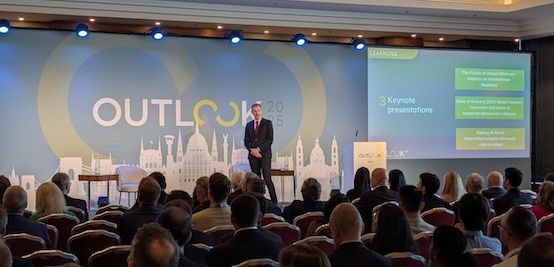
OUTLOOK™ 2025: Charting a sustainable and innovative future for the Nonwovens Industry

EDANA concluded its flagship event, OUTLOOK™ 2025, last week, marking it as a major success and addressing the biggest questions facing the industry. The three-day conference highlighted the urgent need for a unified approach to sustainability, regulation, and innovation in the absorbent hygiene and wipes sectors.

#Nonwovens

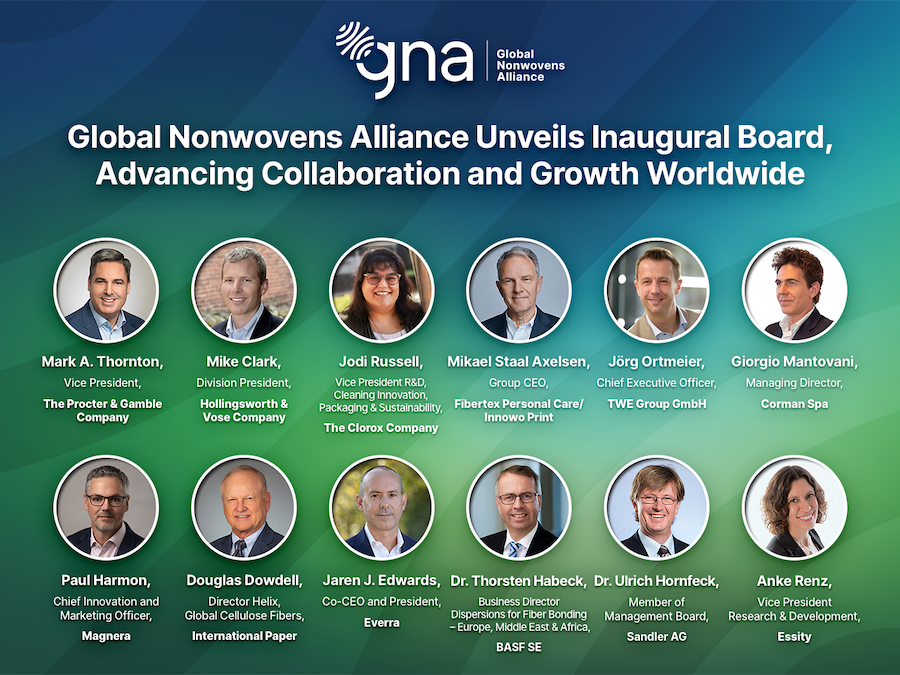
Global Nonwovens Alliance unveils Inaugural Board, advancing collaboration and growth worldwide

The Global Nonwovens Alliance (GNA), a tax-exempt federation jointly founded by INDA, the Association of the Nonwoven Fabrics Industry, and EDANA, the Voice of Nonwovens, announces the appointment of its founding Board of Directors. This group of leaders represents some of the most influential executives across the nonwovens value chain and reflects GNA’s mission to foster global collaboration, innovation, and growth in the industry.

Latest News

#Recycling / Circular Economy

Advanced Recycling Conference 2025 fuels innovation across key waste streams

The Advanced Recycling Conference (ARC) 2025 brought together nearly 220 experts from 28 countries to spotlight pioneering advancements and foster industry collaboration in recycling across diverse waste streams including plastics, textiles, automotive and other materials.

#Dyeing, Drying, Finishing

Navis TubeTex announces U.S. partnership with Icomatex

Navis TubeTex, a global leader in advanced dyeing and finishing machinery solutions, is pleased to announce a new partnership with Icomatex (www.icomatex.com), a respected European manufacturer of high-quality stenters and textile finishing equipment. Under this agreement, Navis TubeTex will exclusively represent the Icomatex stenter line in the United States.

#Recycling / Circular Economy

ADVANSA launches ADVA®tex: A new step toward textile-to-textile recycling

ADVANSA has introduced ADVA®tex, a new filling fibre made entirely from recycled pre-consumer textile waste, positioning the material as a significant step forward in textile-to-textile (T2T) recycling. The fibre is designed for use in duvets, pillows, mattresses, and furniture applications and is available in three versions.

#Research & Development

The region of renewable raw materials: Central German Alliance for Bioplastics

The development of sustainable plastic solutions is rapidly gaining importance in light of global environ- mental pollution, dwindling fossil resources and ambitious climate protection targets. As part of the re- gional alliance RUBIO, which brings together 18 partners from central Germany and the Berlin-Branden- burg area, the bio-based and biodegradable plastic polybutylene succinate (PBS) was comprehensively investigated, starting with the raw material, through the manufacturing process, to industrial application.

TOP