[pageLogInLogOut]

#Nonwovens / Technical Textiles

ANDRITZ to supply two high-speed hygiene converting lines to Predo, Türkiye
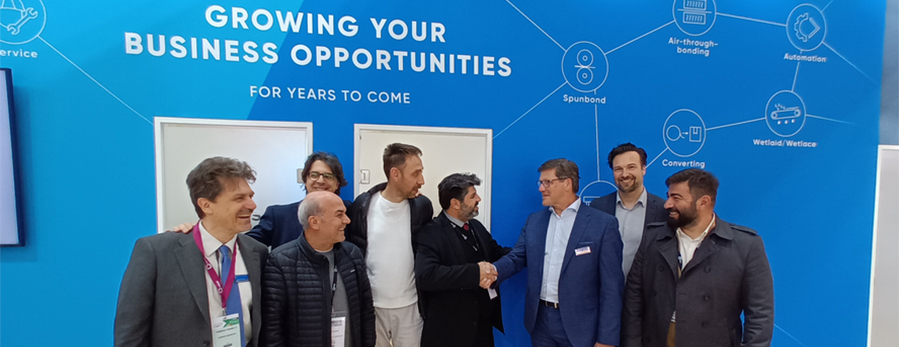
ANDRITZ and Predo teams at INDEX fair © ANDRITZ
International technology group ANDRITZ has received an order from Predo Health Products Inc, Türkiye, for delivery of two high-speed hygiene converting lines to produce adult open diapers and feminine sanitary napkins. With this investment, Predo is entering the growing adult and femcare market.

The company already operates four baby diaper lines from ANDRITZ.

Ibrahim Uygur, owner of Predo, says: “We have again placed our confidence in ANDRITZ as we are very satisfied with the installed lines and the first-class service. Especially during the difficult times we recently faced in Türkiye due to the earthquake, ANDRITZ supported us with perfect service. This enabled us to maintain our production level and serve our customers in time.”

The two state-of-the-art lines are designed for high-speed production and contain the most advanced forming technology for absorbent core and SAP (superabsorbent polymers) dosing. Based on their flexibility and user-friendly configuration, Predo will be able to produce a wide range of different product compositions and sizes. In addition, the lines are designed for zero waste production. This will enable Predo to produce high-performing products with a sustainable approach.


The lines will be installed in Predo’s factory in Gaziantep, with start-up scheduled for the first half of 2024.

Predo is one of the leading manufacturers of baby care products and is expanding its business to other hygiene sectors. The company exports to 55 countries across the globe and scores with high quality production and constant developments.
More News from Andritz Küsters GmbH

More News on Nonwovens / Technical Textiles

#ITMA Asia + CITME Singapore 2025

ANDRITZ sets focus on textile recycling and durable nonwoven production technologies at ITMA Asia 2025

International technology Group ANDRITZ will be presenting its innovative nonwovens production and textile solutions at ITMA ASIA + CITME 2025 in Singapore, from October 28 to 31, 2025 (Hall 2, D106). ANDRITZ will showcase its MMCF production plants, textile sorting and recycling, bast fiber processing, needlepunch, airlay, and life-cycle service technologies, with a focus on sustainable solutions. Discover how these innovations can grow your business opportunities and support a greener future.

#ITMA Asia + CITME Singapore 2025

Dilo Group at ITMA ASIA Singapore 2025

At ITMA ASIA Singapore, the Dilo Group will exhibit at Booth No. H2 – D202. Together with Kansan Materials, Izmir, the company will present its latest developments and looks forward to welcoming visitors to exchange ideas and explore innovations in needling technology.

#Nonwovens

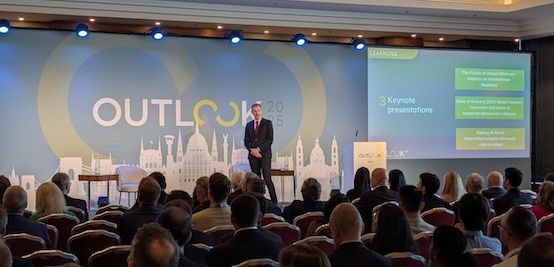
OUTLOOK™ 2025: Charting a sustainable and innovative future for the Nonwovens Industry

EDANA concluded its flagship event, OUTLOOK™ 2025, last week, marking it as a major success and addressing the biggest questions facing the industry. The three-day conference highlighted the urgent need for a unified approach to sustainability, regulation, and innovation in the absorbent hygiene and wipes sectors.

#Nonwovens

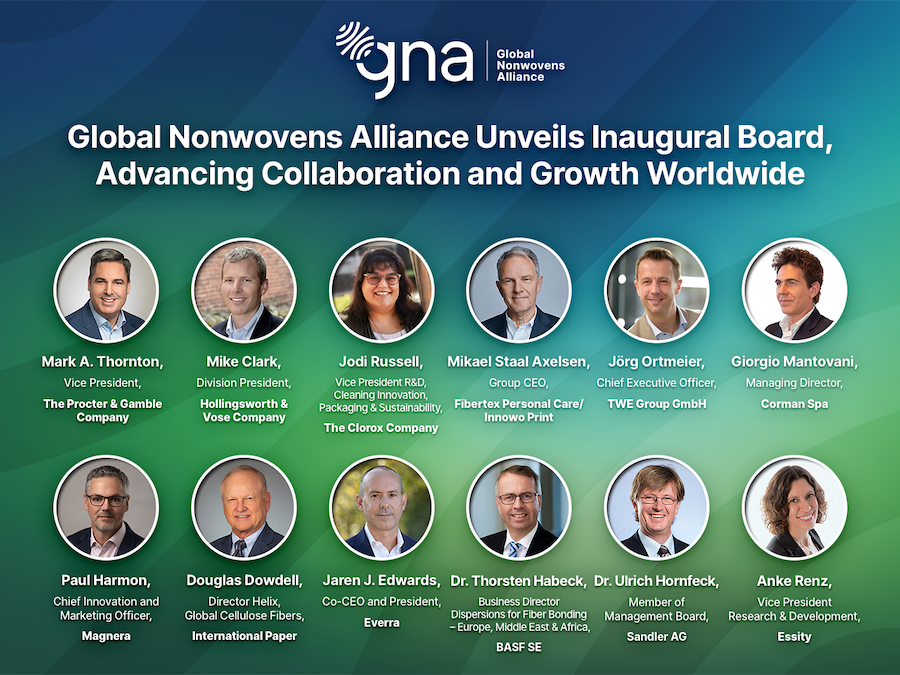
Global Nonwovens Alliance unveils Inaugural Board, advancing collaboration and growth worldwide

The Global Nonwovens Alliance (GNA), a tax-exempt federation jointly founded by INDA, the Association of the Nonwoven Fabrics Industry, and EDANA, the Voice of Nonwovens, announces the appointment of its founding Board of Directors. This group of leaders represents some of the most influential executives across the nonwovens value chain and reflects GNA’s mission to foster global collaboration, innovation, and growth in the industry.

Latest News

#Techtextil 2026

AI, Start-ups, Research: Techtextil and Texprocess bring together players in the textile industry

From start-ups to universities and research institutes: at Techtextil and Texprocess, the world’s leading innovation trade fairs in Frankfurt am Main, exhibitors present future-oriented concepts for the global textile industry. With the international Campus & Research area, a strong participation from start-ups and the latest AI applications for textile processing, both trade fairs showcase current developments in the textile industry. By bringing together innovation, research and application, they enable new partnerships across the textile value chain.

#Techtextil 2026

IVGT joint stand brings innovation and networking to Techtextil 2026

At Techtextil 2026 and the parallel Texprocess 2026, key transformation topics such as artificial intelligence, digitalisation, sustainability, recycling and the circular economy will be reflected across the show. Against this backdrop, the IVGT, together with 16 member companies, will present its joint stand in Hall 12.1 (Stand D62) as a platform for exchange and networking.

#Man-Made Fibers

Indorama Ventures supports Southeast Asia’s textile customers with reliable regional supply and global innovative portfolio

Indorama Ventures, one of the leading global polyester fiber and filament yarn suppliers globally, will participate in Indo Intertex 2026 in Jakarta this April, making its diverse global portfolio available to apparel, home textile, and hygiene customers across Southeast Asia.

#Raw Materials

New study shows low environmental impact by Cotton made in Africa Organic Cotton from Tanzania

Today, the Aid by Trade Foundation (AbTF) is announcing the results of a comprehensive life-cycle analysis (LCA) for cotton produced in Tanzania under the Cotton made in Africa Organic (CmiA Organic) standard. The study emphasises the small ecological footprint of CmiA Organic verified cotton. This can largely be traced back to the absence of synthetic pesticides, artificial fertilisers, and artificial irrigation. Consequently, CmiA Organic cotton can help the textile industry meet regulatory requirements as well as science-based targets. The results also show that the consequences of climate change threaten the livelihoods of these cotton farmers, even though the type of agriculture they practise barely contributes to climate change.

TOP