[pageLogInLogOut]

#Man-Made Fibers

DuPont launches Tyvek® with Renewable Attribution for consumer & industrial applications

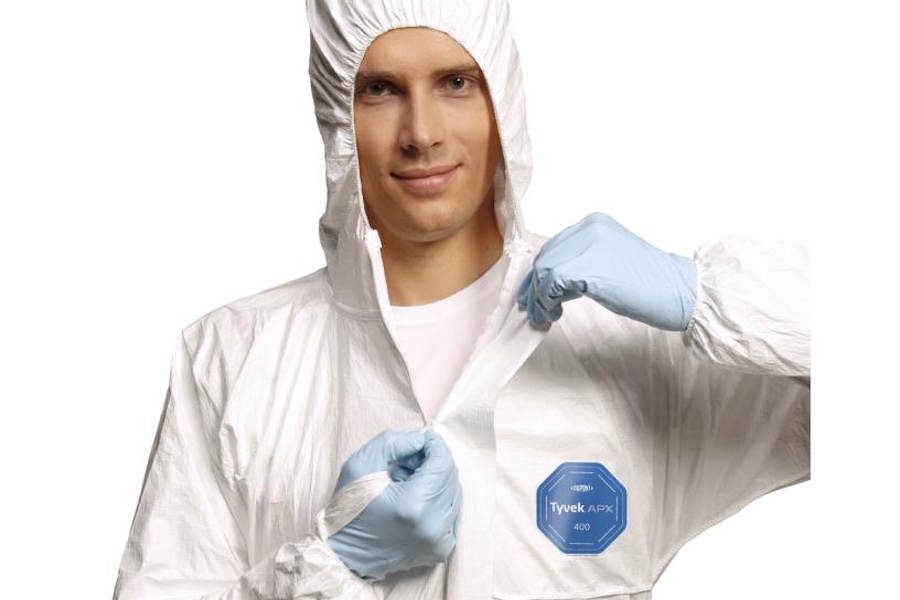
DuPont (NYSE: DD) today announced the global launch of Tyvek® with Renewable Attribution for Consumer & Industrial (C&I) applications, extending its certified bio-circular material innovation to customers in active packaging, tags and labels, race bibs and wristbands, as well as industrial packaging such as art packaging, dunnage and industrial bags.


As companies work to reduce its carbon footprint, including through Scope 3 emissions reduction, Tyvek® with Renewable Attribution offers a practical route to lower-carbon material sourcing. Most importantly, customers can transition to this innovative technology without redesigning their products or processes.

“Tyvek® with Renewable Attribution provides customers with a credible solution that maintains the performance they know while supporting progress on sustainable material sourcing and carbon footprint reduction. It is one step in the journey as we work towards implementing our sustainability strategy, and we will continue to go further as we work to reduce the environmental footprint of Tyvek® manufacturing and collaborate across the value chain to advance circularity of the product,” said Jonathan Brunette, Sustainability Application Development Engineer, DuPont™ Tyvek® C&I.

Tyvek® with Renewable Attribution is available at renewable attribution levels from 30% to 100%, linked to ISCC PLUS-certified bio-circular material on a mass balance basis. Under this approach, certified bio-circular feedstocks are introduced and tracked within the upstream supply chain supporting a reduction in reliance on fossil feedstocks. The renewable feedstocks are then attributed to the purchased HDPE. The bio-circular feedstocks are derived from second-generation biomass, including waste and residues that do not compete with food production – resulting in more responsible material sourcing without placing additional pressure on agricultural resources or food supply chains.

Through the ISCC PLUS-certified mass balance approach, an equivalent amount of certified bio-circular feedstock is allocated to Tyvek® with Renewable Attribution. This enables customers to select a renewable attribution level from 30% to 100%[1], with the carbon footprint reduction linked to the level chosen. At a 30% renewable attribution level, Tyvek® with Renewable Attribution supports an approximately 30% reduction in carbon footprint (including CO2 uptake) compared to standard Tyvek®, based on peer-reviewed, ISO-compliant life cycle assessment data.

Because Tyvek® with Renewable Attribution is produced to the same product specifications as conventional Tyvek®, customers can continue to rely on the same proven performance characteristics across their existing applications. This means they can take a measurable step toward more sustainable material sourcing and a reduced product carbon footprint without compromising durability, reliability or usability. Importantly, the product is a drop in solution, with no requalification needed, helping make adoption simpler and faster for existing Tyvek® users.

DuPont™ Tyvek® is an ISCC PLUS certificate holder at its Luxembourg and Richmond, Virginia manufacturing sites. As part of the voluntary ISCC PLUS certification process, which validates sustainability characteristics of alternative feedstocks across the value chain, the sites receive annual third-party audits and support transparent measurement, tracking and attribution of certified bio-circular feedstocks using the mass balance approach. This helps support traceability, feedstock identity, transparency and accurate renewable attribution. The launch also aligns with DuPont’s wider sustainability strategy, including its 2035 Sustainability Goals and focus on enabling circularity, reducing environmental impact and supporting customers with innovative solutions that deliver direct sustainability advantages.

For more information on Tyvek® with Renewable Attribution, please visit https://www.dupont.com/consumer-and-industrial-applications/tyvek-with-renewable-attribution.html.

[1] For active packaging, Tyvek® with Renewable Attribution is currently available up to 30% Renewable Attribution on HealthCare styles.
More News from Dupont

More News on Man-Made Fibers

#Spinning

Rieter appoints Daniel Lippuner as new CEO as Thomas Oetterli steps down

Thomas Oetterli has decided to step down from his function as CEO, effective October 31, 2026, and hand over the Chairmanship of the Board of Directors. “After the successful implementation of the Next Level performance program, the structural measures initiated to consolidate the sites and the acquisition of Barmag, the time has come to hand over responsibility to new hands,” explains Thomas Oetterli.

#Raw Materials

Kraig Labs ships first commercial spider silk yarn

Kraig Biocraft Laboratories, Inc. (OTCQB: KBLB) (“the Company”, “Kraig Labs”, or “Kraig’s”), a world leader in spider silk technology*, today announced the shipment of its first commercial order of recombinant spider silk yarn. The custom-engineered yarn was produced to fulfill a purchase commitment from a globally recognized performance sports brand and is slated for development into a first-of-its-kind performance textile.

#Man-Made Fibers

Teijin Frontier and Asahi Kasei Advance complete business integration and launch TA Frontier Co., Ltd.

Teijin Frontier Co., Ltd., and Asahi Kasei Advance Co., Ltd., completed the integration of their business operations effective today, and have launched the new entity as TA Frontier Co., Ltd. This integration combines the customer bases and business platforms that the two companies have developed, with the goals of building greater competitiveness, responding more effectively to rapidly changing market conditions and achieving sustainable growth.

#Spinning

Barmag’s automated maintenance processes for quality, safety, and efficiency in spinning plants

Maintenance and service processes in chemical fiber spinning plants have a significant impact on product quality, equipment availability, and workplace safety. With three new retrofittable solutions, Barmag helps Producers make manual work processes more efficient, safer, and more reproducible.

Latest News

#Knitting & Hosiery

SHIMA SEIKI to showcase digital product creation at Apparel Sourcing Week

Leading digital textile solutions provider SHIMA SEIKI MFG., LTD. of Wakayama, Japan will exhibit at Apparel Sourcing Week 2026 in Bengaluru, India next month. The exhibition provides a platform for the entire apparel value chain, bringing together manufacturers, brands, suppliers and solution providers in one location.

#Digital Printing

SNA GZ accelerates its on-demand production strategy with Kornit Digital

SNA GZ is leveraging the Kornit Atlas MAX PLUS to expand its music merchandise production, streamline e-commerce order fulfillment, and grow its print-on-demand business across Europe. This investment increases SNA GZ's textile production capacity by 150% (2.5×), enabling the company to meet growing demand and support its continued expansion.

#Recycling / Circular Economy

NEUMÜHLE launches mono-material hoodie designed for textile recycling

With the Circular Mono Hoodie, Zurich-based label NEUMÜHLE introduces a new essential designed around a single-material principle. The textile construction is cotton throughout, right down to the sewing thread. Entirely free from elastane, the hoodie launches as a Limited Drop for CHF 139. Take-back, collection and existing recycling partnerships complement its circular design.

#Raw Materials

New Cotton Review examines competitiveness, market risk, and opportunities

From moving record volumes of Brazilian cotton to market, to managing price volatility, unlocking Ethiopia’s production potential, and strengthening African textile trade, the latest edition of Cotton: Review of the World Situation examines some of the most consequential opportunities and challenges facing the global cotton industry.

TOP