[pageLogInLogOut]

#Technical Textiles

DuPont introduces Tyvek® APX™ 400 protective coverall, setting a new benchmark for extreme breathability

New coverall benefits from groundbreaking materials technology that offers extreme breathability without sacrificing performance or durability
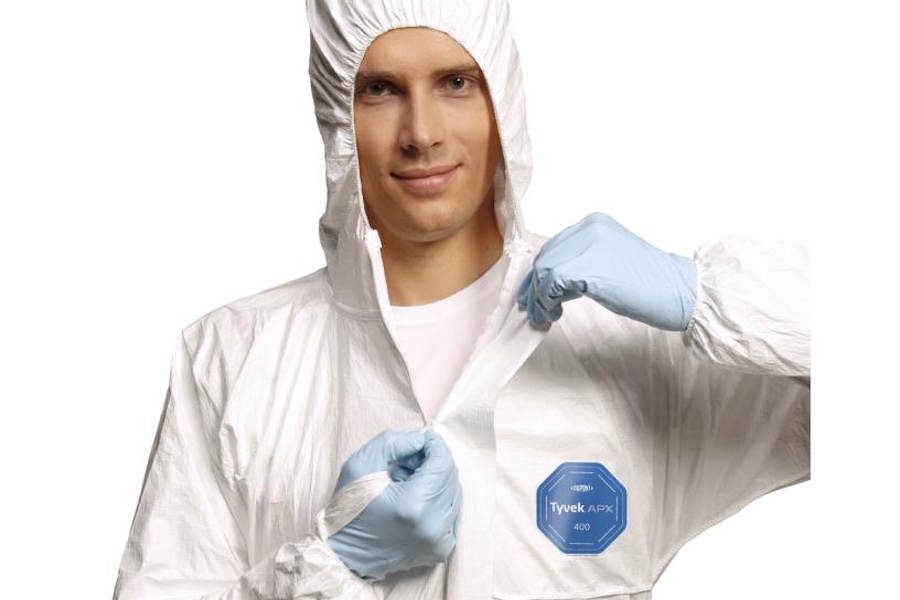
New from DuPont: Tyvek® APX™ 400 protective coverall is the first in a new generation of extremely breathable disposable chemical protection garments. © 2026 DuPont
DuPont (NYSE:DD) announced the launch of the Tyvek® APX™ 400 protective coverall, the first in a new generation of extremely breathable disposable chemical protection garments. Manufactured using DuPont™ Tyvek® APX™ groundbreaking fabric, the new garment combines 360° protection and durability with extreme breathability, taking worker comfort and safety to a whole new level.

Comfort as a science

Balancing comfort and safety in protective garments has always been a compromise, particularly in high temperature, high humidity applications. Through continued innovation, DuPont has made Tyvek® garments more breathable while preserving their exceptional performance and durability. Tyvek® APX™ fabric is the result. It offers an outstanding combination of protection and comfort, helping workers to perform at their best, especially in physically demanding environments.

The fabric’s enhanced performance was validated through collaboration with experts who applied scientific methods to assess breathability and worker well-being. Empa, the Swiss Federal Laboratories for Materials Science and Technology, conducted human thermoregulation modeling and biometric monitoring under controlled conditions. The research assessed thermal strain, sweat rate, skin temperature, and overall comfort perception. Human trials with biometric monitoring then confirmed the simulation data. The research evaluated the breathability of Tyvek® APX™ protective clothing under real-world working conditions. These included high ambient temperatures, controlled humidity, and medium to high activity levels.

Empa’s thermoregulation model showed that Tyvek® APX™ fabric allows a slower rise in core body and skin temperature than traditional garment options, including standard clothing. This helps reduce heat strain and perceived thermal stress. It also shortens recovery time during high temperatures and strenuous activity. Additional customer wear trials involving almost 300 users worldwide confirmed a clear preference for garments made with the new material. Some compared the sensation to wearing casual clothing rather than PPE.

“Since we unveiled Tyvek® APX™ fabric less than six months ago, the response from our customers and industry partners has been overwhelmingly positive,” said Chloé Caux-Wetherell, EMEA Marketing Manager at DuPont. “It’s a game-changer for health and safety professionals, giving them the ability to enhance worker well-being and reduce the risk of them suffering from heat build-up when wearing essential protective garments. With the launch of Tyvek® APX™ 400, we are providing the benefits of comfort and safety to as many people as possible, as quickly as possible.”

A new era of chemical protection

The Tyvek® APX™ 400 protective coverall offers full body protection and unrivalled wearer comfort. It is the first protective coverall in the Tyvek® APX™ range and can be specified for any application requiring Category III, Type 5-B and 6-B chemical protection.

Thanks to the new material technology, the Tyvek® APX™ 400 disposable chemical garment combines extreme breathability with proven design features, including a three-piece hood for optimal wearer visibility and movement, an integral Tyvek® thumb loop to keep sleeves in place during overhead movement, and a Tyvek® zipper and flap for ease of donning and doffing. These are complemented by an elasticated waist for flexibility of movement, plus elasticated wrists, ankles, and face to minimize chemical ingress. 
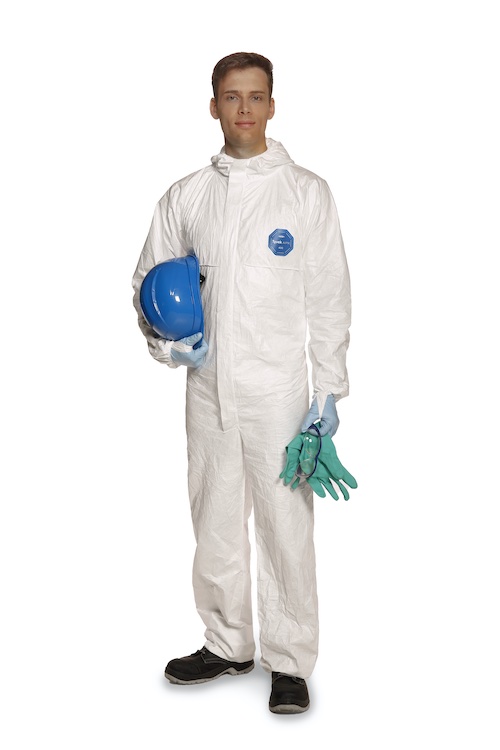
Tyvek® APX™ fabric offers an outstanding combination of protection and comfort, especially in physically demanding environments © 2026 DuPont


Sustainable choice

Because the single-use Tyvek® APX™ 400 coverall is made from a mono-material (HDPE), it is readily recyclable if no contamination has occurred*. In addition, the coverall is available in boxes of 25, dramatically reducing the amount of plastic packaging waste.

The Tyvek® APX™ 400 protective coverall is available commercially from March 2026.

For more details about Tyvek® APX™ 400, please visit:

safespec.dupont.co.uk

Information about Tyvek® APX™ fabric and wear trials can be found here:

tyvek.co.uk/apx


*Tyvek® is made of HDPE, and products made of 100% Tyvek® material can be recycled at facilities that recycle flexible HDPE materials. Please check recycling facilities in your area to ensure they can recycle Tyvek®.


More News from Dupont

More News on Technical Textiles

#Man-Made Fibers

DYNEEMA® and NP Aerospace advance personal protection for military servicewomen

Dyneema®, owned by Avient Corporation, an innovator of materials solutions, is supplying its high-performance unidirectional (UD) materials to world-leading armor manufacturer NP Aerospace, enabling the production of armor systems designed specifically to fit the female body. With 2,000 new armor systems, including 4,000 plates, made in the United Kingdom (UK) and delivered in June 2026, this collaboration addresses a long-standing lack of high-quality personal protection specially built for female defense and security personnel.

#Associations

Keeping products moving with Swedish automation at FILTECH 2026

At FILTECH 2026, taking place in Cologne from June 30th to July 2nd, members of TMAS – the Swedish textile machinery association – will highlight how the country’s engineering expertise is enabling filtration manufacturers to increase productivity, improve traceability and reduce dependence on labour-intensive manual processes.

#Weaving

Itema manufactures the first Projectile Weaving Machines “Made in Italy” at its Colzate Headquarters.

Itema proudly announces an important industrial milestone: in early May, the first Itema projectile weaving machines manufactured in Italy were successfully produced at the Group’s headquarters in Colzate.

#Technical Textiles

Trelleborg celebrates grand opening of advanced manufacturing facility in North Carolina

Trelleborg Engineered Coated Fabrics proudly celebrated the grand opening of its new, state-of-the-art extrusion coating manufacturing facility in Forest City, North Carolina, US on May 6, 2026. The event brought together community leaders, customers, partners and Trelleborg leadership to mark a significant milestone in the company’s continued investment in innovation, capacity and sustainable operations. The new facility represents a significant investment and reinforces Trelleborg’s long-term commitment to advancing high-performance engineered coated fabric solutions for critical applications across aerospace, healthcare & medical, safety & protection and industrial markets.

Latest News

#Nonwovens

Lenzing Group highlights scalable, bio-based nonwovens solutions at leading global industry fairs

From CIDPEX in China to Techtextil in Frankfurt and INDEX in Geneva, the Lenzing Group showcases ready-for-market, bio-based nonwoven solutions and receives industry recognition for LENZING™ Nonwoven Technology.

#Research & Development

Carbon-ceramic hybrid fibre proves its worth – NRW Minister for Science Mona Neubaur congratulates ITA start-up TERNAfil

MAXCarbon technology, a novel carbon-ceramic hybrid fibre developed by ITA spin-off TERNAfil, secured third place at the HIGH-TECH.NRW Demo Day on the TÜV NORD campus in Essen. The technology combines the strength of carbon fibres with the temperature and corrosion resistance of ceramic materials. Mona Neubaur, Minister for Science in North Rhine-Westphalia, congratulated the team on their success and on winning prize money of 4,000 euros.

#

DTF vs DTG Printing - The technologies shaping today’s custom merchandise market

From sportswear to branded tote bags, custom merchandise continues to grow in popularity across sectors, driving print shops to cater to short runs, personalisation, and rapid turnaround. As print providers look to this market, two printing technologies often stand out: Direct‑to‑Film (DTF) and Direct‑to‑Garment (DTG). Each offers its own benefits, and understanding these differences helps determine the most suitable production method for print service providers.

#Associations

Towards pragmatic and harmonised labelling in the EU

EDANA, alongside 14 European associations, urges the European Commission and Member States to adopt a pragmatic approach for the future harmonised packaging labels, in line with the EU’s agenda for the EU Single Market, simplification and competitiveness. The system should rely on text-free pictograms, available in achromatic or monochromatic versions matching the packaging palette, with the possibility of using digital labelling as a core element. Our associations represent manufacturers of consumer goods across Europe.

TOP