[pageLogInLogOut]

#Knitting & Hosiery

EASY MASK
© 2021 KARL MAYER
As we enter the second year of the worldwide COVID-19 pandemic there is a continuing need for masks. While face masks help greatly in mitigating the spread of the virus and protecting the wearer, they also contribute to environmental problems such as waste and pollution.

Sustainable industry collaboration between Indorama Ventures, DyeCoo and STOLL, a brand of the KARL MAYER GROUP

EASY MASK is a collaborative initiative between Indorama Ventures, DyeCoo and STOLL to produce a fashionable mask with a sustainable mind-set throughout the whole production process - starting from the yarn production and followed by the dyeing, design and production. With the advanced technologies of the three companies, the mask does not just eliminate waste, but also reduces the use of water and energy. The design approach ensures that all components can be easily removed and re-used for other masks.

© 2021 KARL MAYER
© 2021 KARL MAYER


Deja™ recycled polyester

Deja™ is the sustainable recycled polyester brand from Indorama Ventures. The polyester performance yarn is made from 100% post-consumer recycled PET bottles and can be used for a multitude of home and apparel applications. The yarn is independently certified and traceable, with full transparency across raw material and processes including GRS, Ecomark, RCS, Oeko-Tex 100 and Reach.

Locally sourced 100% post-consumer rPET products offer a low-carbon footprint and closed loop solution. Deja™ is 100% recyclable at the end of use and can be repeatedly re-processed without harmful emissions or discharges to create new high value-added products.

© 2021 KARL MAYER
© 2021 KARL MAYER


CO2 Dyeing

The Deja™ recycled yarn is afterwards dyed with the innovative supercritical Carbon Dioxide textile dyeing technology by the Dutch company DyeCoo at CleanDye factory. The sc-CO2 dyeing machines can dye yarns or fabric rolls in a closed-loop process without using water and process chemicals, thereby producing any wastewater. By using only the pure non-toxic Corangar dyestuff made by Colourtex, in combination with sc-CO2 that 95% reclaimed in the machine, textile dyeing has less of an environmental impact compared to traditional dyeing technologies. As Carbon Dioxide has the same quality every day and over the whole world the technology is reliable and reproducible.


Design and Production

The sustainable product advantages achieved through the use of Deja™ recycled polyester and CO2 dyeing technology are further enhanced with the design and production method.

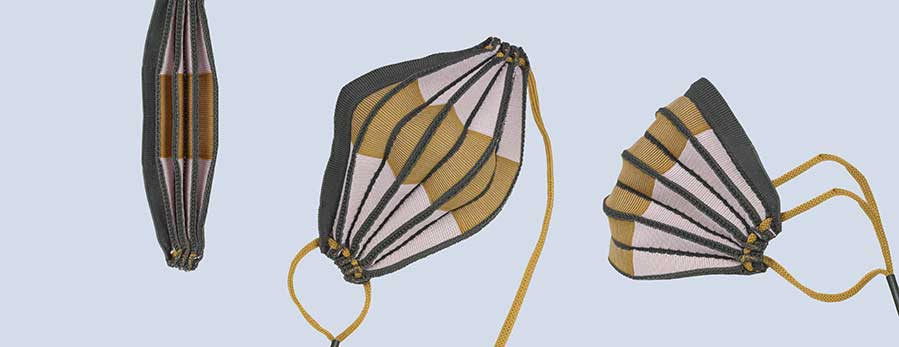
EASY MASK is a fresh approach to reinterpret a traditional medical facemask from a design perspective. It is a 3D knitted and playful kinetic object that expands and collapses easily. It is simple to use and comfortable to wear; be it over the face or around the neck. The design approach allows customization, on-demand production, and reduces production waste to below 1%. Integrated ventilation increases breathability. Whilst it does not protect the wearer from infection it limits the spread of viruses.

© 2021 KARL MAYER
© 2021 KARL MAYER


Both the production method, as well as the design itself, take environmental and sustainable aspects into account. The seamless production method eliminates cut and sew and reduces waste material whilst offering customized on-demand production to lessen product surplus. Washing at 60°C makes repetitive use possible. All mask components (metal bar, knitted strings and adjustment tube) can be easily removed and re-used for other masks.

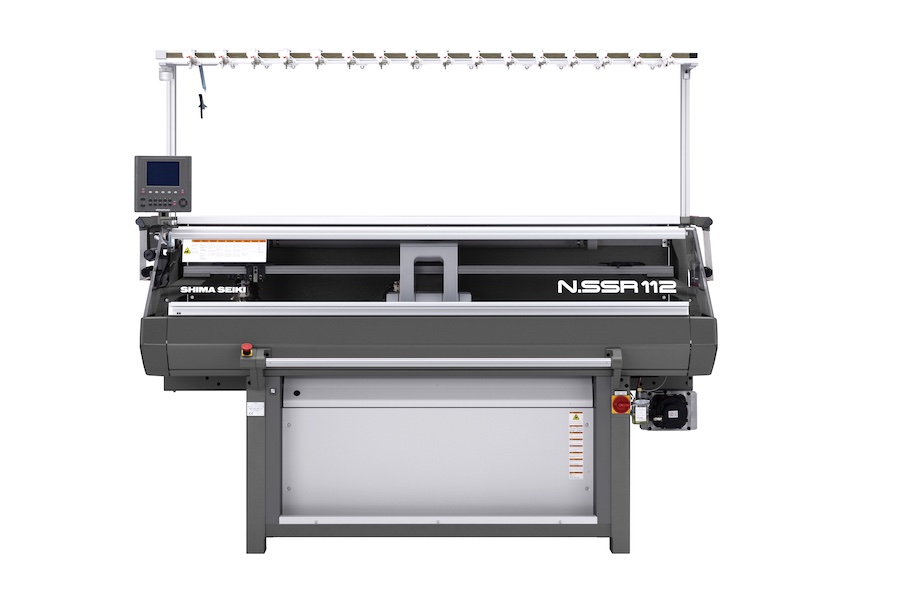
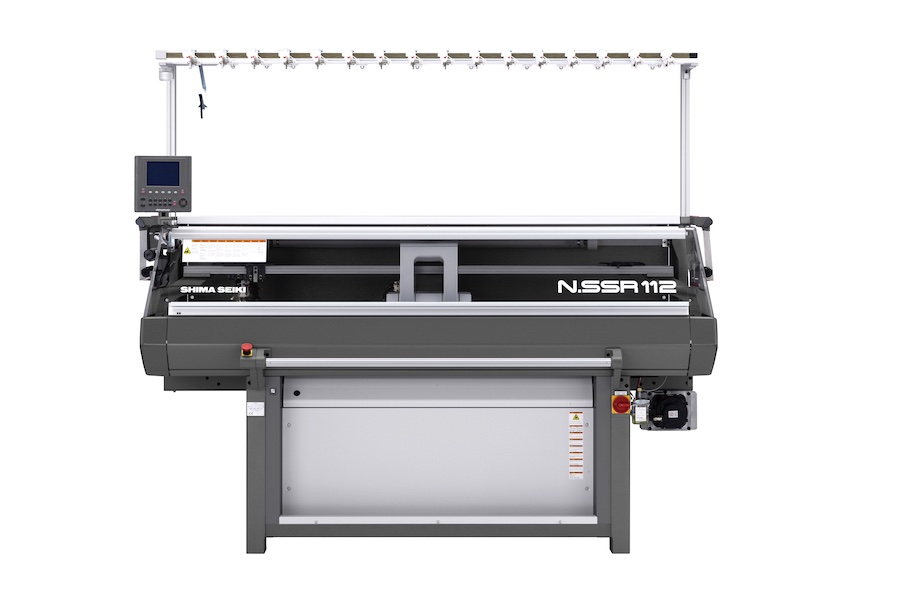
The mask is knitted on a STOLL CMS 530 HP B E 7.2 machine, but can also be knitted on other types of STOLL machines. This allows for flexible local production independent of the machine park.

CMS 530 © 2021 KARL MAYER


More News from KARL MAYER Textilmaschinenfabrik GmbH

#Weaving

More patterns, less effort: the MULTI-MATIC® at Rohleder

Rohleder is one of Europe’s most modern weaving mills. For over 80 years, the family-owned company has been developing and manufacturing premium fabrics for brands, retailers and private customers – 100% Made in Germany. This success is made possible by a consistent focus on design, quality, and functionality, as well as by continuous investment in state-of-the-art production facilities. Rohleder also relies on innovative technologies in warp preparation and has been collaborating with KARL MAYER for many years. As recently as 2023, a MULTI-MATIC® was delivered to the company’s headquarters in Konradsreuth.

#Knitting & Hosiery

The new RJ 4/2 EL revolutionizes body mapping and expands creative possibilities – from smart lingerie to sporty athleisure designs

With the addition of another member to its successful RASCHELTRONIC® family, KARL MAYER is opening up new possibilities for creative product development for warp knitting mills and brands. The RJ 4/2 EL offers with two stitch-forming Jacquard bars entirely new design options for functional sportswear and bi-elastic lingerie. Available in gauges E 28 and E 32, this new model helps manufacturers set their collections apart from the competition. The fine E-32 gauges, in particular, impress with their clean surface, a pleasantly soft feel, and an exceptionally elegant look.

#Knitting & Hosiery

Driving footwear innovation

How innovative spacer fabrics are transforming the athletic footwear market, and why KARL MAYER’s new TEXTILE INNOVATION CENTER is set to become a driving force behind the next generation of performance footwear.

#Knitting & Hosiery

The new RDJ 7/3 defines the design footprint of modern athletic shoes

Stylish, functional, and efficient to produce – spacer fabrics are the all-arounders among textile materials. These versatile fabrics are particularly in demand in the sports and casual footwear sector, as they combine comfort, breathability, and design freedom. At the same time, this industry is trend-driven, dynamic, and price-sensitive like few others. Innovations are therefore a decisive factor for success. With the RDJ 7/3, KARL MAYER offers a solution specifically tailored to these requirements. The particular strength of the new double raschel machine: its exceptional flexibility, thanks to its three jacquard bars.

More News on Knitting & Hosiery

Latest News

#Nonwovens

BASF opens global diaper and superabsorbents performance lab in Mumbai

BASF has officially inaugurated its new Performance Lab for diapers and superabsorbents (SAP) in Mumbai on August 18, 2026, which will provide technical and application services to superabsorbent customers globally. The new lab of BASF’s Hygiene Solutions business has been established in less than a year and is part of BASF’s Innovation Campus Asia Pacific in Mumbai, BASF’s second largest R&D site in Asia Pacific established in 2017 under BASF Chemicals India Private Limited.

#Recycled Fibers

Naia™ from Eastman strengthens western hemisphere textile connections at Apparel Sourcing Show Guatemala

As brands and retailers explore more diversified and responsive sourcing networks, the Naia™ brand from Eastman is strengthening its engagement with the textile and apparel value chain across the western hemisphere. From August 18–20, the company will participate for the first time in Apparel Sourcing Show Guatemala, a regional meeting point for apparel sourcing, manufacturing and nearshoring.

#Man-Made Fibers

Dornbirn GFC 2026 expands conference program with new thematic sessions

For 65 years, Dornbirn GFC has stood for innovation and is one of the world’s leading conferences in the fiber industry. From September 16 to 18, 2026, the international fiber community will meet in Dornbirn, Austria, to discuss current trends, technological developments, and forward-looking solutions. More than 600 experts from industry and academia from over 30 countries are expected to attend. With around 100 presentations by renowned speakers, a 2,5-day conference program, and three parallel presentation rooms with moderated sessions, Dornbirn GFC provides a first-class platform for knowledge exchange, networking, and international collaboration. Together, participants will generate ideas and impulses that will sustainably shape the future of the global fiber industry.

#Research & Development

Europe is committed to recycling end-of-life wind turbine blades

Starting in 2026, Europe’s wind energy industry has committed itself to ensuring that wind turbine blades do not end up in landfills once they reach the end of their service life. The EU-funded research project REWIND is exploring ways to reuse this composite waste. The German Institutes of Textile and Fiber Research Denkendorf (DITF) are one of 13 project partners from seven countries.

TOP