[pageLogInLogOut]

#Knitting & Hosiery

Increased productivity with dur sock needles
(c) 2020 Groz-Beckert
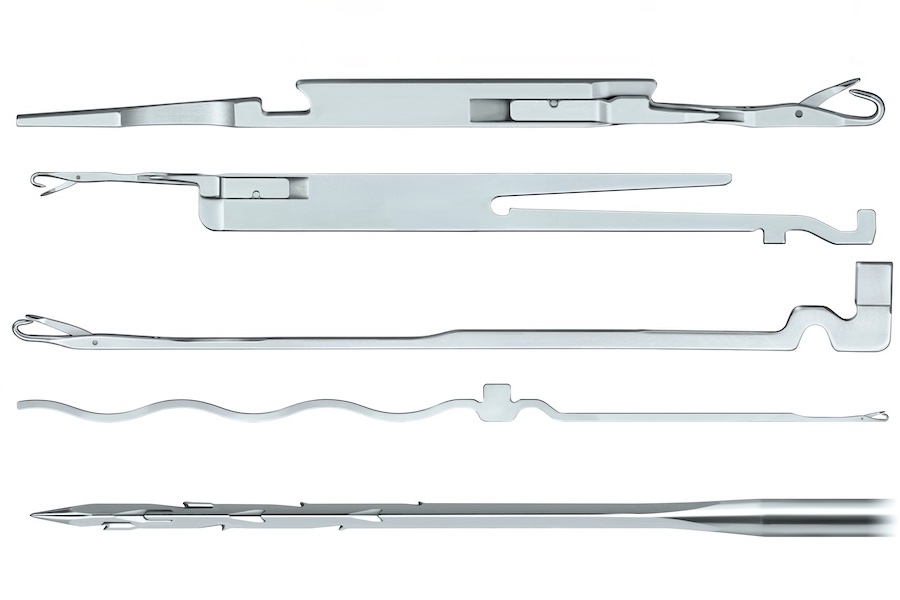
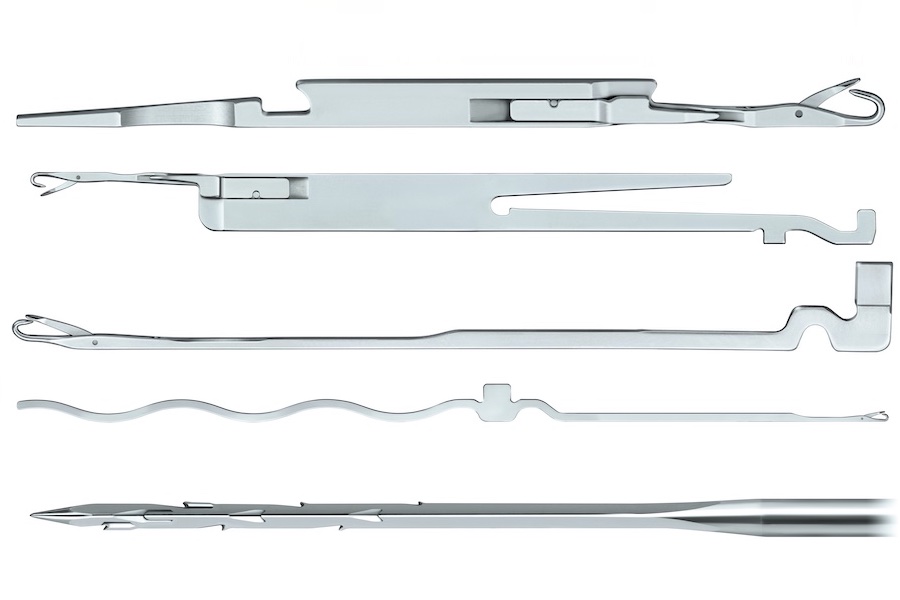
As original equipment in sock machines from leading manufacturers, Gros-Beckert products are known in the market for their reliability and quality. To ensure that all product requirements are met and all aspects are taken into account, development and further development not only take place in consultation with machine builders, but also in dialog with end users who know their requirements best. The result is top class knitting tools that stand for efficiency and perfect product appearance. This is the only way to achieve uninterrupted production in light of the complex work steps involved in producing socks.

dur™ can offer even more

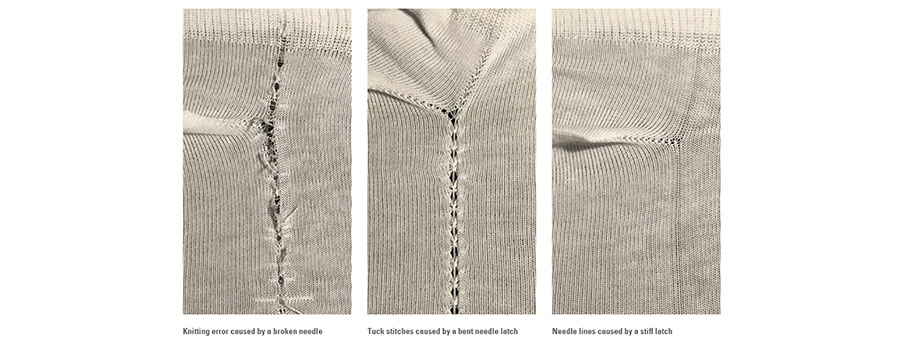
The latest development of the Groz-Beckert sock needles was recently presented under the name dur™. This too was based on feedback received from end users. It is the answer to the increased loads in modern sock production due to fashion or technical aspects. dur™ needles reduce the risk of tuck stitches, needle lines and other faults in the knitted fabric caused by damage to the needle under extreme usage conditions. It is currently demonstrating its effectiveness in the latest machine generations of Lonati and Santoni.

dur™ – the durable

"dur" stands for "durability", i.e. resilience and long service life. Equipped with different properties, needles with dur™ technology are optimally designed for use under higher loads, without compromising the performance of the sock machine.

The technical features at a glance:

  • Increased hook stability
  • Increased latch stability
  • Modified slot design

The higher hook stability reduces the risk of hook breakage and bent open hooks. The increased latch stability and modified slot design reduce the risk of bent latches and also guarantee the latch movement, even with slightly bent latches.

Customer benefits at a glance:

  • Lower needle consumption
  • Reduced machine downtime
  • Increased productivity
  • Fewer rejects
  • Lower production costs


Field tests in over 50 machines showed a clear reduction in needle consumption, which depending on the application was as low as -30 %. This not only saves costs, but helps to protect the environment too. The reduction of rejects means that the dur™ needle contributes to sustainability.

How to identify dur™ needles

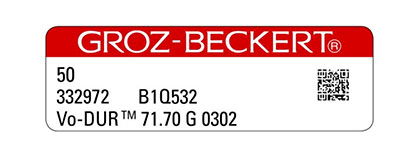
Sock needles with dur™ technology can be identified by the suffix dur™ in the needle designation.
(c) 2020 Groz-Beckert


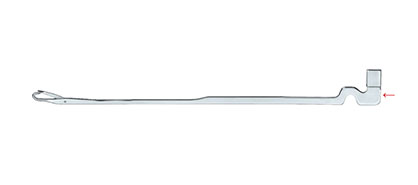
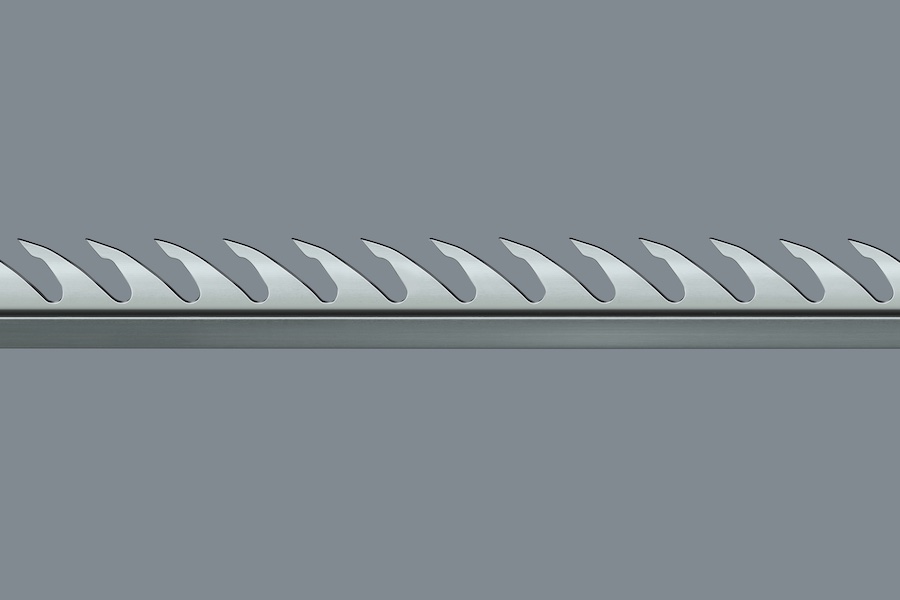
For visual differentiation, dur™ needles have a notch on the back on the butt directly below the predetermined breaking groove.
(c) 2020 Groz-beckert


dur™ needles are currently available for various Lonati and Santoni machine models. The product range can be expanded as required.
More News from Groz-Beckert KG

#Exhibitions & Events

Groz-Beckert showcases textile innovation at ShanghaiTex 2025

From December 16 to 19, 2025, the global textile industry will gather at ShanghaiTex at the Shanghai New International Expo Center (SNIEC), where Groz-Beckert will present its latest highlights and innovations across its five product areas – Knitting, Weaving, Nonwovens, Sewing, and Spinning – at Hall N3, Booth A05.

#ITMA Asia + CITME Singapore 2025

Groz-Beckert showcases textile innovation at ITMA Asia + CITME 2025 in Singapore

From October 28 to 31, 2025, the global textile industry will gather at ITMA Asia + CITME at the Singapore Expo, where Groz-Beckert will present its latest highlights and innovations across its six product areas – Knitting, Weaving, Nonwovens, Tufting, Sewing, and Spinning – at Hall 5, Booth B301.

#Textile processing

The sewing machine needle manufacturer with process expertise

Groz-Beckert sewing machine needles are renowned throughout the industry and comprise an impressively broad portfolio. But customers know that innovative solutions from Groz-Beckert go beyond the core product. With its future-oriented services and digital offerings, the company, headquartered in Germany, is a strong partner of the sewing industry.

#ITMA Asia + CITME 2024

Groz-Beckert at the ITMA Asia + CITME 2024 in Shanghai

The ITMA ASIA + CITME 2024 is in full swing and Groz-Beckert is presenting the highlights and innovations of its six product areas – Knitting, Weaving, Nonwovens, Tufting, Sewing and Spinning – in Hall H4, Booth C04.

More News on Knitting & Hosiery

#Knitting & Hosiery

Live more beautifully and comfortably with Warp Knits

Knitted fabrics are the all-rounders among home textiles. They can be designed in many different ways and are used in mattresses, blankets and pillows as well as in terry towelling, curtains and upholstery fabrics to create trendy designs, constantly new products and good business.

#Knitting & Hosiery

SHIMA SEIKI returns to ShanghaiTex

Leading flat knitting solutions provider SHIMA SEIKI MFG., LTD. of Wakayama, Japan, together with its Hong Kong and Chinese market subsidiary SHIMA SEIKI (HONG KONG) LTD., will exhibit at the ShanghaiTex 2025 exhibition (Booth No.: Hall N3, Booth A20) held in Shanghai, China this month. This marks the return of SHIMA SEIKI to ShanghaiTex after a 14-year hiatus, its last exhibit at the show having been in 2011.

#Knitting & Hosiery

The newcomers HKS 3-M EL ECO and HKS 4-M EL ECO set new standards in the tricot market

Short development cycles, frequent pattern changes, and maximum efficiency – even with small batch sizes: Today's global fashion and apparel market demands more flexibility than ever before. High-performance warp knitting machines with compound needles (HKS) and EL pattern drive are KARL MAYER's answer to this challenge.

#Knitting & Hosiery

KARL MAYER celebrates 35 years of EL pattern drive

KARL MAYER is celebrating an anniversary this year: on 30 November 1990, the first warp knitting machine with electronic guide bar control, the KS 4 EL, was delivered – another milestone for patterning. As early as 1980, the SU gearbox with the MRS42SU had initiated the transition from mechanical chains to digital data.

Latest News

#Research & Development

Innovation center for textile circular economy inaugurated

Just over eight months after the foundation stone was laid, the new Innovation Center for Textile Circular Economy was officially inaugurated today at TITK Rudolstadt. Thuringia's Minister President Mario Voigt, TITK Director Benjamin Redlingshöfer, and other guests of honor cut the ribbon to the modern building complex and viewed the premises, which are now ready for occupancy. The “DICE – Demonstration and Innovation Center for Textile Circular Economy” is TITK's largest single investment to date. The Free State of Thuringia supported the total cost of €11.5 million with €8 million in GRW and FTI funding.

#Research & Development

Sustainable design of Geosynthetics and roof underlayments made from recyclates

Is it possible to recover plastic recyclates from previously unused waste streams in order to produce high-quality fibers and films? How can bio-based polymer fibers be manufactured so as to allow adjustable biodegradability? These are the questions being addressed by researchers from the Fraunhofer Cluster of Excellence Circular Plastics Economy CCPE in the Zirk-Tex project.

#Associations

Waste2Fashion: FTTH Committed to advancing Circular Fashion in the Mediterranean

As an official partner of the Waste2Fashion project, the Tunisian Federation of Textile and Apparel (FTTH) participated in the Kick-off Meeting held on 10–11 December in Spain. The event brought together project partners from across the Mediterranean, including Spain, Italy, Egypt, Lebanon, and Tunisia, to align on a shared vision and initiate the first implementation steps.

#Associations

AATCC announces 2025 Herman & Myrtle Goldstein Graduate Student Paper Competition winners

The American Association of Textile Chemists and Colorists (AATCC) recognized the winners of the 2025 Herman & Myrtle Goldstein Graduate Student Paper Competition. Founded in 1982 to give student members the chance to conduct and present original research, the competition was renamed in 1994 in honor of Herman and Myrtle Goldstein, following their US$60,000 endowment. Their gift is a lasting remembrance of their dedication to young people in the textile industry.

TOP