[pageLogInLogOut]

#Industry 4.0 / Digitalization

Vandewiele Sweden pioneers new e-commerce platform

Vandewiele Sweden is spearheading a transformation in B2B operations for the industry, with a first-of-its-kind new e-commerce platform developed in Sweden. The company, a member of TMAS, the Swedish Textile Machinery Association, has taken on the task of developing the digital solution that will successfully meet the future demands for Vandewiele Group customers worldwide.

Coherent dialogue

“One of the primary challenges faced with B2B sites, is in building a coherent online narrative for products that have traditionally relied on in-person dialogue,” explains Henrik Kruse, Vandewiele Sweden’s Area Sales Manager, who led the development team. “Another challenge, of course, is that every customer should have a positive experience regardless of where they are in the world and via whatever internet connection they are operating with.”

Addressing this, the Vandewiele Sweden team has developed a user-friendly interface that exploits the latest "exploding view" diagrams to ensure customers can easily identify and order the components they need, all within a 1:1 digital representation. The next stage in 3D technology is set up and ready, although it awaits implementation and market readiness to fully integrate and utilize its features.

“The trend today is to bring our behaviour from home to the workplace, which is especially true for the younger generation,” says Kruse. “This means that the B2B textile sector needs to rethink its offer. While the pandemic catalyzed digital transformations across industries, Vandewiele has been at the forefront in recognising the need for accessibility and added value for customers, despite the industry’s traditional nature.”

Focus on core products and clientele

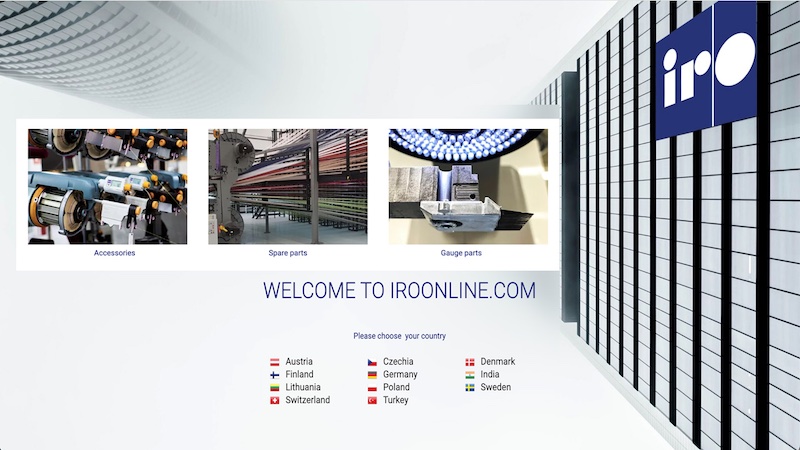
Adopting a phased approach, the company is initially introducing its IRO-branded accessories, spare parts and gauge parts, targeting textile mills, weavers and distributors. The platform has been carefully crafted to cater to the varying needs of its diverse clientele, offering streamlined direct sales and a transparent commission structure for agents and distributors.

“With this project we need to walk before we can run,” Kruse explains. “The foundation is an advanced, user-friendly webbshop for the customer that prioritises function and simplicity. The initial focus has been on products where there are few variables and thus no possibility of making the wrong selection. However, in the not too distant future we will test with machines that can fit this digital format.”

With an ambitious logistics promise of 48-hour dispatch, Vandewiele is set to revolutionise service standards. Leveraging third-party payment service providers like Nets, the company assures speed and reliability, fostering trust and efficiency in every transaction.

”This initiative underscores our commitment to not only meeting but exceeding the evolving demands of our global customers, ensuring that we stay at the forefront of technological advancement.", Henrik concludes.

Launch in April 2024

Scheduled for launch in April, Vandewiele stands ready to introduce its new e-commerce solution to key markets, including Scandinavia, the Baltics, parts of Europe, Turkey, and India.

“We are anticipating a significant shift towards online sales in the coming years, enabled by AI, automation and generative tools that will play a significant role in shaping the future of textile machinery sales,” says TMAS Secretary General Therese Premler-Andersson. “Through such forward looking initiatives our industry is dedicated to exceeding the needs of customers across the globe.”

The new platform, iroonline.com, is now live for preview. Vandewiele extends an invitation to all potential clients to register and experience the future of textile machinery commerce.

Vandewiele Sweden is exhibiting at the Techtextil technical textiles exhibition in Frankfurt, Germany, from April 23-26, at stand D20 in Hall 12.
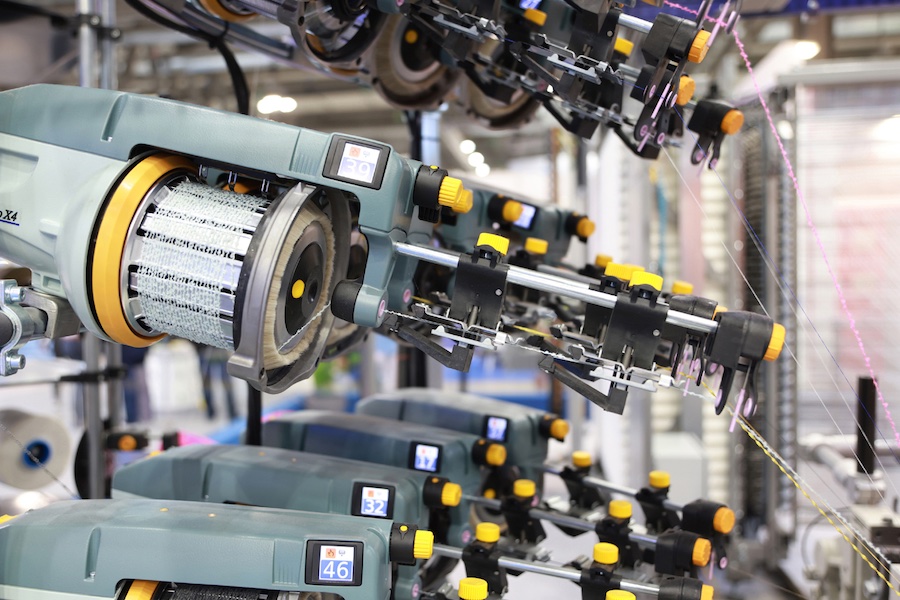
© 2024   TMAS / Vandewiele
© 2024 TMAS / Vandewiele


More News from Textile Machinery Association of Sweden

More News on Industry 4.0 / Digitalization

#Industry 4.0 / Digitalization

EIM evolves into a new Environmental Intelligence to measure the impact of textile production

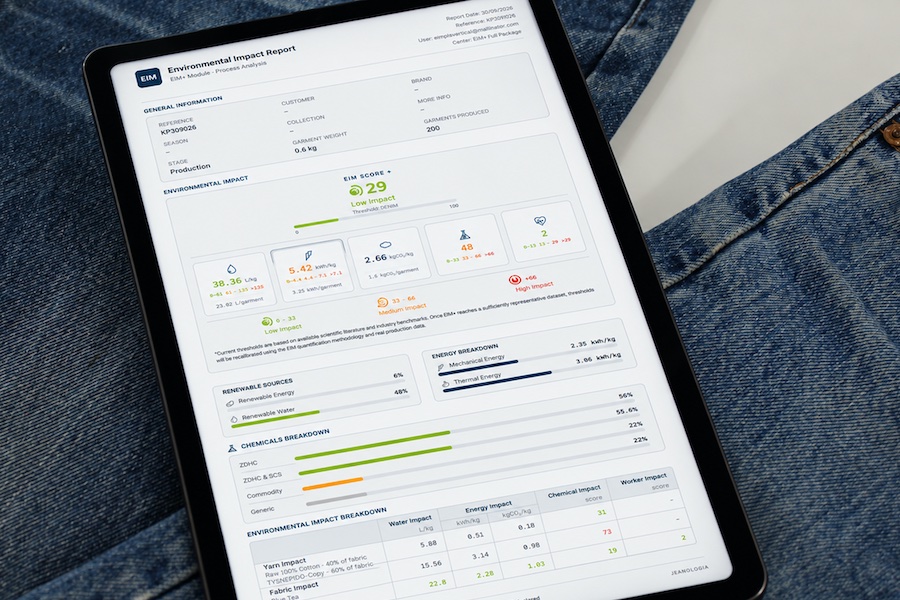
¿Do we really know the environmental impact behind a garment? Answering this question remains one of the textile industry’s major challenges. Garment production involves multiple stages, from yarn and fabric to final finishing, carried out by different players across the supply chain. Accesing reliable data from each process, connecting it and establishing a common language are essential to understanding a product’s true impact.

#Industry 4.0 / Digitalization

Orient Rongheng connects production planning across China and Bangladesh with FastReactPlan

Chinese apparel manufacturer Orient Rongheng is implementing Coats Digital’s FastReactPlan to digitalize production planning across its manufacturing operations in China and Bangladesh. The project aims to connect capacity, materials and order planning across multiple factories while integrating these processes with the company’s existing ERP and Manufacturing Execution System (MES).

#Industry 4.0 / Digitalization

Lectra launches Apogy with agentic AI for fashion product development

Lectra has launched Apogy, a new cloud-based solution for fashion product development that combines product data, collaborative workflows and agentic artificial intelligence. The platform is designed to connect the different stakeholders and processes between initial design and production while using AI agents to automate tasks and support decision-making throughout the development cycle.

#Industry 4.0 / Digitalization

Coats Digital launches AI-powered GSD RealMotion for motion analysis

Coats Digital has launched GSD RealMotion, an AI-powered solution designed to provide apparel manufacturers with greater visibility into factory-floor operations. By analysing shop-floor video and applying Coats Digital’s GSD methodology, the solution turns video recordings into structured, motion-by-motion method studies.

Latest News

#Functional Fabrics

ROICA™ presents stretch textile innovations from nine partners at PERFORMANCE DAYS 2026

ROICA™ by Asahi Kasei will return to PERFORMANCE DAYS Munich on October 13–14, 2026, presenting textile developments from seven European partners and two Japanese specialists under its global brand message, “STRETCH YOUR FUTURE.” Visitors can discover the developments at Booth P10 in Hall A4.

#IGATEX 2026

SHIMA SEIKI to showcase flat knitting and digital design solutions at IGATEX Pakistan 2026

Leading computerized flat knitting technology provider SHIMA SEIKI MFG., LTD. of Wakayama, Japan, together with its Pakistani representative ALMURTAZA MACHINERY CO., (PVT) Ltd., will exhibit at the upcoming International Exhibition for Garment, Textile Machinery and Accessories (IGATEX Pakistan 2026) in Lahore, Pakistan, from October 15–18. SHIMA SEIKI will introduce computerized flat knitting machines, 3D design software and various web platforms as proposals for sustainable production through innovative shaping technology and the latest digital solutions.

#Dyeing, Drying, Finishing

Brazilian market leader Cedro Têxtil focuses on greater efficiency, sustainability, and product quality with Brückner

After more than 150 years of company history, Cedro Têxtil is once again embracing the challenges of a changing industry. Widely recognized as the largest manufacturer of workwear fabrics in Latin America, the Brazilian textile company continues to invest in the modernization of its production facilities. A key milestone in this process was the decision to install a state-of-the-art Brückner stenter frame just over a year ago.

#Recycling / Circular Economy

The Or Foundation, adidas, BESTSELLER, H&M Group, and Inditex launch Apparel Recovery Coalition, responding to impacts of post-consumer textile exports

adidas, BESTSELLER, H&M Group, Inditex and The Or Foundation, with support from Circle Economy, unveiled the Apparel Recovery Coalition (ARC). The coalition will explore how producer responsibility systems can support circular pathways such as reuse, upcycling, recycling, and responsible waste management in countries that receive large volumes of exported secondhand apparel.

TOP