[pageLogInLogOut]

#Industry 4.0 / Digitalization

Lectra strengthens its Executive Committee to accompany its growth

A major global player in the fashion, automotive and furniture markets, Lectra designs industrial intelligence solutions – software, equipment, data and services – for brands, manufacturers and retailers.

Following an eventful year – with the acquisition of the American company Gerber Technology, its largest historical competitor, along with two companies that enrich its technological offer, Neteven and Gemini, and after strong growth in 2021 – the company is expanding its Executive Committee to achieve its new ambitions.

As of January 1, 2022, Lectra's Executive Committee has 16 members:

Daniel Harari, Chief Executive Officer and Chairman of the Executive Committee since its creation in 2005.

Jérôme Viala, Executive Vice President and Vice-Chairman of the Executive Committee since 2019, and a member since its creation.

Maximilien Abadie, Chief Strategy Officer and member of the Executive Committee since 2019.

Fabio Canali, President, Southern Europe & North Africa and member of the Executive Committee since 2019.

Thierry Caye, Chief Technology Officer.

Olivier du Chesnay, Chief Financial Officer and member of the Executive Committee since 2019.

Céline Choussy, Chief Product Officer and member of the Executive Committee since 2016.

Javier Garcia, President, Asia-Pacific and member of the Executive Committee since 2019.

Karen Gibbs, Deputy Chief Financial Officer.

Laurence Jacquot, Chief Customer Success Officer and member of the Executive Committee since 2019.

Eric Lespinasse, Chief Industrial Officer.

Leonard Marano, President, Americas.

Holger Max-Lang, President, Northern & Eastern Europe, Middle East and member of the Executive Committee since 2019.

Maria Modrono, Chief Marketing and Communications Officer.

Rani Rao, Chief People Officer.

Edward Wang, Senior Vice President, Asia-Pacific.


The main objectives of the Executive Committee in 2022 are to complete the integration of Gerber Technology and Lectra teams, integrate the technologies of the different companies acquired, and develop synergies between the Group's various entities.

Announcing the composition of the new Executive Committee, Daniel Harari stated: “Lectra has demonstrated its resilience and potential for growth in a particularly challenging period, marked by a difficult health context and a fluctuating economic climate. We were able to complete several acquisitions, including that of our historical competitor, and to create a climate of trust among customers and employees alike, despite the lockdowns and restrictions that have disrupted the last two years. With this new Executive Committee and a team of 2,500 people, I am confident in our ability to seize the full potential ahead of us”.


More News from Lectra Deutschland GmbH

#Industry 4.0 / Digitalization

Lectra launches Apogy with agentic AI for fashion product development

Lectra has launched Apogy, a new cloud-based solution for fashion product development that combines product data, collaborative workflows and agentic artificial intelligence. The platform is designed to connect the different stakeholders and processes between initial design and production while using AI agents to automate tasks and support decision-making throughout the development cycle.

#Textile processing

Lectra strengthens its partnership with Caron Technology

Lectra announces the strengthening of its industrial alliance with Caron Technology, an Italian company founded in 1993 and specializing in preparation systems operating before the cutting process. This new milestone reflects the strength of a trusted relationship that has grown between the two companies over nearly two decades.

#Industry 4.0 / Digitalization

Mango joins TextileGenesis pioneering traceability solution, a Lectra company, for a transparent value chain

Mango, one of the leading international fashion groups, has joined TextileGenesis, the pioneering traceability solution for the fashion and textile industries, to trace their natural and animal fibers, synthetics, man-made cellulosic fibers and leather. TextileGenesis, a Lectra company, offers a complete and secure cutting-edge technology with its six-dimensional (6D) offering and unique “fiber forwards” approach. Mango, has long been committed to maintaining a fully transparent supply chain, and TextileGenesis will reinforce this commitment.

#Textiles & Apparel / Garment

New Retviews study by Lectra: the luxury market in 2025, between margin protection strategies and new iconic pieces

After more than a decade of uninterrupted growth, the luxury fashion market is now experiencing a more pronounced slowdown. Global luxury goods sales have fallen from €369 billion in 2023 to €364 billion in 2024 (according to Bain & Co.), exposing the vulnerabilities of a model long supported by aggressive price increases.

More News on Industry 4.0 / Digitalization

#Industry 4.0 / Digitalization

Smartex.ai names Tony Fadell chairman and previews new fabric inspection system

Smartex.ai has appointed Tony Fadell as chairman and will present its new fabric inspection hardware and software at SmartCollab Hong Kong on 27 November. Fadell co-designed Inspect, the hardware at the centre of the system, which Smartex developed with a supplier in H&M Group’s network.

#Industry 4.0 / Digitalization

Coats Digital wins SaaS award for AI in apparel manufacturing

Coats Digital has been named Best Company in AI-Powered Fashion Technology at the 2026 Best in SaaS Awards. The company’s AI applications cover garment costing, the analysis of operational data and the use of computer vision to study how tasks are performed on the factory floor.

#Industry 4.0 / Digitalization

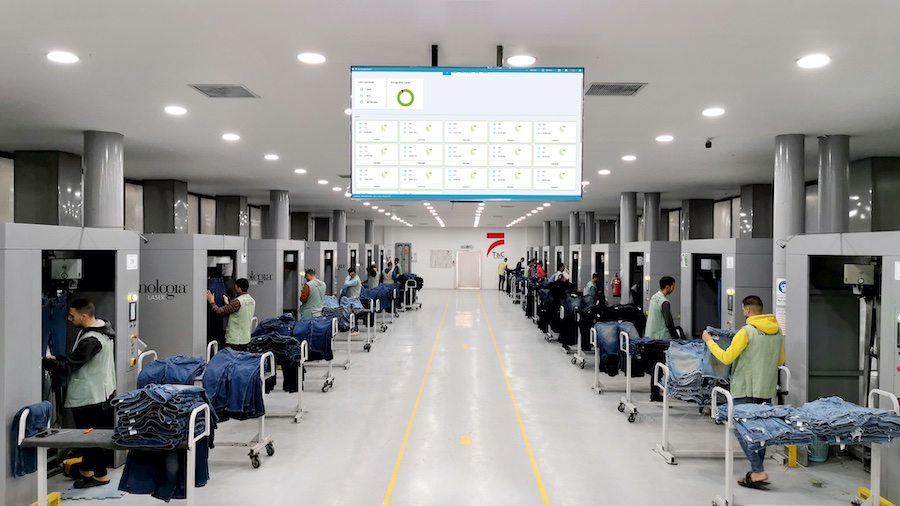
Jeanologia and BCome connect factory data with Life Cycle Assessment and Digital Product Passports

A new white paper by EIM by Jeanologia and BCome demonstrates how primary environmental data from denim finishing processes can be integrated into a garment's Life Cycle Assessment (LCA) and prepared for use in a Digital Product Passport (DPP). A comparative case study highlights significant improvements at the production stage while also showing how these translate into the environmental performance of the finished garment.

#Industry 4.0 / Digitalization

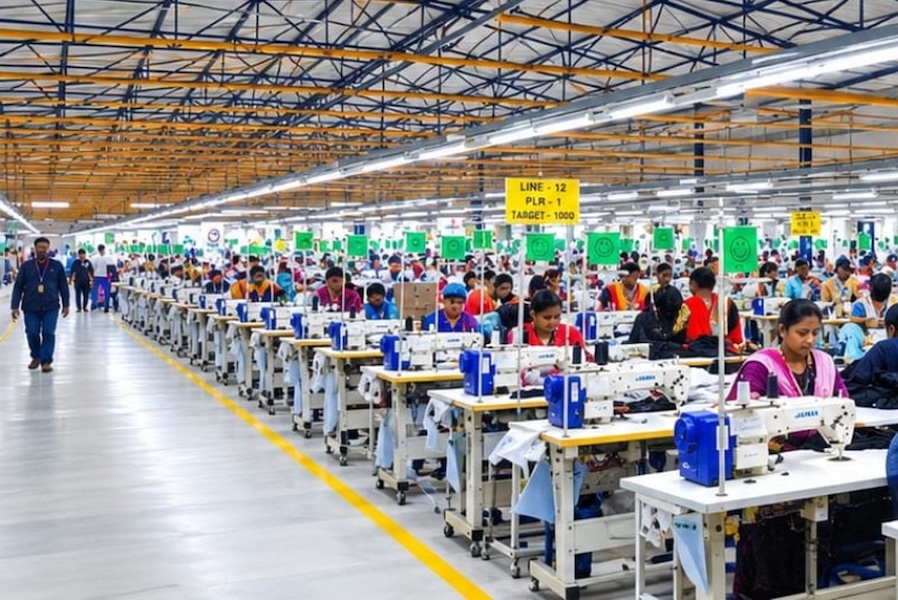
White House reduces production planning time by up to 80% with Coats Digital’s FastReactPlan

Indian garment manufacturer White House has reduced its production planning cycle by 60–80% following the implementation of Coats Digital’s FastReactPlan software. The integrated planning solution provides greater visibility across production, capacity and material requirements while supporting faster decision-making and improved delivery performance.

Latest News

#Textile processing

Jeanologia combines digitalisation, laser and ozone technology to strengthen China’s textile competitiveness

At ITMA Asia + CITME 2026 in Shanghai, Jeanologia showcased how the combination of digitalisation, laser technology and G2 Ozone can help China’s textile industry improve productivity, speed, quality and efficiency. With its Compact Super Flash laser system and integrated production concepts, the Spanish technology specialist demonstrated how connecting product development and industrial production can enable faster, more automated and sustainable manufacturing processes.

#Textile chemistry

Flame protection and OEKO-TEX® certification: Gulec Chemicals clears an important hurdle

Three halogen-free flame retardants from German specialist Gulec Chemicals have been included in the OEKO-TEX® list of accepted Active Chemical Products (ACP). The listing opens up additional opportunities for textile finishers, coaters and manufacturers of technical textiles seeking to combine demanding fire protection requirements with certification according to OEKO-TEX® STANDARD 100.

#Dyeing, Drying, Finishing

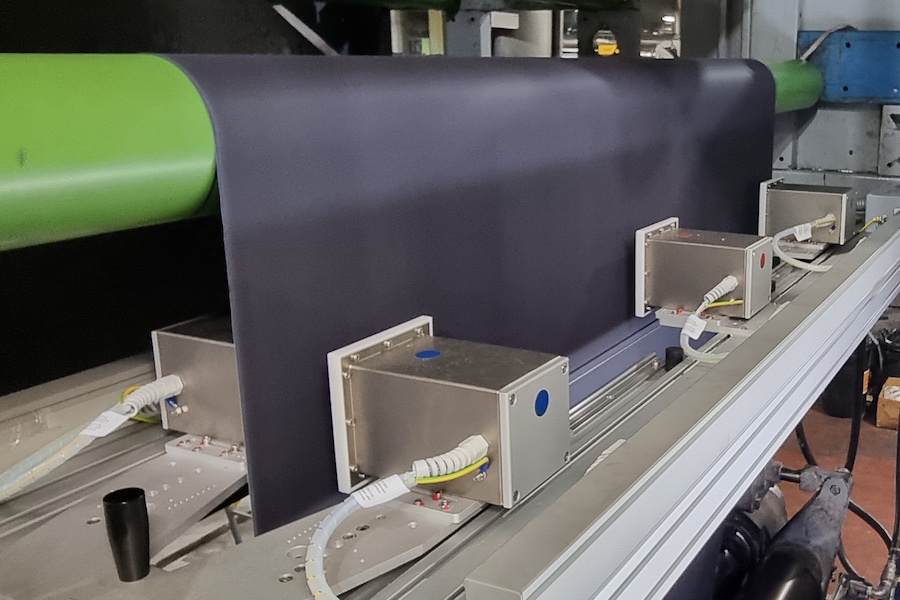
PLEVA improves dyeing consistency with inline microwave measurement of liquor pick-up

Consistent shades are essential in continuous textile dyeing. Yet variations in fabric absorbency or uneven padder pressure can go unnoticed until the end of the line. By then, hundreds of metres of fabric may already be affected and may become second-choice or rejected.

#Recycling / Circular Economy

DITF establishes CYCLOTEXUM recycling center to advance mechanical and solvent-based textile recycling

As part of the CYCLOTEXUM research project, the German Institutes of Textile and Fiber Research Denkendorf (DITF) established the CYCLOTEXUM recycling center. There, in collaboration with industry partners, the center develops application-oriented solutions for mechanical and solvent-based recycling processes. The technologies developed make a significant contribution along the textile value chain toward the efficient use of textile resources in the future and the transition of production in the German textile sector to a circular economy. The project was funded by the Ministry for the Environment, Climate and Energy Sector of the State of Baden-Württemberg.

TRÜTZSCHLER SPINNING - FROM WASTE TO VALUE
TOP