[pageLogInLogOut]

#Digital Printing

World class textile printing show from SPGPrints at ITMA 2019

(c) 2019 SPG Print
From June 20 to June 26 the world’s largest textile machinery show ITMA was held in Barcelona, Spain. As the inventor of rotary screen technology in 1963 and the initiator of digital textile printing in 1991, SPGPrints has been playing a leading role in textile printing for over 55 years now. The company’s brand promise ‘All you need in printing’ was visualized on a 1.500 m² booth, showing the latest equipment and consumables developments for both the rotary and digital printing applications.

Supported by live demonstrations and three Experience Centers, visitors to the SPGPrints booth could learn the technology backgrounds of the ground braking new developments that were showcased, and also get a glimpse into the future in the “Technical Vision Center”

The growing world of rotary printing

With the introduction of two new screen types, the display of the latest rotary printing machine PegasusEvo and the latest BestLEN engraving technology, SPGPrints underlined her statement to the market that the rotary printing market is still growing. In the Screen Experience Center the visitor could review print samples made with the new OrtaScreen, a revolutionary screen based on the flatbed screen structure. Also the newest past saving screen RandomEco, that also helps to avoid Moiré, was prominent present in the Experience Center.

(c) 2019 SPGPrints
(c) 2019 SPGPrints


Where rotary meets digital

Several times per day SPGPrints presented a 15-minute explanation on the much requested topic “when do you print rotary and when do you choose digital printing”? Burning topics like “what is the break even point?” or “what is the price per linear meter” have been addressed. The presentation was concluded by a live demonstration of the SPGPrints PIKE single pass digital printing line, now capable to achieve speeds up to 60 linear meters per minute. 

(c) 2019 SPGPrints
(c) 2019 SPGPrints


(c) 2019 SPGPrints
(c) 2019 SPGPrints


 World premiere of the digital printer JAVELIN2

During the whole show live demonstrations of the new JAVELIN2 have given the audience the confirmation that this digital printer is giving unrivalled print quality, while running faster and more reliable then any other multiple pass printer in the show. The company’s proprietary Archer® Technology, used in both digital printers JAVELIN² and PIKE, is the first ink jet technology specifically designed for digital textile printing and has proven over the last years that it puts an end to the headache of print heads commonly known in the market.

Digital ink developments

SPGPrints is producing digital textile inks since the early 90’s and meanwhile has an extensive range of inks for all major printheads used in today’s digital printing equipment. The runnability of the SPGPrints inks is widely recognized in the world and has made SPGPrints one of the largest suppliers of inks to single pass printers. In the Ink Experience Center customers could take a virtual reality tour through the ink production in Boxmeer, and learn about the unique technology and production processes behind these excellent inks.

Commercial success

During the show SPGPrints signed contracts for several rotary printing machines, engraving systems, digital printers, ink contracts and screens agreements. This has made the ITMA 2019 one of the most successful events in the recent history of SPGPrints, and it confirms that SPGPrints delivers “All you need in printing”.

More News from SPGPrints B.V. (Head Office)

More News on Digital Printing

#Digital Printing

Scaling print-on-demand: Imperial Custom Apparel connects industrial printing with e-commerce automation

Combining industrial direct-to-garment printing with integrated production software, Miami-based Imperial Custom Apparel has expanded its production capacity, improved print quality and streamlined its operations. The installation of three Kornit Atlas MAX PLUS systems alongside GelatoConnect software has enabled the company to serve more sales channels with fewer employees and significantly simplified workflows.

#Digital Printing

From a bedroom startup to 3,000 designs: How Lonely Kids Club built its business with DTG printing

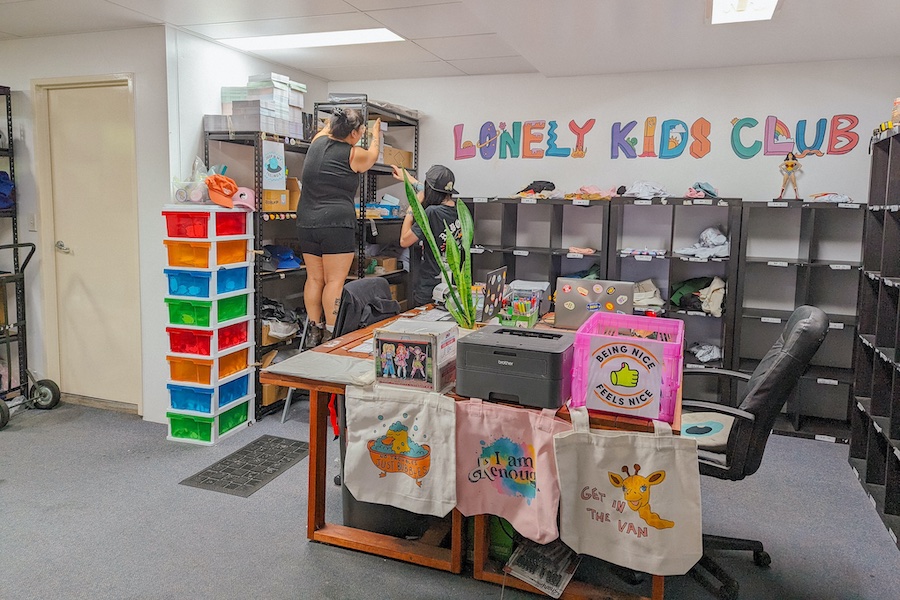
Founded in Sydney in 2011, independent clothing label Lonely Kids Club has grown from a bedroom startup into a business offering around 3,000 graphic T-shirt designs. With its own production studio, direct-to-garment printing and a demand-driven manufacturing model, the company demonstrates how smaller apparel brands can combine creative independence with flexible production – while navigating the everyday challenges of quality control, workflow efficiency and sustainability.

#Digital Printing

Mimaki highlights growing demand for hybrid UV printing across European markets

Insights from Mimaki's European partner network reveal how hybrid UV printing is responding to different regional market needs, driven by growing demand for flexible, application-oriented printing technologies.

#Digital Printing

VistaPrint increases apparel production capacity with Kornit Apollo

Kornit Digital (NASDAQ: KRNT), a provider of on-demand digital textile production technologies, reports that VistaPrint has significantly increased its apparel production capacity through the implementation of the Kornit Apollo system. The installation has enabled the international print and design company to add approximately 25,000 units of weekly production capacity while improving production speed, operational efficiency and order turnaround times.

Latest News

#India ITME 2026

Groz-Beckert targets energy efficiency, productivity and process reliability across six textile technology sectors at India ITME 2026

At India ITME 2026 in Greater Noida from 4 to 9 December, Groz-Beckert will present its latest innovations across all six product areas – Knitting, Weaving, Nonwovens, Sewing, Tufting and Spinning. At Hall 14, Booth B6, the German textile technology specialist will showcase advanced components, systems, services and digital solutions designed to improve energy efficiency, productivity, process reliability and textile quality while addressing the increasingly diverse requirements of modern textile manufacturing.

#Knitting & Hosiery

Monarch extends its Woven Look knitting technology from mattress ticking to apparel and performance textiles

A fabric technology originally developed to reproduce the appearance of woven mattress ticking by Monarch Knitting Machinery, a member of the British Textile Machinery Association (BTMA), is finding new applications in apparel. With the introduction of its 36-gauge OD5B-M-7ED44 double-knit machine, Monarch is expanding the possibilities for producing fine knitted structures that closely resemble woven textiles while retaining the stretch and comfort associated with knitting.

#Textiles & Apparel / Garment

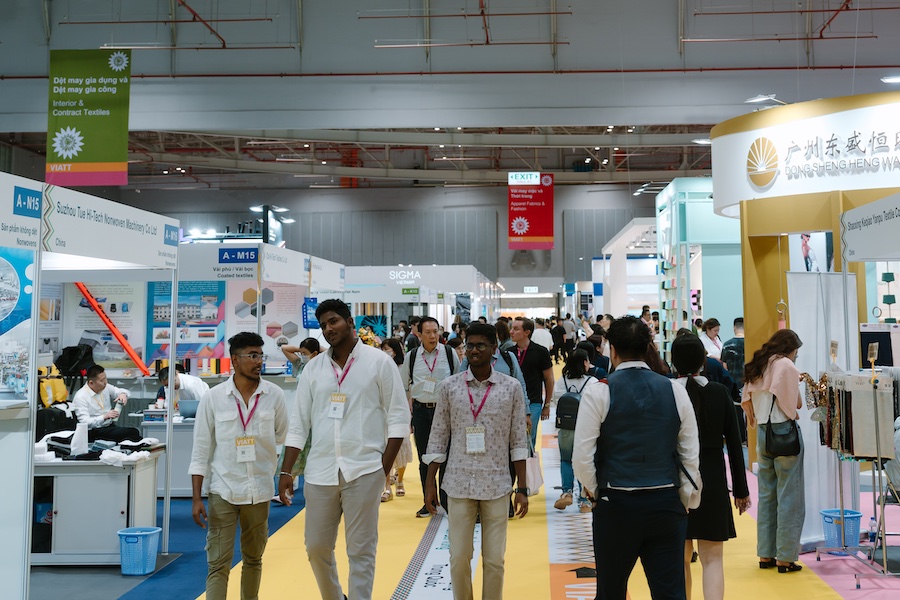
VIATT 2027 names Thailand as its inaugural Partner Country

Thailand will take centre stage as the inaugural Partner Country at the Vietnam International Trade Fair for Apparel, Textiles and Textile Technologies (VIATT), returning to Ho Chi Minh City from 24 to 26 February 2027. Featuring a pavilion, dedicated product displays and various fringe events, the Partner Country programme will showcase Thailand’s textile and fashion capabilities, complementing an exhibitor line-up spanning VIATT’s three sectors. Alongside this new cooperation, eight additionally confirmed country and region pavilions and zones are set to strengthen the fair’s international offering.

#Recycling / Circular Economy

IVGT presents initial findings from the Erasmus+ project Skills4Circularity

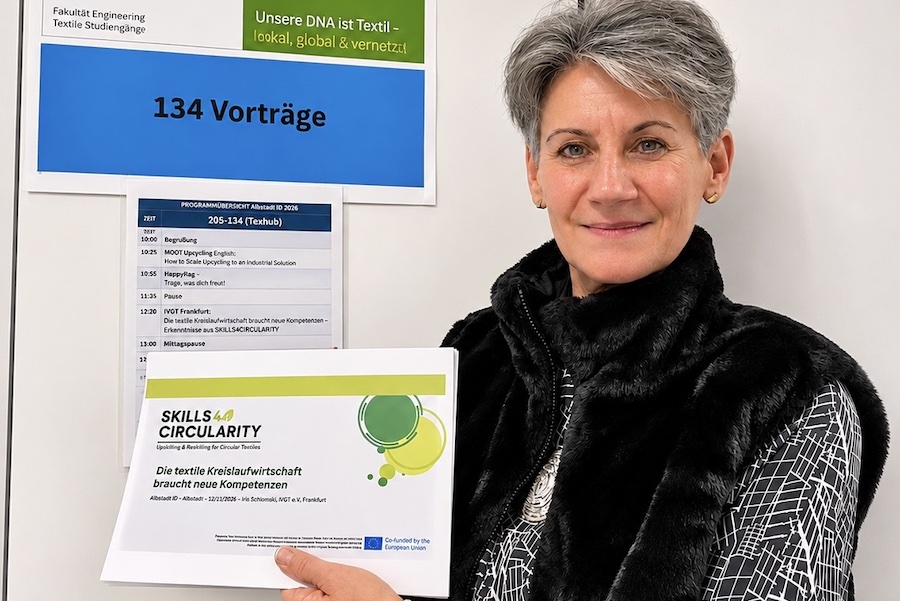
At Albstadt ID 2026, hosted by Albstadt-Sigmaringen University of Applied Sciences, IVGT project manager Iris Schlomski presented initial findings from Skills4Circularity on 12 November 2026. She opened her presentation with an estimate from the European Environment Agency: the EU generated around seven million tonnes of textile waste in 2022. The Erasmus+ project brings together 21 partners from twelve countries to identify the skills textile and clothing professionals need to design more durable products, use fewer resources in production and recover fibres after use.

TOP