[pageLogInLogOut]

#INDEX 23

INDEX™ : Sustainable nonwovens developments for Geneva
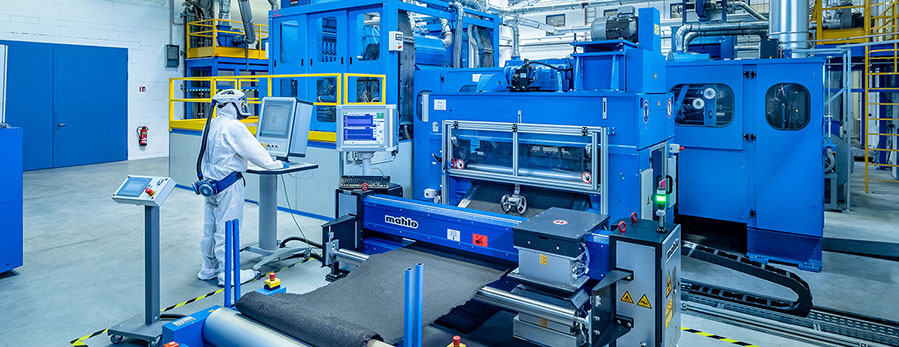
Center for lightweight textile construction © 2023 STFI
From April 18 to 21, INDEX™ 23 invites to Lake Geneva for the world's leading nonwovens fair. A trade fair team from the Saxon Textile Research Institute e.V. (STFI) will be on site to present news from nonwovens research at STFI. Among other things, a bio-based hygiene nonwoven, the recycling of high-performance fibers using the example of the VliesSMC project, an innovative hose liner system and water jet nonwovens made from recycled fibers will be on display. Meet our exhibition team at booth 1369 in Geneva.

Bio-based hygiene nonwoven: BioHyg

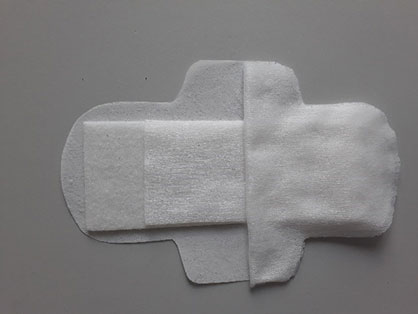
The starting point for the innovation was the search for a washable and thus reusable absorbent pad made from completely bio-based materials for applications in baby, feminine and incontinence hygiene. The focus was on two main requirements: fast and efficient liquid distribution and high absorbency to minimize rewetting and leakage. Both are guaranteed by special viscose fibers from Kelheim Fibres, which have been making this essential contribution in absorbent hygiene products such as tampons for many years.
© 2023 STFI
© 2023 STFI


Here, the advantages of nonwovens in combination with special viscose fibers in terms of absorptive capacity (through, for example, more open-pored structures) have been perfectly transferred from the petrochemical- to the world of biobased fiber materials. For reusable products, however, there is another challenge to overcome: they must remain stable during washing and over several cycles of use. To ensure this, an innovative nonwoven construction was developed at the Saxon Textile Research Institute (Sächsisches Textilforschungsinstitut e.V.). The developed nonwovens close the technological gap between sufficient dimensional stability and as little fiber damage as possible due to the bonding mechanisms. The developed nonwoven layers can be used as a stand-alone solution as a single-use product with bio-based materials or integrated into a washable composite structure, such as the diaper from start-up Sumo. In the Sumo cloth diaper, the absorbent pad's fluid management sets new standards. The new solution combines the worlds of hygiene and sustainability and provides proof that high-performance reusable absorbent products can be developed without fossil materials.

The research collaboration between STFI, Kelheim Fibres GmbH and Sumo GmbH received the 2022 Techtextil Innovation Award in the "New Concept" category for the development of a bio-based hygiene nonwoven - a good example of how research and industry are breaking new ground in sustainability through collaboration in an open innovation approach.


Recycling of high performance fibers: VliesSMC

STFI will be showing innovations in the recycling of high-performance fibers at INDEX™ 23. On display will be a battery housing developed jointly with the research partner Fraunhofer ICT, Pfinztal. Detailed investigations into the use of recycled carbon fibers in the SMC process chain were carried out at STFI, Chemnitz. To this end, nonwovens were first developed that enable the recycled carbon fibers to be fed into the SMC plant.

The SMC semi-finished products produced could then be processed by both molding and impact extrusion.

Comparison with conventional SMC products showed that comparable characteristic values could be achieved with a lower fiber volume content. Developments in the field of renewable raw materials in combination with bio-based resin systems also offer forward-looking materials.Further project information: VliesSMC

Innovative hose liner system

The aim of the research project was to develop an improved pipe liner system for trenchless pipe rehabilitation.

In particular, the force absorption in the longitudinal direction, the bendability without wrinkling were improved and the use of material as well as the pore volume of the textiles were optimized for the best possible impregnation with resin. The project included nonwoven development, coating of the liners and the use of UV-curable resins for curing. At INDEX™ 23, STFI will present a demonstrator showing a nonwoven-based pipe liner with coating, which in turn was impregnated with a UV-curable resin and cured using UV LED lamps. (49MF200100)

From recycled fibers to water-jet nonwovens

At INDEXTM 23, STFI will be exhibiting nonwoven structures that have been bonded by the waterjet process or stitch-bonding technologies after mechanical recycling by means of a tearing machine. The nonwovens are characterized by their soft feel and unique appearance. Whether wet-strength wipes, classic knitted pile fiber nonwovens with cushioning and insulating properties or sustainable needle-punched nonwovens; by using torn fibers in combination with established nonwoven formation processes, new applications for used textiles are found at STFI and material cycles are closed.

We would like to discuss with you the possibility of joint research projects and suitable funding programs. Have we aroused your interest? We are looking forward to exciting discussions with you. Visit us at the INDEX™23 at booth 1369.
More News from Sächsisches Textilforschungsinstitut e.V. (STFI)

#Composites

STFI at JEC

The Sächsisches Textilforschungsinstitut e.V. (STFI) will present composites for aviation made from recycled carbon fibres and natural fibres, as well as printed lightweight elements for surface heating in electric vehicles at JEC World in Paris.

#Research & Development

The region of renewable raw materials: Central German Alliance for Bioplastics

The development of sustainable plastic solutions is rapidly gaining importance in light of global environ- mental pollution, dwindling fossil resources and ambitious climate protection targets. As part of the re- gional alliance RUBIO, which brings together 18 partners from central Germany and the Berlin-Branden- burg area, the bio-based and biodegradable plastic polybutylene succinate (PBS) was comprehensively investigated, starting with the raw material, through the manufacturing process, to industrial application.

#Recycling / Circular Economy

17th Colloquium on Recycling for Textiles with accompanying trade exhibition in Chemnitz

On 3 and 4 December 2025, the 17th colloquium on recycling for textiles will take place at the Hotel Chemnitzer Hof. The event brings together experts from industry, science and research to present and discuss current developments, technologies and business models for a sustainable circular economy in the textile industry.

#Research & Development

Kendyr as a climate-friendly cotton alternative: STFI explores new value chains for salinised land in Central Asia

In large parts of Central Asia, decades of cotton irrigation have led to severe soil salinisation, with serious consequences for soil fertility and the future of cotton cultivation. An international research consortium, including the Saxon Textile Research Institute (STFI), has therefore investigated the potential of alternative fibre plants. The focus was on Apocynum spp. (kendyr), a bast fibre plant that can thrive on saline soils. The aim: to restore the agricultural use of former cotton fields and establish new textile value chains in the region.

More News on INDEX 23

Latest News

#Techtextil 2026

DIENES at Techtextil 2026: Flexible pilot lines for bio-based fiber development

The growing relevance of bio-based materials in technical textiles is accompanied by increasing demands for reproducibility, high-quality data, and scalable process routes. Especially when working with cellulose and its derivatives, chitosan, lignin-based approaches, or bio-based PAN as a carbon-fiber precursor, R&D teams face variable feedstock quality, tighter process windows, and the need for reliable comparability across trials. This calls for flexible, data-driven experimental setups that can be reconfigured efficiently when recipes, solvents, and raw-material batches change.

#Texprocess 2026

Gunold showcases embroidery product range and services at Texprocess

At Texprocess 2026, GUNOLD will present numerous hands-on examples related to embroidery in Hall 8, Booth E20. The focus is on creative embroidery designs as well as the extensive product range of threads, nonwovens, and accessories for embroidery and embellishment. “Trade visitors can once again look forward to many new and creative embroidery designs. Of course, we will also showcase the matching products required to bring these ideas to life,” announces Marketing Manager Stephan Gunold.

#Nonwovens

EDANA and more than 70 industry organisations call for consistent exemptions in EU packaging regulation

EDANA, together with more than 70 industry associations and organisations, has issued a joint statement commenting on the European Commission’s Delegated Act under Article 29 of the Packaging and Packaging Waste Regulation (PPWR).

#Raw Materials

A Powerful Opening: Global thought leaders launch the International Cotton Conference Bremen

The International Cotton Conference Bremen will open on 25 March 2026 in the Parliament building of the Free Hanseatic City of Bremen with a keynote session of exceptional calibre. Distinguished international experts will set the stage for the conference by offering incisive perspectives on the most pressing challenges and the defining trends shaping the future of the global cotton trade. Their insights will span a broad spectrum — from geopolitically driven disruptions affecting global supply chains to the opportunities emerging from innovation-led agriculture capable of supporting a growing world population. Together, these opening keynotes will frame the dialogue of the conference, highlighting both the complexity of today’s market environment and the pathways toward a resilient and forward-looking cotton sector.

TOP