[pageLogInLogOut]

#INDEX 20

Unique spunbond technology to be showcased at INDEX 2020
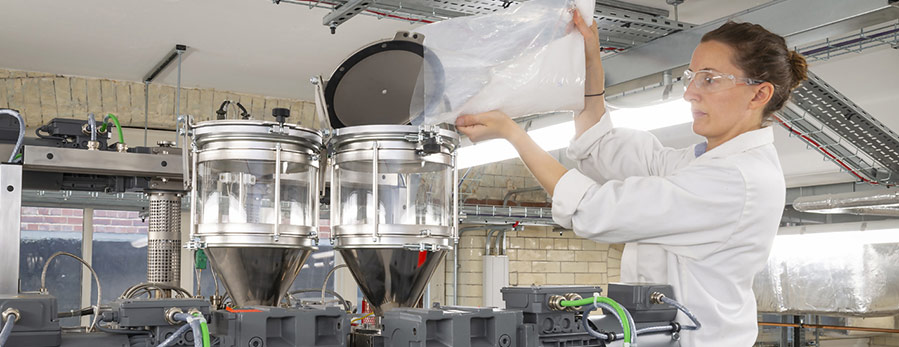
The technology is unique in providing the ability to process a wide range of polymers, including those normally not considered appropriate for the spunbond process. © 2021 FET
The UK’s Fibre Extrusion Technology (FET) will introduce its new lab-scale spunbond system at the forthcoming INDEX 2020 nonwovens exhibition taking place in Geneva, Switzerland, from October 19-22.

Complementing the company’s successful meltblown technology, the new spunbond range provides unprecedented opportunities for the scaled development of new nonwoven fabrics based on a wide range of fibres and polymers, including bicomponents.

The market availability of this new technology is particularly timely, given the industry’s current preoccupation with the development of new substrates based on biopolymers, sustainable resins or recycled fibres.

FET has already supplied one of these new spunbond lines to University of Leeds in the UK, and a second, in combination with a metlblown line, to the University of Erlangen-Nuremberg in Germany.

“Our new spunbond technology is unique in providing the ability to process a wide range of polymers, including those normally not considered appropriate for the spunbond process, at the scale required to fully explore material combinations and bring new products to market,” says FET Managing Director Richard Slack. “FET has built on its melt spinning expertise to develop a true laboratory scale spunbond system.”
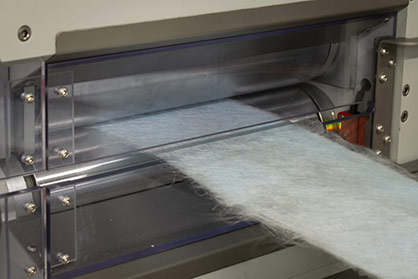
The versatile new spunbond system is perfectly suited to academic research work. © 2021 FET


Properties

Steve Russell, Professor of Textile Materials and Technology at University of Leeds, agrees.
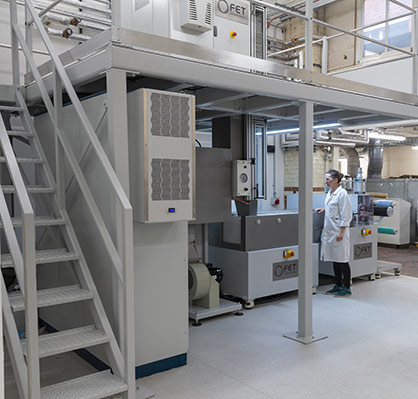
FET’s new spunbond line at University of Leeds. © 2021 FET


“Our new spunbond line from FET forms part of a wider investment in facilities to support fundamental, academic research on future manufacturing, where the focus is on studying the small-scale processing of unconventional polymers and additive mixes to form spunbond fabrics with multifunctional properties,” he says. “Key to this research is developing the underlying process-structure-performance relationships, based on the measured data, to provide a detailed understanding of how final fabric performance can be controlled during processing.”

Many exciting materials developed in academic research struggle to progress beyond the bench as a result of compatibility issues with key manufacturing processes such as spunbond, he adds.

“By leveraging mono, core-sheath and island-in-the-sea bicomponent technology, the Leeds team is working with polymer and biomaterial research scientists, engineers and clinicians to explore the incorporation of unusual materials in spunbond fabrics, potentially widening applications,” Russell says. “The new spunbond system is perfectly suited to our academic research work, and is already proving itself to be extremely versatile and intuitive to use.”

“We look forward to discussing the possibilities of this versatile new system with interested parties at INDEX in Geneva,” Richard Slack concludes. “It is capable of processing pure polymer with no requirement for processing aids or additives, to obtain a wide range of structural and mechanical properties, and there are numerous options for the post-processing of the webs.”

FET is at stand 1163 at the show in Geneva.



More News from TEXDATA International

#Texprocess 2026

Texprocess 2026: Automation, digitalisation and AI reshape textile processing

Investment decisions in textile processing have become increasingly complex. Rising energy prices, labour shortages and geopolitical uncertainties are forcing companies to prioritise technologies that deliver measurable improvements in efficiency and process stability. This applies not only to apparel production, but also to the processing of technical textiles and high-performance materials. Modernisation projects are therefore being evaluated more selectively – but the pressure to upgrade production systems continues to grow. Texprocess 2026 reflects this tension between cautious investment behaviour and increasing technological demand.

#Techtextil 2026

Textile Chemicals & Dyes: Innovation in Textile Chemistry moves into focus at Techtextil 2026

From PFAS-free finishes and water-saving dyeing technologies to advanced coatings and recycling-compatible formulations, innovation in textile chemistry is accelerating across the industry. Reflecting this development, Techtextil 2026 introduces Textile Chemicals & Dyes as a dedicated product segment, highlighting the growing role of chemical solutions in shaping the next generation of technical textiles.

#Recycling / Circular Economy

textile.4U publishes special edition “Top 100 Textile Recycling Companies 2025”

With a comprehensive 176-page special edition, textile.4U is dedicating its latest issue entirely to one of the most dynamic and influential topics in today’s textile industry: textile recycling. The new issue, published exclusively in high-quality print, presents the Top 100 textile recycling companies researched and selected by TexData – organizations that already play a key role in the transition to circular textiles or are expected to have a significant impact in the near future.

#Recycling / Circular Economy

Responsible Textile Recovery Act of 2024 signed by Governor

Senator Josh Newman (D-Fullerton) is proud to announce that Senate Bill 707 (SB 707), the Responsible Textile Recovery Act of 2024, has been signed into law by the Governor of California, Gavin Newsom. This groundbreaking legislation establishes the country’s first Extended Producer Responsibility (EPR) textile recycling program, marking a significant step forward in the state’s efforts to combat waste and promote sustainability.

More News on INDEX 20

Latest News

#Europe

Commission presents proposal for EU Inc. - unlocking the full potential of the Single Market for Europe's entrepreneurs

Today, the European Commission presented its proposal for EU Inc., a new single set of corporate rules, building the cornerstone and starting point for the EU's 28th regime. EU Inc. is an optional, digital-by-default European corporate framework. It will make it easier for businesses to start, operate and grow across the EU – incentivising them to stay in Europe, and encourage those who once looked elsewhere to return.

#Man-Made Fibers

OnceMore® from Södra brings end-to-end traceability for circular Man-made Cellulosic Fibers (MMCF) using TextileGenesis

OnceMore® from Södra, the world’s first large-scale process for recycling blended fabrics into high‐quality dissolving pulp, will begin using TextileGenesis, a Lectra company, to strengthen traceability from raw material to retail across the value chain. OnceMore® produces dissolving pulp made from blended textile waste and wood sourced from responsibly managed Swedish forests. By integrating TextileGenesis, OnceMore® supports the growing need for verified data and secure, transparent tracking throughout increasingly complex supply chain.

#Sustainability

Experts publish APAC policy priorities

Cascale today announced the publication of its APAC Policy Priorities Paper, developed by the Asia-Pacific (APAC) Policy Member Expert Team (MET) to identify key regional sustainability challenges and provide practical, aligned recommendations for policymakers and industry stakeholders across Asia-Pacific.

#Spinning

Temco launches a new DTY all-in-one solution

Temco introduces the DTY All-in-One Solution – a fully harmonized set of components engineered to give customers a highly stable, low maintenance and reproducible process environment. The solution reduces interruptions, extends component lifetimes and supports consistent yarn quality across all machine positions. All-in-One Solution – a fully harmonized set of components engineered to provide maintenance and reproducible process environment.

TOP






