#Dyeing, Drying, Finishing
Nine Orthopac RXVMC-20 systems: Y.R.C. Textile relies on Mahlo for uncompromising fabric quality
Leading Thai textile manufacturer strengthens quality assurance for demanding global sportswear brands
Over five decades of textile expertise
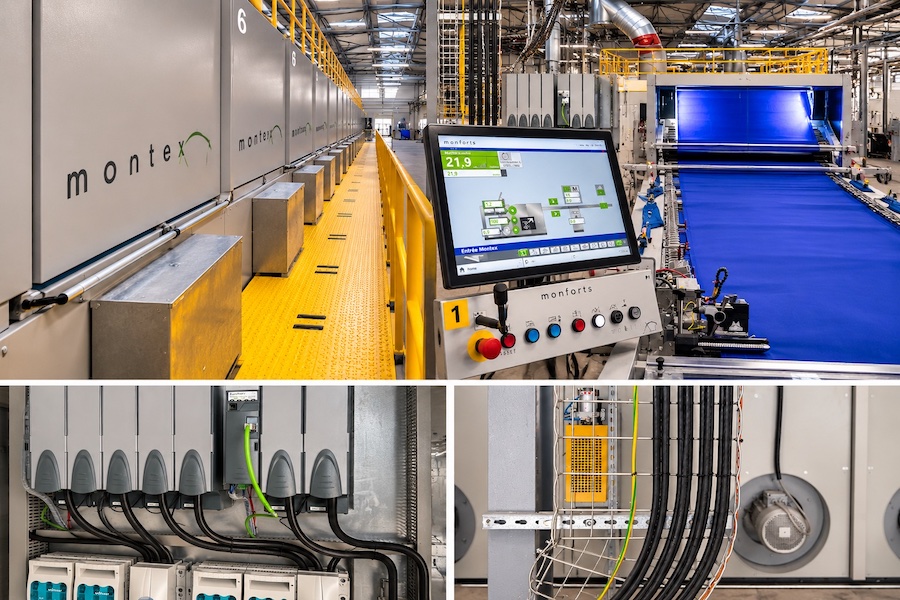
With over 55 years experience, Y.R.C. Textile Co., Ltd. has grown into one of Thailand‘s established textile manufacturers. The company states that it employs around 3,500 people and operates extensive production facilities for warp and circular knitting. Four dye houses complement the knitting capacity and can output up 100 tons of knitted fabric a day. YRC places a strong emphasis on both quality and environmental responsibility. The company is ISO 45001 certified.
From its production base in Samut Sakhon, Y.R.C. supplies high-quality textiles to domestic and international markets. The company‘s published profile names global sportswear brands including Nike, Adidas, Under Armour and Decathlon among its customers.
For a manufacturer working with customers of this calibre, fabric quality is not simply a production target. It is a fundamental requirement. And consistency from one lot to the next is essential.
When residual distortion is not an option
Particularly in knitted and highly elastic fabrics, bow and skew distortions can vary considerably during production. Seams between individual fabric pieces can result in sudden changes in distortion and create a particular challenge for conventional straightening systems.
The textile market more than ever demands fabrics with extremely low residual distortion. At the same time, the share of knitted fabrics and fabrics containing elastane continues to rise, increasing the importance of fast and precise correction in finishing.
With conventional straightening principles, a change in distortion may only be detected after the affected fabric has already passed the straightening section. The resulting reaction delay can leave a length of insufficiently straightened material before the correction rollers have reached the newly required position.
Correcting distortion before it becomes a quality problem
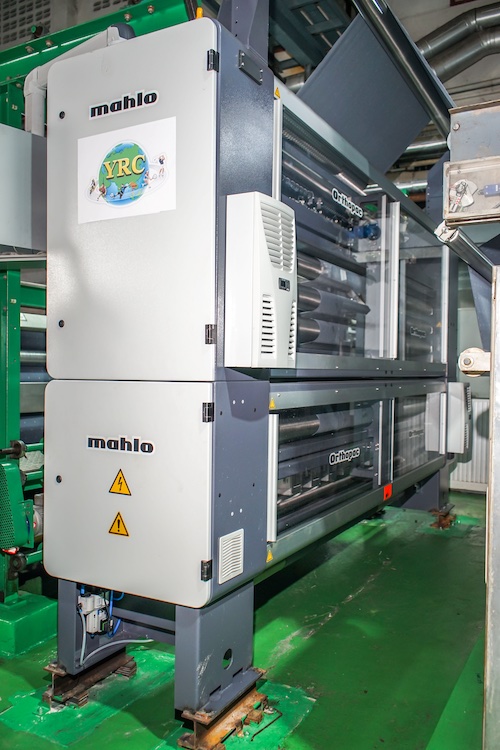
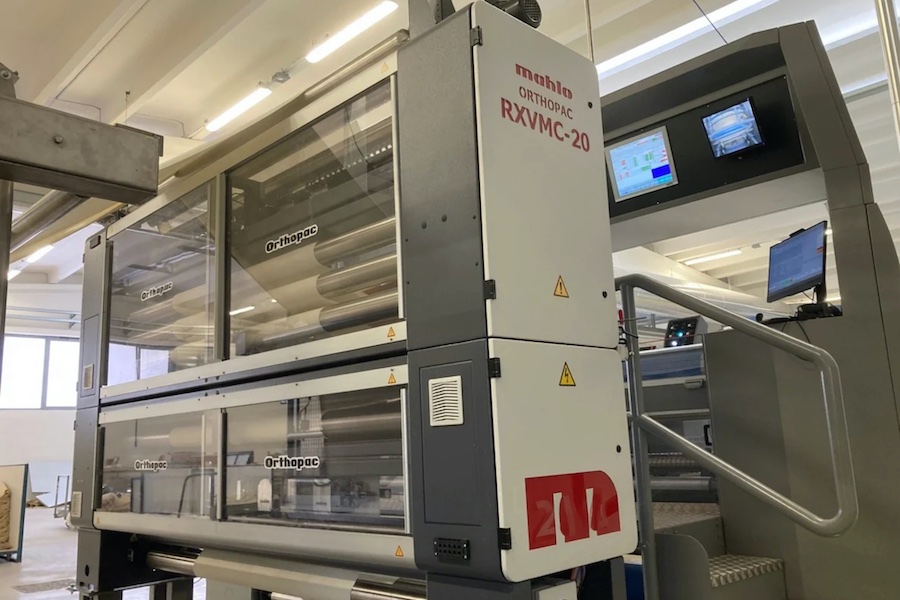
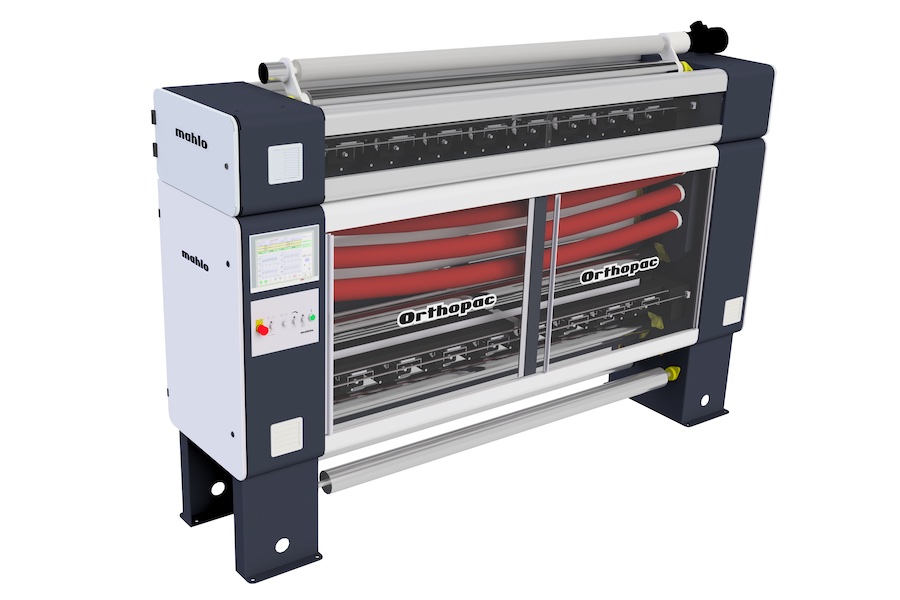
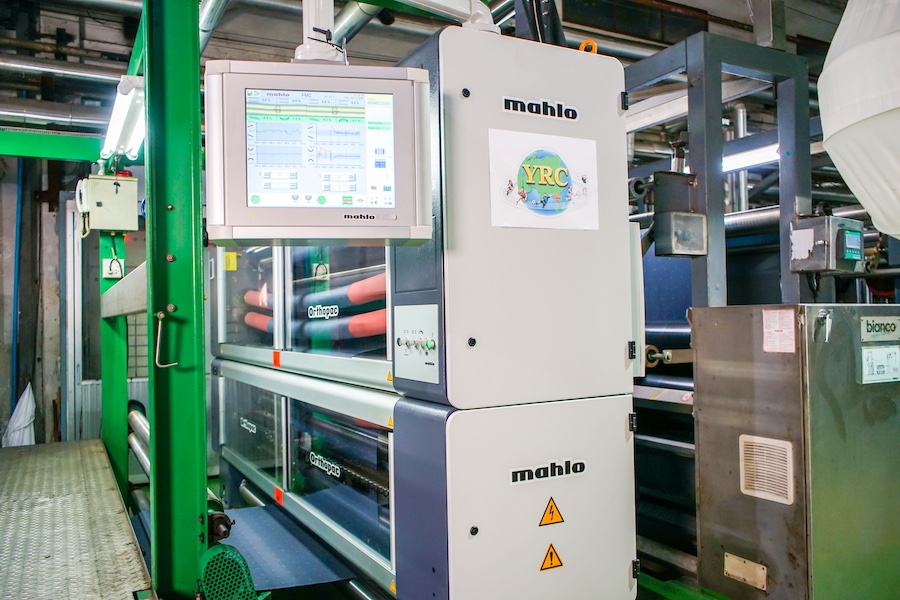
The Orthopac RXVMC-20 uses a fundamentally different concept. Two independently controlled straightening modules work together with scanning systems positioned at both the inlet and the outlet of the machine.
The first module at the fabric inlet incorporates three skew and two bow rollers. A second fine-correction module at the outlet uses a further skew and bow roller. The number and arrangement of correction rollers allow bow and skew to be adjusted in small increments for a very fine and precise straightening process.
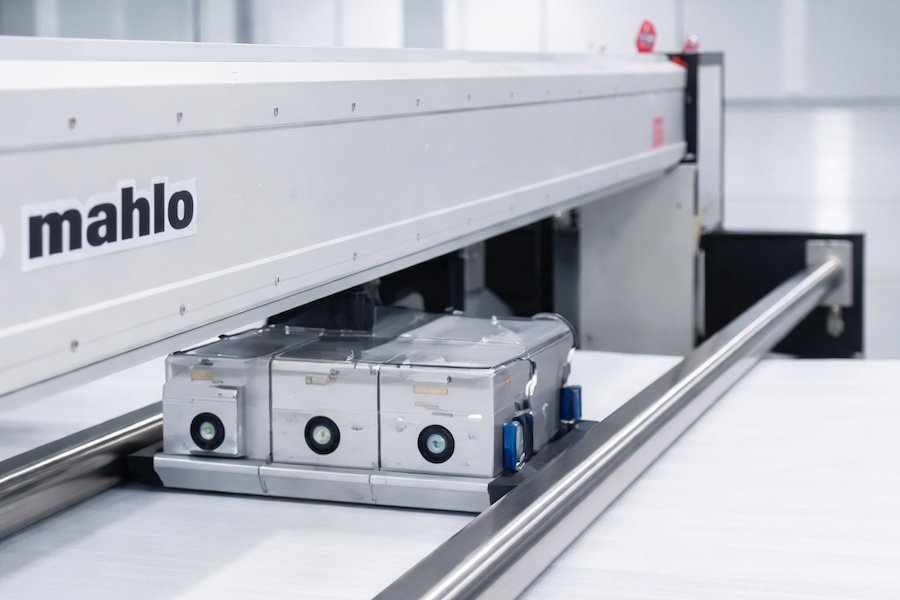
Most importantly, the inlet scanner detects changes in distortion before the affected fabric reaches the correction rollers. The control system can therefore calculate and initiate the required correction immediately. Incoming distortions can be realigned from the first centimetre of product. A second scanner at the outlet detects any remaining residual distortion and provides closed-loop fine correction.
This combination of feed-forward and closed-loop control is designed for fast-changing fabric conditions. The self-optimising, AI-boosted control algorithm and quick-reacting servo-controlled drives enable highly precise corrections, even with products showing high distortion dynamics.
“The Orthopac RXVMC-20 has given us a new level of control over fabric straightness. Especially with demanding knitted fabrics and rapidly changing distortions, the reaction of the system is extremely fast and precise. The results have exceeded our expectations”, says Praphat Nitipongwanich, Managing Director, Y.R.C. Textile Co., Ltd.
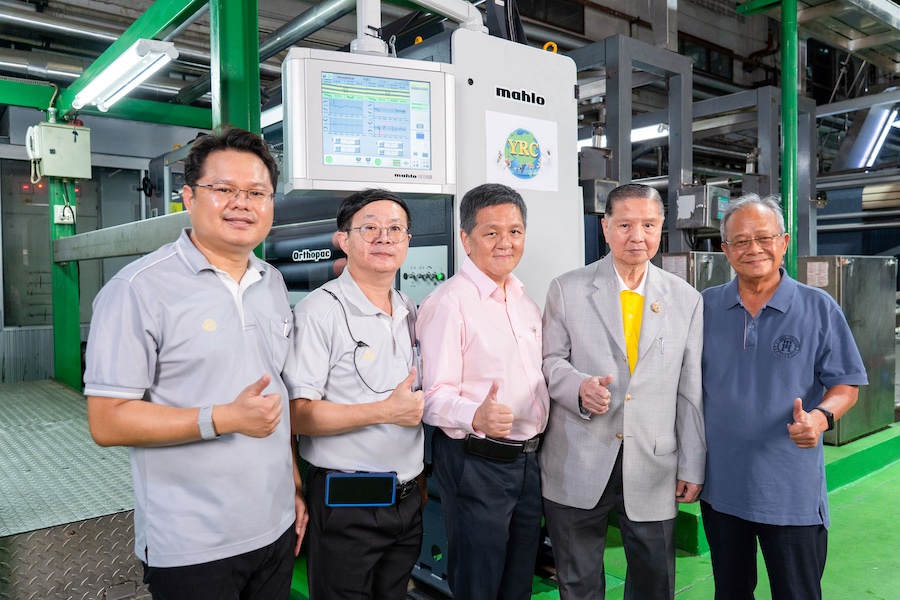
Nine systems - one clear decision
The positive experience with the first Orthopac RXVMC-20 translated into a clear investment decision. Within one year, Y.R.C. purchased a total of nine systems - a strong indication of the confidence the company places in Mahlo technology and in the RXVMC-20 concept for demanding high-volume production. More investments are planned next year.
For Y.R.C., the systems support the goal of achieving consistently low residual distortion, high repeatability and greater quality security, particularly for fabrics where sudden distortion changes can challenge traditional straightening technology. The benefits directly match the requirements of premium textile manufacturing: tight distortion tolerances, reduced risk of complaints, high repeatability, reliable operation and the potential for short payback periods.
Quality that can be measured
Insufficient fabric straightness can have consequences far beyond the finishing line. Depending on the application, material may need to be re-sewn and reprocessed, downgraded to a lower quality class or, in the worst case, lose a substantial part of its product value.
Mahlo‘s application calculations therefore consider three principal sources of avoidable cost: reprocessing, reduced revenue through downgraded goods and total loss. For producers supplying highly demanding international customers, however, the value of consistent quality also extends beyond direct cost savings: it protects delivery reliability, customer confidence and long-term business relationships.
At Y.R.C., the investment in nine Orthopac RXVMC-20 systems demonstrates how advanced straightening technology can become an integral part of a broader quality strategy - helping ensure that demanding fabrics leave the finishing process straight, reproducible and ready to meet the expectations of leading global brands.