[pageLogInLogOut]

#Dyeing, Drying, Finishing

JSRTEX adopts Alchemie's dyeing solution

Taiwan-based JSRTEX, a leading textile innovator in Asia, has completed its first sustainable dye run using the ground-breaking EndeavourTM waterless dyeing system from UK textile industry disruptor Alchemie Technology.

Alchemie’s Endeavour machine, which JSRTEX has purchased to dye polyester, uses 95 per cent less water and 85 per cent less energy compared to traditional methods. With textile dyeing being the biggest cause of pollution in clothing manufacture, the successful sustainable dye run at JSRTEX is a pivotal moment for the outdoor and fashion industry and a first in Asia.

The Alchemie Endeavour system will address the biggest issues facing the dyeing and finishing industry today: water scarcity, carbon reduction, water pollution, and soaring energy costs. It is predicted that carbon emissions from dyeing and finishing textiles will rise threefold to more than two Gigatonnes of CO2 annually by 2050, making it one of the most polluting industries on the planet.

Alchemie Endeavour, developed in one of the world’s high technology clusters in Cambridge, UK, will form the centrepiece of a demonstration hub and showroom in Asia. Brands and manufacturers are welcome to request an invitation to come and see the sustainable dyeing process in action at JSRTEX’s plant in Taiwan.

Taiwan is a rising star in the global textile market, witnessing significant growth in recent years. It has transformed from mass production to more innovative integrated product chains. The country is the world’s seventh largest textile exporter and home to over 4,300 textile manufacturing businesses.

The use of waterless dyeing technology is the first step in JSRTEX’s wider sustainable vision, named PurelineTM, which will bring together the world’s most revolutionary textile manufacturing solutions, from fibre to textile finishing, to create an integrated eco-friendly supply chain.

The PurelineTM concept aims to reduce the carbon footprint and water consumption of each stage of textile manufacturing from the initial fibre to the dyeing and finishing of the final textile.


Alchemie’s technology will play a major part in Pureline, which will also include its Novara digital finishing system - which uses up to 85 per cent less energy, up to 95 per cent less water, and up to 50 per cent less chemistry to apply functional finishes to fabric.

Alan Hudd, founder of Alchemie Technology, said: “Having an Endeavour demonstration hub in Taiwan, and our partnership with JSRTEX, is another key milestone on our journey towards transforming the textile industry, as we aim to stop 500 million tonnes of CO2 emissions being produced by the outdoor and fashion industry by 2030.”

Steve Lin, Chairman of JSRTEX, said: “Sustainability is at the heart of our vision for our business. Taiwan is the epicentre of advanced textile manufacturing technologies in Asia, and we are proud to be playing our part in setting new sustainability benchmarks and working with pioneering brands to accelerate the change to a cleaner dyeing and finishing industry."
More News from TEXDATA International

#ITM 2026

ITM 2026: The new geography of textile production

New production hubs are emerging across North Africa and Central Asia, while Türkiye is accelerating its transformation toward higher-value, technology-driven and more sustainable textile manufacturing.

#Research & Development

“Production is a product”

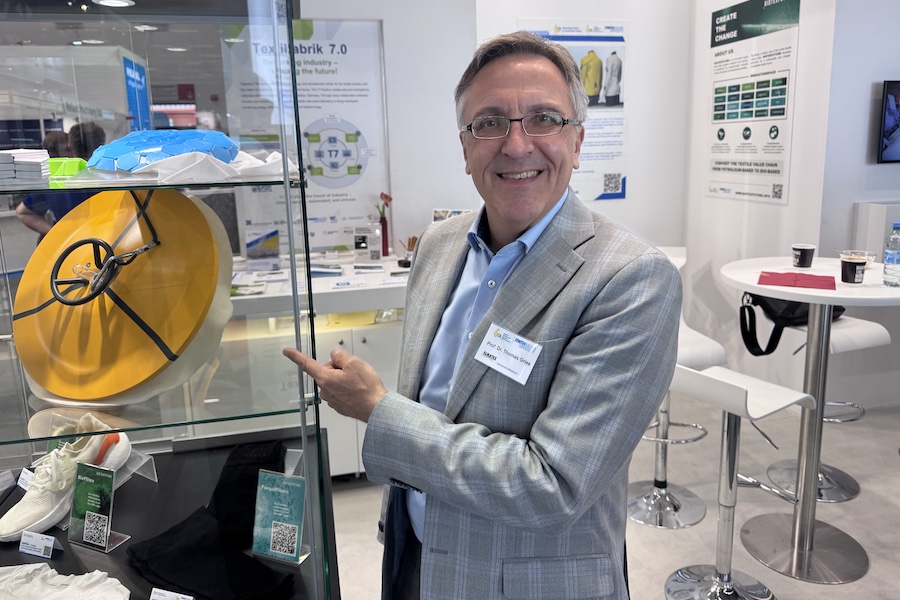
From technical textiles and AI-driven robotics to the limitations of textile circularity: Professor Dr Thomas Gries looks back on more than two decades of development at ITA Aachen. In the interview, he explains why production technology remains a decisive success factor, discusses international collaborations and innovation ecosystems, and shares his views on the transformation of production landscapes and the challenges facing an increasingly regulated industry.

#Knitting & Hosiery

“We need to move away from the price trap and return to a value-driven mindset.”

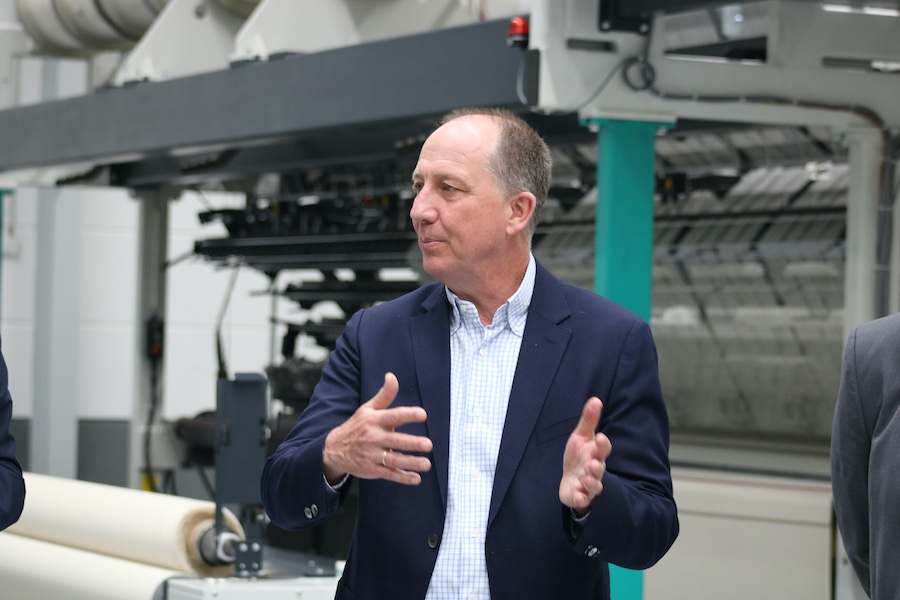
With its new Textile Innovation Center, KARL MAYER is sending a strong signal for innovation, collaboration, and the future of textile applications. In this interview, Karl Josef Mayer discusses new opportunities in warp knitting, the processing of staple fibres, recycling, the changing role of machinery manufacturers, and why the textile industry must once again focus more strongly on the value of textiles. by Oliver Schmidt

#Associations

“Innovation, resilience and international experience remain the great strengths of the Swiss textile machinery industry”

Geopolitical uncertainty, growing competitive pressure from China, new free trade agreements and the shift towards a circular economy are currently reshaping the global textile industry. In this interview, Cornelia Buchwalder discusses the current mood within the Swiss textile machinery sector, the industry’s distinctive innovative strength, new market opportunities in India and Asia, and the technological trends that could shape the upcoming trade fair cycle leading up to ITMA 2027.

More News on Dyeing, Drying, Finishing

Latest News

#Digital Printing

USColorworks expands digital platform with Kornit Atlas MATRIX and Atlas MAX PLUS solutions

Kornit Digital Ltd. (NASDAQ: KRNT), a global pioneer in sustainable, on-demand digital fashion and textile production, today announced that USColorworks, a North Carolina-based apparel decoration and fulfillment company specializing in custom and on-demand printing for retail and promotional markets, has expanded its Kornit digital production platform with the addition of Atlas MATRIX and Atlas MAX PLUS systems to deliver high-quality, on-demand apparel across cotton, blended fabrics and polyester.

#Research & Development

Geotextiles made from recycled materials: GREEN leads the way into the industry

For the industry, recycled materials are creating new opportunities in geotextile production. In the GREEN project, the Fraunhofer Cluster of Excellence Circular Plastics Economy CCPE demonstrates that recycled polypro-pylene (PP), polyethylene terephthalate (PET), and high-density polyeth-ylene (HDPE) can be processed into nonwovens, fibers, and membranes that meet industrial requirements. This creates opportunities for use in existing production lines and new value chains in the geotextile market.

#Nonwoven machines

A Penteadora starts up ANDRITZ textile recycling and needlepunch nonwoven lines in Portugal

A Penteadora SA has successfully started up a complete mechanical textile recycling line and a needlepunch nonwoven line supplied by ANDRITZ at its production site in Unhais da Serra, Portugal. This investment enables A Penteadora to expand its industrial capabilities and develop a new generation of solutions based on pre- and post-consumer recycled textiles. The input materials originate from its own production waste and other textile waste streams. Both lines are fully operational, and the first products are expected to reach the market in July.

#Recycling / Circular Economy

ReHubs elects new Board of Directors to lead the next phase of ReHubs’ strategy to recycle 2.7 million tonnes of textile waste annually by 2035

ReHubs has elected its new Board of Directors, marking an important milestone as the industry alliance continues to accelerate the industrial scale-up of textile-to-textile recycling across Europe. The election took place during the ReHubs Annual Event in Brussels on June 23rd, held alongside the Textile Recycling Expo and Future Fabrics Expo. The newly elected Board combines expertise from across the textile value chain, reflecting ReHubs' collaborative approach to solving the industry’s textile waste crises.

TOP