[pageLogInLogOut]

#Dyeing, Drying, Finishing

We aRe SpinDye welcomes increased focus on color and dyeing in new collaboration

Swedish We aRe SpinDye takes its place with its unique coloring technology in the latest Innovation Stories collection, Color Story from H&M. This is a clear milestone in the work of creating an increased focus on color among fashion companies and a heightened awareness of the negative environmental effects that occur when dyeing textiles.

We aRe SpinDye introduced in 2016 a unique and extremely resource-efficient dyeing process. By using the company's technology when dyeing textiles, water consumption is reduced by 75 percent and chemical consumption by as much as 90 percent compared with traditional water dyeing of fabric. A technology that is now part of the latest Innovation Stories collection, Color Story from H&M. The fact that more companies in the fashion industry must pay attention to the negative environmental effects that occur when dyeing textiles has been We aRe SpinDye`s biggest driving forces since the start. 
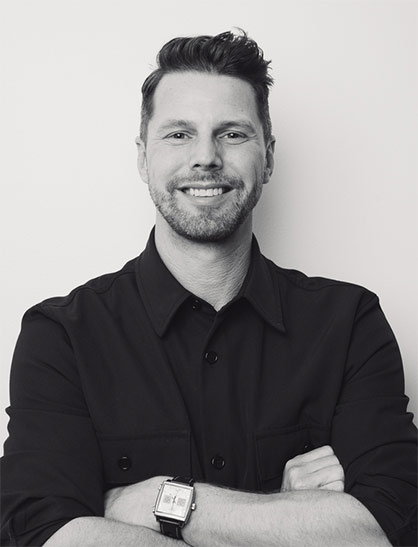
Andreas Andrén © 2021 H&M


- We aRe SpinDye has devoted its entire existence to highlighting how enormously resource-intensive the dyeing process is in textile production. It is a global problem that needs more attention. It has been fantastic to work with pioneering and brave designers over the years who show that it is possible to create fantastic creations with our resource-efficient coloring method. We want to highlight that color and process can no longer be ignored, says Andreas Andrén, CEO of We aRe Spin Dye (WRSD).

Reports show that dyeing alone accounts for almost 24 percent of the resources consumed during a garment's entire lifetime. From raw material, through production and use to recycling or in the worst case the landfill. In just one year, the clothing industry uses 9 billion cubic meters of water and 168 million tons of process chemicals to dye fabrics.

© 2021 H&M
© 2021 H&M


We aRe SpinDye now hopes that 2021 will be the year when more brands in the industry will pay attention to the ways that are available when it comes to resource-efficient dyeing procedures.- We believe in abandoning the harmful model of using wet dyeing and instead lead by example to inspire the textile world to choose a modern, more sustainable dyeing method. You can avoid wet dyeing completely by adding color pigments to the fiber in the same moment as the fiber is made. In this way, both water, chemicals and CO2 can be reduced to a minimum, says Andreas Andrén.

© 2021 H&M
© 2021 H&M


This is the second time We aRe SpinDye has participate in one of H & M's premium collections, and the company has also collaborated with H&M Womenswear and Arket earlier this year. The collection will be launched in selected stores and on hm.com from 15 April.



More News from TEXDATA International

#ITM 2026

ITM 2026: The new geography of textile production

New production hubs are emerging across North Africa and Central Asia, while Türkiye is accelerating its transformation toward higher-value, technology-driven and more sustainable textile manufacturing.

#Research & Development

“Production is a product”

From technical textiles and AI-driven robotics to the limitations of textile circularity: Professor Dr Thomas Gries looks back on more than two decades of development at ITA Aachen. In the interview, he explains why production technology remains a decisive success factor, discusses international collaborations and innovation ecosystems, and shares his views on the transformation of production landscapes and the challenges facing an increasingly regulated industry.

#Knitting & Hosiery

“We need to move away from the price trap and return to a value-driven mindset.”

With its new Textile Innovation Center, KARL MAYER is sending a strong signal for innovation, collaboration, and the future of textile applications. In this interview, Karl Josef Mayer discusses new opportunities in warp knitting, the processing of staple fibres, recycling, the changing role of machinery manufacturers, and why the textile industry must once again focus more strongly on the value of textiles. by Oliver Schmidt

#Associations

“Innovation, resilience and international experience remain the great strengths of the Swiss textile machinery industry”

Geopolitical uncertainty, growing competitive pressure from China, new free trade agreements and the shift towards a circular economy are currently reshaping the global textile industry. In this interview, Cornelia Buchwalder discusses the current mood within the Swiss textile machinery sector, the industry’s distinctive innovative strength, new market opportunities in India and Asia, and the technological trends that could shape the upcoming trade fair cycle leading up to ITMA 2027.

More News on Dyeing, Drying, Finishing

#ITM 2026

New Monforts systems deliver round-the-clock production for Kipaş

As a valued Monforts customer for many years, Türkiye’s Kipaş Textile has just installed a new Thermex dyeing range and a Monfortex sanforizer at its new dyeing and finishing plant in Kahramanmaraş.

#ITM 2026

SETEX turns dyeing and finishing data into daily production control

At ITM 2026, SETEX will show how textile mills can use machine, recipe, quality and energy data for more reliable daily production decisions — not as another reporting layer, but as part of the running dyeing and finishing process. With OrgaTEX X3 MES, E390x/C390x controllers, CamCOUNT and FabricInspector Portable, SETEX connects planning, machine execution and fabric-related quality insight within existing mill structures.

#Dyeing, Drying, Finishing

Tradition and Innovation – Phoenox Textiles Ltd. relies on state-of-the-art carpet back-coating line from Brückner

For more than 70 years, Phoenox Textiles Ltd. has been synonymous with quality, reliability, and inno-vation in the textile industry. Founded in 1954 in Huddersfield (Yorkshire, UK), a region with a long tradition in textiles, this family-owned business has continued to evolve without losing sight of its roots. Today, in its fourth generation under the leadership of the Mosley family, Phoenox successfully combines decades of experience with a clear, forward-looking corporate strategy.

#ITM 2026

Monforts sees growing potential for technical textiles in Türkiye

For many years now, Türkiye has been one of the most important markets for textile finishing, coating and continuous dyeing equipment, making ITM 2026 from June 9-13 a key event for Germany’s Monforts. At the Istanbul exhibition at stand 1117D in Hall 11, the company will put the emphasis on its machines which continue to lead the field in conventional dyeing and finishing, and also highlight the strong opportunities for Turkish textile manufacturers in the growing field of technical textiles.

Latest News

#Natural Fibers

Bremen Cotton Exchange: Fritz A. Grobien re-elected as President

The members of the Bremen Cotton Exchange have re-elected Fritz A. Grobien as President during the association’s 152nd General Assembly on June 18, 2026. The election confirms the organization’s commitment to maintaining its role as a leading international platform for the cotton and fiber industry amid a period of geopolitical and economic uncertainty.

#Natural Fibers

Organic cotton at the crossroads: Ideology, evidence, and the road ahead

Organic cotton occupies one of the most contentious spaces in global agriculture. While praised by brands and consumers for its environmental ideals, it also faces persistent questions about yield stability, certification integrity, and scalability. The current edition of The ICAC Recorder cuts through the ideology to deliver a rigorous, evidence-based assessment of both sides of the debate.

#Spinning

New spinning package with two-step filtration for recycled yarns and more

At the ITM in Istanbul, BB Engineering unveiled its new, patented ValuePack spinning package for the first time, which features a two-stage filtration system. This is particularly beneficial for re-cycling processes. Until now, spinning packs have used either metal powder (“sand”) or filter candles as filter media. Both options are suitable for differ-ent applications, and each has its own specific advantages and dis-advantages.

#ITMA 2027

ITMA 2027 gains strong momentum

In line with the theme "Co-creating the future of textiles", ITMA continues to strengthen its support for start-ups, recognising their role in driving innovation and shaping the future of textile and garment manufacturing. Through the Start-Up Valley, emerging companies gain access to a global marketplace where they can connect with industry leaders, potential partners, investors and customers.

TOP