[pageLogInLogOut]

#Dyeing, Drying, Finishing

Spinnova and Kemira to develop disruptively sustainable inherent dyeing

Spinnova, the sustainable fibre company, has entered long-term collaboration with the global chemicals company Kemira, to develop a highly eco-friendly inherent dyeing method of fibre. Dyeing fibre in its manufacturing process could significantly benefit both the textile industry and the environment.

Inherent dyeing in the Spinnova process means that the cellulosic fibre mass is dyed before extruding into filament. This avoids the excess use of water, energy, heavy metals and other harmful substances that go into dyeing fibre, thread and fabric as subsequent processes.

Spinnova’s sustainable fibre and the possibility of inherently dyeing the fibre could be an environmental game changer and could disrupt e.g. the denim dyeing process. The textile dyeing and finishing industry is one of the most chemically intensive industries globally, and one of the worst polluters of fresh water. The traditional textile industry uses thousands of chemicals in various processes of manufacture, including dyeing and printing.

"In addition to being the most sustainable way of dyeing, the fibre maintains this in-built color really well. We have already made some successful trials, and the results are very promising", Spinnova’s CEO and co-founder Janne Poranen explains.

Spinnova’s innovation originates from the pulp and paper industry, which is also one of the areas of expertise for Kemira and an important focus in the company’s R&D work towards bio-based chemicals.

"We have returned to our roots in a way, to improve the quality of the product we have created, while maintaining our zero tolerance on harmful chemicals", Poranen says.

"Kemira has strong expertise in the chemical applications for the pulp and paper industry and a long history of enabling raw water, energy, and resource efficiency for our customers. In collaboration with Spinnova, we can extend our unique know-how into the development of new innovations in the textile industry; not only in dyeing but also to improve other properties of sustainable textile fiber, such as hydrophobicity and strength", Kemira’s Director of Global Business Development Mats Berg states.

(c) 2020 Spinnova
(c) 2020 Spinnova


Spinnova’s strategy is to work with brand owners in developing applications before the fibre is commercially available.

"It is humbling to see how committed brand owners are in sustainability and developing these sustainable solutions with us", Poranen ends.

Spinnova is now looking for a brand partner for the disruptive dyeing development.

More News from TEXDATA International

#ITM 2026

ITM 2026: The new geography of textile production

New production hubs are emerging across North Africa and Central Asia, while Türkiye is accelerating its transformation toward higher-value, technology-driven and more sustainable textile manufacturing.

#Research & Development

“Production is a product”

From technical textiles and AI-driven robotics to the limitations of textile circularity: Professor Dr Thomas Gries looks back on more than two decades of development at ITA Aachen. In the interview, he explains why production technology remains a decisive success factor, discusses international collaborations and innovation ecosystems, and shares his views on the transformation of production landscapes and the challenges facing an increasingly regulated industry.

#Knitting & Hosiery

“We need to move away from the price trap and return to a value-driven mindset.”

With its new Textile Innovation Center, KARL MAYER is sending a strong signal for innovation, collaboration, and the future of textile applications. In this interview, Karl Josef Mayer discusses new opportunities in warp knitting, the processing of staple fibres, recycling, the changing role of machinery manufacturers, and why the textile industry must once again focus more strongly on the value of textiles. by Oliver Schmidt

#Associations

“Innovation, resilience and international experience remain the great strengths of the Swiss textile machinery industry”

Geopolitical uncertainty, growing competitive pressure from China, new free trade agreements and the shift towards a circular economy are currently reshaping the global textile industry. In this interview, Cornelia Buchwalder discusses the current mood within the Swiss textile machinery sector, the industry’s distinctive innovative strength, new market opportunities in India and Asia, and the technological trends that could shape the upcoming trade fair cycle leading up to ITMA 2027.

More News on Dyeing, Drying, Finishing

#ITM 2026

New Monforts systems deliver round-the-clock production for Kipaş

As a valued Monforts customer for many years, Türkiye’s Kipaş Textile has just installed a new Thermex dyeing range and a Monfortex sanforizer at its new dyeing and finishing plant in Kahramanmaraş.

#ITM 2026

SETEX turns dyeing and finishing data into daily production control

At ITM 2026, SETEX will show how textile mills can use machine, recipe, quality and energy data for more reliable daily production decisions — not as another reporting layer, but as part of the running dyeing and finishing process. With OrgaTEX X3 MES, E390x/C390x controllers, CamCOUNT and FabricInspector Portable, SETEX connects planning, machine execution and fabric-related quality insight within existing mill structures.

#Dyeing, Drying, Finishing

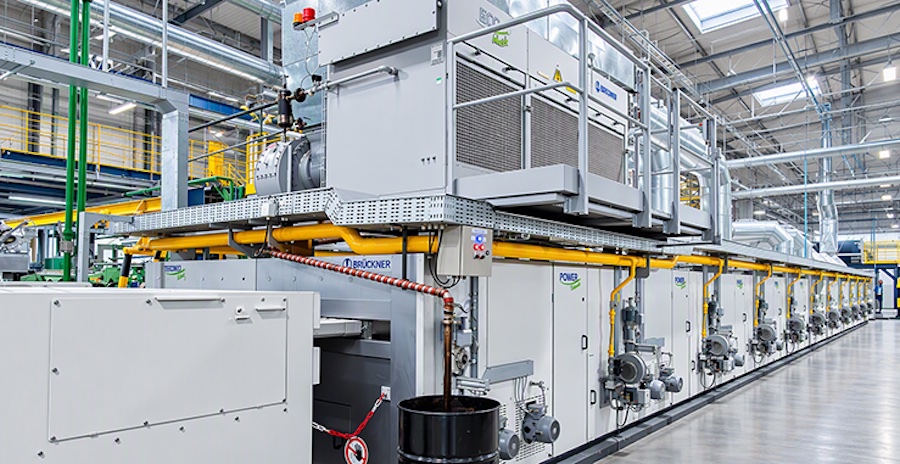
Tradition and Innovation – Phoenox Textiles Ltd. relies on state-of-the-art carpet back-coating line from Brückner

For more than 70 years, Phoenox Textiles Ltd. has been synonymous with quality, reliability, and inno-vation in the textile industry. Founded in 1954 in Huddersfield (Yorkshire, UK), a region with a long tradition in textiles, this family-owned business has continued to evolve without losing sight of its roots. Today, in its fourth generation under the leadership of the Mosley family, Phoenox successfully combines decades of experience with a clear, forward-looking corporate strategy.

#ITM 2026

Monforts sees growing potential for technical textiles in Türkiye

For many years now, Türkiye has been one of the most important markets for textile finishing, coating and continuous dyeing equipment, making ITM 2026 from June 9-13 a key event for Germany’s Monforts. At the Istanbul exhibition at stand 1117D in Hall 11, the company will put the emphasis on its machines which continue to lead the field in conventional dyeing and finishing, and also highlight the strong opportunities for Turkish textile manufacturers in the growing field of technical textiles.

Latest News

TOP