#Dyeing, Drying, Finishing
World’s first C2C Platinum for Rajby Textiles
Its Beluga denim fabrics have gained the ultimate sustainability score in all five categories covered by the C2C standard, which is acknowledged as involving the toughest and most thorough testing and assessment it is possible to put a product through.
As such, Beluga denim fabric is based on 100% GOTS certified organic cotton and employs no hazardous chemicals in its production. At the same time, it is both recyclable and biodegradable, with 100% of the energy used in its production offset by green energy and involving a closed loop system with no waste water generated and no material wastage.
Until now, no company has been able to achieve a Platinum rating for ANY product across all ten separate product areas in the C2C programme, which was first introduced in 2005.
Circular economy
The C2C Certified Product Standard guides designers and manufacturers through a continual improvement process, aiming to achieve a circular economy approach. The five quality categories on which products are graded are Material Health, Material Reutilisation, Renewable Energy and Carbon Management, Water Stewardship and Social Fairness.
A product receives an achievement level in each of these categories – Basic, Bronze, Silver, Gold or Platinum – with the lowest achievement level representing the product’s overall mark.
The criteria at each level builds towards the expectation of eliminating all toxic and unidentified chemicals, and the products breaking back down to nutrients after use, top establish a safe, continuous cycle.
Golds
So far, the C2C Certified Product Registry lists 612 separate products, with 113 being Gold standard.
Rajby has already achieved Gold for its Greenmystery and Blue Magic denim fabrics and three other Monforts denim companies based in Pakistan have also achieved Gold to date – Artistic Fabric and Garment Industries for Earthmatics denims, Artistic Milliners for Dylan denim fabrics and Soorty, for both its Pure D and Smart Loop ranges.
The new Beluga denim fabrics, however, represent a new zenith in circular denim production.

To meet the active cycling requirement, Rajby has committed to using Beluga denim fabric exclusively in apparel products sold by retailers with take back programmes in place and estimated expected cycling rates for such products. Rajby collaborated with C&A, which led the research and quantification for this initial certification through its We Take it Back programme and will track active cycling rates through it.
The fabrics range from 4oz to 13oz in weights in a range of different woven constructions.

Advanced technology
With a 10,000-strong workforce, Karachi-headquartered Rajby Textiles has a monthly production of 3.2 million metres of denim and 1.3 million finished garments and sustainability is at the top of its agenda.
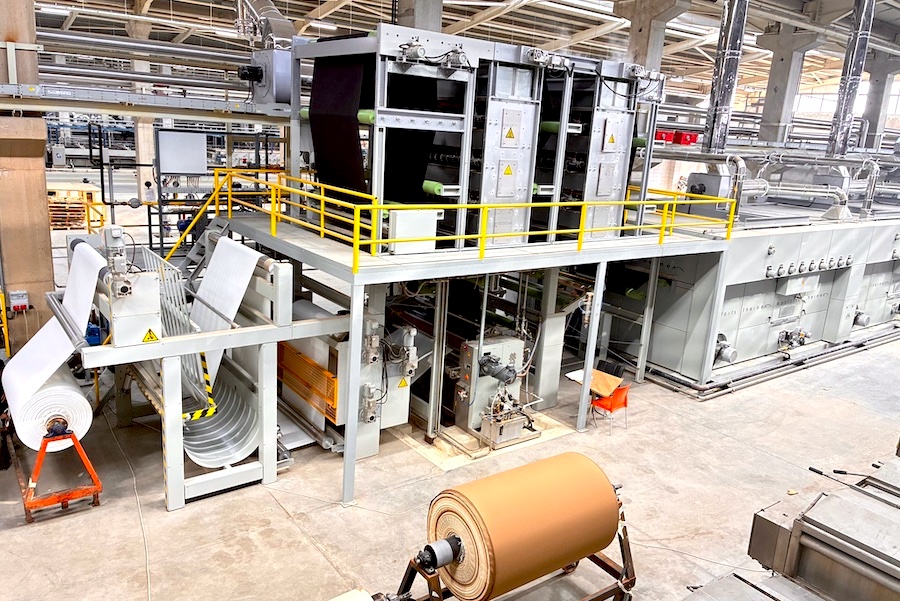
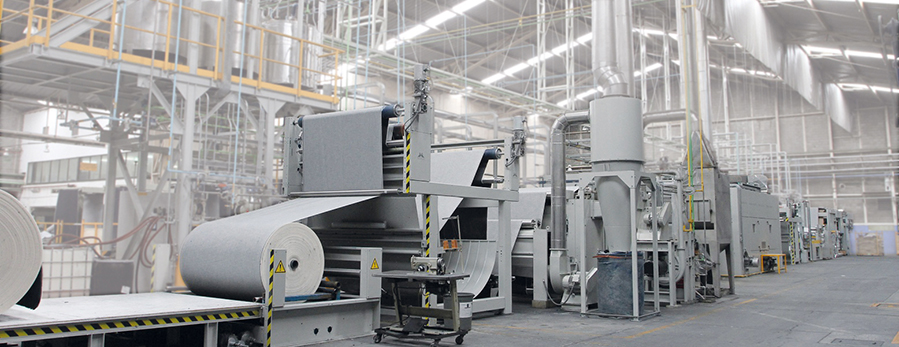
Its advanced technology includes a Monforts denim finishing range comprising washing compartments, padder, a weft straightener, cylinder dryers, a levelling field, a compressive shrinking unit, felt calender, inspection table and an outlet combination. With a working width of two metres, the complete installation has a length of 42 metres.
“When we started working for C2C Gold certification it wasn’t easy, because the requirements are very tough,” says Safdar Shah, who led the C2C project team at Rajby. “We worked very hard to create a completely green supply chain and we also modified our machines and processes to meet the standard, going beyond what was required and creating a 100% closed loop process, including Zero Waste Water Discharge Dyeing (ZDD) and Zero Waste Water Discharge Finishing (ZDF).
“As a result, we have reduced the load of our biological ETP water effluent plant by approximately 99%, since we are not discharging a single drop of water in the entire process. The fabrics are named after the Beluga whale and dedicated to preserving ocean life.”
Igatex 2020
Experts from Monforts will be on hand to discuss the latest technologies for sustainable denim finishing at the forthcoming IGATEX International Exhibition for Garments, Textiles and Accessories which takes place in Lahore, Pakistan, from July 1-4 2020. It has been postponed from March due to the Corona Virus Covid-19.
In the latest short film released on the Monforts YouTube Channel – captured at the recent Denim Première Vision show in London – some of the leading global manufacturers discuss their initiatives for more sustainable denim production.
The Monforts Denim PV film can be viewed here, or by visiting the Monforts website at.
http://www.monforts.de/en/latest-news-media/