[pageLogInLogOut]

#Digital Printing

Mimaki unveils new UV DTF technology and next-gen UV inks ahead of innovation-packed FESPA 2025

Mimaki Europe, a leading provider of industrial inkjet printers and cutting plotters, is set to showcase its first UV-DTF (UV curable, direct-to-film) printer, the UJV300DTF-75, at FESPA Global Print Expo 2025. Combining Mimaki’s expertise in sustainable, energy-efficient UV technology with its proven DTF textile printing capabilities, this latest entry produces high-quality, customisable prints, ideal for decorating items of all shapes and sizes, including those with uneven or rounded surfaces.
Mimaki’s new UV-DTF printer, the UJV300DTF-75, is ideal for product customisation and value-added printing © 2025 Mimaki


UJV300DTF-75

The UJV300DTF-75 will be one of many industry-shaping innovations making their debut at the event (Hall 1.2 / Stand B20), as Mimaki kickstarts its 50th anniversary celebrations.

The brand-new UJV300DTF-75 uses a transfer printing method, where the design is printed directly on a glued film, applied to a transfer sheet which is then applied to the object. This further expands application and creative possibilities with reduced risk of misprinting. Equipped with proprietary silicon film pinch rollers, this printer effectively addresses issues such as film peeling off or glue being removed, maintaining print stability for desired quality and accuracy. The printer incorporates Mimaki’s core technologies, including automatic nozzle check, nozzle recovery function, ink circulation function and anti-collision sensor, to ensure consistent reliability with minimal user intervention.

Arjen Evertse, Director Sales at Mimaki Europe, comments, “Mimaki led the way with the release of its first DTF printer in 2023, which continues to be incredibly successful within the textile market. Building on this achievement, we are extending the core concept—printing on a film first, then transferring it to surfaces that are challenging to print on directly—to new markets. With the UJV300DTF-75, we have also leveraged our expertise in UV printing to deliver a reliable solution for object decoration, enabling high-quality, durable prints on surfaces that were previously unsuitable for direct UV printing.”

Further expanding its expert UV offering, Mimaki is introducing its next generation of UV inks, ELS-170 and ELH-100 at FESPA. The range abides by EU’s REACH regulation (SVHC regulation) and is GREENGUARD Gold certified, making it both environmentally and health conscious. The UJV300DTF-75 uses a unique combination of the two: ELH-100 (hard ink) for White and Clear, and ELS-170 (flexible ink) for CMYK, ensuring industry-leading durability with both strength and flexibility.

Mimaki encourages the industry to ‘Print Different’

To mark 50 years of introducing transformative technology to the sign graphics, industrial, and textile printing markets, Mimaki is launching its ‘Print Different’ vision. The initiative not only celebrates Mimaki’s legacy of breakthrough technologies but also highlights the company’s continuous commitment to driving creativity and sustainability in the digital printing industry.

In line with this vision, the Mimaki FESPA booth will showcase an impressive display of Mimaki solutions across multiple sectors, many of which will be demonstrated for the first time at an international show. One of these brand-new technologies is the recently launched, direct-to-textile Tx330-1800, with dual capabilities for printing on both fabric and paper. In addition, the JFX600 and CFX Series print-and-cut solution, as well as the CJV200-160, TS330-3200DS, and TRAPIS will showcase the wide-ranging, creative application possibilities enabled by Mimaki technology.

Danna Drion, General Manager Marketing and Product Management at Mimaki Europe, comments, “Mimaki’s ethos is one of continuous innovation that combines the need for productivity, performance and improved sustainability. This is why ‘Print Different’ exemplifies everything Mimaki stands for and provides the perfect backdrop for our 50th anniversary celebrations. It reflects both our pioneering spirit and our ongoing commitment to shaping a more vibrant, sustainable future for digital printing – with our customers at the heart of it.”

Mimaki is also shaping the industry’s future by supporting Girls Who Print and the FESPA Foundation. Danna Drion continues, “FESPA will be the official event to launch Girls Who Print Europe. This represents a powerful step towards a more inclusive print industry. At Mimaki, we know that true innovation comes from diverse voices, education and supporting communities. This is why we have pledged our commitment to the FESPA Foundation too. Together, these initiatives are empowering change and building a future where different opportunities are open to all.”

To find out more about Mimaki’s drive to ‘Print Different’, visit: www.mimakieurope.com/print-different/
More News from Mimaki Europe B.V.

#Digital Printing

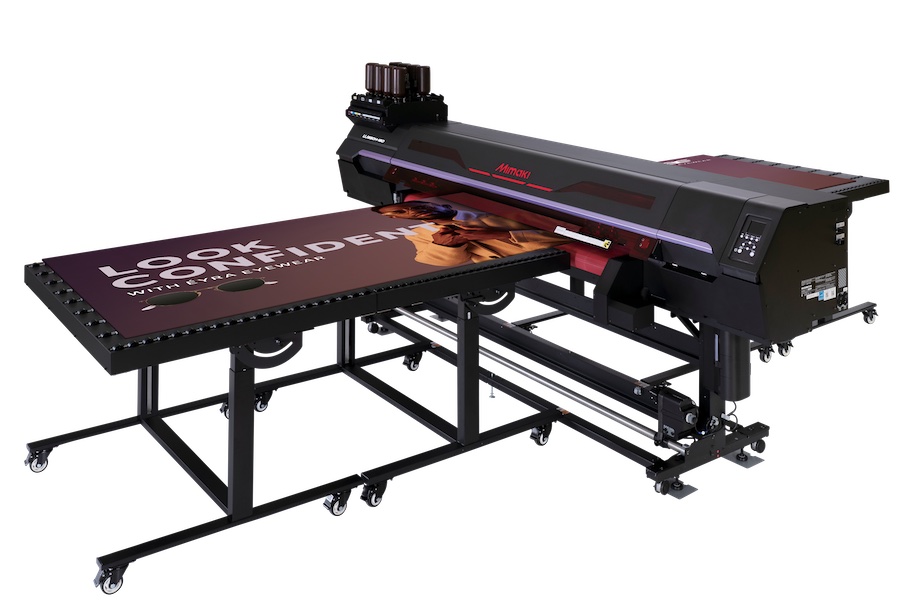
Mimaki highlights growing demand for hybrid UV printing across European markets

Insights from Mimaki's European partner network reveal how hybrid UV printing is responding to different regional market needs, driven by growing demand for flexible, application-oriented printing technologies.

#Digital Printing

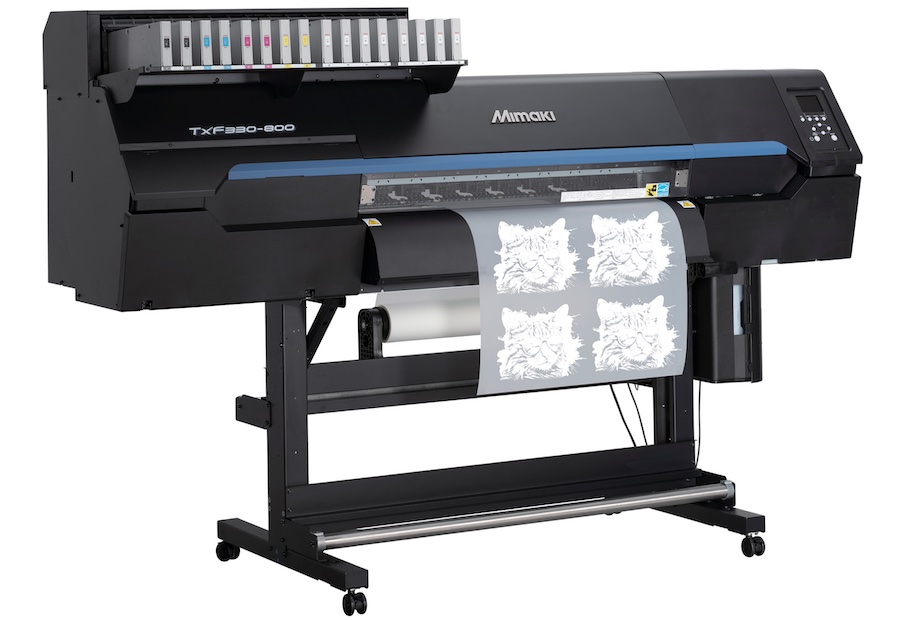
Mimaki advances DTF productivity and stability with new TxF330-800

Mimaki Europe, a leading manufacturer of industrial inkjet printers and cutting plotters, announces the TxF330-800, its new direct-to-film (DTF) printer. Designed to support stable, high-quality garment decoration in demanding print environments, the system combines automated maintenance, expanded white ink capacity and advanced production capabilities to streamline workflow.

#Digital Printing

Where every detail counts: Experiential applications of DTF and UV-DTF printing

Personalisation has moved far beyond the traditional logo on a t-shirt. Today, brands want to create complete experiences, where every detail – from clothing and accessories to décor and packaging – feels distinctive and reflective of their identity.

#Digital Printing

DTF vs DTG Printing - The technologies shaping today’s custom merchandise market

From sportswear to branded tote bags, custom merchandise continues to grow in popularity across sectors, driving print shops to cater to short runs, personalisation, and rapid turnaround. As print providers look to this market, two printing technologies often stand out: Direct‑to‑Film (DTF) and Direct‑to‑Garment (DTG). Each offers its own benefits, and understanding these differences helps determine the most suitable production method for print service providers.

More News on Digital Printing

#Digital Printing

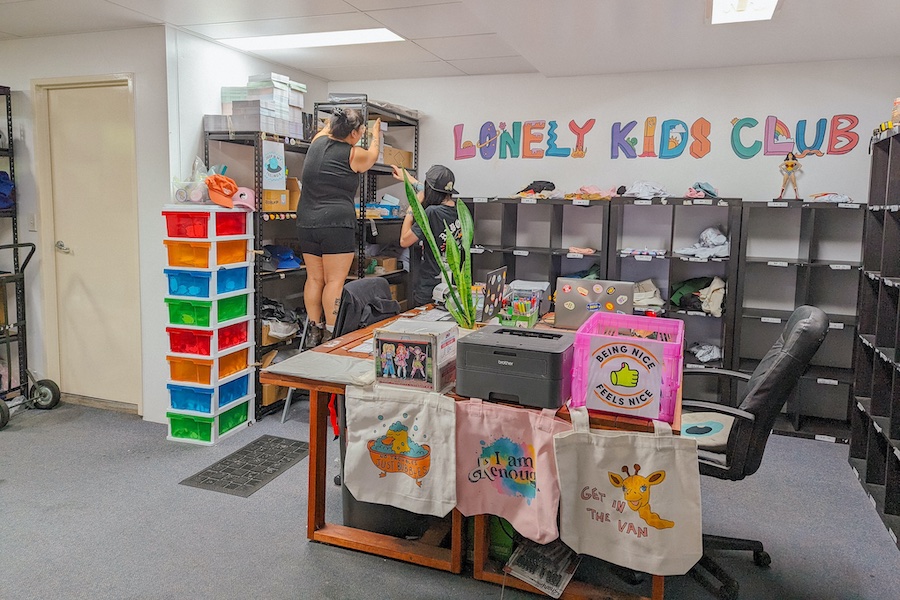
From a bedroom startup to 3,000 designs: How Lonely Kids Club built its business with DTG printing

Founded in Sydney in 2011, independent clothing label Lonely Kids Club has grown from a bedroom startup into a business offering around 3,000 graphic T-shirt designs. With its own production studio, direct-to-garment printing and a demand-driven manufacturing model, the company demonstrates how smaller apparel brands can combine creative independence with flexible production – while navigating the everyday challenges of quality control, workflow efficiency and sustainability.

#Digital Printing

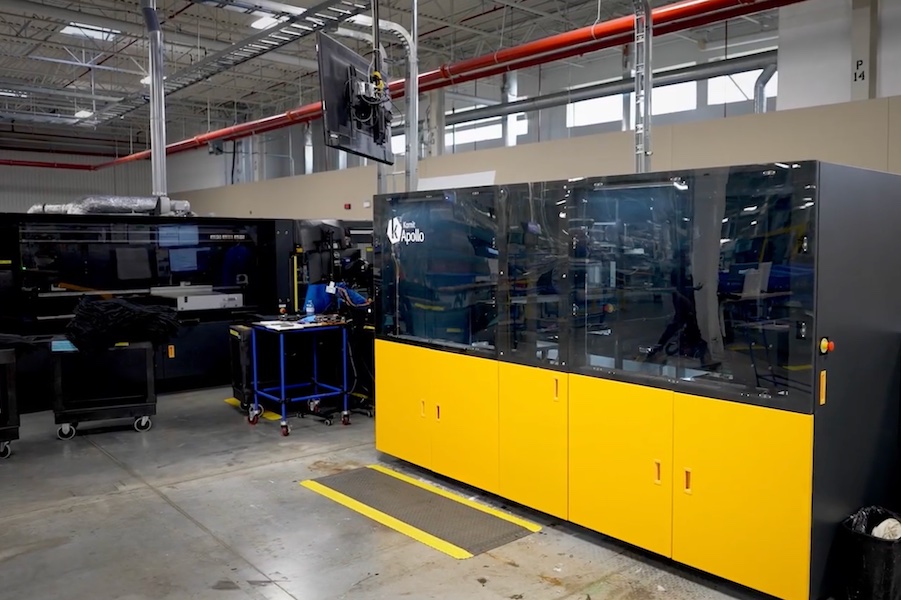
VistaPrint increases apparel production capacity with Kornit Apollo

Kornit Digital (NASDAQ: KRNT), a provider of on-demand digital textile production technologies, reports that VistaPrint has significantly increased its apparel production capacity through the implementation of the Kornit Apollo system. The installation has enabled the international print and design company to add approximately 25,000 units of weekly production capacity while improving production speed, operational efficiency and order turnaround times.

#Digital Printing

Blue Tomato accelerates agile retail apparel production with Kornit Digital

Kornit Digital (NASDAQ: KRNT), a global pioneer in on-demand digital fashion and textile production technologies, is highlighting how Blue Tomato, Europe’s largest board sports retailer, is using two Kornit Atlas MAX PLUS systems to support a more agile approach to in-house apparel production. The systems are helping Blue Tomato respond faster to changing consumer trends, produce high-quality apparel for its network of 86 retail stores across Europe and reduce inventory by printing only what the market demands.

#Digital Printing

Growth at the speed of demand: Kornit Digital brings digital textile innovation to PERFORMANCE DAYS 2026

Kornit Digital Ltd. (NASDAQ: KRNT) (“Kornit”), a global pioneer in on-demand digital fashion and textile production, will showcase the possibilities of digital, on-demand production at PERFORMANCE DAYS 2026, October 13–14 at Messe München, Hall 6, Booth E08.

Latest News

#Textile processing

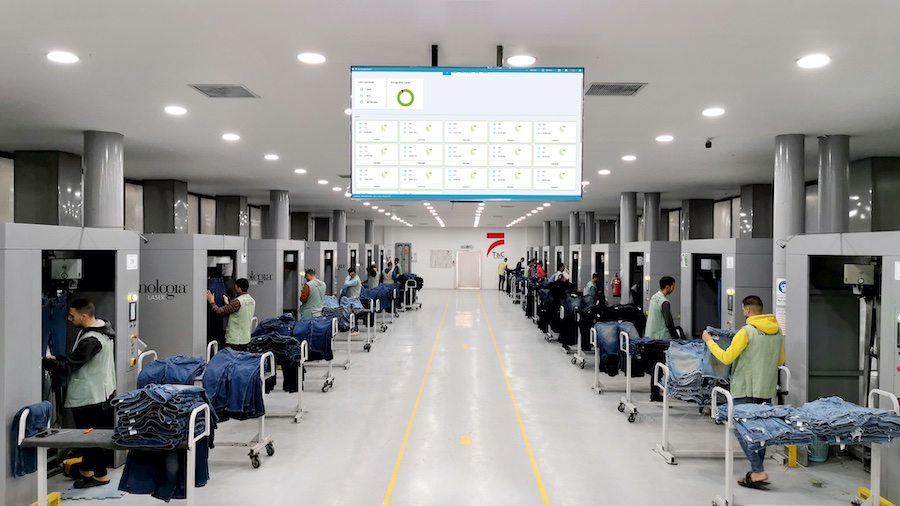
Jeanologia combines digitalisation, laser and ozone technology to strengthen China’s textile competitiveness

At ITMA Asia + CITME 2026 in Shanghai, Jeanologia showcased how the combination of digitalisation, laser technology and G2 Ozone can help China’s textile industry improve productivity, speed, quality and efficiency. With its Compact Super Flash laser system and integrated production concepts, the Spanish technology specialist demonstrated how connecting product development and industrial production can enable faster, more automated and sustainable manufacturing processes.

#Textile chemistry

Flame protection and OEKO-TEX® certification: Gulec Chemicals clears an important hurdle

Three halogen-free flame retardants from German specialist Gulec Chemicals have been included in the OEKO-TEX® list of accepted Active Chemical Products (ACP). The listing opens up additional opportunities for textile finishers, coaters and manufacturers of technical textiles seeking to combine demanding fire protection requirements with certification according to OEKO-TEX® STANDARD 100.

#Dyeing, Drying, Finishing

PLEVA improves dyeing consistency with inline microwave measurement of liquor pick-up

Consistent shades are essential in continuous textile dyeing. Yet variations in fabric absorbency or uneven padder pressure can go unnoticed until the end of the line. By then, hundreds of metres of fabric may already be affected and may become second-choice or rejected.

#Recycling / Circular Economy

DITF establishes CYCLOTEXUM recycling center to advance mechanical and solvent-based textile recycling

As part of the CYCLOTEXUM research project, the German Institutes of Textile and Fiber Research Denkendorf (DITF) established the CYCLOTEXUM recycling center. There, in collaboration with industry partners, the center develops application-oriented solutions for mechanical and solvent-based recycling processes. The technologies developed make a significant contribution along the textile value chain toward the efficient use of textile resources in the future and the transition of production in the German textile sector to a circular economy. The project was funded by the Ministry for the Environment, Climate and Energy Sector of the State of Baden-Württemberg.

TOP