[pageLogInLogOut]

#Digital Printing

Warp knitted terry fabric with digital prints for even more bathing fun
© 2021 KARL MAYER
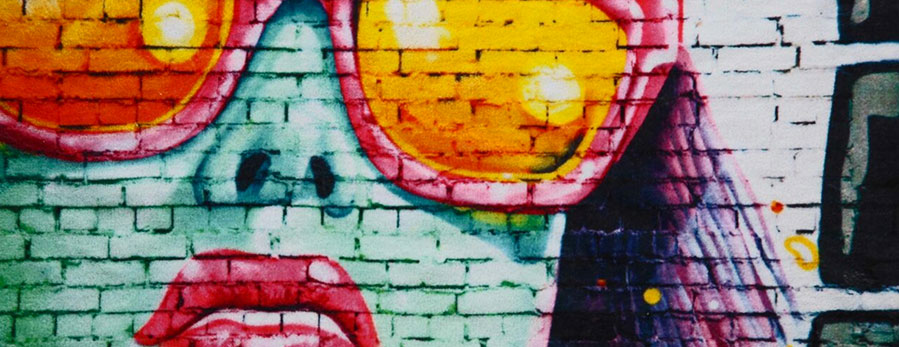
The textile was produced on a TM 4-TS EL with double-sided fabric to ensure that the finished product is not only a must-have bathing accessory, but also a real eye-catcher.

Streetart on the beach

Towels are not only useful for drying off, but they can also steal the show from bathing beauties. You only need to look at the extravagant example on this page to see how. The terry cloth product produced by KARL MAYER creates vibrant accents with lively motifs in bright colours no matter whether you are around the swimming pool, at the beach or even simply next to the washbasin in the bathroom.

The textile was produced on a TM 4-TS EL with double-sided fabric to ensure that the finished product is not only a must-have bathing accessory, but also a real eye-catcher. One side features a dense layer of cotton loops. It quickly absorbs moisture from the skin after bathing and nestles gently against the body. The other side consists of sheared polyester. Its soft texture invites you to relax, while its smooth finish makes it both easier to print on and quicker to dry. The imaginative design was created at ZIMMER AUSTRIA using a digital printing process. The specialist for printing, coating and finishing systems did a great job. KARL MAYER’s textile developer, Melanie Bergmann, couldn’t be happier with the results: “The colours are extremely vibrant and vivid while the contours are sharp. Even the finest lines are clearly defined,” says the textile engineer.


Warp knitting technology with a firmly integrated terry loop ensures that the colourful towels can be enjoyed for a long time to come. The fluffy fibre layer is extremely resistant to thread pullers. The long service life and ecological advantages in production distinguish warp knitted terry articles from their weaving counterparts. The TM 4-TS EL does not require compressed air like conventional airjet rapier looms and therefore consumes around 87 % less energy per kilogram of fabric produced. The sizing process is also eliminated in warp knitting. This saves textile chemicals, waste water and energy to the tune of approx. 0.20 USD/kg. This corresponds to about 30 % of the manufacturing costs – excluding yarn – for the production of the raw material. Apart from saving costs, the terry warp knitting machine is extremely efficient. With a width of 186” and a speed of 800 rpm, the TM 4-TS EL produces around 1,800 kg of terry cloth weighing 400 g/m2 every day in 24-hour operation. This is around 250 % more than on an airjet rapier loom.
More News from TEXDATA International

#ITM 2026

ITM 2026: The new geography of textile production

New production hubs are emerging across North Africa and Central Asia, while Türkiye is accelerating its transformation toward higher-value, technology-driven and more sustainable textile manufacturing.

#Research & Development

“Production is a product”

From technical textiles and AI-driven robotics to the limitations of textile circularity: Professor Dr Thomas Gries looks back on more than two decades of development at ITA Aachen. In the interview, he explains why production technology remains a decisive success factor, discusses international collaborations and innovation ecosystems, and shares his views on the transformation of production landscapes and the challenges facing an increasingly regulated industry.

#Knitting & Hosiery

“We need to move away from the price trap and return to a value-driven mindset.”

With its new Textile Innovation Center, KARL MAYER is sending a strong signal for innovation, collaboration, and the future of textile applications. In this interview, Karl Josef Mayer discusses new opportunities in warp knitting, the processing of staple fibres, recycling, the changing role of machinery manufacturers, and why the textile industry must once again focus more strongly on the value of textiles. by Oliver Schmidt

#Associations

“Innovation, resilience and international experience remain the great strengths of the Swiss textile machinery industry”

Geopolitical uncertainty, growing competitive pressure from China, new free trade agreements and the shift towards a circular economy are currently reshaping the global textile industry. In this interview, Cornelia Buchwalder discusses the current mood within the Swiss textile machinery sector, the industry’s distinctive innovative strength, new market opportunities in India and Asia, and the technological trends that could shape the upcoming trade fair cycle leading up to ITMA 2027.

More News on Digital Printing

#Digital Printing

Where every detail counts: Experiential applications of DTF and UV-DTF printing

Personalisation has moved far beyond the traditional logo on a t-shirt. Today, brands want to create complete experiences, where every detail – from clothing and accessories to décor and packaging – feels distinctive and reflective of their identity.

#Dyeing, Drying, Finishing

EFI Reggiani and Danitech Group announce strategic multi-year agreement for Mezzera textile finishing machinery

Electronics For Imaging, Inc. (EFI), through its subsidiary EFI Reggiani (Reggiani Macchine S.p.A.), together with Danitech Engineering and Solutions Srl (Italy) and Suzhou Danitech Intelligent Technology Co. Ltd (China), announces a multi-year license and manufacturing agreement covering the Mezzera and Jaeggli textile finishing machinery portfolio.

#Digital Printing

USColorworks expands digital platform with Kornit Atlas MATRIX and Atlas MAX PLUS solutions

Kornit Digital Ltd. (NASDAQ: KRNT), a global pioneer in sustainable, on-demand digital fashion and textile production, today announced that USColorworks, a North Carolina-based apparel decoration and fulfillment company specializing in custom and on-demand printing for retail and promotional markets, has expanded its Kornit digital production platform with the addition of Atlas MATRIX and Atlas MAX PLUS systems to deliver high-quality, on-demand apparel across cotton, blended fabrics and polyester.

#Digital Printing

DTF vs DTG Printing - The technologies shaping today’s custom merchandise market

From sportswear to branded tote bags, custom merchandise continues to grow in popularity across sectors, driving print shops to cater to short runs, personalisation, and rapid turnaround. As print providers look to this market, two printing technologies often stand out: Direct‑to‑Film (DTF) and Direct‑to‑Garment (DTG). Each offers its own benefits, and understanding these differences helps determine the most suitable production method for print service providers.

Latest News

#Europe

The Digital Product Passport registry is now live

On 20 July, the European Commission launched the Digital Product Passport Registry together with a testing environment, marking an important milestone in making the Digital Product Passport (DPP) a practical reality for businesses placing products on the EU market.

#Europe

EU ban on destroying unsold clothing and footwear now in force

The European Union's ban on the destruction of unsold clothing, clothing accessories and footwear has entered into force. Since July 19, 2026, large companies across the EU have been prohibited from destroying unsold textile products, while medium-sized companies will be required to comply with the same rules from 2030.

#Recycled Fibers

Eastman Naia™ brings its inside-out denim vision to Kingpins New York

Following its debut at Kingpins Amsterdam, Eastman Naia™ brings the next chapter of its denim story to Kingpins New York, taking place July 22–23. At Booth Green 7, Naia™ presents its denim proposition built around three complementary design directions: Performance Denim, Fashion Denim and Authentic Denim.

#Recycling / Circular Economy

Circ launches first denim collection with H&M featuring TENCEL™ | Circ® with REFIBRA™ technology

Circ today announced that the first men's denim collection featuring TENCEL™ | Circ® with REFIBRA™ technology is now available at H&M, marking the commercial delivery of this unique pilot project first announced in October 2025. Featuring two styles available across the UK, Scandinavia, Central Europe, Eastern Europe, South Europe, Turkey, North America, Mexico, Canada, and the Middle East, the launch brings TENCEL™ | Circ® with REFIBRA™ technology into H&M's standard men's denim assortment for the first time.

TOP