[pageLogInLogOut]

#Denim

ISKO invests in pioneering green technology to provide customers with a 100% post-consumer recycling solution
© 2021 ISKO
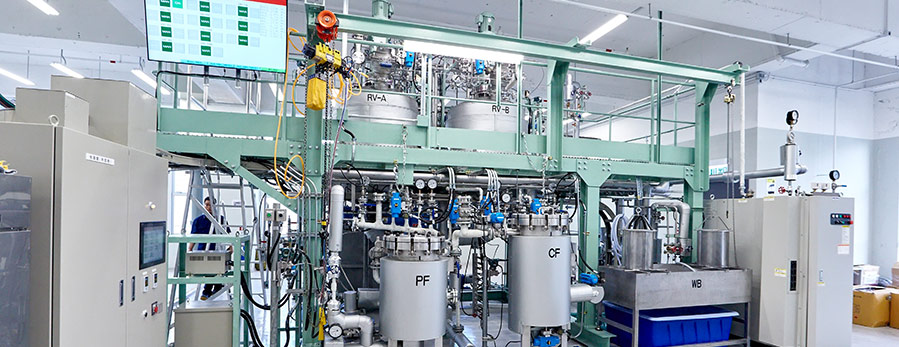
ISKO, the leading premium denim ingredient brand, and textile research and development company HKRITA are proud to announce a licensing agreement for HKRITA’s award-winning, revolutionary Green Machine – a one-of-a-kind technology that fully separates and recycles cotton and polyester blends at scale.

The technology is still in the pilot stage, but is an additional step in ISKO’s drive to improve and commercialize recycling technologies which will eventually enable the company to offer a 100% post-consumer recycling solution to all of its customers. In addition, ISKO and HKRITA will work together to develop related technology, further strengthening the company’s position as a leader in sustainability. 
© 2021 ISKO
© 2021 ISKO


"ISKO has a total commitment to sustainability and through our Responsible Innovation approach, we are constantly looking for new ways of working towards the future of a fully circular fashion industry. Our investment in this new technology is another milestone towards our full circularity vision,” says ISKO CEO, Fatih Konukoglu. 
© 2021 ISKO
© 2021 ISKO


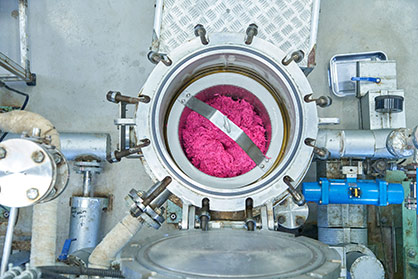
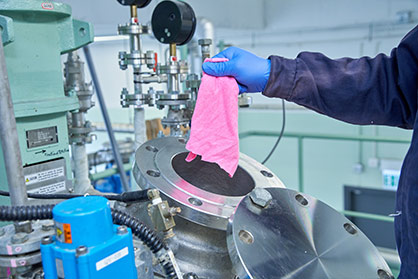
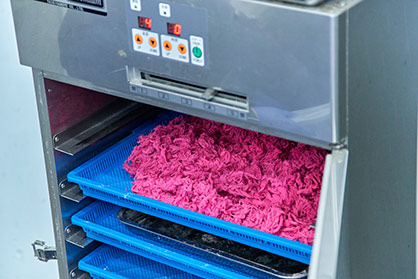
The Green Machine is a first in the industry and uses an innovative and ultra-efficient hydrothermal treatment method that decomposes cotton into cellulose powders and enables the separation of polyester fibres from blended fabrics. The process is a closed loop and uses only water, heat and less than 5% biodegradable green chemicals. Crucially, this method does not damage the polyester fibres and therefore maintains their quality; the cellulose powders, which are clean and toxic-free, can be used in a variety of ways. 
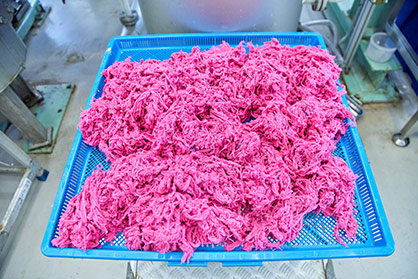
© 2021 ISKO
© 2021 ISKO


“The Green Machine is a ground-breaking recycling technology. Seeing this project become truly commercially viable is wonderful. We are excited to learn that ISKO recognises our innovation and applies this recycling solution into its production. The Green Machine will definitely become another green credential of ISKO,” says Mr. Edwin Keh, Chief Executive Officer of HKRITA.
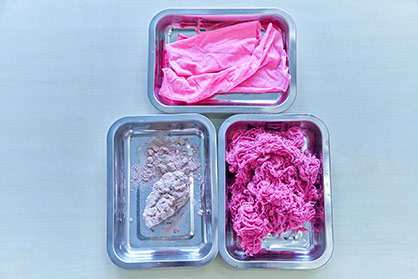
© 2021 ISKO
© 2021 ISKO


The investment in this new technology is the latest in ISKO’s ongoing drive for advancements in sustainability. As part of the company’s R-TWOTM programme, it is also working to develop fabrics with a guaranteed minimum 50%+ GRS (Global Recycle Standard) recycled content blend. This will significantly reduce the carbon and water footprint of a fabric, as well as make it easy for consumers to trace a garment’s sustainable journey step-by-step from the beginning of the supply chain through to the end product they purchase.
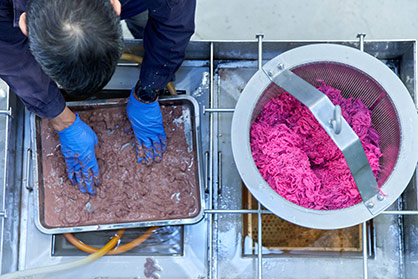
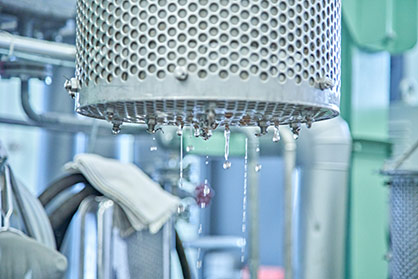
© 2021 ISKO
© 2021 ISKO


© 2021 ISKO
© 2021 ISKO


© 2021 ISKO
© 2021 ISKO


More News from TEXDATA International

#ITM 2026

ITM 2026: The new geography of textile production

New production hubs are emerging across North Africa and Central Asia, while Türkiye is accelerating its transformation toward higher-value, technology-driven and more sustainable textile manufacturing.

#Research & Development

“Production is a product”

From technical textiles and AI-driven robotics to the limitations of textile circularity: Professor Dr Thomas Gries looks back on more than two decades of development at ITA Aachen. In the interview, he explains why production technology remains a decisive success factor, discusses international collaborations and innovation ecosystems, and shares his views on the transformation of production landscapes and the challenges facing an increasingly regulated industry.

#Knitting & Hosiery

“We need to move away from the price trap and return to a value-driven mindset.”

With its new Textile Innovation Center, KARL MAYER is sending a strong signal for innovation, collaboration, and the future of textile applications. In this interview, Karl Josef Mayer discusses new opportunities in warp knitting, the processing of staple fibres, recycling, the changing role of machinery manufacturers, and why the textile industry must once again focus more strongly on the value of textiles. by Oliver Schmidt

#Associations

“Innovation, resilience and international experience remain the great strengths of the Swiss textile machinery industry”

Geopolitical uncertainty, growing competitive pressure from China, new free trade agreements and the shift towards a circular economy are currently reshaping the global textile industry. In this interview, Cornelia Buchwalder discusses the current mood within the Swiss textile machinery sector, the industry’s distinctive innovative strength, new market opportunities in India and Asia, and the technological trends that could shape the upcoming trade fair cycle leading up to ITMA 2027.

More News on Denim

#Recycled Fibers

Eastman Naia™ brings its inside-out denim vision to Kingpins New York

Following its debut at Kingpins Amsterdam, Eastman Naia™ brings the next chapter of its denim story to Kingpins New York, taking place July 22–23. At Booth Green 7, Naia™ presents its denim proposition built around three complementary design directions: Performance Denim, Fashion Denim and Authentic Denim.

#Denim

ISKO brings conscious color, texture, and tactile evolution to Bluezone Munich

At Bluezone ISKO is debuting its FW 27–28 Collection, structured around a trio of core sensory pillars: color, texture, and touch. This season, the textile leader showcases a creative vision where emotional connection and advanced technical innovation come together. The entire range is anchored by a dedicated commitment to eco-conscious material creation, utilizing patented processing technologies and high-quality Next-Gen materials powered by RE&UP.

#Denim

Jeanologia brings “Billy” to China, the AI transforming denim design

The denim industry is turning its attention to Hangzhou this week, where a new edition of Kingpins, the leading international trade show for the sector, takes place on May 21 and 22. There, the Spanish company Jeanologia, a global leader in sustainable technologies for the textile industry, is introducing its latest innovation to the Chinese market: “Billy”, the first artificial intelligence specifically developed for denim finishing design.

#Denim

Officina39 brings modular Low Temperature Reactive Dyeing and a new vision of denim efficiency to Denim Première Vision Milan 2026

At Denim Première Vision Milan 2026, at Stand G21, Officina39 returns to the international denim stage with a clear message: the next phase of denim innovation will be shaped by process efficiency, creative flexibility and the ability to rethink established industrial routines.

Latest News

#Industry 4.0 / Digitalization

Coats Digital launches AI-powered GSD RealMotion for motion analysis

Coats Digital has launched GSD RealMotion, an AI-powered solution designed to provide apparel manufacturers with greater visibility into factory-floor operations. By analysing shop-floor video and applying Coats Digital’s GSD methodology, the solution turns video recordings into structured, motion-by-motion method studies.

#Textile chemistry

Archroma and Lameirinho partner in pioneering deployment of InOneGO single-step dyeing

Archroma, a global leader in specialty chemicals, and Lameirinho, a leading home textiles manufacturer based in Portugal, are collaborating to bring InOneGO by Archroma, a new single-step dyeing process, into commercial production. Lameirinho’s first InOneGo bedlinens collection is now available worldwide.

#Knitting & Hosiery

KARL MAYER launches extra-wide HKS 3-M EL for increased productivity

KARL MAYER has launched a new extra-wide version of its HKS 3-M EL tricot machine, designed to increase productivity particularly in the manufacture of textiles for sports, activewear and athleisure applications.

#Research & Development

Reducing development times for technical textiles by accelerated thermo-oxidative aging in a high-pressure autoclave

Synthetic polymers used in technical textiles can be effectively protected against degradation caused by heat, oxygen, and water through the use of stabilizer systems. This enables service lives of several decades, extending to more than 50 years. As the use of durable technical textiles continues to grow, so does the demand for reliable methods to predict their service life within economically feasible testing periods. For the first time the German Institutes of Textile and Fiber Research Denkendorf (DITF) developed methods for robust service life prediction for textiles in an IGF research project.

TOP